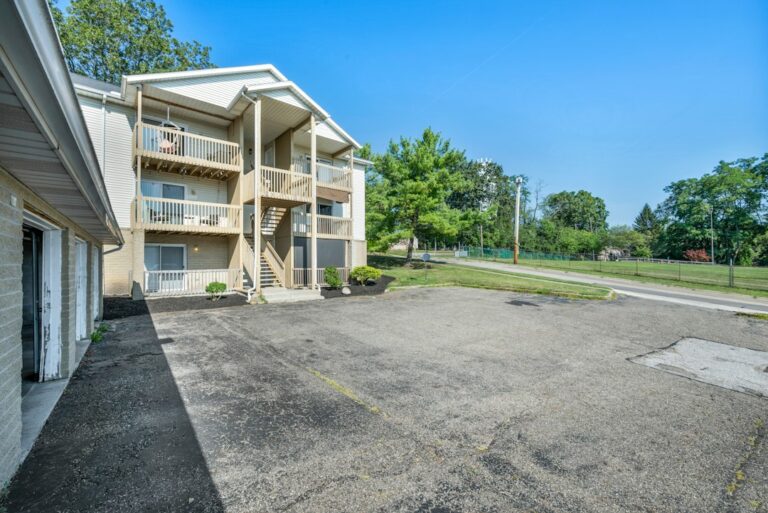

St. Louis apartment property taxes are set by the City Assessor, not a county, because St. Louis is an independent city that sits outside any county. Apartment buildings, including large complexes, are classed as residential property in Missouri, so they are assessed at 19% of market value and taxed at the city’s residential rate, which was 8.1867 per $100 of assessed value for 2025.
That short answer hides a lot of detail that matters to owners: when values change, how the appeal calendar works, what the 2025 reassessment did to parts of the city, and how abatement and land bank rules shape the competitive landscape. This guide walks through each piece using the city’s own published schedules and Missouri statutes.
Why St. Louis has no county assessor
St. Louis voters approved separating the city from St. Louis County in August 1876, and the city has operated as an independent jurisdiction ever since. The U.S. Census Bureau treats it as a county-equivalent, listing it as “St. Louis city” with its own county code. For property owners, that history has a practical consequence: the city government performs functions that a county would handle elsewhere in Missouri. The City Assessor values property, the city’s Board of Equalization hears appeals, and the city’s Collector of Revenue mails and collects the bills.
This matters when you read market commentary. “St. Louis” in a news story or broker report often means the metro area, which spans St. Louis County, St. Charles County and counties in Illinois. A building just across the city line is valued by the St. Louis County Assessor under different staffing and different local levies. Everything in this guide applies only to property inside city limits.
The city’s population has been shrinking. The 2020 Census counted 301,578 residents, and the Census Bureau’s July 2025 estimate was 278,144, a decline of 7.7%. Census data also show that only 45.3% of homes in the city are owner-occupied, making St. Louis a majority-renter city, and the 2020–2024 American Community Survey put median gross rent at $997. Those figures help explain why assessment accuracy is a recurring political issue: a large share of the tax base is rental housing, and values vary sharply from block to block.
How Missouri classifies apartment buildings
Missouri law sorts real estate into three classes: residential, agricultural and commercial. The definitions are in RSMo 137.016, which defines residential property as all real property improved by a structure used or intended to be used for residential living by human occupants. The statute carves out facilities used primarily for transient housing, such as properties whose rental receipts are subject to sales tax. Anything that is neither residential nor agricultural is commercial.
The building count does not change the class. A six-unit brick walk-up and a 300-unit complex downtown are both residential under the statute. The Missouri State Tax Commission confirmed this reading in its 2010 decision in Northpark Apartments v. Hoover, holding that a multifamily apartment site must be assessed at the residential ratio, even the portion an assessor had tried to value as commercial.
There are edges worth watching:
- Units operated as short-term rentals can fall into the transient-housing exclusion. The city’s 2025 Board of Equalization schedules even listed a separate hearing category for short-term rental appeals.
- Ground-floor retail in a mixed-use building is commercial space and can be assessed separately at the commercial ratio.
- Laundry equipment, furniture in furnished units and other business property are personal property, which carries its own ratio and its own declaration deadline.
How the 19% ratio shapes St. Louis apartment property taxes
Assessment ratios come from RSMo 137.115: 19% of true value for residential property, 12% for agricultural and 32% for commercial. Personal property is assessed at 33⅓%.
Once the assessor sets market value, the assessed value is simply 19% of it. Taxing districts then apply their levies per $100 of assessed value. For 2025, the city’s published rate sheet shows a residential total of 8.1867 per $100 and a commercial total of 9.7522 per $100. The commercial rate is higher partly because it includes the Merchants and Manufacturers Inventory Replacement Tax of 1.64.
A simple illustration using the 2025 numbers:
- A building with a market value of $1,000,000 has an assessed value of $190,000.
- At 8.1867 per $100, the 2025 tax works out to roughly $15,555.
- If the same value were assessed as commercial property at 32% and taxed at 9.7522, the bill would be roughly $31,200.
That gap is why classification is worth checking on every notice. It is also why buyers who model taxes from a seller’s bill should confirm the class shown on the city’s records, especially for buildings with storefronts or short-term units. Running a building’s numbers through an overview of rent control and property tax rules by state can help put Missouri’s ratio system in context against other states where an owner may hold property.
Where the levy goes
The 2025 base rate of 8.1122 per $100 is a stack of separate levies. The largest components on the city’s rate sheet are:
- St. Louis Public Schools: 4.9085
- City of St. Louis: 1.5583
- St. Louis Public Library: 0.5474
- St. Louis Community College: 0.2442
- Children’s Service Fund: 0.2396
- Zoo-Museum District: 0.2196
The residential total adds a 0.0745 storm-water capital levy from the Metropolitan St. Louis Sewer District. Because the school district accounts for well over half of the rate, school levy changes have the biggest effect on what an apartment owner pays. Rates are set each year between September 1 and October 1, after assessed values are final, so the rate in any one year should be treated as that year’s figure rather than a permanent number. The city posts each year’s rates on the Assessor’s property tax rates page.
The odd-year reassessment cycle
Missouri reassesses real property every two years. Under RSMo 137.115, new values are set as of January 1 of each odd-numbered year and carry over to the following even year. In St. Louis, 2025 was a reassessment year, which means 2026 values largely carry over and the next general reassessment is in 2027.
The statute adds a protection that applies to residential parcels, apartments included. Before the assessor raises a residential property’s value by more than 15% (outside of new construction), the assessor must conduct a physical inspection and notify the owner in writing. The owner has at least 30 days to request an interior inspection. For a building with well-documented deferred maintenance, an interior inspection can be a useful way to show the assessor what an exterior drive-by misses.
The 2025 reassessment in practice
The 2025 cycle was a significant one. Local reporting from St. Louis Magazine and KMOV ahead of the notices said about 100,000 city properties were expected to see higher assessments. The assessor’s office identified 14 of its 163 assessor neighborhoods as substantially underassessed, concentrated in the southeast part of the city from Tower Grove East toward the Patch, and estimated that about 10% of properties citywide had been substantially underassessed. The interim assessor at the time, Shawn Ordway, described the jump as “sticker shock” and said the office could not keep underassessing.
One example cited in that coverage was a multifamily property in Marine Villa whose value rose from about $67,000 to about $175,000. That is not a typical outcome for every building, but it shows how quickly a long-stale value can reset when the assessor catches up with sales in a neighborhood. Owners of older buildings in neighborhoods where values had not been updated in years had the most reason to review their notices closely.
The appeal calendar, step by step
The Assessor’s deadlines and appeal dates page lays out the annual calendar. In a typical year:
- January 1: the assessment date. Values reflect the property as of this date.
- April 1: personal property declarations are due.
- May 1 to May 15: change-of-value notices are mailed, and informal appeals open on May 1.
- June 15: the last day for the assessor to deliver notices.
- June 23: the informal review period ends.
- July 1: the assessment books close.
- Second Monday in July: the deadline to file a formal appeal with the Board of Equalization.
- September 1 to October 1: taxing districts set rates, and bills are prepared in October.
- December 31: taxes are due.
Informal review with the Assessor
The informal review is the fastest route to a correction. It works best for factual problems: wrong unit counts, incorrect square footage, a building listed with features it does not have, or a value built from a sale that was not arm’s length. For income-producing property, owners commonly bring a trailing twelve-month operating statement and a current rent roll so the assessor can see actual income and expenses.
The Board of Equalization
If the informal review does not resolve the issue, the next step is the city’s Board of Equalization. The Board convenes on the first Monday in July (it can begin July 1 in reassessment years) and sits until the fourth Saturday in August. It has four citizen members appointed by the Mayor, with the Assessor serving as president. In 2025, hearings ran from July into September. An owner must appeal to the Board before going to the state.
The State Tax Commission
After the Board rules, an owner who still disagrees can appeal to the Missouri State Tax Commission. Under RSMo 138.430, the deadline is 30 days after the Board’s final action or a statutory date, whichever is later. The city’s own guidance summarizes it as within 30 days of the Board’s decision. Commission appeals are more formal, and income-producing property cases often involve an appraisal.
Bills, penalties and delinquency
The Collector of Revenue mails real estate tax bills each November, and payment is due by December 31. According to the Collector’s real estate tax page, a late payment triggers a one-time 2% penalty plus interest of 2% per month, capped at 18% a year. Unpaid taxes eventually lead to a tax suit, and the tax sale typically follows about a year after the suit is filed.
For owners who budget monthly, the timing matters. The full annual bill lands in a single late-year payment, so an escrow or reserve that accrues through the year avoids a December cash squeeze. Lenders on apartment loans usually require tax escrows for this reason.
Abatement, the land bank and other city programs
Tax abatement for new and rehabilitated buildings
St. Louis uses property tax abatement heavily to encourage redevelopment. The St. Louis Development Corporation administers abatement, and the Board of Aldermen must approve it. Abatement freezes the assessment on improvements at the pre-development level, typically for five to ten years, and owners must apply before construction begins with support from their alderperson and neighborhood organization. Under some Chapter 353 abatements, an owner receives two bills, one for the land and one for the pre-development improvements.
For owners of existing, unabated buildings, abatement is a competitive factor more than a personal benefit. A newly renovated building nearby may carry a much lower tax bill per unit for years, which lets that owner price rents differently. When abatement expires, the opposite happens: taxes step up to full assessed value, and an owner’s net operating income can drop noticeably in a single year. Buyers reviewing a building with abatement should confirm the expiration date and model the post-abatement tax line.
The abatement framework is also under discussion. In March 2026, SLDC proposed changes to the Community Benefits Scorecard used by the Land Clearance for Redevelopment Authority, including a longer top tier and added credit for three-bedroom units, accessible units and land bank parcels. As of this writing that was a proposal, so owners should check its status before relying on it.
The senior tax freeze does not cover rental units
The city adopted a senior property tax freeze by ordinance in 2023 under state enabling law. It applies to owner-occupants age 62 or older whose homes meet a market-value limit, and it excludes abated property. In a multi-unit building, only the unit the owner lives in qualifies. An owner who lives in one flat of a four-family building can freeze that unit’s share, but the rental units remain fully taxed.
The Land Reutilization Authority
Missouri law, at RSMo 92.875, authorizes a land reutilization authority for managing and selling tax-delinquent land in a city not within a county. St. Louis operates such a land bank for tax-delinquent property. For apartment owners, the land bank shapes neighborhood conditions and the supply of parcels available for infill, which in turn affects how assessors read sales in a given block.
The earnings tax is separate
St. Louis also levies a 1% earnings tax on residents’ wages and on nonresidents who work in the city, plus a 0.5% payroll expense tax on employers. Voters renewed it in April 2026. It is not a property tax, but it affects resident owners and any management company with city employees.
What these rules mean for apartment owners
A few practical takeaways follow from the statutes and the city’s calendar:
- Confirm the residential classification on every notice. A building wrongly coded as commercial would be assessed at 32% instead of 19%.
- Mark the calendar for odd years. Notices arrive in May, informal review closes in late June and the Board of Equalization deadline is the second Monday in July. Missing those dates usually means waiting until the next cycle.
- Keep operating records ready. A clean trailing twelve-month statement and rent roll are the most persuasive evidence in an income-based appeal.
- Request an interior inspection when a value jumps more than 15% and the building’s condition does not match the assessor’s assumptions.
- Model abatement expirations, both for buildings you own and for nearby competitors whose cost structure may change.
- Budget for one large payment due December 31 rather than monthly installments.
Owners weighing a sale should know that a buyer’s underwriting will use the current assessed value and the most recent levy, and will often stress-test for the next odd-year reassessment. If you are thinking through that decision, our page on selling an apartment building in St. Louis explains how we evaluate city properties, and the Missouri market overview covers conditions across the state.
Key dates and figures at a glance
- Jurisdiction: City of St. Louis, an independent city with no county government.
- Class: apartments are residential under RSMo 137.016.
- Ratio: 19% of market value under RSMo 137.115.
- 2025 residential rate: 8.1867 per $100 of assessed value, per the Assessor’s published rate sheet.
- Reassessment: odd-numbered years, with 2027 next.
- Board of Equalization deadline: second Monday in July.
- State Tax Commission: within 30 days of the Board’s decision, subject to the statutory date.
- Bills: mailed in November, due December 31, with a 2% penalty and 2% monthly interest after that.