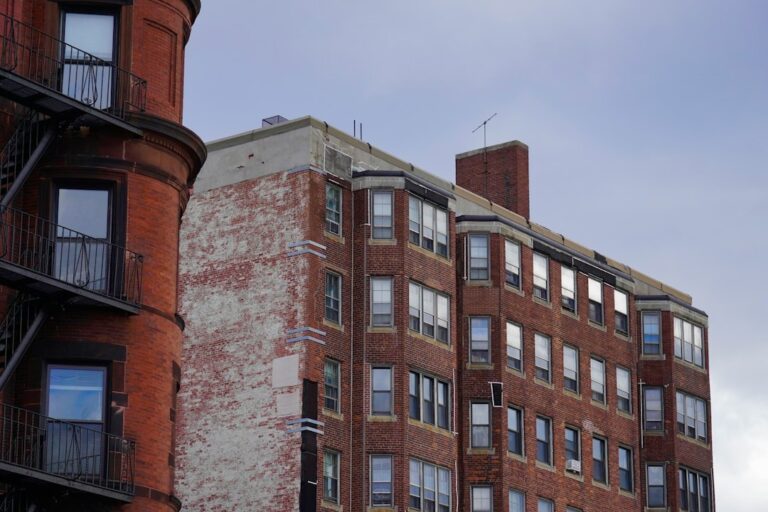

Newark rent control rules apply to almost every apartment building in the city: annual increases are limited to the change in the Consumer Price Index, never more than 4%, and an owner who has not registered the building cannot raise rent at all. Those local limits sit on top of New Jersey statutes that restrict evictions to specific “good cause” grounds, cap security deposits, and require lead-safe certification for older rentals.
This guide walks through the city ordinance first, then the state laws that every Newark owner of a five-plus-unit building works under, and closes with a practical checklist. The code sections and dates come from the City of Newark, the New Jersey Department of Community Affairs (DCA), the state Legislature and the New Jersey Courts.
Where Newark rent control rules are written
Newark’s rent rules are in Title XIX, Chapter 19:2 of the city’s Revised General Ordinances, titled “Rent Control Regulations; Rent Control Board.” The current framework dates to an ordinance adopted September 5, 2017, and the chapter has been amended several times since, including in September 2024 and twice in 2026 (May 20 and June 17). The full, current text is published on the city’s Chapter 19:2 rent control code on eCode360, and that is the version an owner or attorney should read before making any rent decision, because amendments can change definitions, surcharge procedures and fees.
Two features make Newark’s version of rent control broader than many owners expect:
- Section 19:2-2.1, added in August 2023, states that all multiple dwellings in the city are subject to rent control. The code defines a multiple dwelling as a building with one or more apartments, so coverage does not start at some higher unit count.
- The code defines “owner occupied” (four units or fewer with the owner living in one), but it does not list owner occupancy as an exemption. Owners of small buildings should not assume they fall outside the ordinance.
How the annual increase is calculated
Under Section 19:2-3.1, when a lease expires the landlord may not raise rent by more than the percentage change in the Consumer Price Index. The measurement window is specific: it runs from 15 months before the proposed increase to three months before it. Whatever the index shows, the ordinance adds a ceiling: “In no case shall the allowable rent increase exceed 4%.” The limit applies once per 12-month period.
Three details matter for anyone underwriting rent growth in a Newark building:
- No vacancy decontrol. The limit holds regardless of tenant turnover, a change of ownership or a vacancy. A unit that turns over does not reset to market rent.
- Registration is a condition. No annual increase is allowed if the landlord has not met the registration requirements or if the dwelling is not in “substantial compliance” with applicable codes.
- The pandemic freeze counts as zero. A mayoral executive order froze increases on rent-controlled units retroactive to April 1, 2020. It was rescinded effective September 18, 2023, and the city treats the freeze period as 0% with no retroactive catch-up, according to the Newark Office of Rent Control.
The city publishes a CPI table rather than a single headline percentage, so the practical step is to confirm the allowable figure for a given lease date with the Office of Rent Control before sending a renewal notice.
Registration, fees and the documents behind them
Registration is annual and covers every dwelling unit in the building, including units used for short-term rentals. If anything on the filing changes, such as ownership, managing agent or unit configuration, an amended statement is due within 20 days under Section 19:2-9.8.
The city’s Rent Registration Statement form (dated April 2025) sets the fees:
- Annual fee: $50 per building plus $10 per unit.
- Late fee: $100 plus $20 per unit for each year past due, charged on top of the annual fee.
- Required attachments include a Certificate of Habitability and a Lead Safe Certificate.
That last point links rent control to the city’s inspection programs. An owner who has fallen behind on habitability inspections or lead certification will have trouble completing registration, and without registration there is no lawful increase.
Exemptions and surcharges in Newark’s code
Section 19:2-2 lists the properties outside rent control. The list is narrower than in some New Jersey towns:
- Public housing.
- Transient hotel and motel rooms.
- Commercial space.
- Certain government-subsidized or otherwise rent-regulated units, only while the subsidy or regulatory contract lasts.
- New construction (Section 19:2-18.1), for the length of the initial mortgage amortization or 30 years, whichever is less, or 30 years from completion if there was no initial mortgage.
- Rehabilitated vacant buildings (Section 19:2-18.2), for five years, if the building sat vacant 18 months or more, the rehab cost more than 50% of fair market value, and the Rent Control Board approves.
Major new improvement and other surcharges
Owners who invest in a building are not limited to the CPI increase forever. Section 19:2-7 allows a “major new improvement” surcharge, but the procedure is strict. The landlord must notify the Rent Control Board and the tenants at least 60 days before the surcharge takes effect, and no surcharge is allowed for work finished more than 24 months before notice to the Board. The code also provides for surcharges tied to taxes, water and sewer costs and hardship. Utility surcharges are capped by building size: 15% for buildings with 30 units or fewer, 5% for 31 to 200 units and 3% for more than 200 units.
Penalties and the Rent Control Board
The Rent Control Board hears rent-adjustment petitions. It does not hear lease-breach, discrimination, harassment or retaliation claims, which go elsewhere. After notice and a hearing, the Board can impose a penalty of up to $500 per violation of Chapter 19:2.
Rules that reach units outside rent control
Because coverage is so broad, few Newark apartments escape the ordinance. For those that do, the city adopted an unconscionable rent increase ordinance in 2023. According to the city’s June 2023 announcement on unconscionable rent increases, increases above 5% a year on apartments that are not rent-controlled are treated as unconscionable, with fines of up to about $1,200 per apartment. Public housing is excluded.
Newark’s citywide registration and inspection program
Separate from rent registration, the Municipal Council approved a citywide rental registration and inspection program on April 5, 2023. The city’s rental registration announcement lays out the requirements, administered by the Department of Economic and Housing Development:
- Register every rental unit, listing owner, maintenance, fuel and 24/7 emergency contacts. Owners outside Essex County must name an in-county agent.
- Allow a city inspection at least every three years and at each change of occupancy.
- Pay a $50 inspection fee per unit, $50 per re-inspection and $100 per unit for non-compliance. Owner-occupied units pay no fee.
- A unit that passes receives a Certificate of Habitability; a unit that fails cannot be leased until it is fixed.
- Violations can bring fines of up to $1,250 each.
Lead-safe certification in Newark
Newark also has its own lead-safe ordinance in Chapter 16:3, Article 7, most recently amended in May 2025. Rentals built before 1978 must be inspected, then re-inspected at least every three years or at tenant turnover. Certificates are valid for two years and must be given to new tenants and attached to the lease. Fees are a $20 state fee and a $25 city filing fee per unit. Refusing access can bring a fine of up to $300 per unit, and failing to cure a hazard within 30 days can cost up to $1,000 per week.
The city rule tracks the state’s lead-safe law, P.L.2021, c.182. That law took effect July 22, 2022 and required a first inspection of pre-1978 rentals by July 22, 2024 or at tenant turnover, whichever came first. The DCA’s lead-safe certification guidance notes an exemption for multiple dwellings that have been registered with the state for at least ten years with no outstanding lead violations.
New Jersey eviction law: good cause only
New Jersey’s Anti-Eviction Act, N.J.S.A. 2A:18-61.1, limits evictions to one of 18 lettered grounds (a through r), such as nonpayment, disorderly conduct, damage to the premises and habitual late payment. The only residential exemptions are owner-occupied buildings with no more than two rental units and transient hotel and motel guests, so every five-plus-unit building is covered. The text of the Anti-Eviction Act is posted by the DCA.
In practice, the Act means a lease expiration is not, by itself, a reason to remove a tenant. Notice periods vary by ground, according to a DCA bulletin on eviction grounds:
- Nonpayment: generally no notice to quit is required, except 14 days in federally subsidized housing.
- Disorderly conduct or damage: three days, and disorderly conduct also requires a prior notice to cease.
- Violations of rules or lease covenants: one month.
- Permanent retirement of the building from residential use: 18 months.
- Conversion to a condominium or cooperative: three years.
Cases are filed in the Superior Court, Special Civil Part, Landlord/Tenant section, by mail or through the court’s JEDS online system. The filing includes a verified complaint, a Landlord Case Information Statement, the lease and the landlord registration statement (unless exempt), and trial is set at least 21 days after service.
Tenant counsel in Newark eviction cases
Newark created an Office of Tenant Legal Services by ordinance on December 19, 2018. It provides free representation in eviction cases to tenants with gross household income at or below 200% of the federal poverty level, with an exception for infirm applicants 60 or older. Owners should expect that a meaningful share of contested cases will involve a represented tenant.
State rules on deposits, screening and disclosure
Several other New Jersey statutes shape day-to-day leasing in Newark.
Security deposits
Under N.J.S.A. 46:8-19 and the DCA’s security deposit bulletin (revised July 2025):
- The deposit is capped at 1.5 months’ rent, and any annual increase in the deposit is limited to 10% of the current amount.
- Landlords with ten or more units must hold deposits in an insured New Jersey money market fund or a variable-rate account at an insured New Jersey bank.
- Within 30 days of receiving the deposit, the landlord must notify the tenant in writing of the bank name and address, account type, interest rate and amount.
- Interest belongs to the tenant and is paid yearly in cash or as a rent credit.
- The deposit, with an itemized list of deductions, is due back within 30 days after the lease ends, or within five business days after a fire, flood, condemnation or evacuation.
- Wrongful withholding can cost double damages.
Screening: criminal history, income source and fees
The Fair Chance in Housing Act (effective January 1, 2022) limits criminal-history screening. Before a conditional offer, a landlord may ask only about lifetime sex-offender registration or a conviction for manufacturing methamphetamine in federally assisted housing. After the offer, look-back periods are six years for first-degree offenses, four years for second- and third-degree offenses and one year for fourth-degree offenses, with no time limit for certain serious crimes. Penalties run up to $1,000 for a first violation, $5,000 for a second and $10,000 after that. The Act does not apply to owner-occupied buildings of four or fewer units.
The Law Against Discrimination also bars refusing or discouraging applicants who pay with Section 8 vouchers, state rental assistance, SSI, child support or other lawful income. Advertising “No Section 8” is illegal.
Application fees are now capped. P.L.2025, c.405, approved January 20, 2026 and effective May 1, 2026, limits application and similar fees to $50, adjusted yearly for inflation. Fines reach $500 for a first offense, $750 for a second and $1,000 after that, and overcharges must be refunded. The text is in the application fee law, P.L.2025, c.405.
Disclosures and filings
- Truth in Renting: owners must give each new tenant the DCA’s Truth in Renting guide at or before move-in and post it in the building. The penalty is up to $100 per offense.
- Flood risk: since March 20, 2024, landlords must tell prospective tenants whether the property sits in a FEMA Special or Moderate Flood Hazard Area and disclose any known flooding.
- Landlord identity: owners of multiple dwellings file a registration with the DCA’s Bureau of Housing Inspection listing owners, an in-county agent, a 24-hour emergency contact and mortgage holders. An unregistered landlord cannot obtain a judgment for possession until the filing is made.
- Multiple dwelling registration: buildings with three or more units register under the Hotel and Multiple Dwelling Law for $100 per building, plus an annual certification of $25 per building (capped at $100 for owners with more than four buildings). Since a 2019 amendment, state inspections follow a tiered cycle of seven, five or two years depending on how quickly violations are corrected.
- Late fees: tenants who are seniors receiving Social Security or a government pension, or who receive SSDI, SSI or Work First NJ, get five business days before a late fee can be charged when rent is due on the first.
What these rules mean for Newark building owners
Taken together, the city and state layers reward owners who keep paperwork current and plan capital work carefully. A few practical takeaways:
- Treat registration as revenue protection. An unregistered or out-of-compliance building cannot take its annual increase, and a missing state landlord registration can stall an eviction. Calendar the annual filing and the 20-day amendment window.
- Underwrite rent growth at the CPI formula, capped at 4%, with no reset on turnover. A buyer will do the same, so a rent roll with units far below market tends to stay that way.
- Document capital projects for surcharges as you go. The 60-day notice and 24-month look-back mean a surcharge application assembled long after the work is done may be lost.
- Keep inspection status clean. Certificates of Habitability and lead-safe certificates feed directly into rent registration, so a failed inspection has knock-on effects.
- Budget for screening limits. Fair chance rules, source-of-income protections and the $50 fee cap all change how applications are processed.
These obligations also travel with the property. When a building changes hands, the tenants, their lease terms and the registration history come with it, which is why buyers ask for rent registration statements early in due diligence. Owners weighing a sale can compare how rules differ across states in our rent control and property tax guide by state, see other New Jersey markets on our New Jersey market overview, or read our Newark market page for local context on how Skyline Capital approaches buildings in the city.
Keeping up with changes
Newark’s rent control chapter has been amended repeatedly, most recently in 2026, and state law changed again this year with the application fee cap. Before relying on any figure in a lease, renewal notice or surcharge application, owners should check the current code text and confirm the allowable increase with the Office of Rent Control. The ordinance itself, the DCA bulletins and the court’s filing guidance are the authoritative sources, and they are updated more often than most owners realize.