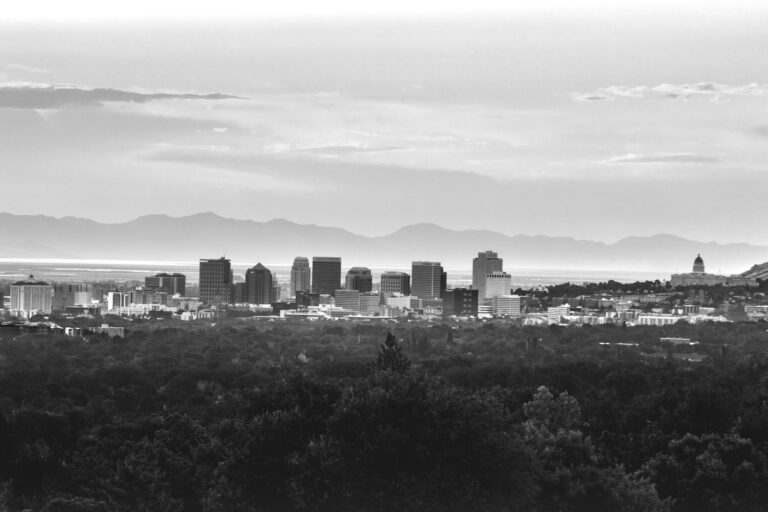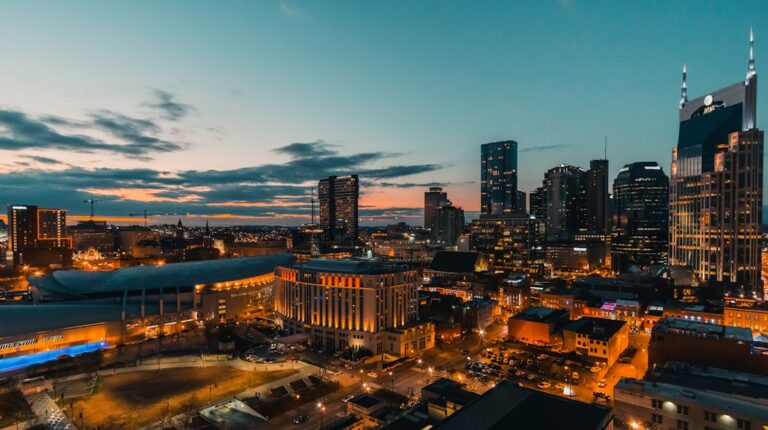
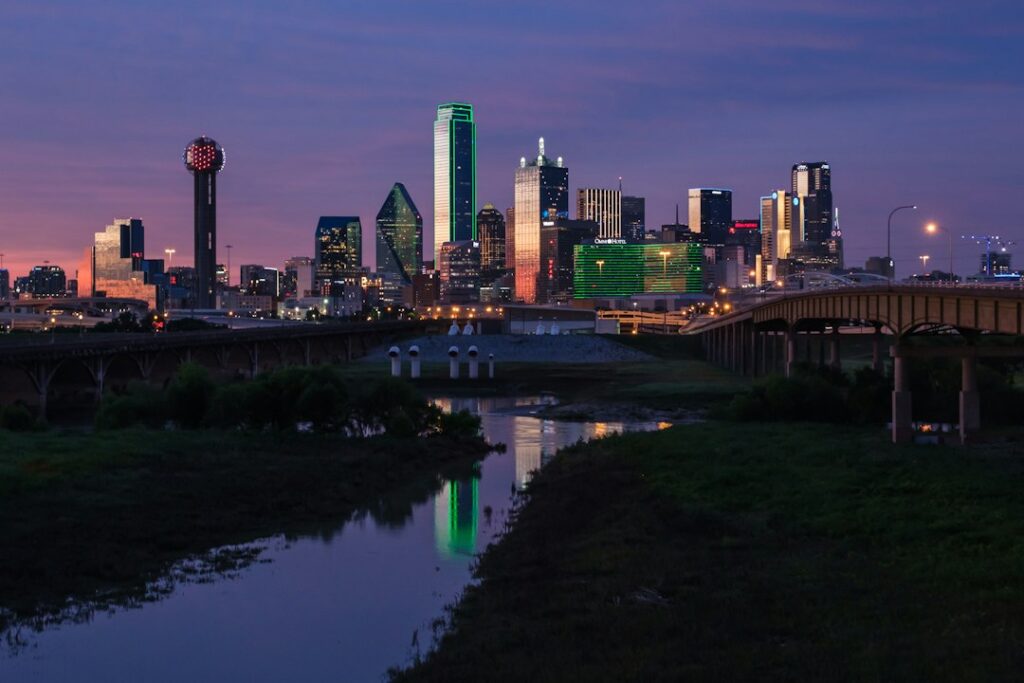
Dallas apartment submarkets range from high-rise towers in Uptown and converted office buildings Downtown to 1920s streetcar apartments in Old East Dallas, dense 1970s garden complexes in Vickery Meadow and new mid-rise construction in West Dallas. Each area has its own housing stock, rules and renter base, so the city behaves less like one apartment market than like a dozen neighboring ones.
This guide focuses on the City of Dallas, the largest city in the Dallas–Fort Worth metro. It starts with the citywide numbers, then moves neighborhood by neighborhood through the areas apartment owners most often ask about, describing what was built there, when, and under what zoning or district rules. It closes with what the map means for someone holding or evaluating a building.
How to read Dallas apartment submarkets
Dallas is the seat of Dallas County, a role it has held permanently since an 1850 vote, but the city’s taxable property spreads into four appraisal districts: Dallas, Collin, Denton and Rockwall. A city memo reported in 2024 put the certified taxable value at $215.1 billion, with about $204 billion in Dallas County and the rest mostly in Collin and Denton. An apartment building’s county matters because it determines which appraisal district values it.
The city is large and renter-heavy. The 2020 census counted 1,304,379 residents, and the Census Bureau estimated 1,329,491 on July 1, 2025. According to Census QuickFacts for Dallas, 42.4% of occupied homes were owner-occupied in the 2020–2024 American Community Survey, meaning roughly 57.6% of households rent. Median gross rent over that period was $1,472.
Texas sets the regulatory backdrop. Under Texas Local Government Code Section 214.902, a city may adopt rent control only after finding a housing emergency caused by a disaster, and only with the governor’s approval, so in ordinary conditions rent control is effectively off the table in every Dallas neighborhood. What does vary by neighborhood is zoning: planned development districts, conservation districts, historic districts and special improvement districts all shape what can be built next to an existing building.
Uptown and Oak Lawn: towers under PD-193
North of downtown, Uptown and Oak Lawn hold the city’s densest concentration of mid- and high-rise apartments. Much of the area is governed by Planned Development District 193, the Oak Lawn special purpose district, which runs from the West End north through Uptown, Oak Lawn, Knox and part of the Medical District. Some multifamily land within it allows unlimited height, subject to FAA approval, which is one reason new towers keep appearing beside older low-rise buildings.
Uptown also has its own management layer. The Uptown Dallas Public Improvement District was created in 1993 and is managed by Uptown Dallas Inc. Property owners in the district, about 2,181 properties, pay an assessment for added services. The district has been renewed in 2000, 2005, 2012 and 2019, and its current term runs through December 31, 2026, so owners will see a renewal decision soon.
Transit is part of the appeal. The McKinney Avenue Transit Authority, a nonprofit founded in 1983, runs the free M-Line, a 4.6-mile heritage streetcar through Uptown, West Village, Klyde Warren Park, the Arts District and Downtown, connecting to DART at the CityPlace/Uptown station. Older low-rise buildings in the district can find themselves competing on price against new towers a block away.
Downtown Dallas: conversions and a growing resident base
Downtown has turned into a neighborhood over the past two decades, largely through office-to-residential conversions. Mercantile Place is the landmark example. According to the Urban Land Institute’s case study, the complex has 704 units across four buildings: the 1940s Mercantile National Bank tower, which reopened as 213 apartments in March 2008; the Continental office building, which opened as 203 units in January 2013; the 1904 Wilson building with 135 units; and a new-construction building, the Element, with 153 units.
The Downtown Dallas Inc. Q4 2025 State of the Market report counts about 15,943 downtown residents, 11,326 rental units plus 838 condos and townhomes, 88.0% multifamily occupancy, and 3,412 units in the pipeline. Those numbers describe a submarket where supply is still arriving. Downtown buildings tend to compete on finishes, amenities and walkability, and conversion buildings in particular can carry operating quirks, from older elevator systems to unusual unit layouts, that buyers need to price in.
The pipeline figure deserves a second look. At 3,412 units, it equals roughly 30% of downtown’s existing rental inventory. Even if only part of that pipeline is built on schedule, it implies years of new competition for lease-ups and renewals, and it suggests that downtown occupancy will depend heavily on how quickly the residential population keeps growing.
Deep Ellum, the Cedars and the Design District
Three districts around the edge of downtown share a pattern: old commercial and industrial land being filled with newer apartments and lofts.
- Deep Ellum was founded in 1873 along Elm Street just east of downtown and became one of the city’s first commercial districts for African Americans and European immigrants. Its early commercial buildings now sit among newer development east of the central business district.
- The Cedars, directly south of downtown with I-30 to its north, dates to the 1870s. Its housing today includes lofts, apartments and townhomes.
- The Design District grew on former Trinity River floodway land protected by levees begun in 1928, which was filled with postwar Trammell Crow warehouses. Redevelopment of that warehouse district began in the mid-2000s.
For owners, these are submarkets defined by new supply. A building here competes primarily with the next project down the street, and the absorption pace of each new delivery shapes rents and concessions more than citywide trends do.
Old East Dallas: streetcar-era apartments in historic districts
East of downtown, the housing stock gets older and smaller. Old East Dallas grew along early streetcar lines, and its apartment buildings reflect that history. The City of Dallas describes Peak’s Suburban Addition, designated a Landmark District and listed on the National Register in 1995, as a mix of Victorian and Prairie houses with “streetcar apartments from the 1920’s and 30’s,” and its National Register nomination notes three-story apartment buildings appearing in the 1910s and 1920s.
Individual city landmarks tell the same story. The building at 4928 Bryan Street, from 1928, is described by the city as one of the early apartment buildings in East Dallas, and the Wales Apartments at 4515 Live Oak, also from 1928, is a U-shaped garden complex tied to a trolley-line expansion.
Much of the surrounding area is protected. The Swiss Avenue Historic District, which the city calls “the first local historic district designated in Dallas,” holds about 200 homes in Revival, Prairie and bungalow styles and was listed on the National Register in 1974. Junius Heights, designated a Dallas Landmark District in 2006, has more than 800 residences in Craftsman, Prairie and Tudor styles. Historic designation limits demolition and exterior changes, which helps preserve older small apartment buildings but also means renovations need design review. Owners of a 1920s walk-up here are working with brick, plaster and old plumbing, and the reward is a scarce product that new construction cannot replicate.
Conservation districts and stabilization overlays
Not every protected neighborhood is a historic district. The city also uses conservation districts, which its planning department defines as a zoning change “that preserves an area’s physical attributes.” The City of Dallas conservation districts overview lists 17 of them, including Lakewood, the M-Streets and Vickery Place on the east side and Kessler Park, Bishop/8th and Stevens Park in Oak Cliff. Conservation districts typically regulate the scale and character of new buildings more lightly than historic districts regulate alterations.
A third tool, the Neighborhood Stabilization Overlay, regulates setbacks, garage placement and height planes to guide infill. For an apartment owner, all three tools work in two directions. They limit what a neighbor can build next door, which protects the setting that renters pay for, and they limit what the owner can do with the building and the lot. Before underwriting an expansion, an addition or a teardown, it is worth confirming which district, if any, covers the parcel.
Oak Cliff and the Bishop Arts District
Across the Trinity River, Oak Cliff combines historic districts, conservation districts and one of the city’s most visible revitalization stories. Streetcar tracks were laid on Bishop Avenue around 1903, after Dallas annexed Oak Cliff, and service ended in the late 1950s. Restoration of the commercial blocks began in the early 1980s under Jim Lake Sr., and from 1996 the firm Good Space converted neglected buildings into apartments and offices.
Transit returned in modern form. The DART-operated Dallas Streetcar runs from Union Station to Bishop Arts; its Bishop Arts extension opened on August 29, 2016, extending the line beyond its earlier end at Beckley.
Nearby residential areas are protected by different tools. The Winnetka Heights Historic District, platted in 1908 and designated in 1981 as the city’s sixth historic district, holds one-story bungalows and two-story Foursquares. Kessler Park, Bishop/8th and Stevens Park are among the conservation districts described above, each with its own standards for new construction. The result is a part of the city where older, smaller-scale housing protected by these districts sits close to newer infill and the apartments carved out of Bishop Arts’ restored buildings.
Vickery Meadow: dense garden complexes
Vickery Meadow, in northeast Dallas, is one of the city’s densest residential areas and a near-pure apartment submarket. The Vickery Meadow Public Improvement District, created in 1993 and managed by Midtown Dallas Inc., counts about 11,929 apartment units within its boundaries, and its current term runs through December 31, 2032. A Vickery Meadow tax increment financing district was created in 2006.
The complexes were built mostly in the 1970s and into the 1980s, aimed at young single renters. After the 1988 amendments to the Fair Housing Act barred discrimination against families with children, families moved in, followed by immigrants and resettled refugees. Some complexes have since faced serious code-enforcement problems. For an owner, Vickery Meadow means large, aging garden properties with heavy capital needs, a deep renter base, and close attention from city code enforcement.
Lake Highlands and the LBJ/Skillman corridor
Farther northeast, in Lake Highlands, planning has focused on the area around a rail station. In October 2014 the city adopted a study covering about 703 acres around the LBJ/Skillman DART station, addressing multifamily density and transit-oriented redevelopment. The area overlaps the Skillman Corridor TIF district, created in 2006. The planning attention reflects a familiar pattern in older suburban parts of Dallas: aging garden complexes near a rail station, where the city hopes reinvestment will raise quality without displacing existing renters.
Tax increment financing districts such as Skillman Corridor and Vickery Meadow matter to existing owners even if they never apply for incentives. TIF money tends to go into streets, lighting, parks and redevelopment projects near the station, so the surroundings of a building can change noticeably over a decade, sometimes raising rents a property can command and sometimes bringing new competition across the street.
West Dallas, rail stations and newer infill
Transit and bridges have created some of the city’s newest submarkets. DART’s light rail system runs four lines, Red, Blue, Green and Orange, over 93 miles with 65 stations, and several station areas have become apartment nodes:
- Mockingbird Station opened in 1999 with 211 lofts, linked to its rail station by a pedestrian bridge. The Urban Land Institute describes it as the first mixed-use project in Texas built specifically around a light-rail station.
- Trinity Groves, about 100 acres in West Dallas, grew up alongside the Margaret Hunt Hill Bridge, which opened in March 2012. Its Cypress at Trinity Groves apartments added 352 units in a first phase of four- and five-story buildings started in 2015.
- Vickery Meadow and LBJ/Skillman, described above, are both organized around rail stations, with city plans encouraging redevelopment near the platforms.
Newer infill brings competition but also validates locations. An older building within walking distance of a station or a new mixed-use district can benefit from the amenities and foot traffic new projects bring, provided it is maintained well enough to compete on value.
What the submarket map means for owners
Seen together, Dallas’s neighborhoods fall into a few recognizable types, each with its own questions:
- High-rise and conversion districts (Uptown, Oak Lawn, Downtown): how much new supply is coming, and how district assessments and renewals affect expenses.
- New-infill districts (Deep Ellum, the Cedars, the Design District, Trinity Groves): absorption pace and concessions at the next project down the street.
- Historic and conservation areas (Old East Dallas, Oak Cliff): design review for renovations, older building systems, and scarcity value.
- Garden-complex corridors (Vickery Meadow, Lake Highlands): capital needs, code compliance and station-area redevelopment plans.
Expense lines vary by submarket too. A building inside a public improvement district such as Uptown’s or Vickery Meadow’s pays an assessment on top of property taxes, and those districts come up for renewal on a schedule. A building in Collin or Denton County is valued by a different appraisal district than one in Dallas County. And a building in a historic or conservation district may face longer approval times and higher costs for exterior work. None of these is visible in a rent comparison, but each affects net operating income.
Comparing a building against citywide averages can mislead in a city this varied. A 1928 courtyard building in East Dallas and a 1978 garden complex in Vickery Meadow may share a ZIP code’s median rent and have almost nothing else in common. The more useful comparison is against buildings of the same era and type in the same district. Passive investors evaluating a sponsor’s Dallas strategy can apply the same lens, and our overview of passive multifamily investing covers the questions to ask. Texas markets beyond the metroplex are listed on our Texas markets page, and our Dallas–Fort Worth market page looks at the metro as a whole.