
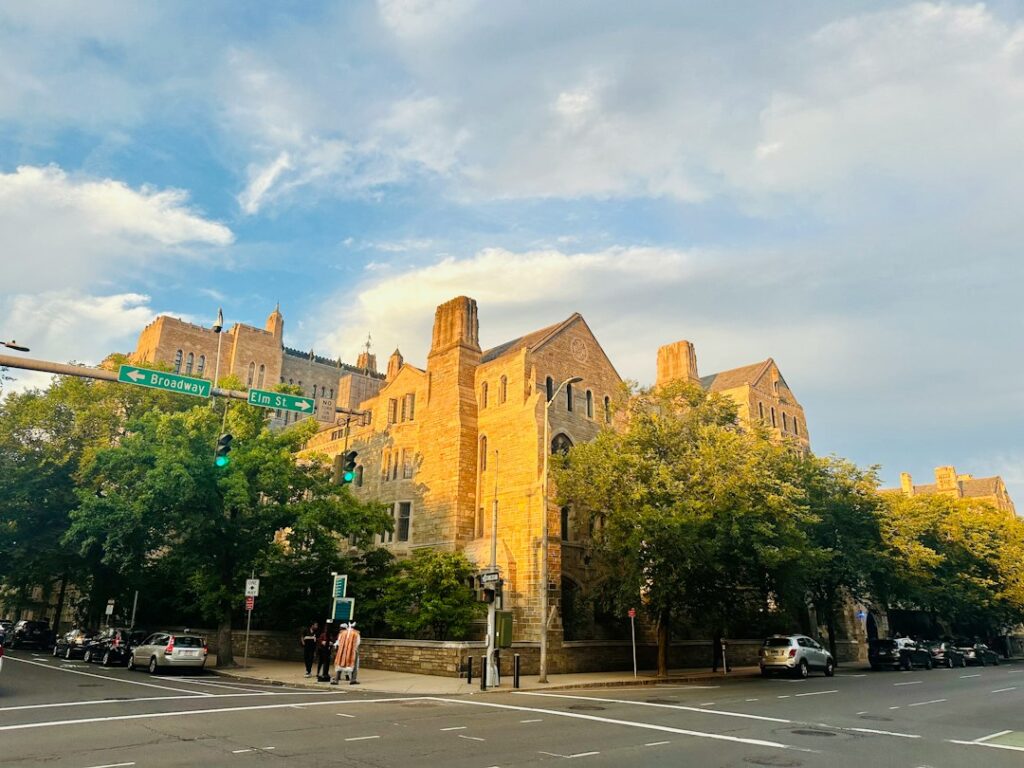
New Haven rental demand rests on an unusual foundation: roughly seven in ten occupied homes in the city are rented, and the renters filling them are tied to a cluster of large, stable institutions, led by Yale University and Yale New Haven Health, plus a life-science sector and direct rail service to New York. The result is a market where demand is driven less by in-migration booms than by a steady flow of students, clinicians, researchers and commuters, which in turn shapes which buildings lease quickly and which compete on price.
This article looks at who rents in New Haven and why, using U.S. Census Bureau data, figures published by the city’s major institutions and the most recent federal housing market profile for the region. Where a figure comes from a specific year or a single source, it is dated and attributed, because several of the most useful numbers are updated only periodically.
A renter majority in New Haven, CT
According to Census QuickFacts for New Haven city, the owner-occupied housing rate in the 2020–2024 American Community Survey was 28.4%, which means about 71.6% of occupied housing units were rented. That is a high renter share by national standards, and it reflects in part the city’s large student and institutional population.
The same survey reports:
- 54,773 households, averaging 2.29 people each.
- A median gross rent of $1,488 a month.
- A median household income of $56,851, in 2024 dollars.
- 38.9% of adults 25 and older holding at least a bachelor’s degree.
Those figures describe a city with two renter populations living side by side: a highly educated, often transient group connected to the universities and hospitals, and a base of long-term working households for whom rent is a significant share of income. Most apartment buildings serve one group more than the other, and the distinction explains a lot about rent levels, turnover and leasing seasons.
Household size points in the same direction. With an average of 2.29 people per household, demand leans toward studios, one-bedrooms and two-bedrooms rather than large family units, although roommate households of graduate students and young professionals can make larger units in the right location lease well. Owners deciding whether to combine or split units during a renovation should test both options against the renter group the building actually attracts.
Population and household trends
New Haven had 134,023 residents at the April 2020 census, and the Census Bureau’s Vintage 2025 estimate puts the population at 138,774 as of July 1, 2025, an increase of roughly 4,750 people, or about 3.5%, in a little over five years. For a long-established Northeastern city, that is meaningful growth, and because most residents rent, much of that growth shows up as rental demand.
One technical point matters for anyone pulling data. Connecticut’s eight counties stopped operating as governments in 1960, and starting with the 2022 American Community Survey the Census Bureau replaced them with nine planning regions as county-equivalents. New Haven is in the South Central Connecticut Planning Region. “New Haven County” still exists as a geographic name, and many private data providers and older federal reports use it, so county-level comparisons across years need care.
Yale University as the anchor of demand
Yale is the single largest reason New Haven’s rental market behaves the way it does. The university’s Yale Facts page, using 2025 data published in May 2026, reports:
- 15,657 students, including 6,667 undergraduates and 8,990 graduate and professional students.
- 5,842 faculty members.
- About 12,000 staff.
The graduate and professional population is the part that matters most to apartment owners. Most Yale undergraduates live in university housing, but nearly 9,000 graduate and professional students, along with postdoctoral researchers and visiting scholars, make up a large, recurring pool of renters who arrive on an academic calendar, commonly sign 12-month leases, and are replaced by a new cohort every year or two. Buildings within walking distance of campus or the medical school tend to lease in a concentrated window in late spring and summer.
Yale also says it has nearly 14,000 faculty and staff based in New Haven, close to 6,000 of whom live in the city. The rest commute, which is a reminder that there is room for more university employees to live in New Haven if suitable housing is available.
The 2026 agreement between Yale and the city
Because Yale’s property is largely tax-exempt, its voluntary payments to the city are a recurring political issue. On March 6, 2026, Yale and the city announced a new six-year agreement running through 2033 worth more than $230 million in total, with the annual payment rising to about $30 million and a one-time additional payment of $8 million, as reported by the Connecticut Mirror. For property owners, these payments matter indirectly: they are part of the city budget that the mill rate on taxable property, including apartment buildings, has to balance.
Health care and the hospital workforce
The second pillar is health care. Yale New Haven Health reports more than 31,000 employees across its five hospitals and describes itself as Connecticut’s second-largest employer. Its flagship, Yale New Haven Hospital, has 1,541 beds. Not all of those employees work in New Haven, since the system includes hospitals elsewhere in the state, but the flagship campus and the Yale School of Medicine form one of the largest concentrations of jobs in the region.
Hospital demand has a different character from student demand. Nurses, technicians, residents and fellows work around the clock, so proximity to the medical campus and easy parking or transit access are valued features. Medical residents and fellows rotate on multi-year schedules, which creates predictable turnover. Buildings near the hospital that offer modest amenities and short commutes can draw from this pool year-round rather than only during the academic leasing season.
Students beyond Yale
Southern Connecticut State University, located in New Haven, adds another sizable student base. Its fast facts report 10,027 students in fall 2025, including 6,571 bachelor’s degree students, and 1,989 students living on campus in fall 2024. With most of its students living off campus or commuting, Southern Connecticut contributes demand for lower-cost apartments and shared housing in neighborhoods near its campus.
The University of New Haven, despite its name, is in neighboring West Haven, at 300 Boston Post Road. It reported 6,719 students in fall 2026, including 4,972 undergraduates and 1,747 graduate students. Some of those students rent in New Haven, but owners and analysts should not count the university as an in-city institution when sizing demand. Taken together with Yale and Southern Connecticut State, the student population within commuting distance of New Haven’s apartments exceeds 30,000, a base that renews itself every fall.
Life sciences and the 101 College Street effect
New Haven’s biotech sector has grown out of Yale research, and its fortunes affect demand for higher-end apartments downtown. The clearest symbol is 101 College Street, a 10-story, 525,000-square-foot lab and office building developed by Winstanley Enterprises. It broke ground in June 2021 and opened in early 2024 about 90% leased, at a total cost of about $250 million including tenant improvements, according to reports from Arvinas and the Hartford Business Journal. Tenants include Alexion, Arvinas, BioLabs, BioCT and Yale, with Arvinas leasing about 160,000 square feet for its headquarters.
The sector has had setbacks as well as wins. Alexion announced in September 2017 that it would move its headquarters to Boston, taking about 400 jobs, while keeping a New Haven center of roughly 450 employees. Biohaven Ltd. lists its principal office at 215 Church Street in New Haven in its most recent annual report. For apartment owners, the lesson is that life-science employment adds a well-paid renter segment, particularly young scientists and professionals who favor downtown and nearby walkable neighborhoods, but it can be more cyclical than the university and hospital base.
Rail access and the commuter renter
New Haven Union Station is a major rail hub for southern New England. It is served by Metro-North’s New Haven Line to Grand Central Terminal, the CTrail Hartford Line north to Hartford and Springfield, CTrail Shore Line East toward New London, and Amtrak’s Acela and Northeast Regional trains. The city’s Union Station planning page reports more than 700,000 Amtrak riders and more than 1 million Metro-North riders a year, and the city is pursuing mixed-use development within half a mile of the station. For owners of existing buildings near the station, that planning push cuts both ways: it signals continued public and private investment in the area, and it will also bring new units that compete for the same commuting renters.
That connectivity supports a renter segment that works in Fairfield County, New York or Hartford but chooses New Haven for its lower housing costs and urban amenities. These renters tend to value buildings near the station or downtown, and their demand is tied to the health of employment along the Northeast Corridor rather than to the local academic calendar.
How new supply is changing the picture
The most recent federal snapshot, the U.S. Department of Housing and Urban Development’s housing market profile for the New Haven-Milford metro, dated February 2023, rated the regional rental market as balanced. Citing CoStar data, it reported apartment vacancy of 5.7% in the fourth quarter of 2022, an overall rental vacancy rate of about 7.2% and an average asking rent of $1,647. Those figures cover the whole metro and are now several years old, but they establish that the region was not a severely undersupplied market even before the most recent building wave.
The same HUD profile estimated the metro population at 864,100 and listed Yale New Haven Health, with about 29,500 employees, and Yale University, with about 19,000, as the region’s largest employers. The two institutions’ combined headcount of close to 50,000 in that profile underlines how concentrated the region’s demand base is, and why the leasing outlook for many New Haven buildings tracks institutional hiring more closely than broad state economic trends.
Since then, New Haven has permitted and built at a pace unusual for Connecticut. In his February 2025 State of the City address, as reported by the New Haven Independent, Mayor Justin Elicker said the city had issued more than 500 housing permits in the prior year, the most in the state, completed more than 1,000 units, more than 40% of them below market rate, and had more than 7,000 units in the pipeline, with a goal of 10,000 new units by 2034, at least 30% of them affordable. Recent downtown examples include:
- The Archive, 848 Chapel Street: 166 units, developed by Article Student Living.
- 19 Elm Street: 96 market-rate units by the Hakimian Organization, which broke ground in October 2024 and began leasing in July 2026. Its approval predates the city’s inclusionary zoning rule, which otherwise requires 15% of units to be below market rate.
New construction competes most directly with older Class A and well-renovated Class B buildings downtown and near campus. Older stock in outlying neighborhoods, which serves a different renter, is less exposed to new deliveries and more sensitive to local incomes and to the condition of the building itself.
Tenant organizing and state rules that shape leasing
Demand does not exist in a regulatory vacuum, and New Haven has been at the front of Connecticut’s tenant policy changes. On September 6, 2022, the Board of Alders voted unanimously to make New Haven the first city in Connecticut to recognize tenant unions under local law, according to Connecticut Public. Recognized unions can participate in investigations by the city’s Fair Rent Commission, which reviews complaints that a rent increase is excessive. A 2022 state law required towns of 25,000 or more people to establish such commissions by July 1, 2023, and New Haven’s had seen its caseload rise from about 52 complaints a year from 2015 to roughly 300 a year by 2023, as reported by the Connecticut Mirror.
State rules adopted in 2023, effective October 1, 2023, also apply to every New Haven building:
- Tenant screening fees are capped at $50, adjusted for inflation, and other application fees and move-in or move-out fees are prohibited.
- Security deposits must be returned within 21 days.
- Late fees can be charged only after a nine-day grace period and are capped at the lesser of $5 a day up to $50, or 5% of the overdue rent.
For an owner, these rules mean that the rent a market will bear is only part of the picture. Large increases on long-term tenants can be challenged before the Fair Rent Commission, and fee income that was once common in leasing is now limited.
What New Haven rental demand means for owners
Pulling these threads together, several practical conclusions follow for anyone who owns or is evaluating an apartment building in the city:
- Know which renter the building serves. A walk-up near the medical campus, a downtown building near new construction and a triple-decker in an outer neighborhood face different demand and different competition.
- Plan around the academic calendar. Buildings near Yale or Southern Connecticut State should time lease expirations to the late-spring and summer leasing window.
- Watch the pipeline. Thousands of units in the city’s pipeline mean that newer buildings downtown will face more competition, and concessions at new properties can set the pace for nearby rents.
- Budget for regulation. Fair Rent Commission reviews, tenant unions and the 2023 state fee limits all affect how quickly rents and other income can grow.
- Value the anchors. Yale and Yale New Haven Health are long-established institutions, and their scale gives New Haven a deep, steady base of renter demand.
Demand is only one input into what a building is worth; income, expenses and cap rates do the rest. Our apartment building value calculator shows how rent and expense assumptions translate into value, and the Connecticut market overview compares New Haven with other cities in the state. Owners considering their options can also visit our New Haven market page, which explains how we approach buildings across the city’s neighborhoods.