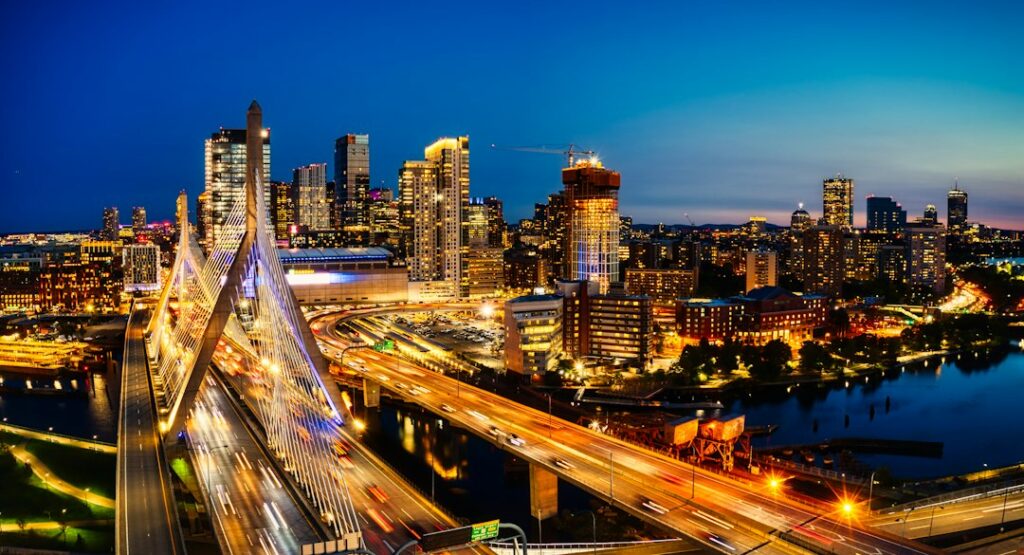
Boston is loosening zoning in selected neighborhoods and offering tax breaks to restart stalled projects, yet new apartment construction has slowed sharply. For owners of existing buildings, that combination means limited new competition in the near term, alongside new rules that affect what can be built next door and what an older building costs to operate.
A pipeline that has slowed down
Approvals have stayed fairly steady. The Planning Department approved 3,773 net new residential units in 2025, compared with 3,575 in 2024. Construction starts have not kept pace. Mayor’s Office of Housing data reported by CommonWealth Beacon show housing starts falling from 4,406 in 2022 to 2,389 in 2024. When the city proposed targeted tax abatements in September 2026, officials said only three market-rate projects of 100 or more units had started construction in 2025.
The city’s own response points to financing as the bottleneck: its incentive programs target projects that already hold approvals but have not been able to close their funding. How many of those projects eventually break ground will shape how much new supply existing buildings compete with over the next few years.
Squares + Streets and neighborhood rezoning
The most visible zoning change is Squares + Streets. In April 2024 the Boston Zoning Commission adopted a set of new districts, labeled S0 through S5, designed to allow more housing and mixed uses around neighborhood business districts and transit. Parking minimums are eliminated in these districts. The districts apply only after a local planning process maps them onto a specific area.
So far the Squares + Streets program has been applied in two places:
- Mattapan Square, the first area rezoned, beginning in 2024
- Roslindale Square, approved by the Zoning Commission in May 2025
Cleary Square in Hyde Park has a revised draft plan and zoning map, released after a spring 2026 comment period, and Fields Corner in Dorchester has a plan underway. Neither has been adopted. A separate Neighborhood Housing zoning draft, released in July 2026 for Hyde Park, Roslindale and West Roxbury, focuses on expanding where accessory dwelling units are allowed without a variance. Today, detached ADUs are allowed by right only in Mattapan. For owners near rezoned squares, the likely change is more mixed-use infill on main streets without the variance process that used to slow it down.
Affordability rules on new buildings
Boston’s inclusionary zoning, codified as Article 79 and in effect since October 2024, now reaches more projects. The city’s inclusionary zoning rules apply to developments of seven or more units, down from ten, and require 17% to 20% of units to be income-restricted depending on project type, up from 13%. Large rental projects choose between 18% of units at an average of 50% of area median income or 20% at an average of 60%. Either option includes a set-aside for voucher holders.
Alongside those requirements, the city has added incentives aimed at getting approved housing built:
- The office-to-residential conversion program, launched in 2023, offers up to a 75% property tax abatement for up to 29 years. Applications are open through December 31, 2026, and more than 1,500 homes have been proposed.
- A $110 million Housing Accelerator Fund, announced in November 2024, fills financing gaps on approved projects that stalled.
- The September 2026 abatement proposal would cover four stalled rental projects in Charlestown, Allston and Brighton totaling about 1,400 homes, pending a board vote.
Rules that reach existing buildings
Not every change targets new development. In August 2025 the Zoning Commission approved the first major update to Article 80, the city’s large-project review process, in about 30 years. One change matters for renovation: substantial rehabilitation of larger buildings moved from mandatory review to a notification process, which can shorten timelines for major upgrades.
The Building Emissions Reduction and Disclosure Ordinance, known as BERDO, has the most direct cost impact. Residential buildings with 15 or more units must report energy and water use every year by May 15. Emissions limits began in 2025 for residential buildings with 35 or more units and phase in for buildings with 15 to 34 units in 2030, tightening toward net zero by 2050. Owners who miss the limits face alternative compliance payments or fines. For an older walk-up, that can mean heating system, insulation or electrification work that a buyer will price in.
Reading the market as an owner
Taken together, these trends point in a few directions for owners of existing Boston buildings:
- Slow construction starts limit near-term competition from newly built supply
- Rezoned squares in Mattapan and Roslindale, and possibly Hyde Park, may see more mixed-use infill over time
- Emissions compliance under BERDO is becoming part of every building’s capital plan and every buyer’s due diligence
Owners can test how these factors affect value with our apartment building value calculator, and the Massachusetts market overview covers the rest of the state. For owners considering selling an apartment building in Boston, that page explains how we approach properties in the city.