
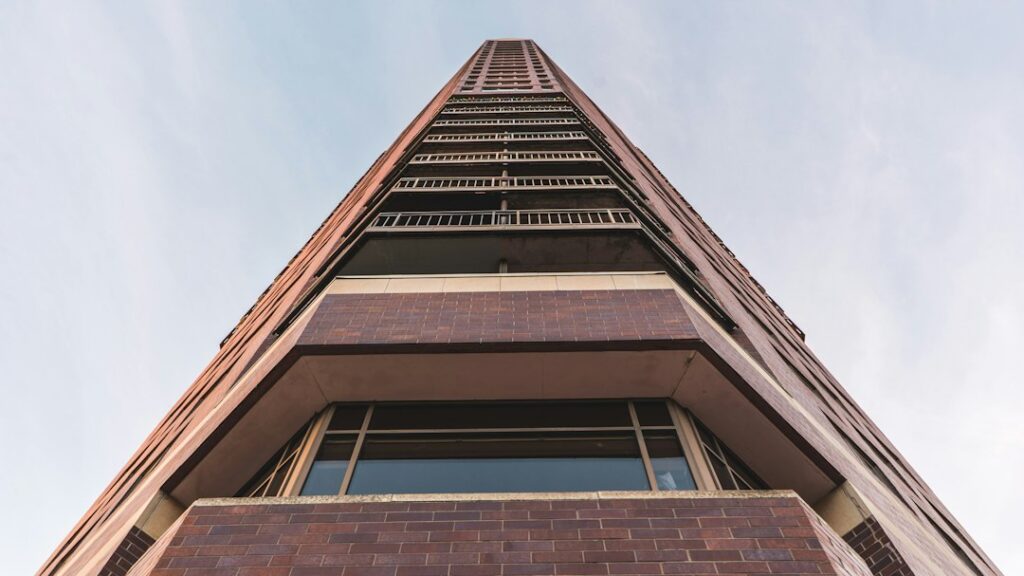
Des Moines apartment buildings with three or more units are now taxed as residential property under Iowa law, after the state folded its separate “multiresidential” class into the residential class beginning with the January 1, 2022 assessment. That change, together with Iowa’s statewide rollback and Polk County’s odd-year revaluation cycle, determines how much of an apartment building’s value is actually taxed.
From commercial to residential in less than a decade
Iowa’s treatment of apartments has changed twice in recent memory. Before 2015, buildings with three or more units were generally assessed as commercial property. Legislation passed in 2013, known as SF 295, created a new multiresidential classification beginning with the 2015 assessment, covering parcels primarily used for human habitation with three or more separate dwelling units, along with mobile home parks, manufactured home communities, land-leased communities and assisted living facilities.
The multiresidential rollback was designed to step down until it matched the residential rollback. As the law firm Ahlers & Cooney explained in 2021, the two were set to equalize as of January 1, 2022, so House File 418 removed the multiresidential classification and reclassified those properties as a subdivision of residential property. A 2023 Act then specified that property classified as multiresidential before 2022 is left out of the calculation that sets the residential rollback, according to a January 2026 Iowa Legislative Services Agency briefing on assessment limitations. In practice, apartment values do not feed into the rollback percentage, even though apartments receive it.
How the residential rollback works
Iowa assesses property at market value, then applies a statewide “rollback” percentage to arrive at taxable value. The Iowa Department of Revenue calculates the rollback each year to hold growth in statewide taxable residential value to no more than 3% a year, with a further limit tied to agricultural value growth. According to the Legislative Services Agency briefing:
- The residential rollback was 46.3428% for assessment year 2023.
- It was 47.4316% for assessment year 2024, which applies to taxes for fiscal year 2026.
- Commercial and industrial property, by comparison, has the first $150,000 of value taxed at the residential rollback and the remainder at 90%.
The difference is significant for owners. A Des Moines apartment building assessed at $2 million in assessment year 2024 would have a taxable value of about $949,000 at the 47.4316% rollback. If the same value were taxed under the commercial formula, its taxable value would be roughly $1.74 million, about 83% higher, before any levy rate is applied.
Polk County’s revaluation cycle
The Polk County Assessor’s assessment FAQ sets out how the 2025 revaluation worked. Iowa reassesses real property in odd-numbered years, and the 2025 assessment notices for Polk County were mailed on March 31, 2025. The assessor used 2024 sales to set the new values and noted that properties were, on average, selling for about 10% more than their 2023 assessments.
Because the rollback limits statewide growth rather than any single property, the assessor estimated that taxable value for the typical property owner would rise only about 3%. Taxes based on the 2025 assessment are payable in two installments, in September 2026 and March 2027.
On that schedule, the next countywide revaluation falls in 2027, so owners should expect the next broad round of new values that spring.
Who sets the tax rate
The assessor sets value; the tax bill comes from levies set by several bodies. Polk County lists the county itself, cities, school districts, public hospitals, the assessor and community colleges among the taxing authorities that each determine part of a property owner’s bill. In Des Moines, the total levy depends on which school district and taxing district a parcel sits in, so two apartment buildings with the same taxable value can owe different amounts.
What owners should do with this
For anyone holding or buying a Des Moines apartment building, a few practical steps follow:
- Confirm the parcel’s classification on the Polk County Assessor’s records. A building with three or more dwelling units should be classified residential, and any other classification is worth asking the assessor about.
- Model taxes using taxable value after the rollback, not assessed value, and update the rollback each year when the Department of Revenue certifies it.
- Watch the calendar in revaluation years. Polk County offers an informal review with the assessor from April 2 to April 25, and formal protests to the Board of Review can be filed from April 2 to April 30, the window set in Iowa Code section 441.37.
- When reviewing older offering memorandums or pro formas, check whether taxes were underwritten under the pre-2022 multiresidential or pre-2015 commercial treatment.
Property taxes are usually one of the largest line items in an apartment budget, so these rules flow directly into value. Our overview of rent control and property tax rules by state puts Iowa’s approach in national context. For more on the local market, see our Des Moines market page or explore other Iowa apartment markets.