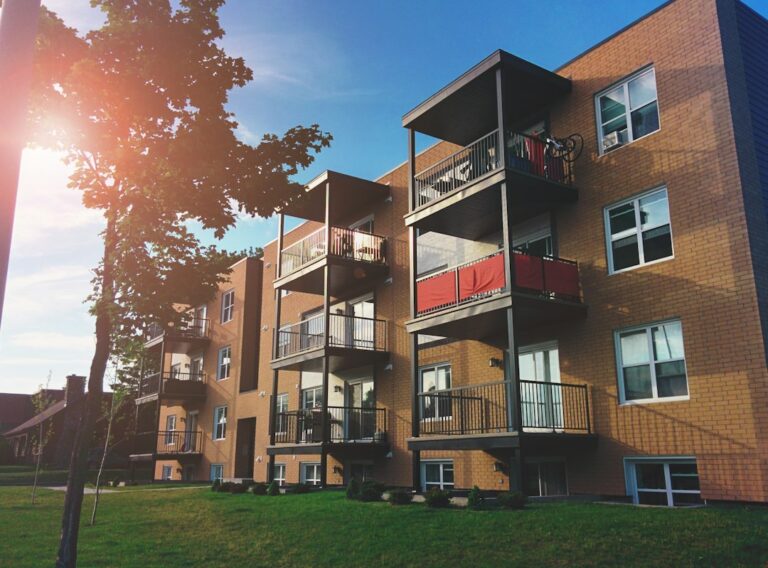
Las Cruces rental demand rests on three steady anchors: a growing New Mexico State University whose dorms are nearly full, a large federal and defense payroll centered on White Sands Missile Range, and a shortage of affordable rental units that the city itself estimates at about 5,600 units for low-income renters. Population growth has been modest but consistent, and a large share of households rent, which keeps occupancy in the city’s apartment buildings supported even as new affordable projects open.
This article walks through each of those drivers with the most recent public figures, explains how they show up in rents and voucher limits, and closes with what the picture means for owners of existing apartment buildings in Doña Ana County’s largest city.
The Las Cruces rental demand picture in numbers
Start with the basics from the Census Bureau’s QuickFacts for Las Cruces:
- Population was 111,385 at the April 2020 Census and an estimated 116,978 on July 1, 2025, growth of about 5% in a little over five years.
- Doña Ana County as a whole grew from 219,561 to an estimated 229,091 over the same period, an increase the Census Bureau puts at 4.3%.
- The owner-occupancy rate in the city was 55.9% in the 2020–2024 American Community Survey, which means roughly 44% of occupied homes are rented. Countywide, owner occupancy is higher at 65.5%, so renters are concentrated in the city.
- Median gross rent in the city was $974 over 2020–2024, compared with $934 for the county.
- Median household income was $55,422 in the city (in 2024 dollars), and the city’s poverty rate was 22.6%.
Those numbers describe a market that is growing slowly rather than booming, but one where renting is the norm for a very large slice of households. A poverty rate above one in five also means that a meaningful portion of renter demand is price sensitive, which is why subsidized and voucher-supported housing play a large role later in this story.
New Mexico State University and the student renter base
New Mexico State University is the single most visible source of renter demand in Las Cruces, and its enrollment has been rising. The university reported 16,076 students on the Las Cruces main campus in fall 2025, an increase of 4.3% from the prior year, according to the NMSU provost’s office. That built on a fall 2023 count of 14,794, which had already pushed past the pre-pandemic fall 2019 level of 14,296.
Campus housing is close to capacity
On-campus housing has not kept pace. In a presentation to a New Mexico legislative committee in August 2025, NMSU said it expected about 3,200 beds to be in use for fall 2025 at 98–99% projected occupancy. The NMSU housing presentation to legislators also reported:
- A waitlist of 427 students in fall 2024 and 80 students in fall 2025.
- A note that fall 2026 occupancy “may reach or exceed 100%.”
- No new residence hall on the schedule, alongside an estimated $220 million to $280 million in deferred maintenance needs in existing housing.
When a university’s own beds are full and no new hall is planned, the overflow goes to the private market. Students who would otherwise live on campus look for one- and two-bedroom apartments, shared houses and small apartment buildings within a short drive of the university.
Students as a share of all renters
The scale of student demand was already large before the recent enrollment gains. A 2022 housing market analysis by the U.S. Department of Housing and Urban Development found that off-campus students made up more than 10% of all renter households in the Las Cruces area, and that NMSU employed more than 3,500 people on the Las Cruces campus. Those employees are a second, quieter source of demand: faculty, staff and graduate assistants who rent while they settle in.
White Sands, Spaceport America and the federal payroll
The largest employer in the region sits east of the Organ Mountains. The U.S. Army says White Sands Missile Range employs more than 6,500 soldiers, civilians and contractors, who commute from El Paso, Las Cruces and Alamogordo. HUD’s 2022 market analysis put the range’s direct workforce at about 5,350 (roughly 5,000 civilians and 350 active-duty military) and estimated its annual economic impact at $1.9 billion.
Federal and defense employment matters to apartment owners for a specific reason: it tends to be stable through ordinary business cycles, and it brings in a steady flow of new arrivals, such as contractors on multi-year assignments, junior civilian employees and military personnel, many of whom rent before deciding whether to buy.
Spaceport America adds a newer layer. According to the spaceport’s FY2025 annual report, published by the New Mexico Economic Development Department, the spaceport supported 590 jobs in Doña Ana County in 2024, 256 of them direct, along with $88 million in value added and $57 million in labor income in the county. The spaceport keeps its corporate office in Las Cruces. Those are modest numbers next to White Sands, but they represent a technical workforce that is likely to rent at least initially.
The broader employer base
Beyond the university and the range, HUD’s 2022 analysis lists a group of large employers each with between 1,000 and 4,999 workers: NMSU, Memorial Medical Center, Walmart and the City of Las Cruces. MountainView Regional Medical Center and Doña Ana Community College each employed between 500 and 999.
That mix of two hospitals, a community college, a university and local government is typical of a regional hub. It produces a renter base that is heavy on healthcare workers, educators and public employees, groups that value proximity to work and tend to rent mid-priced units rather than luxury product.
What the latest labor data shows
The Bureau of Labor Statistics publishes monthly figures for the Las Cruces metropolitan area on its economy at a glance page. As of mid-October 2026, the most recent preliminary data showed:
- An unemployment rate of 5.3% in August 2026, down from 6.2% in July (not seasonally adjusted).
- 86,300 nonfarm jobs in September 2026, up 3.6% from a year earlier.
- Government as the largest sector at 23,300 jobs, followed by education and health services at 19,600.
Preliminary monthly numbers are often revised, and a single month should not be over-read. Still, the composition is telling. Government and education-and-health together account for more than half of all nonfarm jobs in the metro, which reinforces the point that Las Cruces renter demand is tied to institutions rather than to a single private industry.
Rents, voucher limits and price sensitivity
Las Cruces rents are modest, and the market’s price ceiling is shaped in part by federal voucher limits. HUD’s FY2026 Fair Market Rents for the Las Cruces metro are:
- Efficiency: $744
- One bedroom: $951
- Two bedrooms: $1,042
- Three bedrooms: $1,449
- Four bedrooms: $1,580
The two-bedroom figure was $1,041 in FY2025, so the voucher benchmark was essentially flat year over year. For owners who rent to Housing Choice Voucher holders, Fair Market Rents set the general range a housing authority will work within, which makes them a practical ceiling for a large slice of the market.
HUD’s 2022 analysis gives a sense of how tight the market had become before the recent affordable deliveries. As of April 1, 2022, it measured apartment vacancy at 1.2% and an average apartment rent of $895, up nearly 13% from a year earlier. Those figures are now more than four years old and should be read as history rather than as current conditions, but they show how little slack the market had when the city began pushing new affordable supply.
What HUD expected for new supply
The same 2022 study estimated demand for 490 new rental units across the Las Cruces area over its three-year forecast period ending in 2025, and counted about 100 units under construction at the time. That is a small number for a metro of more than 220,000 people, and it reflects how measured growth has been. The affordable projects described below have since added several hundred income-restricted units, which is substantial relative to that forecast.
Ownership as the alternative
Renter demand also depends on how hard it is to buy. The Census Bureau puts the median value of an owner-occupied home in Las Cruces at $231,700 for 2020–2024. Set against a median household income of $55,422, that is a price of roughly four times income, before property taxes, insurance and today’s mortgage rates are counted. For a household earning the median, a down payment and closing costs on a typical home represent years of savings. Younger households, new arrivals on federal assignments and students’ families may therefore rent for longer than they would in a lower-cost market, which can lengthen tenancies in the city’s apartment stock.
NMSU’s enrollment history adds to that pattern. The fall 2023 increase of 3.7% was followed by the fall 2025 increase of 4.3%, so main-campus enrollment grew each fall from 2023 through 2025. Students turn over every year or two, but a growing enrollment means each departing class is replaced by a slightly larger one, which keeps leasing seasons around the academic calendar busy.
The affordable housing gap and the new supply answering it
The City of Las Cruces has been explicit about the shortage. Its Consolidated Plan identifies a gap of about 5,600 rental units for low-income renters, a figure the city repeated in 2025 and 2026 announcements for new projects. Voters approved a $6 million bond for affordable housing in 2022, and the city adopted an Affordable Housing Investment Strategy for 2024–2027 on March 4, 2024, targeting about 800 units.
Several projects have opened or are underway:
- Three Sisters, 70 units funded with 9% low-income housing tax credits, received its certificate of occupancy on June 13, 2025.
- Pedrena Senior, 80 units, received its certificate of occupancy on September 19, 2025.
- Peachtree Canyon Phase I, 144 units for households at or below 60% of area median income, held its ribbon cutting in May 2026. The city’s announcement for Peachtree Canyon says $4.3 million in local funds leveraged about $36.9 million in total investment.
- Peachtree Canyon Phase II, another 144 units, is under construction.
- Amador Crossing is providing 50 units of supportive housing.
For program year 2025, the city also received $1,056,272 in Community Development Block Grant funds and $490,236 in HOME funds, and its Affordable Housing Trust Fund had about $5.73 million available.
How new affordable units affect existing buildings
Income-restricted units compete most directly with older, lower-rent market buildings, because they target the same households. At the same time, the city’s own gap estimate is many times larger than what has been delivered so far, so the new projects are absorbing part of a shortage rather than creating a surplus. Owners of older buildings near new tax-credit projects should watch their own turnover and lease-up times, which are the earliest signals of whether competition is pulling tenants away.
State rules that shape the rental market
New Mexico law sets the boundaries for how rents can move. Under NMSA 1978 Section 47-8A-1, no county or city, including a home-rule city, may enact rent control on private residential property. Bills to repeal that preemption were introduced and did not advance in 2024, 2025 and again in January 2026, when the Senate bill was postponed indefinitely.
The state’s Uniform Owner-Resident Relations Act requires 30 days’ written notice before a rent increase takes effect. In practice, that means Las Cruces owners can adjust rents to the market at renewal, subject to that notice period and to the terms of any subsidy or tax-credit agreement that applies to a particular property.
The El Paso connection
Las Cruces sits about 45 miles from El Paso, Texas, and the two metros function as a single regional labor market for many workers. HUD’s 2022 analysis noted that some workers employed in the Las Cruces area choose to live in El Paso, in part because Texas has no state income tax. White Sands’ own description of its workforce mentions commuters from both cities.
For apartment owners, the El Paso connection cuts both ways. A larger city 45 miles away gives renters an alternative, which can cap rents for the most mobile tenants. It also makes Las Cruces a lower-cost option for people who work in the corridor, particularly those tied to NMSU, local healthcare employers or the city’s own government, for whom a daily commute to Texas would be impractical.
What this means for Las Cruces apartment owners
Taken together, the drivers point to a market with durable, institution-based demand and a price-sensitive tenant base:
- University growth plus full campus housing creates a reliable pool of student and young-professional renters, especially for units within an easy drive of NMSU.
- Defense, healthcare and government employment provide a stable core that does not swing much with the private economy.
- Fair Market Rents and the city’s poverty rate keep a lid on how far rents can climb for a large share of tenants, so expense control matters as much as rent growth.
- New affordable projects compete with older market-rate buildings, but the city’s estimated 5,600-unit gap is far larger than recent deliveries.
- Statewide preemption of rent control leaves rent-setting to the market, subject to the 30-day notice rule.
Owners trying to translate these demand trends into a value for their own property can start with our apartment building value calculator. Our New Mexico markets overview covers the rest of the state, and owners considering a sale can find local details on our Las Cruces market page.