Providence apartment development is being reshaped by three forces at once: a run of Rhode Island housing laws passed every year since 2023 that make it easier to build and convert buildings, a city zoning code updated to match, and a pipeline of new projects concentrated in the former Interstate 195 corridor. For owners of existing buildings, that means more competition at the newer end of the market over time, but also clearer rules for adding units, converting older properties and redeveloping underused lots.
This guide covers the state laws, the city’s comprehensive plan and zoning amendments, the projects that have opened or stalled, the city’s tax and financing tools, and what the changes mean for owners of the triple-deckers, walk-ups and mid-size buildings common in the city’s older neighborhoods.
Providence’s housing baseline
Providence is Rhode Island’s capital and largest city. The 2020 census counted 190,934 residents and 75,257 housing units, and the Census Bureau estimated the population at 195,310 in 2025. It is a renter-majority city: the 2020–2024 American Community Survey, summarized in QuickFacts for Providence, puts the owner-occupancy rate at 41.4%, meaning close to 59% of households rent, with a median gross rent of $1,408.
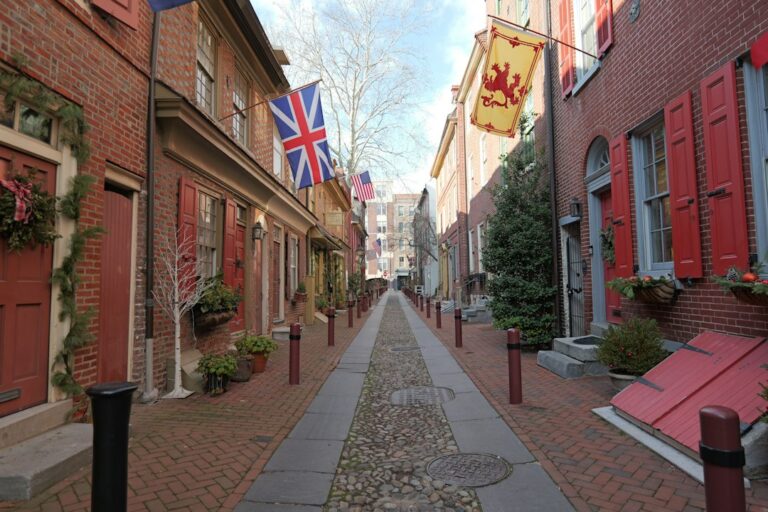
The city’s older neighborhoods include many small multifamily buildings. Rhode Island’s Historical Preservation and Heritage Commission describes the triple-decker as “the quintessential multiple-family dwelling built in Providence between about 1895 and 1925.” Those three-unit wood-frame buildings, along with two-family houses and early 20th-century brick apartment blocks, shape what new construction competes with and what the new laws allow owners to change.
Rhode Island’s housing laws since 2023
Rhode Island has passed a housing package in each legislative session since 2023, led by House Speaker K. Joseph Shekarchi. Together they change what can be built, how fast it can be approved and what it costs.
The 2023 package
In June 2023, Governor Dan McKee signed a package of 13 bills, described in the legislature’s 2023 housing package summary. The provisions most relevant to apartment owners:
- Commercial-to-residential conversions (H 6090A / S 1035A): converting commercial buildings such as factories, offices and schools into high-density housing became a permitted use, with zoning incentives including a parking cap of one space per unit.
- Inclusionary zoning (H 6058A / S 1051A): towns must offer a base density bonus and must return in-lieu fees they have not used within two years.
- Comprehensive permits (H 6081A / S 1037A): the review process under the Low and Moderate Income Housing Act was cut from three stages to two, not counting pre-application.
- Appeals (H 6083A / S 1050A): the State Housing Appeals Board was abolished as of January 1, 2024, so appeals now go directly to Superior Court.
- Transit-oriented development (H 6084B / S 1052A): a pilot program was created to encourage housing near transit.
The 2024 package
The 2024 session added 14 more bills, ceremonially signed on August 29, 2024, according to the governor’s office. The most visible is H 7062A / S 2998A, which gives homeowners the right to build one accessory dwelling unit on an owner-occupied lot if it houses a family member with a disability, fits within an existing structure’s footprint, or sits on a lot larger than 20,000 square feet. Other bills amended the inclusionary zoning law again, barred local wetland buffer rules stricter than the state’s, required yearly municipal inventories of abandoned properties, and limited when towns can stop accepting housing applications.
The 2025 package
The 2025 package, ten bills that the legislature announced in July 2025, went further toward allowing more homes on existing land:
- H 5794B / S 1086Aaa clarified the rules for converting commercial and industrial buildings to housing, allowed oversized lots to be subdivided, and permitted dimensional adjustments based on the average of neighboring buildings.
- H 5800 / S 1090A requires towns to allow residential use in some or all commercial zoning districts.
- H 5796aa / S 1092 requires towns to allow more than single-family homes inside the urban services boundary where public water and sewer exist.
- H 5804A / S 1089Aaa moved buildings of up to four units under the residential building code. Three- and four-family buildings had previously fallen under the more expensive commercial code.
- H 5793A / S 1091 lets taxes on new housing fall outside the municipal property tax levy cap when the town approves and the project includes affordable units.
Several 2025 bills took effect January 1, 2026, including ones addressing townhomes and co-living, a housing land bank within RIHousing, and the revived Housing and Conservation Board.
Parking near transit in 2026
In 2026, the legislature passed H 8005A / S 3303, which sets maximum parking requirements for multifamily housing near public transit. It was signed on June 23, 2026, as part of that year’s House housing package, according to the legislature’s 2026 announcement. Owners planning a project near a bus corridor should check the final text for the specific limits that apply.
Providence apartment development under the new city zoning
The city has been updating its own rules alongside the state’s. In December 2023, the City Council approved zoning amendments that allow housing on smaller lots and in new zones, streamline reviews and allow schools, churches and office buildings to be converted to housing.
The city’s comprehensive plan update was approved by the Council and signed by Mayor Brett Smiley on November 22, 2024, and approved by the state on January 29, 2026. Among its directions, it tells the city to “prioritize the elimination of parking minimums wherever feasible.”
The 2025–2026 zoning amendment
In November 2025, the City Plan Commission sent the Council a further set of amendments, Referral 3605, to align the city code with the 2025 state laws. The recommendation includes:
- Character-based modifications that let new buildings match the dimensions of neighboring buildings.
- Administrative reductions in required lot size of up to 15%.
- Subdivision of oversized lots.
- Simpler rules for rowhouses.
- A prohibition on converting buildings in the heaviest industrial zones to residential use.
For owners of existing buildings on large or irregular lots, the subdivision and dimensional changes are the most practical: they can make it possible to add a building or split off a buildable lot that the old code did not allow.
What is being built
The I-195 District
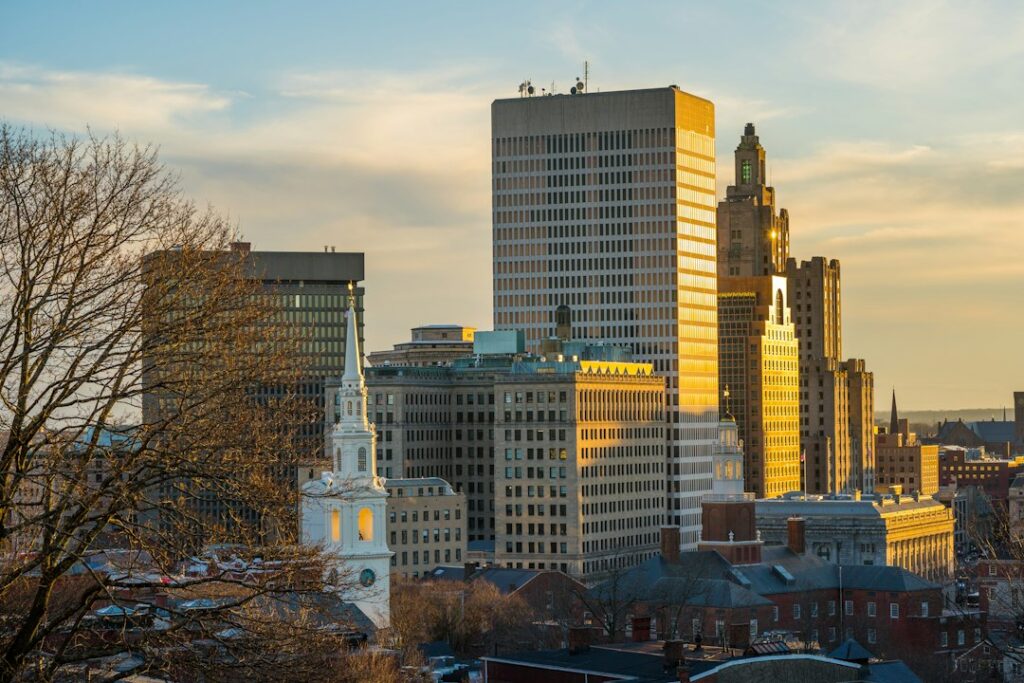
A major source of new apartments in central Providence is the land freed up when Interstate 195 was relocated. According to the I-195 District’s 2025 impact report, released in January 2026, about 1,100 housing units across the 26-acre district are completed, under construction or planned, including 162 workforce or affordable units, with $830 million of project investment.
On Parcel 9, developer Pennrose opened Tempo, a 66-unit mixed-income building, in April 2025, and held a grand opening in August 2026 for Tandem, a second building with 61 mixed-income units. Projects like these add newer units close to downtown, Fox Point and the Jewelry District, which compete most directly with renovated older buildings in those areas.
The Superman building
The conversion of 111 Westminster Street, the art deco tower often called the Superman building, has not been completed. The building has been empty since 2013. Developer High Rock’s plan now calls for 308 apartments, up from 285 in its 2022 agreement, which set aside 20% of units as affordable, and the estimated cost has risen to $327 million from $220 million. On August 24, 2026, the state’s Commerce board approved $9.5 million in additional incentives. Reporting by Rhode Island public media noted that the project’s last work permit lapsed in June 2026 and that there had been little visible progress since August 2025. Owners in downtown should treat its delivery date as uncertain.
Citywide permits
The city reports that it permitted more than 850 housing units in 2025, and that the Providence Housing Trust Fund has committed $55 million to support more than 2,000 units, more than 1,600 of them deed-restricted affordable, according to a city housing report released in October 2025. At the state level, the Department of Housing reported 2,655 units permitted statewide in 2024, the most since 2005, in its Housing 2030 plan, which sets a goal of 15,000 new homes permitted by 2030.
Tax stabilization and public financing
Two financial tools shape which projects get built.
Tax stabilization agreements
Rhode Island law (R.I.G.L. §44-3-9) allows the City Council to fix a property’s taxes for up to 20 years through a tax stabilization agreement. Providence uses these agreements to encourage new construction and major rehabilitation. Under a 2019 ordinance, 10% of collections under these agreements go to the Providence Housing Trust. The city’s fiscal 2025 report counted 66 active agreements, with $15.9 million billed and $19.6 million abated. For owners of unsubsidized older buildings, this means some newer competitors may be carrying lower property taxes for years, which affects how they can price rents.
The 2024 state housing bond
In November 2024, Rhode Island voters approved Question 3, a $120 million housing bond, the largest in the state’s history. It allocates $80 million to affordable housing development, $20 million to homeownership, $10 million to acquiring and redeveloping existing buildings, $5 million to site acquisition, $4 million to infrastructure and $1 million to municipal planning. The $10 million for acquisition and redevelopment is the piece most likely to reach existing apartment buildings.
How the new rules play out for typical Providence properties
The laws above are easiest to understand through the kinds of properties Providence owners actually hold. The scenarios below are hypothetical and describe which rules come into play, not whether a specific project would be approved.
A triple-decker on an oversized lot
An owner holds a three-unit building on a lot much larger than its neighbors. Under the 2025 state law on oversized lots, and the subdivision provisions in the city’s pending Referral 3605, the owner may be able to split off a second buildable lot rather than leaving the land as a side yard. If the owner builds a new three- or four-unit building on that lot, H 5804A / S 1089Aaa means it would be designed under the residential building code instead of the commercial code. The character-based dimensional rules could also let the new building match the setbacks and height of its neighbors rather than a stricter district standard.
A vacant church or small office building
An owner of a mixed-use or institutional building that has lost its tenant has more options than before 2023. The 2023 conversion law made high-density residential conversion of commercial buildings a permitted use with a parking cap of one space per unit, the city’s December 2023 amendments specifically allow schools, churches and offices to be converted to housing, and the 2025 package clarified how those conversions work. The main restriction to watch is the city’s proposed ban on residential conversions in its heaviest industrial zones.
A mid-size building near a bus line
An owner of a 1960s or 1970s walk-up near a frequent bus route is mostly affected indirectly. New projects nearby may be able to build with fewer parking spaces under the 2026 transit parking law, and a tax stabilization agreement can lower a competing project’s carrying costs for years. That combination can bring newer units into a neighborhood faster than in the past. At the same time, the same rules raise the development potential of the owner’s own land, which can matter if the building is near the end of its useful life.
An affordable or mixed-income project
For owners or partners considering a project with income-restricted units, the comprehensive permit process under the Low and Moderate Income Housing Act now has two review stages instead of three, appeals go directly to Superior Court, and the 2025 amendments favor projects that are at least 25% affordable. The 2025 levy cap change also lets a town approve taxes on new housing outside its property tax levy cap when the project includes affordable units, which can make local approval easier.
What the changes mean for owners of existing buildings
The combined effect of state and city changes is to make it easier to add homes in Providence, which has several implications for owners:
- More options on your own lot. Subdivision of oversized lots, character-based dimensions and administrative lot-size reductions can make an additional building or lot feasible where it was not before.
- Cheaper small-building work. Moving three- and four-unit buildings to the residential building code can lower the cost of renovating or building triple-decker-scale properties.
- Conversion potential. Office, school, church and commercial buildings can now be converted to housing more easily, which creates new competition but also opportunities for owners of mixed-use properties.
- Newer competition near downtown. I-195 District buildings and tax-stabilized projects compete for higher-income renters, so older buildings near downtown may need to compete on price or upgrades.
- Valuation effects. Land with more development rights can be worth more, which affects both sale value and assessments. Running numbers through an apartment building value calculator can help frame how added units or a lot split change a property’s value.
Watching the pipeline from here
Several items will shape the next few years of Providence apartment development. The Council’s action on Referral 3605 will determine how far the city’s code goes in implementing the 2025 state laws. The Superman building’s progress will indicate whether large downtown conversions can be financed at current costs. And the parking limits near transit adopted in 2026 will show whether denser buildings become practical along bus corridors outside downtown.
The statewide numbers frame the stakes. If the Housing 2030 goal of 15,000 permitted homes is spread over 2025 through 2030, it works out to about 2,500 permits a year, close to the 2024 total, which was the highest since 2005. As the capital and largest city, Providence is likely to account for a meaningful share of whatever the state achieves, so owners here should expect the pipeline, and the policy push behind it, to continue.
For statewide context, see our Rhode Island markets page, and owners thinking about their options can read more about selling an apartment building in Providence on our city page.