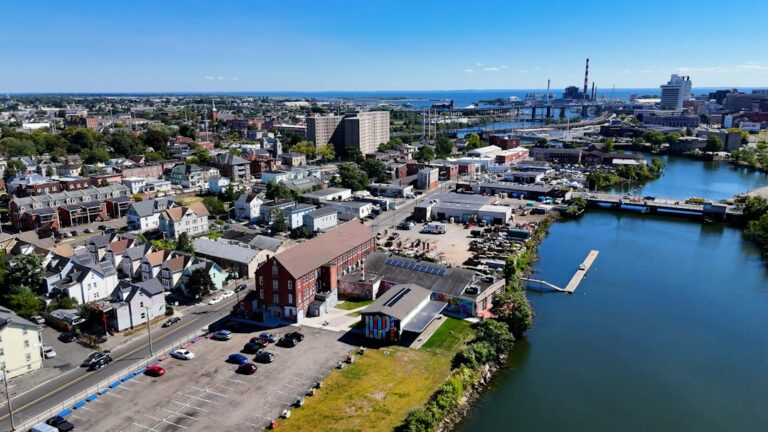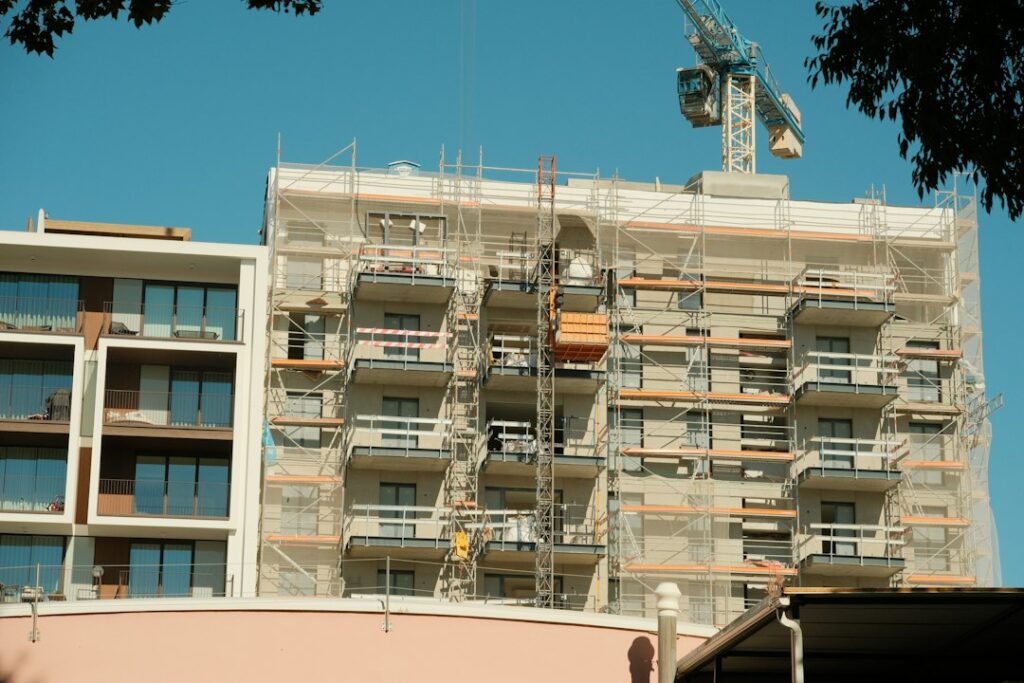
The Stamford apartment pipeline is one of the largest in Connecticut: the city authorized 1,564 new housing units in 2025, about 16% of the statewide total, and downtown alone had 1,032 apartments under construction and another 1,680 approved in 2026. For owners of existing buildings, that means steady competition from new Class A product near the train station and Harbor Point, set against a growing population and a zoning system that sends most new density to a few districts.
This article lays out where that supply is coming from, which local and state rules shape it, and what it means for owners of older apartment buildings elsewhere in the city.
A growing city with a rental majority
Stamford is a consolidated city and town. Voters approved the consolidation charter in 1947, and the combined government took office in 1949, so there is a single municipal government for zoning and permitting. Connecticut abolished county government in 1960, so Fairfield County is a geographic label rather than a layer of regulation.
The population has climbed for two decades. The 2010 Census counted 122,643 residents, and the 2020 Census counted 135,470, a 10.5% increase. The Census Bureau’s QuickFacts profile for Stamford estimates 139,535 residents as of July 1, 2025, which keeps Stamford the second-largest city in the state, behind Bridgeport.
Renters are the majority. The same Census profile shows an owner-occupancy rate of 48.8% for 2020–2024, a median gross rent of $2,276 and a median household income of $111,586. Those are high numbers by Connecticut standards and help explain why developers keep choosing Stamford: incomes support new-construction rents, and commuters can reach Manhattan by Metro-North.
Employers add to the draw. Charter Communications opened its headquarters at Harbor Point in June 2022, a 900,000-square-foot campus next to the train station that the company said would house about 1,700 employees.
Measuring the Stamford apartment pipeline
The state’s annual permit data, published by the Department of Economic and Community Development on the Connecticut open data portal, show how uneven the pipeline is from year to year:
- 2019: 1,140 units authorized
- 2023: 423 units
- 2024: 132 units
- 2025: 1,564 units, about 16% of Connecticut’s 9,834 statewide
Over the 11 years from 2015 through 2025, Stamford authorized about 5,540 housing units. Permits and openings do not line up neatly, because large buildings take two to three years to build. CoStar reported in February 2026 that Stamford set a record in 2024 with more than 2,200 apartments completed, and that 2025 completions ranked third-highest of the decade, more than 25% above the 10-year average.
For owners, the 2025 permit jump is the number to watch. A low 2024 permit year suggests a lighter wave of openings around 2026, followed by a heavier one as the 2025 approvals reach completion later in the decade.
Where the new apartments are going
New supply in Stamford is concentrated rather than spread across the city.
Downtown
The Stamford Downtown 2026 development report counts 10,765 apartments opened downtown in total, 654 completed since 2024, 1,032 under construction and 1,680 planned with land-use approvals. The project-by-project figures in that report do not add up exactly to its totals, so the precise counts should be read as approximate. Projects it lists include:
- Recently completed: The Smyth (414 units), Julius (376), Life Time Living (291) and The Asher (228)
- Under construction: 100 Clinton (471), 74 Broad (280) and The Coastline (200)
- Approved: 677-707 Washington (406), 3 Landmark (400), 109 Tresser Boulevard (305) and 177 Broad (231)
The 109 Tresser Boulevard project stands out because it replaces St. John’s Towers with 305 apartments, all of them affordable to households earning between 30% and 80% of area median income, split into 101 one-bedroom, 100 two-bedroom and 104 three-bedroom units.
The South End and Harbor Point
South of the train station, Building and Land Technology has said it built more than 4,000 apartments in the South End over roughly a decade, including the 435-unit Escape at 880 Pacific Street. The pipeline there continues. City records show an approved 395-unit project at 18 Dock Street, which in June 2024 sought to reduce its on-site below-market-rate units from 32 to 20.
The train station site
The next large site is the Stamford Transportation Center itself. In August 2025, the Connecticut Department of Transportation issued a request for proposals to redevelop the 11-acre station property, calling for at least 440,000 gross square feet of private development, primarily multifamily residential. Proposals were due December 5, 2025. The department says the station serves more than 5.5 million rail and bus passengers a year. A selection had not been confirmed in the sources reviewed for this article, but any winning plan would add to the supply closest to the city’s main commuter asset.
Stamford’s zoning tools for multifamily
Stamford shapes its apartment supply through district-level zoning and an inclusionary requirement rather than citywide upzoning.
The below-market-rate requirement
Under Section 7.4 of the Stamford Zoning Regulations, developments with more than 10 units must set aside 10% of units as below-market-rate housing, generally for households earning below 50% of area median income. Fractional units can be satisfied with a fee in lieu. Units built under the regulations’ Premium Floor Area provisions are excluded from the calculation.
This matters to existing owners in two ways. It adds a layer of deed-restricted units to every large new building, which is supply at the lower end of the market as well as the top. And the BMR requirement shapes project economics, so developers seek approvals in the districts where density is allowed, which keeps most new construction downtown and in the South End.
The 2035 Comprehensive Plan
Connecticut requires municipalities to update their plan of conservation and development every 10 years. Stamford’s Planning Board adopted the Stamford 2035 Comprehensive Plan by a 5-0 vote on September 30, 2025, replacing the 2015 Master Plan. The plan recommends neighborhood studies for the Cove and Waterside areas.
The plan drew debate over its residential land-use designations, and Mayor Simmons asked for changes so that single-family neighborhoods would remain protected. She also emphasized that the plan does not change zoning by itself. Any new density in established neighborhoods would still require zoning amendments, which gives owners of existing buildings in those areas some predictability.
Affordable housing goals
A city housing affordability plan prepared by the consultancy HR&A set a goal of creating or renovating 1,000 affordable apartments by 2025. The city’s Housing Trust Fund had allocated more than $3.7 million since 2021, according to HR&A, which also recommended changes to how the BMR fee in lieu is set.
State housing laws that reach Stamford
Connecticut has been rewriting its land-use rules, and several changes reach Stamford.
The 8-30g exemption
Under Connecticut’s affordable housing appeals law, Section 8-30g, towns where less than 10% of housing counts as affordable face an appeals process that lets developers challenge denials of projects with affordable units. Stamford is not one of them. The Department of Housing’s 2025 Affordable Housing Appeals List puts Stamford at 15.81% affordable, or 9,005 assisted units out of 56,953 housing units. That total includes 4,754 government-assisted units, 2,152 units with tenant rental assistance, 360 CHFA-financed mortgages and 1,739 deed-restricted units. In practice, the city’s own zoning, not state builder’s-remedy appeals, decides where large projects go.
Parking and middle housing
Public Act 21-29, effective in 2022, capped how much parking towns could require for new homes and banned numerical caps on multifamily units, though towns could opt out of some provisions. In 2025 the legislature went further. After Governor Ned Lamont vetoed House Bill 5002 on June 23, 2025, a November special session produced House Bill 8002, signed November 26, 2025 as Public Act 25-1.
According to a 2026 Office of Legislative Research report and other summaries of the act:
- Starting July 1, 2026, a project of 16 or fewer units cannot be denied for failing to meet parking minimums.
- Larger projects can rebut parking minimums with a parking-needs study.
- Towns may designate up to two districts, each covering no more than 4% of their land, where minimums still apply.
- The act allows conversion of commercial or mixed-use land to transit-oriented “middle housing.”
- Municipalities must prepare housing growth plans, due in 2028 and 2029, tied to state grants.
The 16-unit threshold is the provision most relevant to small-building owners. Infill projects of a dozen units on an underused lot become easier to approve, which over time could bring new mid-size competitors into neighborhoods that saw little construction in the past.
Fair rent rules for existing buildings
New construction is not the only policy that affects existing owners. Public Act 22-30 required Connecticut towns with 25,000 or more residents to have a fair rent commission by July 1, 2023. Those commissions can hold hearings, issue subpoenas and order rent changes when they find a rent harshly excessive.
In Stamford, the Social Services Commission at 888 Washington Boulevard hears excessive-rent complaints, and tenants must keep paying the current rent while a case is pending. City minutes from August 2024 show the commission setting a rent of $1,738 a month in one case, conditioned on repairs, and reporting eight new complaints. For owners, the practical message is that condition and rent are reviewed together: a large increase on a unit with open maintenance issues is the kind of case the commission is designed to hear.
Sizing up new competition near a building
The citywide numbers are useful, but an owner’s real question is narrower: how much new supply will compete with a specific building, and when. The sources above make it possible to answer that with some discipline.
Start with the three stages. Permits show what developers have committed to build. Projects under construction show what will open within roughly the next two years. Approved but unbuilt projects show what could follow, though approvals can lapse or be redesigned, as the 18 Dock Street filing shows. The downtown report’s split of 1,032 units under construction and 1,680 approved is a good example: the first number is near-certain new supply, the second is likely but less certain.
Then match the product. A new tower with a fitness center and concierge competes most directly with other recent buildings and with the top of the older stock. A 1970s garden complex with surface parking and lower rents usually competes with it only at the margins, when concessions in new buildings narrow the price gap. The affordable projects compete with a different slice of the market again, drawing households that qualify for income-restricted units.
Finally, map distance and access. In Stamford, the strongest pull for renters is proximity to the train station and to downtown employers such as Charter’s Harbor Point campus. A building a short walk from the station shares that advantage with the new supply; a building across the city may draw a different renter, such as households that drive to work or want more space for the rent.
An owner who works through those three steps can usually place a building in one of three groups: directly exposed to the new deliveries, partly exposed through concessions, or largely insulated because it serves a different renter.
What the pipeline means for existing building owners
Taken together, the data point to a few practical conclusions for owners of older apartment buildings in Stamford:
- Competition is concentrated. Most new units cluster downtown, in the South End and around the train station. A 1960s walk-up in a neighborhood away from those districts competes with them on price more than on amenities.
- Lease-up concessions matter. When a wave of new buildings opens close together, new properties often compete for tenants. Owners near those districts should watch renewal rates and adjust timing rather than assume steady increases.
- Affordable supply is rising too. Projects like 109 Tresser Boulevard and BMR units in market-rate buildings add income-restricted options, which affects older buildings that serve moderate-income renters.
- Small infill gets easier. The parking changes in Public Act 25-1 lower one hurdle for projects of 16 or fewer units, which could bring new competition to neighborhood blocks and also new options for owners with excess land.
- Rent increases face review. With the fair rent process in place, documentation of repairs and improvements supports rent decisions.
Those factors also shape what buyers will pay. A buyer underwriting an older Stamford building will look at nearby deliveries, likely concessions and the condition record. Owners can estimate how changes in rent and expenses flow through to price with our apartment building value calculator, compare Stamford with other cities on the Connecticut market page, or read about selling an apartment building in Stamford for local context.
Signals to watch in 2026 and 2027
The next two years will show whether the 2025 permit surge turns into a delivery wave. The signals worth tracking are the CTDOT selection for the train station site, the pace of construction at 100 Clinton, 74 Broad and The Coastline, the city’s response to the Public Act 25-1 parking rules after July 1, 2026, and any zoning amendments that follow the 2035 Comprehensive Plan’s neighborhood studies. Each one changes how much new product will compete with existing buildings, and where.