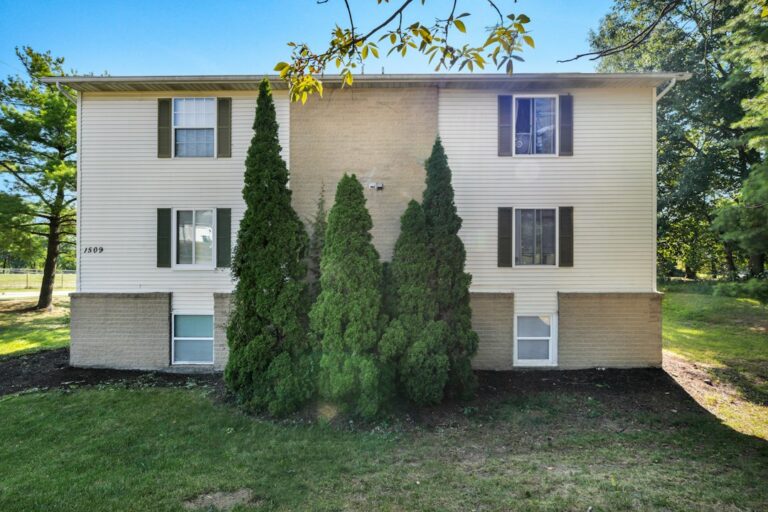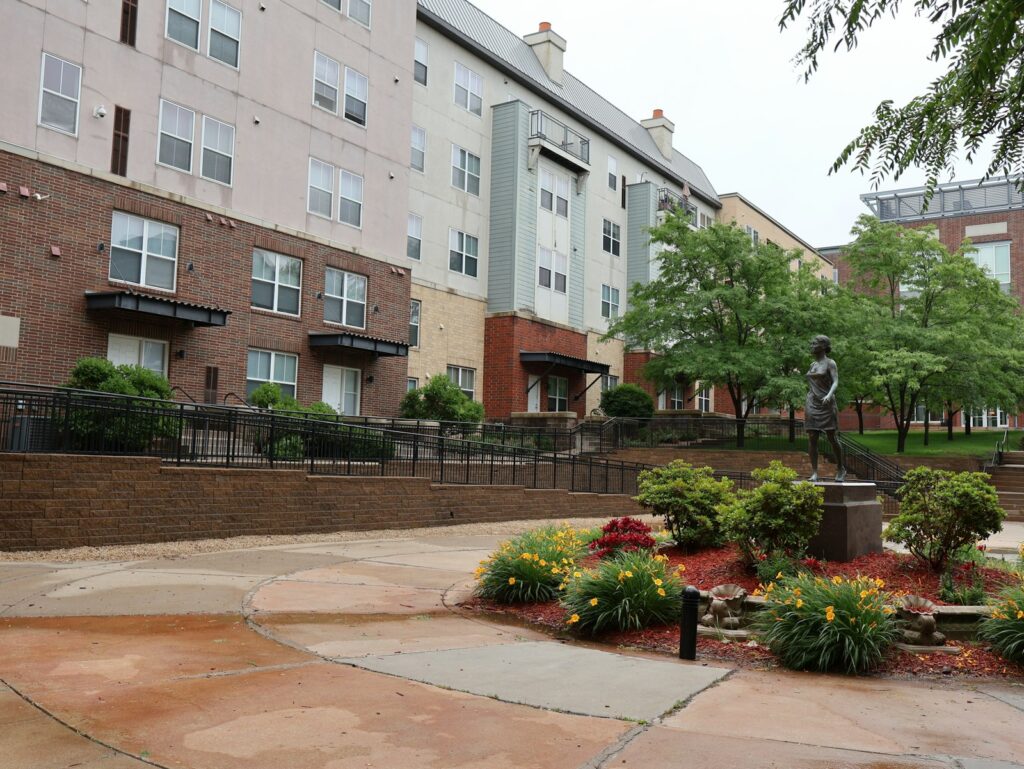
Columbus apartment property taxes come from two numbers: the value the Platte County Assessor places on the building as of January 1, and the combined levy of every local government that taxes the parcel, which totaled about 1.63% of value inside the city and Columbus Public Schools district for tax year 2025. Nebraska taxes apartment buildings at 100% of market value, so the most effective ways an owner can manage the bill are to understand how the county arrives at that value and to use the protest calendar when it is wrong.
This guide covers each step, from the January 1 assessment date to the December tax statement, with the current levy breakdown and the deadlines that matter.
Why Nebraska taxes apartments at full market value
Nebraska law sets the starting point. Under Neb. Rev. Stat. 77-112, actual value for tax purposes means market value, and the statute names the three professionally accepted ways to estimate it: the sales comparison approach, the income approach and the cost approach. Section 77-201 then requires that real property other than agricultural land be valued at its actual value. Farmland is taxed at 75% of value, but apartment buildings, like homes and commercial property, are taxed on 100%.
There is no separate, lower assessment ratio for rental housing and no cap on how much a value can rise from year to year. If the market for apartment buildings in Columbus rises, assessed values are expected to follow.
How the state checks the county’s work
Each year the state measures whether counties are hitting the target. Section 77-5023 requires that the level of value for residential and commercial property fall between 92% and 100% of actual value. The Tax Equalization and Review Commission (TERC) publishes the results. For 2026, Platte County’s levels of value after commission action were 96% for residential, 94% for commercial and 71% for agricultural land, all within the statutory ranges.
A commercial level of 94% means that, as measured against sales, commercial and apartment properties in the county were assessed on average a little below their sale prices. It is a countywide median, not a promise about any one building.
How Platte County values apartment buildings
The state’s annual report on Platte County’s assessment practices, prepared in 2025, describes how the commercial class is handled. Platte County values commercial property using all three approaches to value: cost, income and sales comparison. The report notes that typical rent information is used for income-producing parcels, and that the county revalued several property types, including apartments.
In practice, that means the assessor is not only asking what it would cost to rebuild a building. For an apartment property, the office also looks at what comparable buildings rent for and what similar buildings have sold for. Owners should check the property class on their parcel record, because smaller multifamily buildings may sit in a different class from larger complexes, and the class determines which sales and methods are applied.
The inspection cycle
Nebraska requires every parcel to be inspected and reviewed at least once every six years under section 77-1311.03. The 2025 report described Platte County’s commercial inspections as current. An inspection is when the county records changes such as new roofs, added units, finished basements or demolished garages, so a building that has been substantially renovated since its last review can see a value change after an inspector visits.
Sales used in the analysis
The same 2025 report counted 116 qualified commercial sales in the county between October 1, 2021 and September 30, 2024. That three-year window is what the state uses to measure the commercial level of value, and it is the pool of transactions the county looks to when it tests whether its values track the market.
The assessment calendar from January 1 to August
The calendar is set by statute, and the dates matter because missing one usually means waiting a full year:
- January 1: Under section 77-1301, all real property is assessed as of January 1 at 12:01 a.m. Conditions on that date control the value, so a building that was half-renovated on January 1 is valued as it stood then.
- March 19: The assessor must complete the assessment of real property by this date.
- June 1: Section 77-1315 requires the assessor to send a notice of valuation change, on or before June 1, to the owner of record as of May 20. The notice is tied to a change in value, so an owner who receives nothing in June should generally expect last year’s value to carry forward, and should still confirm it on the county’s parcel record.
- June 1 to June 30: The protest window. For 2026, the Nebraska Department of Revenue’s annual protest reminder set the deadline as Tuesday, June 30, 2026.
- By July 25: The county board of equalization must finish hearing protests.
- By August 2: The county clerk mails the board’s decisions.
- August 24: The 2026 deadline to appeal a board decision to the state Tax Equalization and Review Commission for most counties, including Platte.
Protesting a Columbus apartment valuation
A protest is filed with the county clerk on Form 422, in person, by mail or by email, and must be filed by June 30. Each parcel needs its own protest. The county board, sitting as the board of equalization, hears the case under the procedure in section 77-1502.
What makes a strong apartment protest
Because the county uses income information for income-producing parcels, an apartment owner has more to work with than a homeowner. Evidence that tends to carry weight includes:
- A rent roll and operating statement as of the assessment date, showing actual rents, vacancy and expenses compared with the market assumptions the county may have used.
- Comparable sales of similar Columbus apartment buildings, adjusted for size, age and condition.
- Condition evidence, such as contractor bids or photos of deferred maintenance, if the county’s record treats the building as being in better shape than it is.
- Record errors, such as the wrong unit count, square footage or year built.
The board’s decision can be appealed to the Tax Equalization and Review Commission. TERC’s appeal page lists filing fees that rise with the property’s value, reaching $85 for property valued at $1,000,000 or more. Most apartment buildings of meaningful size fall in that top bracket.
The 2025 levy inside Columbus
Once values are set, local governments adopt budgets and the county board sets levies by October 20 under section 77-1601. Every parcel sits in a tax district, a combination of the taxing bodies that overlap it. According to the Nebraska Department of Revenue’s 2025 district report for Platte County, the district that covers the City of Columbus and Columbus Public Schools had a total levy of 1.630042 per $100 of taxable value for tax year 2025. It breaks down as follows:
- Columbus Public Schools (general): 0.965286
- Columbus Public Schools (bond): 0.120983
- City of Columbus: 0.290030
- Platte County: 0.186434
- Lower Loup Natural Resources District: 0.024841
- Central Community College: 0.020000
- Educational Service Unit 7: 0.015000
- Agricultural Society: 0.007468
The school district is the largest piece by far. Its general and bond levies together make up about two-thirds of the total. Other tax districts in the Columbus area, for example parcels outside the city or in a different school district, carry different totals, so confirm the district code on the tax statement before using this rate for a specific building. Levies for tax year 2026 had to be set by October 20, 2026, and will appear on the statements mailed at the end of the year, so treat the 2025 figures as a recent benchmark rather than this year’s bill.
The city’s tax base
The Department of Revenue’s 2025 annual report shows the City of Columbus with $2.61 billion of taxable value and about $7.56 million in city property taxes levied at its 0.290030 rate. For comparison, Platte County’s average tax rate across all districts in 2025 was 1.1620%, lower than the in-city rate largely because rural districts carry no municipal levy.
A worked example for a 24-unit building
Consider a hypothetical 24-unit Columbus apartment building assessed at $1,800,000 in tax district 1, using the 2025 levy:
- Total gross tax: $1,800,000 × 1.630042 ÷ 100 = about $29,341, or roughly $1,223 per unit per year.
- School general levy: about $17,375.
- School bond levy: about $2,178.
- City: about $5,221.
- County: about $3,356.
- Everything else combined: about $1,211.
These are gross amounts before the state credits described below. The example also shows why valuation protests matter. If an owner showed the building’s market value was $1,650,000 rather than $1,800,000, the gross tax at the same levy would drop to about $26,896, a saving of roughly $2,445 a year that recurs until the next revaluation.
State credits that reduce the bill
Nebraska has layered several forms of relief on top of the levy, and apartment owners qualify for the ones tied to real property generally.
The Property Tax Credit Act credit
Under section 77-4212, the state provides a credit that appears directly on the property tax statement. Each parcel’s share is based on its taxable value, and the credit applies to all real property, not only homes, so apartment buildings receive it automatically.
The school district credit after LB 34
In the August 2024 special session, the Legislature passed LB 34, which moved relief that had previously been claimed as an income tax credit into a credit shown on the property tax statement. The bill set total relief at $750 million for tax year 2024, rising to $780 million for 2025, $808 million for 2026 and $838 million for 2027. The credit applies to school district taxes levied on real property, but not to school bond levies or voter-approved overrides. In the example above, that means the credit offsets part of the $17,375 general school levy but none of the $2,178 bond levy.
LB 34 also limited growth in city and county property tax requests beginning with fiscal year 2025–26, with exceptions for items such as bonds and public safety, and for increases approved by voters.
The income tax credit that remains
The older income tax credit created under LB 1107 still exists in reduced form. For 2024 and later, the Department of Revenue states that it is available only for community college property taxes paid. For a Columbus building, that is the Central Community College levy, about $360 a year in the example.
When taxes are due in Platte County
Nebraska property taxes are paid a year in arrears. Under sections 77-203 and 77-204, taxes become due on December 31. The first half becomes delinquent the following May 1 and the second half on September 1, and delinquent taxes accrue interest at 14%. The Platte County Treasurer mails statements between late November and December.
For a 2026 valuation, then, the levy is set in October 2026, the bill arrives around December 2026, and the halves are due by May 1 and September 1, 2027. Buyers and sellers need to account for this lag when they prorate taxes at closing, because the seller typically owes taxes for a period that will not be billed until after the sale.
What a sale does to the tax picture
Nebraska does not automatically reset a building’s value to its sale price when it changes hands. A sale still matters, though, in two ways.
First, the transfer itself is taxed. The state’s documentary stamp tax applies when a deed is recorded, and the Department of Revenue’s rate history lists the rate as $3.32 for each $1,000 of value from July 18, 2026. On the $1,800,000 building in the example, that is about $5,976.
Second, a qualified sale becomes part of the evidence the county and the state use to measure assessment levels. A buyer who pays well above a building’s assessed value is adding a data point that supports higher values for that building and similar ones in later years, while a sale below assessed value supports the opposite. Buyers should underwrite taxes on the price they are paying, not on the seller’s current bill, and sellers should expect a buyer to do exactly that.
What Columbus apartment property taxes mean for owners
For owners, the practical takeaways are short:
- Read the June notice. Any change in value arrives by June 1, and the protest window closes June 30. Put both dates on the calendar every year.
- Keep January 1 records. Rent rolls, operating statements and photos as of the assessment date are the evidence a protest needs.
- Model the school levy. At about two-thirds of the total, school taxes drive the bill. Watch Columbus Public Schools budget and bond decisions as closely as the city’s.
- Net out the credits. When comparing buildings or underwriting a purchase, use the tax statement after credits, and remember the school credit does not cover bond levies.
- Expect the bill to track the market. With no assessment cap, a rising market for apartment buildings will eventually show up in values.
To see how Nebraska’s approach compares with other states, our guide to rent control and property tax rules by state sets the rules side by side. For a broader view of the local market, visit our Columbus market page, and for other cities around the state, see the Nebraska market overview.
How the tax load compares with Columbus rents
Columbus is the county seat of Platte County. The Census Bureau estimated its population at 25,248 as of July 1, 2025, up from 24,028 in the 2020 Census. For 2020–2024, the city had 9,850 households, an owner-occupied rate of 66.1%, meaning roughly a third of households rent, and a median gross rent of $892 a month.
That rent level puts the tax figures in perspective. In the 24-unit example, gross property tax works out to about $102 per unit per month before credits, or a little over 11% of the city’s median gross rent. Property tax is one of the largest expenses an apartment owner in Columbus carries, which is why the valuation notice each June deserves as much attention as any lease renewal.