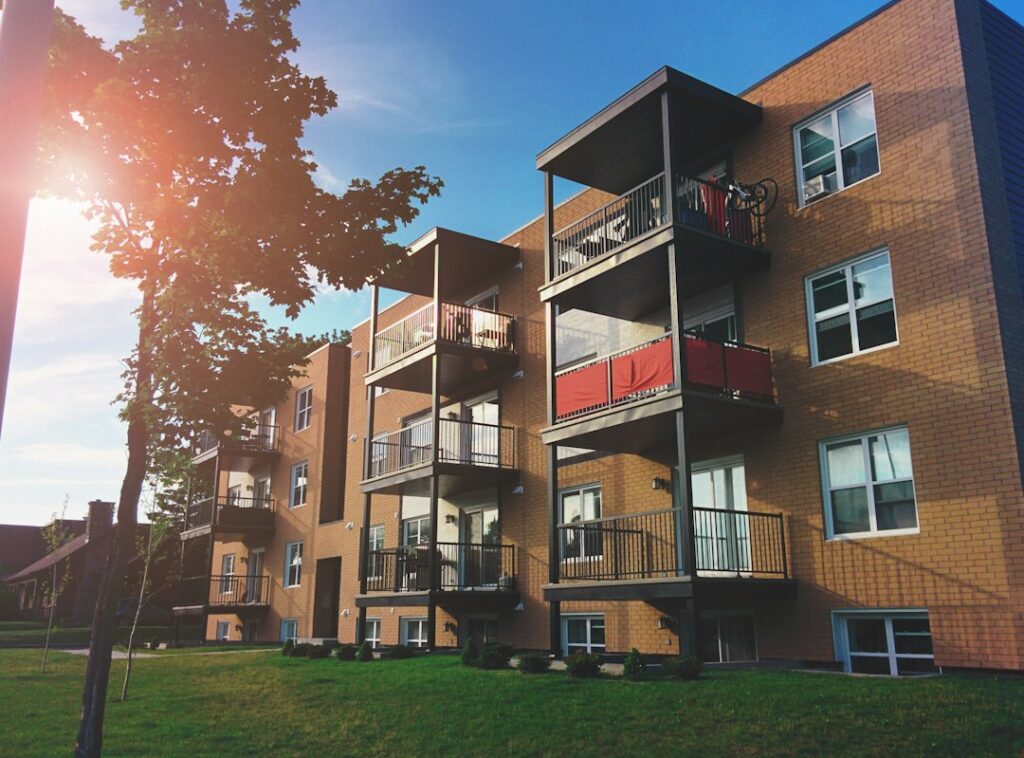
Fayetteville landlord-tenant law is mostly North Carolina state law: the General Statutes set deposit caps, late-fee limits, repair duties, notice periods and the only lawful way to evict, and they bar the city from adopting rent control. On top of that, the City of Fayetteville enforces a minimum housing code and a targeted rental registration program, and the large military population around Fort Bragg brings federal lease-termination rules into many leases. Here is how those layers fit together for apartment owners.
Fayetteville is an incorporated city and, as the city’s own website notes, the seat of Cumberland County. The 2020 Census counted 208,501 residents, and the Census Bureau’s July 1, 2025 estimate is 209,120. Fort Bragg, renamed back from Fort Liberty in February 2025 to honor Private First Class Roland L. Bragg, a World War II soldier, sits near the city and shapes much of its rental demand.
No local rent control in North Carolina
The starting point is N.C. Gen. Stat. § 42-14.1. It says no county or city may enact, maintain or enforce any ordinance or resolution that regulates the amount of rent charged for private residential or commercial property. The exceptions are narrow: property owned by a government, units that receive government subsidies or CDBG funds, and properties whose owners voluntarily agree to rent terms in exchange for local incentives.
In 2024, the General Assembly added a second limit in the same section. Under Session Law 2024-47, a city or county cannot require landlords to accept tenants who pay with federal housing assistance, such as Housing Choice Vouchers. North Carolina has no statewide source-of-income protection, so landlords in Fayetteville may legally decline voucher applications, although many choose to participate.
For owners, the practical effect is that rent levels in Fayetteville are set by the market and the lease, not by local regulation.
Repair and safety duties under § 42-42
The Residential Rental Agreements Act puts specific obligations on landlords, and a tenant cannot waive them in a lease. Under § 42-42, a landlord must:
- Comply with applicable building and housing codes.
- Make all repairs needed to keep the premises in a fit and habitable condition, and keep common areas safe.
- Maintain and promptly repair electrical, plumbing, sanitary, heating, ventilating and air-conditioning systems and supplied appliances, after written notice from the tenant, except in emergencies.
- Provide working smoke alarms. When installing or replacing one, the landlord must use a tamper-resistant alarm with a 10-year lithium battery, unless the unit has a hardwired alarm with battery backup or a combination smoke and carbon monoxide alarm.
- Install at least one carbon monoxide alarm per unit, per level, where the unit has a fossil-fuel appliance, heater or fireplace, or an attached garage.
- Repair or replace a smoke or carbon monoxide alarm within 15 days of written notice.
The imminently dangerous list
The statute also lists conditions that are “imminently dangerous” and must be corrected within a reasonable time. One that matters every winter is heat. The heating system must be capable of keeping the unit at 65 degrees when the outside temperature is 20 degrees, between November 1 and March 31. Other listed conditions cover things like unsafe wiring, lack of potable water and serious structural hazards. For an older garden-style complex in Fayetteville, a heating plan that can meet this standard on the coldest nights is not optional.
Security deposits: caps, holding rules and deadlines
North Carolina’s Tenant Security Deposit Act is detailed, and it is one of the areas where owners most often make mistakes.
How much you can collect
Under § 42-51, the maximum deposit depends on the lease term:
- Week-to-week tenancy: two weeks’ rent.
- Month-to-month tenancy: one and a half months’ rent.
- Terms longer than month-to-month: two months’ rent.
The statute lists what a deposit may be applied to, including unpaid rent, damage beyond normal wear and tear, costs of re-renting after a breach and certain court costs. A landlord cannot deduct early-termination damages from a deposit when the tenant ended the lease under the military-technician or domestic-violence provisions discussed below. Under § 42-53, a landlord may also charge a reasonable, nonrefundable pet fee.
Where the money must be held
Section 42-50 requires the deposit to be held in a trust account with a licensed and insured bank or savings institution in North Carolina, or the landlord may instead post a bond from an insurer licensed in the state. Within 30 days after the lease begins, the landlord must tell the tenant the name and address of the bank or the insurance company holding the bond.
When it must be returned
Section 42-52 sets the return deadline. Within 30 days after the tenancy ends and the landlord gets possession, the landlord must mail or deliver an itemized statement of any damages and the balance of the deposit. If the extent of damages cannot be determined within 30 days, the landlord can send an interim accounting and then a final one within 60 days. Normal wear and tear cannot be deducted. If the tenant’s new address is unknown, the landlord must hold the balance for at least six months.
For a building with dozens of move-outs a year, these deadlines are easiest to meet with a standard move-out inspection checklist and dated photographs.
Late fees and court-related fees under § 42-46
Section 42-46 caps what landlords can charge when rent is late, and it has been amended several times since 2024. The current rules include:
- A late fee may be charged only after rent is five calendar days late, counted from the day after it was due.
- For monthly rent, the late fee cannot exceed $15 or 5% of the rent, whichever is greater. For weekly rent, the cap is $4 or 5%.
- Only one late fee may be charged for each late payment.
- If the lease allows it, a landlord may charge one administrative fee per eviction case: a complaint-filing fee of up to $15 or 5% of monthly rent, but only if the tenant cures and the case is dismissed; a court-appearance fee of 10% of monthly rent; or a second-trial fee of up to 12% of monthly rent after an appeal.
- For subsidized tenants, fees are calculated on the tenant’s share of the rent only.
On a $1,100 monthly rent, 5% is $55, so the maximum late fee would be $55. On a $250 tenant share for a subsidized household, 5% is $12.50, so the $15 floor applies instead. Lease forms that use a flat fee or a daily fee should be checked against these caps.
Ending tenancies and the eviction process
Notice periods
For periodic tenancies with no fixed end date, § 42-14 sets the minimum notice to terminate: two days for a week-to-week tenancy, seven days for month-to-month, and one month or more before the end of the year for year-to-year tenancies. Many owners give longer notice by lease, which the statute allows. Fixed-term leases are different: they end on their stated date, and any notice the lease itself requires for non-renewal must be followed. Whatever the tenancy type, keeping a dated copy of every notice, and a record of how it was delivered, makes it far easier to prove compliance if the matter ends up before a magistrate.
Nonpayment and summary ejectment
Under § 42-3, a lease is forfeited if a tenant fails to pay rent within 10 days after the landlord demands all past-due rent. From there, the landlord’s only lawful path is a summary ejectment case, usually heard first by a magistrate in small claims court. Section 42-25.6 makes it explicit that a residential tenant may be removed only through these court procedures. Lockouts, utility shutoffs and removing a tenant’s belongings without a court order are not allowed.
If the magistrate rules for the landlord and the tenant appeals to district court, § 42-34 lets the tenant stay in possession by paying the undisputed back rent to the clerk and continuing to pay rent into court as it comes due. If a payment is more than five business days late, the landlord can ask for the judgment to be enforced.
Retaliation is a defense
Section 42-37.1 protects tenants who request repairs, complain to code enforcement or organize with other tenants. If a landlord files an eviction within 12 months of such an act, the tenant can raise retaliation as a defense. The statute lists situations in which the landlord can still prevail, such as nonpayment of rent or a tenant holding over after a fixed lease term ends. Good records of rent ledgers and lease terms are the best protection against a retaliation claim.
Military tenants and lease termination
With Fort Bragg nearby, many Fayetteville renters are service members or military families, and lease terminations tied to orders are routine. North Carolina’s statute here is narrower than many owners assume.
The current text of § 42-45 applies only to military technicians as defined in federal law, not to service members generally. Session Law 2019-161 moved most service members’ state-law rights into the North Carolina Servicemembers Civil Relief Act, and § 127B-28 applies the federal Servicemembers Civil Relief Act’s protections in North Carolina, including to members of the state National Guard.
Under the federal law, 50 U.S.C. § 3955, a service member may terminate a residential lease after receiving permanent change-of-station orders or deployment orders for 90 days or more, by giving written notice and a copy of the orders. For a lease with monthly rent, termination takes effect 30 days after the next rent due date following the notice. As an example, if rent is due on the first of the month and a tenant delivers notice and orders on March 10, the next rent due date is April 1, and the lease ends 30 days later, on May 1. Rent is owed through that date, and the landlord must refund any rent paid in advance for the period after it. Owners near Fort Bragg should build that timing into their turnover planning and keep a standard process for accepting orders and calculating the final rent.
Domestic violence, sexual assault and stalking
Section 42-45.1 lets a protected tenant end a lease with 30 days’ written notice and one of the documents listed in the statute, such as a protective order (not an ex parte order), a criminal no-contact order or an Address Confidentiality Program card. Tenants who are victims of domestic violence or sexual assault must also include a safety plan. The tenant owes rent only through the termination date, and the right cannot be waived in the lease.
City rules: minimum housing code and RAMP
Limits on city rental registration
State law also limits what Fayetteville can require. Under § 160D-1207, cities may conduct periodic rental inspections only with reasonable cause or in designated areas, and they cannot require rental registration or permits for every rental. Registration may be required only for specific properties, such as those with more than four verified violations in a rolling 12-month period, two or more in 30 days, or a ranking in the top 10% for crime or disorder. Fees for such registration are capped at $500 in any 12-month period, and violations cannot be made a crime.
How Fayetteville applies it
Within those limits, Chapter 14 of the Fayetteville Code of Ordinances covers housing, dwellings and buildings. It includes minimum standards of fitness, enforcement and emergency procedures, rules for boarded-up structures and nuisance properties, and the Rental Action Management Program, known as RAMP.
RAMP covers single-family homes, duplexes, triplexes, townhomes, condominiums and mobile homes. As written, it exempts apartment complexes unless the City Council adds them by ordinance. Covered properties must register after three or more verified violations in 12 months or when they reach the program’s disorder risk threshold. The city’s FY2026 fee schedule lists a $500 RAMP registration fee and daily civil penalties for failing to comply.
Even when RAMP does not apply to an apartment complex, the minimum housing standards in Chapter 14 do. Code enforcement can inspect on a complaint, issue orders to repair and, in serious cases, declare a unit unfit. Owners of small buildings such as duplexes and triplexes should pay particular attention, since those property types are inside RAMP’s scope.
Vouchers and the local housing authority
The Fayetteville Metropolitan Housing Authority administers public housing and the Housing Choice Voucher program in the city. For participating landlords, the authority deposits its share of the rent directly and expects security deposits to be handled under North Carolina law, which means the trust account and return rules above still apply. Because state law now prevents the city from requiring voucher acceptance, participation is a business decision. Owners who join should remember that late fees on subsidized tenancies are calculated on the tenant’s portion only.
What Fayetteville landlord-tenant law means for owners
Pulling the state and local rules together, a short compliance checklist for a Fayetteville apartment building looks like this:
- Hold every deposit in a North Carolina trust account or under a bond, and notify tenants of its location within 30 days.
- Keep deposits within the two-week, one-and-a-half-month or two-month caps, and calendar the 30-day return deadline at every move-out.
- Set late fees at no more than $15 or 5% of monthly rent, charged only after the five-day grace period.
- Use summary ejectment for every removal, never self-help.
- Keep smoke and carbon monoxide alarms compliant and fix reported alarm problems within 15 days.
- Have a written process for military lease terminations under federal law, including how final rent is calculated.
- Watch code enforcement activity, especially on smaller buildings that fall within RAMP.
For more on how markets across the state compare, see our North Carolina market overview. These rules also matter if you decide to sell, because existing leases and deposits transfer with the building. Our guide to selling rental property with tenants in place explains what happens to leases and tenants when a building changes hands, and our page on selling an apartment building in Fayetteville explains how we evaluate local properties.