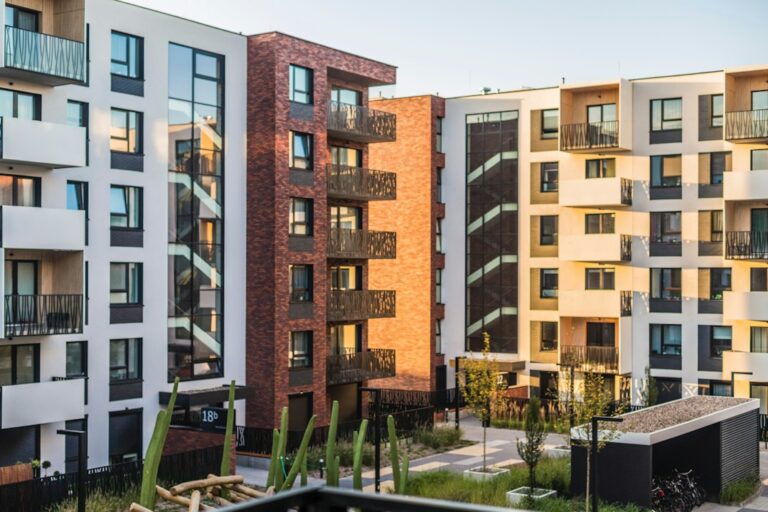
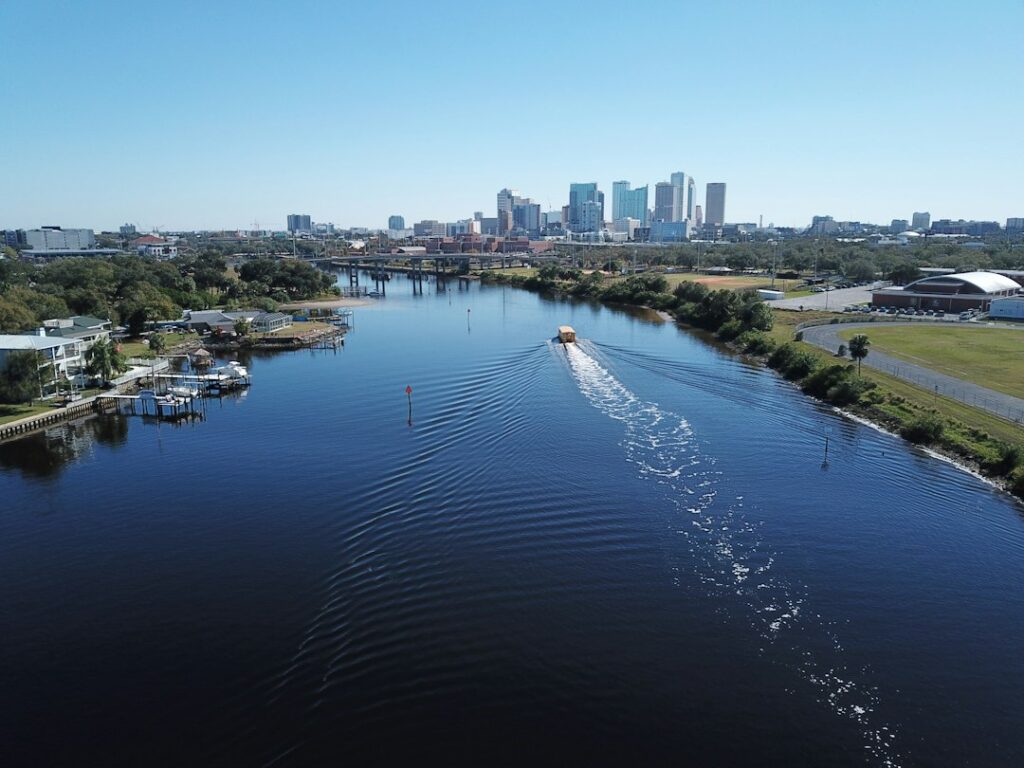
Tampa apartment development is being reshaped by Florida’s Live Local Act, which lets qualifying rental projects with at least 40% affordable units go up on commercial, industrial and mixed-use land with staff-level approval, alongside large master-planned districts such as Gasworx in Ybor and Water Street downtown. For owners of existing buildings, the result is a steady flow of new competition, much of it income-restricted, layered on top of a metro that delivered thousands of new apartments in 2025 and still has more under construction.
This article explains the rules driving new supply in the city of Tampa, the projects and numbers behind them, and what they mean for the value and operations of older apartment properties. Figures are dated and attributed, because Tampa’s pipeline changes month to month.
What drives Tampa apartment development
Tampa, the county seat of Hillsborough County, had 384,959 residents at the April 2020 census, and the Census Bureau estimates 413,554 as of July 1, 2025, according to Census QuickFacts for Tampa. The same source puts the city’s median gross rent at $1,701 for 2020–2024, with owners occupying 50.3% of homes across 166,278 households, so roughly half of Tampa households rent.
The city’s own analysis expects that growth to continue. When it opened the Marquee Square apartments in September 2025, the city projected 60,000 more residents by 2045. Its Comprehensive Housing Needs Assessment, completed in November 2025, estimated that Tampa needs about 24,198 new housing units between 2024 and 2045 and found that more than half of renters have been cost-burdened since 2010. Those two numbers, population growth and affordability pressure, explain most of the policy choices described below.
What the Live Local Act changed
The Live Local Act, CS/SB 102, was signed on March 29, 2023, and took effect July 1, 2023, as Chapter 2023-17, Laws of Florida. It included $711 million in housing funding, barred local governments from adopting rent control, and, most importantly for developers, required cities and counties to allow qualifying multifamily and mixed-use rental projects on land zoned commercial, industrial or mixed-use, without a rezoning.
The Legislature has amended the act twice since:
- SB 328 (Chapter 2024-188), effective May 16, 2024, limited how far local governments can restrict floor area ratio, allowed certain height limits, and revised the property tax exemption rules.
- SB 1730 (Chapter 2025-172), effective July 1, 2025, extended eligibility to flexibly zoned areas and to land owned by religious institutions, and limited local rules on how mixed-use projects must divide residential and non-residential space.
The cumulative effect is that many of Tampa’s commercial corridors and older industrial sites are now potential apartment sites, approvable at the staff level as long as the affordability and design conditions are met.
How the City of Tampa applies Live Local
A September 19, 2025 City of Tampa zoning memo on the Live Local Act lays out how the city implements the statute. The key terms are:
- Affordability: rental projects need at least 40% of units affordable for at least 30 years.
- Mixed use: mixed-use projects must be at least 65% residential and at least 10% non-residential.
- Density: projects may build to the city’s highest allowed density, the RMU-100 category at 100 units per acre.
- Floor area: up to 150% of the highest allowed floor area ratio, which in Tampa works out to 5.25 (3.5 times 1.5).
- Height: up to the tallest height allowed within one mile, or three stories if that is higher. Chapter 27 zoning heights range from 35 to 200 feet. Where a site is next to single-family areas on two or more sides, height is capped at 10 stories.
- Parking: 0.8 spaces per affordable unit. Tampa has no designated transit-oriented areas.
- Process: administrative approval with no City Council or board vote, a fee of $2,642 plus $111 per acre, a 60-day review with one possible 30-day extension, and approvals that expire after 24 months if no building permit is issued.
There are exceptions. Projects within a quarter mile of a military installation still need a City Council rezoning, and the act does not apply in airport-impacted areas or on working waterfronts. For an owner, the practical lesson is that the zoning label on a nearby strip center or warehouse no longer tells you much about what could be built there.
A simplified example of the math
Consider a hypothetical three-acre commercial parcel. At the 100-units-per-acre ceiling, the density cap alone would allow up to 300 apartments, before floor area, height and site constraints are applied. At least 40% of them, or 120 units, would need to stay affordable for 30 years. The parking requirement for those affordable units would be 96 spaces at 0.8 per unit, and the application fee would be about $2,975. Because 120 affordable units is more than the 70-unit threshold in state law, the project could also seek the property tax exemption described below. Real projects rarely reach the full density on paper, but the example shows why owners of nearby older buildings should take Live Local sites seriously.
Tampa’s Live Local pipeline by the numbers
The city keeps a running list of Live Local projects; the version posted in late September 2026 shows 20 applications, of which 12 were approved, five were in process, two were denied and one was withdrawn. The approved projects total 2,613 units, 1,442 of them affordable. Across all 20 applications, the total is about 4,127 units, with 2,487 affordable.
Two details stand out. About 55% of the approved units are affordable, well above the 40% minimum, which shows that many applicants are committing to more affordable units than the law requires. And the approved projects average a little over 200 units each, large enough to affect leasing in the surrounding neighborhood when they open.
Those figures are modest next to the metro’s overall construction volume, but they matter because they are spread across sites that would not have allowed apartments a few years ago. A Class B or C building on a commercial corridor can find a new, partly income-restricted competitor appearing on a former retail parcel down the street, and its affordable-tier rents may land close to what nearby older market-rate units charge.
The property tax exemption for affordable units
Live Local also created a property tax incentive that changes the economics of new projects. Under section 196.1978(3) of the Florida Statutes:
- The exemption applies to newly constructed developments with more than 70 affordable units.
- Units rented to households at or below 80% of area median income are 100% exempt.
- Units for households between 80% and 120% of area median income receive a 75% reduction in assessed value.
- Rents may not exceed the lesser of Florida Housing Finance Corporation’s limits or 90% of market rent.
- Owners must apply to the property appraiser by March 1, and starting with the 2025 tax roll, a taxing authority may opt out of the 80% to 120% tier by a two-thirds vote.
For existing owners, the exemption is a competitive factor more than a direct benefit. Property taxes are among the largest operating expenses for a Florida apartment building, and a new property that pays little or no tax on a large share of its units can accept lower rents at the affordable tiers while still covering its costs. Older buildings that compete for the same renters do not have that advantage.
Large districts shaping Tampa’s skyline
Beyond Live Local, several large districts account for much of Tampa’s residential growth:
- Gasworx, Ybor: roughly 50 acres planned for about 5,000 homes. La Unión, with 317 units, was delivered in 2024; The Stevedore, with 390 units, welcomed its first residents on April 1, 2026; and the 376-unit Olivette tower topped out on April 17, 2026, with completion expected in 2027.
- Ybor Harbor: a separate 33-acre plan for nearly 5,000 units.
- Water Street Tampa: a 56-acre, $3 billion downtown district, as described by Multi-Housing News in 2024, with plans for an additional 452-unit residential tower filed in July 2026.
- Rome Yard, West Tampa: 18 acres of city-owned land where Related Urban plans 954 units, about 600 of them income-restricted, plus 40 affordable for-sale townhomes.
- Marquee Square, East Tampa: 354 affordable units for households at 50% to 120% of area median income, restricted for 99 years, which opened September 17, 2025 on the former Fun-Lan Drive-In site with $12 million from the city.
Most of these districts sit in and around downtown, Ybor and West Tampa. Existing buildings in those neighborhoods face the most direct competition, but they also benefit from the amenities, jobs and infrastructure investment the new districts bring.
Zoning reforms on the horizon
The city’s Comprehensive Housing Needs Assessment found that current zoning allows about 99,500 units on vacant or redevelopable land, but about 40,000 of those are not allowed by right, meaning they would require a rezoning or other discretionary approval. It also found that about 1,000 subsidized units could lose their affordability restrictions by 2032. Its recommendations include allowing up to four units per lot in certain areas, permitting accessory dwelling units citywide by right, lowering parking minimums and adopting inclusionary zoning.
Those findings cut two ways for existing owners. The 40,000-unit gap between theoretical and by-right capacity helps explain why predictable approval paths, such as master-planned districts and Live Local, matter so much to developers. If the city adopts the recommended reforms, more small-scale infill, such as fourplexes and ADUs, would become possible across established neighborhoods. That kind of supply competes less with large complexes than with older small apartment buildings, duplexes and rented single-family homes, so owners of smaller properties in neighborhoods targeted for reform should watch the process closely.
Some of that work has already started. In 2024, Tampa dropped the requirement that an owner live on a property with an accessory dwelling unit and expanded the areas where ADUs are allowed, adding neighborhoods such as Sulphur Springs, Temple Crest, Wellswood and parts of Riverside Heights. As of August 19, 2026, 28 homeowners had started ADUs under the new rules and seven had finished. The broader Tampa Comprehensive Plan update, Live Grow Thrive 2045, adopted its vision in July 2022 and completed its future land use, housing and coastal phase in spring 2026; the final phase was still under way in summer 2026, and the plan takes effect only after review by the Florida Department of Commerce.
Deliveries, vacancy and rents in the Tampa metro
Market data firms agree that 2025 was a heavy delivery year, even if their counts differ. Northmarq, using CoStar data, reported about 8,500 apartments delivered across the Tampa metro in 2025, down 30% from 2024, with 11,815 units under construction at year-end, vacancy of 8.0% in the fourth quarter and an average asking rent of $1,709, down 0.1% from a year earlier. It expected about 7,200 deliveries in 2026. Yardi Matrix, as reported by Multi-Housing News in February 2026, counted 11,269 units delivered in 2025, or 4.1% of existing stock, with stabilized occupancy of 93.4% and an average asking rent of $1,786 in December.
The difference between the two counts reflects different property universes and methods, so owners should compare like with like when benchmarking. Both sources point in the same direction: supply has outpaced demand enough to hold rents roughly flat, and deliveries are expected to slow but not stop in 2026.
For budgeting, these metro figures are a backdrop rather than a forecast for any single property. A building’s own trailing occupancy, concessions and renewal rate are better guides, but a metro vacancy rate near 8% signals that keeping existing residents deserves as much attention as signing new ones, since every renewal avoids turnover costs and a vacancy that new buildings are competing hard to fill.
Storm rebuilding and the 50% rule
Development rules also reach existing buildings after a storm. Following Hurricanes Helene and Milton in 2024, Tampa waived permit fees for storm repairs. Properties in the flood zone must complete a FEMA Substantial Improvement form, which applies the rule that repairs or improvements costing more than 50% of a building’s market value trigger current flood-protection requirements. For Helene and Milton damage, the city’s October 2024 permitting memo excluded one year of repair work from that 50% calculation under City Code section 5-121, and the city sent substantial-damage letters to owners in the flood zone.
For an older apartment building in a flood zone, the 50% threshold can decide whether a renovation is a cosmetic upgrade or a full rebuild to current elevation standards. Owners planning major capital work should get the building’s market value and flood zone status confirmed before scoping a project.
What the pipeline means for existing Tampa buildings
For owners of older apartment properties in Tampa, the development picture translates into a few practical points:
- Map nearby Live Local sites. Commercial and industrial parcels within a mile or two are potential competitors, and the city’s project list shows where applications have already been filed.
- Price against new affordable tiers. Income-restricted units in new buildings, capped at no more than 90% of market rent when the tax exemption is claimed, can compete directly with older market-rate units.
- Expect concessions to linger. With thousands of units still under construction metro-wide, lease-up properties are likely to keep offering incentives, and stabilized buildings may need to match some of them.
- Remember that rent control is off the table. The Live Local Act preempts local rent control, so pricing remains a market decision.
- Plan capital work with the flood rules in mind. In a flood zone, the 50% threshold shapes how far a renovation can go.
Some owners respond to a supply wave by repositioning their buildings; others decide to trade into a different property or market. Our guide to 1031 exchanges for apartment owners explains how a tax-deferred exchange works, and the Florida market overview compares Tampa with other cities in the state. For owners considering a sale, our Tampa Bay market page explains how we evaluate buildings across the region.