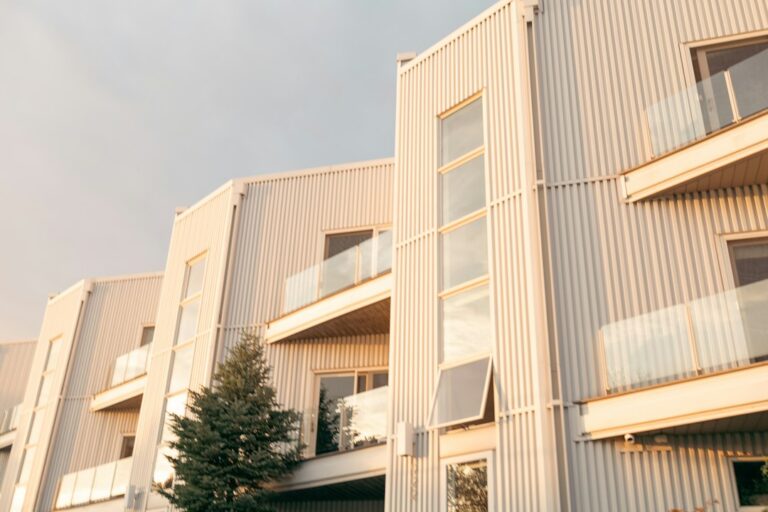
Duluth rental licensing rules require every apartment building to hold a city rental license before any tenant moves in, renewed every three years and backed by a Fire Department Life Safety inspection. On top of that license, Minnesota statutes govern deposits, late fees, entry and evictions, and two newer city measures, a tenant rights notice and a voter-approved right-to-repair ordinance, now shape how owners handle leases and maintenance.
Why Duluth rental licensing rules carry extra weight
Duluth is the seat of St. Louis County and sits at the western tip of Lake Superior. The Census Bureau’s QuickFacts profile for Duluth estimates 88,330 residents on July 1, 2025, up from an April 2020 base of 86,878. The owner-occupied housing rate for 2020 to 2024 was 59.4%, which means roughly four in ten of the city’s 37,447 households rent. Median gross rent over the same period was $1,087.
The age of the housing stock is what makes the licensing program central to owning here. When the city announced its tenant notice ordinance in May 2025, Deputy Fire Chief Jonathan Otis, who leads the Life Safety division, said Duluth “has the oldest average housing stock in the state and among the oldest in the nation.” Older buildings mean more boilers, more original wiring, more converted attics and basements, and more opportunities for an inspector to write a correction order. For an apartment owner, the rental license is less a paperwork exercise than the city’s main tool for checking that an aging building still meets minimum standards.
The rules discussed below fall into three tiers:
- City of Duluth: the rental license, inspections, posting and transfer duties, the disorderly behavior provisions, the tenant rights notice and the right-to-repair ordinance.
- State of Minnesota: Chapter 504B of the Minnesota Statutes, which covers security deposits, late fees, entry and eviction procedure, plus the state limit on local rent control.
- Federal: fair housing law and lead-based paint disclosure for buildings constructed before 1978, which apply to most of Duluth’s older apartment stock.
Who needs a license and how the three-year cycle works
Chapter 29A of the city code adopts the 2012 edition of the International Property Maintenance Code as Duluth’s housing and property maintenance code, and the same chapter sets up rental licensing. Section 29A-28 is blunt: no owner may permit any tenant to occupy any portion of a rental unit unless that portion is licensed. The Fire Department’s rental licensing page repeats the point, noting that a license must be obtained and have an issued status before a home is rented out.
Under Section 29A-31, licenses run for a term of three years. Several application details matter for apartment owners:
- Renewal applications are due at least 90 days before the license expires (Section 29A-29(a)(1)).
- A renewal for a license that has already expired is processed as a new application, and the building must comply with all applicable laws (Section 29A-29(c)). If a license lapses, the city may administratively reissue it if the owner completes the remaining requirements within 60 days of expiration (Section 29A-29(d)).
- Newly built units that comply with the State Building Code and were certified for occupancy within one year before the application can be licensed for the first period without a further inspection (Section 29A-29(a)(3)). Every other rental unit is inspected before a license is issued.
- The applicant must name a managing agent or contact person who lives within a 25-mile radius of the city and has authority to act for the owner, and must keep address, phone and email information current (Section 29A-29(e)).
The code also requires a posted notice. At the principal exterior entrance of any rental unit that is not owner-occupied, the owner must display a notice in a conspicuous place giving the name, email address and telephone number of the owner or managing agent (Section 29A-32(b)). If the managing agent changes, the new agent must notify the code official in writing within ten days (Section 29A-32(d)).
What Duluth’s 2026 fee schedule charges
Section 29A-30 leaves license fees to city council resolution, so the amounts change through the annual fee schedule rather than through the code itself. The city’s 2026 fee schedule lists the following rental housing fees:
- $325 per building for a new license on an existing structure or a renewal, which includes the initial inspection and one reinspection (up from $320 in 2023 through 2025).
- $40 for each dwelling or housekeeping unit, unchanged since a December 2021 council action.
- $125 to reissue an existing license with a new owner or manager name for the remainder of the license period (up from $100).
- $225 for a second or later reinspection, $225 for each failure to appear for a reinspection, and $225 for a reinspection after a license has been suspended or revoked.
- $100 per parking space as a nonconformance fee where required off-street parking cannot be provided.
As a worked example of how those fees combine, a 12-unit building renewing in 2026 would owe the $325 building fee plus 12 units at $40, or $805, before any extra reinspection charges. Spread over a three-year license term, that is a modest line item, but failed reinspections can add up quickly at $225 each.
Two other provisions mainly affect smaller properties. Converting a one-family home to a multi-tenant rental carries a one-time $1,500 conversion fee, and one- and two-family rentals licensed since March 13, 2011, must provide at least two off-street parking spaces plus one more for each bedroom beyond three, with snow cleared within 72 hours after each snowfall (Section 29A-32(e) and (f)). For fee purposes, Section 29A-27 treats each bedroom in a dwelling as a rental unit, which is why the per-bedroom charge applies to houses and duplexes.
Inspections, correction orders and the current backlog
After a completed application and fees reach the Life Safety office, the city says an initial inspection is scheduled within seven to ten business days. The inspector identifies any code corrections, a reinspection verifies that the work was done properly, and the license is issued once the property meets minimum housing code requirements.
Section 29A-33 requires licensed premises to be available for inspection “at any reasonable time,” whether the visit is tied to licensing or to a complaint. When an inspection finds violations, the city mails a written notice that sets a reasonable time to correct them, and the total correction period, including any extension, may not exceed 180 days. If the work is not done and the unit is not vacated, the code official may revoke the license and order the unit vacated within a period of no more than 30 days. Violating the article is a misdemeanor for the property owner and anyone else involved (Section 29A-34(d)).
Owners should also know about a practical wrinkle. The Fire Department’s licensing page currently states that the city is behind on inspections and will call owners to schedule them, and that rental licenses whose renewal fees have been paid will not be revoked for lack of inspection. That protects owners who renew on time, but it also means a buyer cannot assume a recent inspection has happened just because a license shows as active. The city’s online rental license search is the starting point for confirming status.
Habitability items with short clocks
Section 29A-36 gives tenants a self-help remedy for essential services. If the landlord fails to provide heat, running hot and cold water, electricity, gas or working toilet or bathing facilities, and the building official confirms the violation, the tenant may make the repair or pay the utility bill and deduct the cost from rent if the landlord has not fixed the problem within 24 hours of the official’s notice. For major heating plant, electrical, water or sewer work costing more than $500, the landlord keeps the right to choose the contractor and repair method only if it supplies temporary service and signs a written repair contract within seven days. Missing deadbolts or smoke detectors have a five-day window after the building official’s notice. In a city where winter heating failures are a genuine safety issue, these clocks are worth building into any maintenance plan.
Buying or selling a licensed building in Duluth
Licenses do not move between properties (Section 29A-32(a)), but they can transfer with a sale. Under Section 29A-32(c), when ownership changes, the new owner must apply for a transfer within 30 days and pay the transfer fee, which is $125 under the 2026 schedule. If the building is sold on a contract for deed, the buyer is responsible for the transfer application and must provide a recorded copy of the contract from the St. Louis County recorder’s office. The reissued license runs for the remainder of the existing license period rather than starting a new three-year term.
For a seller, that means the license term, the date of the last inspection and any open correction orders are part of what a buyer will ask about, and a clean file can remove a source of delay. Owners who are weighing a sale can find local context on our page about selling an apartment building in Duluth, and statewide context in our Minnesota market overview. Because most Duluth apartment sales close with tenants in place, the lease files, deposit ledger and tenant notices described in the next sections transfer with the building, and our guide to selling a rental property with tenants in place covers how those records are typically handled at closing.
A buyer’s due diligence checklist for a Duluth apartment building should include:
- The license number, expiration date and status from the city’s search tool.
- Copies of the most recent inspection report and evidence that corrections were completed.
- The name of the local managing agent who will be listed after closing, to satisfy the 25-mile rule.
- Any disorderly behavior notices issued in the past 12 months.
- Signed disorderly behavior acknowledgments and tenant rights notices for current leases.
Disorderly behavior and the three-notice process
Duluth’s code makes licensees responsible for responding to repeated disorderly behavior at their properties. Section 29A-40 prohibits tenants and their guests from engaging in, aiding, abetting or conspiring in disorderly behavior on or about the licensed premises, and it makes any such violation a material breach of the rental agreement and good cause for termination. Before a lease term starts, the licensee must give tenants a written notice containing the code’s definition of disorderly behavior and these provisions, and must keep a signed acknowledgment of receipt.
Section 29A-42 then sets out an escalating process:
- First instance: the city notifies the licensee, the property manager on file and the tenant, and directs the licensee to take steps to prevent further violations.
- Second instance within 12 months: the licensee must submit a written abatement report within ten days describing what it has done and plans to do. The owner or manager must also attend crime-free multi-housing training within 180 days, and failure to do so may lead to a fine and license revocation.
- Third instance within 12 months: the code official must revoke, suspend or refuse to renew the license, with the decision made within 15 days of the notice.
Separately, Section 29A-40(b) requires the licensee to begin eviction proceedings under state law if a tenant violates these provisions three or more times in a 12-month period. For owners of larger buildings, keeping a log of incidents, notices and responses by unit is the simplest way to show the city that the abatement process is working.
Tenant notices and the right-to-repair ordinance
Two measures adopted in 2025 add new obligations. The first is the tenant rights notice. In June 2025 the city council adopted Article V of Chapter 29A, which requires landlords to give tenants notice of available resources and of their rights under existing state law and city ordinance. The city’s published Duluth tenant rights notice states that, effective January 1, 2026, it must be included with all lease agreements and posted publicly in buildings with five or more units. The notice summarizes rights such as a unit in reasonable repair, protection from unlawful eviction and retaliation, proper notice before lease changes or rent increases, and timely repairs. Owners who use a standard lease form should add the notice to their lease packet and post it in a common area.
The second is the Tenant Right to Repair in Residential Rental Property ordinance, which Duluth voters approved on November 4, 2025, and which took effect on November 10, 2025, according to a client alert from the Minneapolis law firm Winthrop & Weinstine and reporting by the tenant advocacy group HOME Line. Under the ordinance, once a tenant gives proper notice of a qualifying defect, the landlord has 14 days to complete the repair or give the tenant a scheduled repair date. A landlord who disputes that a repair is needed must send a written dispute within 14 days and arrange for a building official to inspect within 30 days. If the landlord does neither, the tenant may proceed with the repair under the ordinance’s conditions and deduct the cost, and violations can expose the landlord to rent reduction, lease rescission, a civil penalty of up to $500 per violation and attorney fees.
Minnesota statutes that sit on top of the city code
City licensing does not replace state law. The following Minnesota Statutes apply to every Duluth apartment building:
- Security deposits: Section 504B.178 requires the landlord to return the deposit, with simple noncompounded interest at 1% per year, or give a written explanation of amounts withheld within three weeks after the tenancy ends. If a building is condemned for reasons not caused by the tenant, the deadline is five days after the tenant leaves. Bad-faith retention can bring punitive damages of up to $500 per deposit.
- Late fees: Section 504B.177 allows a late fee only if the tenant and landlord agreed in writing, and caps it at 8% of the overdue rent payment.
- Entry: Section 504B.211 requires at least 24 hours’ notice before entry, with entry between 8:00 a.m. and 8:00 p.m., outside of the statute’s exceptions. Violations can bring a rent reduction, recovery of the deposit and a civil penalty of up to $500 per violation.
- Nonpayment notices: Section 504B.321 requires a written notice at least 14 days before filing an eviction for nonpayment. The notice must show the total due, an itemized accounting of rent, late fees and other charges, the name and address of the person authorized to receive payment, and specific statements about legal help and emergency assistance. Once a case is filed, the hearing is set seven to 14 days after the summons is issued.
- Rent control: Section 471.9996 bars Minnesota cities from adopting rent control unless the measure is approved in a general election. Duluth has no rent control ordinance, so rents on existing apartments are set by the lease and the market, subject to proper notice.
What this means for Duluth apartment owners
Taken together, Duluth’s rules reward owners who treat compliance as an ongoing system rather than a once-every-three-years event. A practical routine looks like this:
- Calendar the license expiration and file the renewal at least 90 days ahead, since a lapsed license is processed as a new application.
- Keep a local managing agent or contact within 25 miles on file, and update the city within ten days if that person changes.
- Budget the 2026 fees, $325 per building and $40 per unit, and plan repairs so the included reinspection is the only one needed.
- Add the disorderly behavior notice and the tenant rights notice to every lease packet, collect signed acknowledgments, and post the rights notice in buildings with five or more units.
- Set up a dated repair-request log so every request gets a repair or a scheduled date within 14 days.
- Follow state limits on deposits, late fees, entry and nonpayment notices, which apply regardless of what a lease says.
- When buying or selling, confirm license status, inspection history and open orders early, and file the transfer within 30 days of closing.