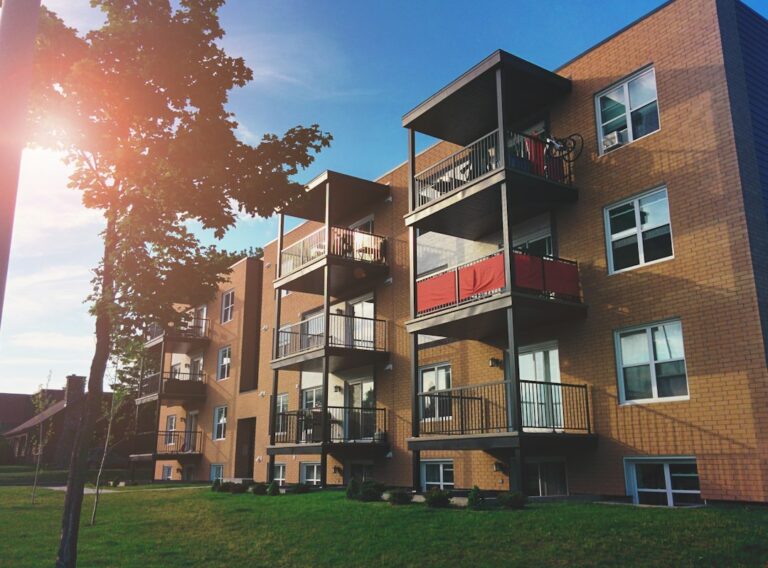
Independence, MO landlord rules come from two layers: Missouri statutes, which control deposits, evictions and rent, and a city code that requires every residential rental to be licensed and inspected under the Rental Ready program. For apartment owners the city layer has tightened recently, with an expanded inspection checklist in 2025 and, since January 1, 2026, no city utility service for a rental unit without an active landlord license.
Independence is the fifth-largest city in Missouri, with 123,011 residents in the 2020 Census, and it shares county seat status in Jackson County with Kansas City. That proximity causes confusion, because several well-known Kansas City tenant protections do not apply here. This guide sorts out which rules govern a five-plus-unit building inside Independence city limits, and what each one means in day-to-day operations.
Missouri’s statewide limits on local rent rules
The starting point is that Independence cannot regulate rents. Missouri Revised Statutes Section 441.043 bars any city or county, including charter governments, from regulating the amount of rent charged on private residential or commercial property.
That preemption was widened by HB 595 and HB 343, effective August 28, 2025. The current version also prevents local governments from adopting rules that:
- Require landlords to accept housing-assistance payments as a source of income.
- Restrict tenant screening based on income, credit, eviction or damage history, or criminal history.
- Cap security deposits.
- Give tenants a right of first refusal when a property is sold.
Local governments may still protect veterans’ benefits as a source of income. For an owner, the effect is that rent levels, screening criteria and deposit amounts in Independence are governed by state law and the lease, not by city ordinance. The site’s guide to rent control and property tax rules by state shows how Missouri compares with neighboring states.
Security deposits under Section 535.300
Missouri’s deposit statute has been stable since its 2018 amendment, and it applies uniformly across the state. Under Section 535.300:
- The deposit may not exceed two months’ rent.
- It must be held in an account at a federally insured bank or credit union, and the landlord may keep any interest.
- Within 30 days after the tenancy ends, the landlord must return the deposit or provide an itemized list of damages along with any balance. Mailing to the tenant’s last known address satisfies the delivery requirement.
- Permitted deductions include unpaid rent, damage beyond ordinary wear and tear, carpet cleaning if the lease provides for it, and losses caused by inadequate notice.
- The landlord must give reasonable written notice of the move-out inspection, and the tenant has the right to attend.
The penalty for getting it wrong is significant: a tenant can recover twice the amount wrongfully withheld. In a building with regular turnover, a written move-out procedure and a calendar reminder for the 30-day deadline are cheap insurance.
Notice, occupancy and how tenancies end
Most apartment leases in Independence are either fixed-term or month-to-month. Under Section 441.060, either party can end a month-to-month tenancy with written notice that ends on a rent-paying date at least one month after it is received. A lease that is not in writing is treated as month-to-month by default.
The same section sets a useful occupancy benchmark: two persons per bedroom is presumed to be a reasonable occupancy limit, and children born during the lease term do not count against it. Owners writing occupancy rules into leases can rely on that presumption rather than guessing.
When a tenant leaves without notice, Section 441.065 provides a path to treat the unit as abandoned. All of the following must be true: rent has been unpaid for 30 days, the landlord reasonably believes the tenant has moved out, the landlord has posted a notice on the unit and mailed it by first-class and certified mail, and the tenant has not responded in writing within 10 days. Skipping a step exposes the owner to a wrongful-eviction claim, so the notice and mailing records belong in the tenant file.
Eviction procedure for Independence apartment owners
Missouri offers two main court routes, and choosing the right one matters.
Rent and possession, under Chapter 535, is the route for nonpayment. Under Section 535.030 the summons must be served at least four days before the court date, and the hearing cannot be set more than 21 business days after the summons is issued. If service is by posting and mailing, it must occur at least 10 days before court, and that form of service does not support a money judgment if the tenant defaults. After judgment, Section 535.040 requires the officer to deliver possession within five days of receiving the execution.
Unlawful detainer, under Chapter 534, is used for holdovers after a lease ends and the landlord has made a written demand for possession. The possession writ in those cases cannot issue sooner than 10 days after judgment.
Two practical points catch owners off guard:
- Trial de novo still exists. Under Section 512.180, a party who loses a rent-and-possession case heard by an associate circuit judge without a jury is entitled to a new trial. Under Section 535.110, that appeal does not stop the eviction unless the tenant posts a bond within 10 days and pays rent into court as it comes due.
- The venue is local. The 16th Judicial Circuit’s landlord-tenant docket sends cases for property in Independence to the Eastern Jackson County Courthouse at 308 W. Kansas Ave. in Independence, not to the downtown Kansas City courthouse.
Missouri also added a separate tool in 2024. HB 2062, effective August 28, 2024, created an expedited removal process under Section 534.602 for unauthorized occupants of residential property, with a hearing within 48 hours, and made unlawful occupancy a class A misdemeanor under Section 569.200. It applies only where the property has not been leased for three consecutive months and the occupants are not current or former tenants, so it is not a shortcut for evicting a tenant who has stopped paying.
Self-help, repairs and utilities under state law
Missouri prohibits self-help evictions. Under Section 441.233, removing a tenant or changing the locks without a court order is treated as forcible entry and detainer, and so is deliberately cutting off electric, gas, water or sewer service, except for genuine health or safety reasons. Independence repeats the same prohibition in its own code.
Tenants have a limited repair-and-deduct right under Section 441.234. A tenant qualifies only after six consecutive months of residence, with rent fully paid and no uncured written lease violations, and the condition must violate a local housing code. The landlord gets 14 days after written notice to make the repair. The tenant can then spend up to $300 or half a month’s rent, whichever is greater, but no more than one month’s rent, and the right is limited to one month’s rent in any 12-month period. A lease cannot waive it. Because the trigger is a local code violation, Independence’s adoption of the International Property Maintenance Code gives this statute real force inside the city.
Water and sewer bills follow Section 250.140, which treats city water and sewer service as provided to both the occupant and the owner. Where a unit has its own private lines, the owner’s liability for a tenant’s unpaid bill is capped at 90 days and the city must try to notify the owner once a tenant is 30 days late. Where units share a line, as in most apartment buildings, the owner is responsible.
The Rental Ready program and Independence, MO landlord rules at the city level
Independence adopted its Rental Ready program in September 2016 and began enforcing it on June 1, 2017. The city describes it as the first rental inspection program in the Kansas City metro. The core requirements are:
- Every residential rental in the city must be covered by a landlord license, renewed annually in the month it was first issued.
- Before a unit can be licensed, it must pass a health and safety inspection.
- Inspections are performed by city-approved private inspectors, at $100 per unit, with re-inspections at $60.
The City Council unanimously approved changes on January 21, 2025, which took effect May 1, 2025. According to the city’s announcement of the Rental Ready changes, the checklist expanded from 9 items to 16, adding window fall protection for windows more than 72 inches above the ground, carbon monoxide detectors, ground-fault circuit interrupters and HVAC items. For buildings with five or more units, 50% of units must now be inspected, and units inspected previously do not count toward that share. Units are inspected on a recurring cycle and at tenant turnover, with every unit inspected at least once every four years.
The newest enforcement lever arrived on January 1, 2026: the city will not provide utility service to a rental unit unless the landlord holds a valid, active license. Because Independence Power and Light, the electric utility, has been city-owned since 1901, that rule has teeth. The city also offers a revert-to-owner agreement so service switches to the owner automatically when a tenant moves out, which helps avoid vacant-unit shutoffs between leases.
The landlord and tenant code in Chapter 4
Beyond licensing, Chapter 4, Article 11 of the city code sets operating rules. The city’s Landlord and Tenant Guide, updated in February 2025, summarizes them:
- A unit may not be leased unless it meets the city’s latest adopted International Property Maintenance Code.
- Tenants may not refuse entry for repairs after reasonable notice, and no notice is required in an emergency.
- Landlords may not retaliate against a tenant for reporting code violations.
- Landlords may not pass the city’s late fees, permit-review fees or re-inspection fees through to tenants.
- A landlord with three formal city complaint actions in a rolling 12-month period is designated a “deficient landlord,” which triggers monthly city inspections for six months.
- Violations carry fines of at least $150 for a first conviction, $300 for a second and $500 for later convictions, and up to six months in jail.
Exterior maintenance is enforced separately. The city’s property maintenance standards require grass and weeds to be kept under seven inches, and trash carts may be set out no more than 16 hours before pickup and must be removed by the end of collection day. Summons fines range from $100 to $500, and the owner is billed for any abatement work the city performs.
Federal rules add one more layer. Much of Independence’s apartment stock predates 1978, which brings in the federal lead-based paint disclosure rule. Before a lease is signed, the landlord must provide the EPA pamphlet “Protect Your Family From Lead in Your Home,” disclose any known lead hazards and available reports, including building-wide reports for multi-unit properties, and include a Lead Warning Statement in the lease. Signed disclosures must be kept for three years. Zero-bedroom units and leases of 100 days or less are among the exemptions.
Walking through a unit turnover in Independence
The state and city rules are easiest to understand in sequence, because a single move-out touches most of them. Consider a two-bedroom unit in an older building whose month-to-month tenant decides to leave.
- Notice: the tenant’s written notice must end on a rent-paying date at least one month after the landlord receives it, under Section 441.060. A notice that falls short simply pushes the end date to the next qualifying rent day.
- Move-out inspection: the landlord sends reasonable written notice of the inspection date and time, and the tenant may attend. Photos and a signed checklist from that walk-through support any deductions later.
- Utilities: with a revert-to-owner agreement on file, electric and water service switch to the owner when the tenant’s account closes, so the unit is not dark while it is being turned.
- City inspection: if the unit is due under the Rental Ready cycle or the turnover triggers an inspection, the owner schedules a city-approved inspector, fixes anything on the 16-item list that fails, and pays the $60 re-inspection fee if a second visit is needed.
- Deposit: within 30 days of the tenancy ending, the landlord returns the deposit or mails an itemized list of deductions and the balance to the tenant’s last known address.
- New lease: for a pre-1978 building, the lead disclosure, pamphlet and warning statement go to the incoming tenant before signing, and the owner keeps the signed copies for three years.
Handled in that order, a turnover in Independence is routine. Handled out of order, the same turnover can produce a doubled deposit claim, a utility gap or an unlicensed unit sitting empty.
Kansas City tenant rules that stop at the city line
Owners who also hold property across the city line should keep the two rulebooks separate. Kansas City adopted a Tenant Bill of Rights in 2019 that includes a 24-hour entry notice requirement and disclosure of recent code citations, and it established a tenant right to counsel in eviction cases in 2021. Neither applies inside Independence. Kansas City also adopted a source-of-income ordinance in 2024, but the 2025 amendment to Section 441.043 now makes local source-of-income requirements of that kind unenforceable statewide.
What these rules mean for apartment owners
For an owner or buyer of a five-plus-unit building in Independence, the practical checklist looks like this:
- Confirm that every unit is licensed and that the license renewal month is on the calendar, because utility service now depends on it.
- Budget for Rental Ready inspections at $100 per inspected unit and $60 per re-inspection, and walk units against the 16-item checklist before the inspector arrives.
- Check window heights, CO detectors and GFCI outlets in older buildings, since those were the items added in 2025.
- Keep deposit accounting tight: two-month maximum, insured account, 30-day return with itemization.
- File nonpayment cases as rent and possession in the Eastern Jackson County Courthouse, and plan for the possibility of a trial de novo.
- Sign a revert-to-owner utility agreement to avoid gaps between tenants.
A building that is out of compliance with Rental Ready is harder to finance and harder to sell, and buyers will ask for license and inspection records in due diligence. Owners thinking about a sale can see how the local market looks and what is involved in selling an apartment building in Independence, or compare other cities on the Missouri markets page.