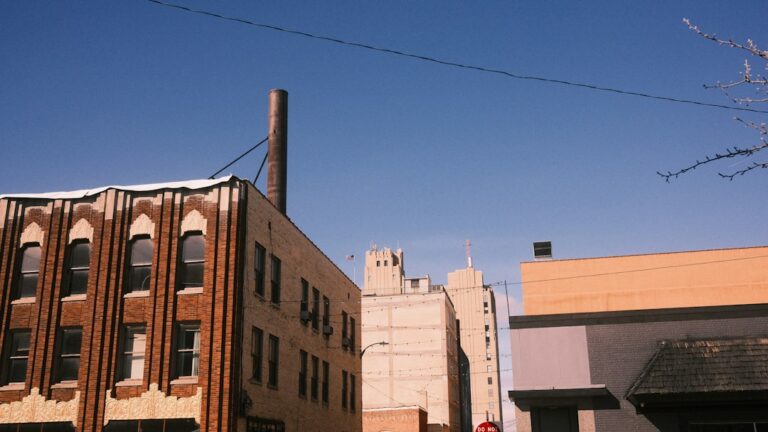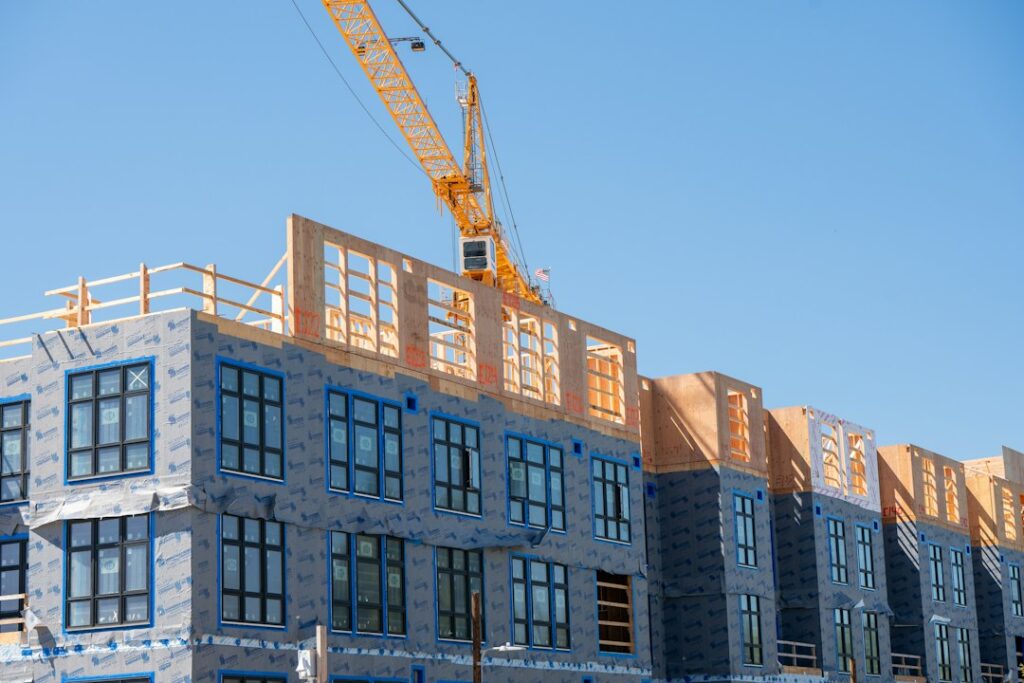
Missoula zoning changes adopted in February 2026 allow apartment buildings in 89% of the city’s residential and mixed-use districts, remove parking minimums for housing, and replace a patchwork of 38 districts and 95 planned-unit developments with a single 22-district code. For owners of existing apartment buildings, the short answer is that new competition is now legally easier to build almost anywhere in town, but the first apartment projects under the new rules had not yet been permitted by mid-2026, and the city’s own targets show how far supply still trails demand.
The reforms arrive in a city that has been growing steadily. Missoula had 73,489 residents in the 2020 Census, and the Census Bureau’s QuickFacts for Missoula estimates 78,903 as of July 1, 2025. The same profile puts the owner-occupied rate at 47.0% for 2020–2024, which means slightly more than half of occupied homes are rented. Missoula is the seat of Missoula County, whose population rose from 117,922 in 2020 to an estimated 123,513 in 2025. Set side by side, those figures show the city added about 5,400 residents over that period while the county as a whole added about 5,600, so nearly all of the county’s growth landed inside city limits, where apartments are most viable.
The plan behind the code: Our Missoula 2045
The new zoning rules implement a long-range plan the City Council adopted unanimously on December 16, 2024. The Our Missoula 2045 Land Use Plan sets out the numbers that drove everything that followed:
- The plan area is expected to grow about 1.39% a year, adding roughly 37,000 people by 2045.
- Missoula needs 22,000 to 27,500 additional homes over that period. That range includes an existing shortfall of 2,700 to 3,700 homes and enough extra supply to hold vacancy in a healthy 5% to 8% band.
- Instead of traditional land-use categories, the plan uses 12 “place types” and 8 street types to describe what should be built where, and it lists more than 150 implementation actions.
Translated into an annual target, the plan calls for 1,100 to 1,500 new homes a year for ten years. That benchmark is the yardstick against which every later permit count should be read.
What the Missoula zoning changes actually did
On February 2, 2026, the City Council unanimously approved a new Unified Development Code and zoning map, the culmination of the city’s code reform project. Coverage of the vote by Montana Free Press on the new zoning regulations laid out how sweeping the change is.
Fewer, broader districts
The old code had 38 zoning districts, 21 overlay zones and 95 planned-unit-development districts. The new code has 22 districts: seven residential, seven mixed-use and eight special-use. Every overlay was eliminated except the airport hazard area and four historic district overlays. For an owner, that consolidation means a parcel’s development rights are now far easier to read, and far more uniform from one neighborhood to the next.
Apartments allowed almost everywhere
Under the old zoning, 64% of residential areas allowed only single-family homes or duplexes. Under the new code, apartment buildings are permitted in 89% of residential and mixed-use districts, and mixed-use districts allow every building type with no density limit. In January 2026, before final adoption, the council also removed the cap on the number of units in apartment buildings in urban residential districts.
No parking minimums for housing
Parking minimums were removed for all residential uses, and parking requirements were dropped in commercial and industrial districts. On small infill sites, where surface parking competes directly with building footprint, this change matters most for the 5-to-20-unit buildings that fit on one or two city lots.
The transition window
The code took effect 30 days after adoption, and applicants filing within 120 days could choose the old or the new rules. Since July 2, 2026, every permit application has had to use the new code.
Older buildings and the new map
One less obvious effect concerns buildings that already exist. Because 64% of residential areas under the old code allowed only single-family homes or duplexes, some older Missoula apartment buildings, from converted houses with three or four units to small mid-century complexes, sat in districts that would not have allowed them to be built new. With apartments now permitted in most residential and mixed-use districts, owners of such properties should check whether their building now conforms to its district. Conforming status can matter when a building needs to be rebuilt after a fire, when a lender reviews zoning during a refinance, or when a buyer orders a zoning report during due diligence.
Montana’s state housing laws and the 2026 court ruling
Missoula’s reform did not happen in isolation. In 2023 the Montana Legislature passed a package of housing bills, summarized by the State Court Report’s analysis of the Montana Supreme Court decision:
- SB 323 requires duplexes to be allowed in single-family zones in cities above a set population.
- SB 528 requires accessory dwelling units to be allowed in single-family zones in all cities.
- SB 245 requires mixed-use and multi-unit buildings to be allowed in commercial zones in larger towns.
- SB 382, the Montana Land Use Planning Act, sets new planning and approval procedures for larger cities.
The laws were challenged almost immediately. A district court blocked SB 323 and SB 528 with a preliminary injunction on December 29, 2023, and the Montana Supreme Court later overturned that injunction, allowing both laws to take effect. In March 2026, the court unanimously upheld all four laws in Montanans Against Irresponsible Densification v. State, in an opinion by Justice Beth Baker, reversing a Gallatin County district judge’s finding that SB 382 violated the constitutional right to public participation.
For Missoula owners, the ruling removes the main legal cloud over the city’s new code. The combination of state mandates and local reform means the zoning baseline is unlikely to swing back toward single-family-only districts.
Missoula’s housing policy and funding tools
Zoning allows housing; money and land often determine whether it gets built. Missoula has layered several funding tools on top of its code reform.
A Place to Call Home and the 2025 update
The City Council adopted its “A Place to Call Home” housing policy in 2019 and completed a 2025 Housing Strategy Update organized around five strategies: Fund, Preserve, Assist, Build and Track. The council approved the update 10–1 in February 2026. The city’s citywide housing policy page tracks progress on each strategy.
The Affordable Housing Trust Fund
The trust fund is paid for by an annual council allocation and proceeds from city land sales. In July 2025 the council approved selling the 1.9-acre Riverfront Triangle “Fox Site” at Orange and Main streets to Averill Hospitality for a hotel, a sale expected to deliver millions of dollars to the fund over roughly a decade.
Urban renewal districts
Missoula uses tax increment financing through six urban renewal districts: URD II, URD III, Front Street, Riverfront Triangle, North Reserve-Scott Street and Hellgate. Montana Free Press’s review of Missoula’s urban renewal spending reported that URD III, which covers Midtown, runs through 2040 with about $9.3 million in estimated revenue for fiscal 2026, while URD II ends in 2031 and Hellgate in 2030. The redevelopment agency launched a workforce-housing program in 2023 that has helped fund projects including Scott Street-Ravara and Opportunity Place, and state law changes in 2021 and 2023 allow district funds to support housing for households earning 60% to 140% of area median income.
Where new apartments are coming from
Missoula’s recent apartment deliveries show both what the market can produce in a strong year and how lumpy that production is.
Income-restricted deliveries
In 2023, Trinity Apartments (202 units for households up to 70% of area median income) and Villagio (about 200 units, up to 60%) opened, together adding 402 income-restricted homes across three sites. That compares with the 20 to 30 income-restricted units the city typically added in a year, so a single year’s deliveries equaled more than a decade of the usual pace.
The broader multifamily pipeline
Broader multifamily supply has been steadier but modest. Sterling CRE’s mid-2025 survey, reported by KPAX in September 2025, counted 138 units delivered, 443 under construction, about 250 permitted and 508 in planning. Separately, the Missoula Organization of Realtors’ 2026 Five Valleys Housing Report found that the city issued 587 building permits in 2025, compared with 599 in 2024. Those permit totals include every housing type, but even at face value they fall well short of the 1,100-to-1,500-home annual target in the land use plan. Measured against that target, 2025’s 587 permits leave a gap of roughly 500 to 900 homes for the year, and the land use plan’s estimate of an existing 2,700-to-3,700-home shortfall means each short year adds to a backlog rather than holding steady.
The Sxwtpqyen area
The largest greenfield opportunity sits west of Reserve Street. A federal BUILD grant of about $13 million, announced in November 2019, is funding nearly three miles of new roads to open roughly 1,500 developable acres, according to Sen. Steve Daines’ announcement of the Mullan-area grant. A master plan for the Sxwtpqyen area adopted in March 2021 covers about 1,800 acres and allows for up to 6,000 homes over the coming decades.
Demand indicators to watch
Supply only tells half the story. Several demand indicators suggest Missoula’s renter base is still expanding:
- Rents. The Five Valleys report found the average two-bedroom rent rose 11.4% in its latest survey, from $1,491 to $1,661. Census figures lag market rents considerably: the 2020–2024 median gross rent in Missoula was $1,189.
- Vacancy. Sterling CRE’s mid-2025 data put multifamily vacancy at about 4.7%, up 0.61 points, after sitting below 1% only a few years earlier. That is still at the low end of the 5% to 8% range the land use plan considers healthy.
- Home prices. The 2026 Five Valleys report put the median home sale price at $550,000, which keeps many households renting longer.
- University enrollment. The University of Montana reported fall 2026 enrollment of 11,319 students, its highest since 2017, with more than 1,500 first-time freshmen.
Taken together, these indicators describe a market where demand is still outrunning new supply, even after an unusually large year of income-restricted deliveries. Rents for two-bedroom units are rising faster than Census medians suggest, vacancy has only just begun to loosen from historic lows, and the cost of buying a home keeps a large share of working households in the rental pool. That is the backdrop against which the new zoning code has to deliver units, and it explains why the city set its annual housing target well above recent permit totals.
How the new Missoula zoning affects existing buildings
For owners of existing apartment buildings, the reforms cut in two directions.
More competition over time
The obvious effect is that the barriers to building new rental housing are lower. A developer who once needed a rezoning, a planned-unit development or a parking variance can now build by right across most of the city. Over a five-to-ten-year horizon, that should bring more new units into neighborhoods where older walk-ups and small complexes have faced little direct competition. Newer buildings typically compete on finishes and amenities, so older properties that have deferred unit upgrades are the most exposed.
More redevelopment value in land
The same changes raise the underlying land value of many existing sites. A 1970s fourplex on a lot that now allows a larger apartment building with no parking requirement carries redevelopment potential it did not have before. When an owner evaluates a building today, the analysis should include both its income value and the highest and best use of the land under the new code. Our apartment building value calculator is a quick way to frame the income side of that comparison.
Slower than the headlines suggest
The early permit data is a useful reality check. By early July 2026, about 70 building permits had been processed under the new code, mostly for single-family homes, and none were for apartment buildings, although several apartment projects were in pre-application meetings. Construction costs, interest rates and infrastructure in growth areas still limit how quickly zoning capacity becomes delivered units.
What Missoula owners should take from the reforms
The practical takeaways for owners and passive investors in Missoula multifamily:
- Check your parcel under the new map. Confirm the district your building now sits in and what it would allow if rebuilt; for some lots, the answer changed significantly in 2026.
- Watch the pipeline, not the code. Pre-application meetings and building permits for apartment projects near your property are a better signal of future competition than the zoning map alone.
- Track vacancy against the plan’s 5% to 8% band. If market vacancy moves into that range, rent growth is likely to moderate; while it stays below, existing buildings remain in demand.
- Budget for unit upgrades. As new supply arrives, older units that have not been updated will feel competitive pressure first.
- Mind the income bands. Income-restricted projects like Trinity and Villagio serve households at or below 60% to 70% of area median income, while urban renewal housing funds can reach up to 140%. Market-rate buildings whose rents sit near those upper bands may see the most direct competition from subsidized workforce projects.
- Follow the URD sunsets. URD II and Hellgate expire in 2031 and 2030, which will change where tax increment money is available for housing projects.
Owners weighing their options can find local context on our Missoula market page and a statewide view on the Montana markets page.
The next milestones
The next two years will show whether Missoula’s zoning reform translates into the 1,100 to 1,500 homes a year the city says it needs. The first apartment buildings permitted under the Unified Development Code, the pace of road construction in the Sxwtpqyen area, and the 2025 Housing Strategy Update’s funding commitments are the milestones to watch. With the Montana Supreme Court’s 2026 ruling settling the state framework, the remaining uncertainty is economic rather than legal: whether financing and construction costs allow builders to use the capacity the city has opened up.