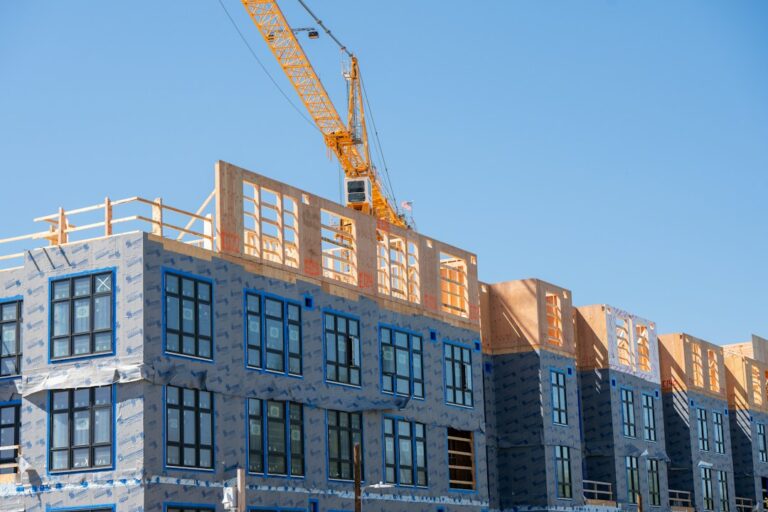
Reno renter demand is being driven by three forces at once: a manufacturing and logistics base east of the city anchored by the Tahoe-Reno Industrial Center, steady population growth fed in part by moves from California, and a construction pipeline that has slowed sharply after five years of heavy delivery. The result in 2026 is falling vacancy and record average rents in large complexes.
The city’s renter base is already large. Reno had 264,165 residents in the 2020 Census and an estimated 283,621 in July 2025, according to the Census Bureau’s QuickFacts for Reno, Sparks and Washoe County. The owner-occupied rate for 2020–2024 was 49.8%, so roughly half of Reno households rent. Reno is the seat of Washoe County, which grew from 486,492 to an estimated 509,386 over the same period, and it shares the urban core with Sparks, a separate city of about 112,000. For an apartment owner, that means demand is regional: a job created in Storey County or Sparks often becomes a lease signed in Reno.
Who rents in Reno
The Census profile gives a useful baseline for the typical Reno renter household:
- Household size: 2.33 persons per household, which supports demand for studios, one-bedrooms and two-bedrooms.
- Income: a median household income of $80,760 for 2020–2024.
- Rent: a median gross rent of $1,556 in Reno and $1,608 countywide for 2020–2024.
- Tenure: about 50% renters in the city, compared with about 40% countywide, where the owner-occupied rate is 59.9%.
That gap concentrates rental demand within Reno’s city limits. Census medians lag the market by several years because they average five years of survey responses, so the more current indicators below matter more for underwriting.
The industrial engine east of town
A large share of the region’s recent industrial investment has landed at the Tahoe-Reno Industrial Center (TRIC) in neighboring Storey County, roughly 107,000 acres covering more than half the county. TRIC sits outside Reno’s city limits, but many of its workers live in Reno and Sparks.
Tesla and the battery supply chain
Tesla Gigafactory Nevada is Storey County’s largest employer, listed by the state in the 5,000-to-9,999-employee range. In January 2023 Tesla announced a $3.6 billion expansion at TRIC: a 100 GWh battery cell factory and its first high-volume Semi factory, which it said would add 3,000 jobs and bring its Nevada investment to $6.2 billion since 2014. In March 2023 the state’s economic development board approved a $330,250,366 tax abatement for the expansion; the Governor’s Office of Economic Development’s approval of the Tesla abatement required 3,000 jobs at an average wage of $33.49 an hour.
Other battery and materials investments followed. Redwood Materials committed $1.1 billion at TRIC, the second-largest investment in the economic development office’s history at the time, received more than $105 million in abatements, and planned about 450 employees by 2027. Panasonic Energy also operates at the Gigafactory.
Where TRIC workers live
Storey County itself is tiny. The Nevada Department of Taxation’s official July 2025 population estimates put Storey County at just 4,462 residents, against 519,471 in Washoe County, 283,378 in Reno and 117,116 in Sparks. (The state’s estimates differ from the Census Bureau’s, which is why the Washoe figure here is higher than the one above.) A single employer in Storey County with a workforce in the thousands therefore draws almost entirely on commuters, and the Reno-Sparks urban area is where most of that housing exists. That is the most direct link between industrial investment at TRIC and leasing activity at Reno apartment buildings.
Data centers and technology
TRIC also hosts large technology users. Google bought about 1,210 acres there for roughly $29.1 million, as reported in 2017, and Switch, Apple and Rackspace have operations at the center. Separately, Apple announced a $1 billion expansion of its data center at the Reno Technology Center east of Reno in 2017. Data centers employ relatively few people per dollar invested, so their main effect on apartment demand is through construction crews and specialized operations staff rather than large permanent headcounts.
Reno’s largest employers inside Washoe County
Inside Washoe County, the employment base is more diverse than the industrial headlines suggest. The state’s list of Washoe County’s largest employers for early 2026 places each of the following in the 1,000-to-4,999-employee range:
- Gaming and hospitality: Nugget Casino Resort, Peppermill, Eldorado, Silver Legacy and Circus Circus.
- Health care: Renown Health and the North Reno VA clinic.
- Education: the University of Nevada, Reno.
- Logistics and distribution: UPS and Legacy Supply Chain.
- Other employers: Blackhawk Network and Hamilton Company.
For apartment owners, this mix matters because each sector rents differently. Shift-based casino and hospitality jobs can favor buildings close to downtown, health care and university staff may prioritize proximity to hospital campuses and the university, and warehouse and manufacturing workers commuting to TRIC are likely to weigh access to Interstate 80 east toward Sparks.
The labor market in 2026
The Reno metro unemployment rate was 3.5% in August 2026, down from 4.2% a year earlier and below Nevada’s statewide seasonally adjusted rate of 4.8%, according to the state’s regional labor market release. A low unemployment rate supports rent collections and lease renewals, though a low rate by itself does not show how quickly employers are adding jobs.
The university effect
The University of Nevada, Reno is both a major employer and a direct source of renters. The university’s data portal shows 20,204 undergraduates and 3,857 graduate students in fall 2025, about 24,000 in total, which local media reported as a record, up 8.7%. Graduate students, staff and upper-division undergraduates who leave campus housing support older apartment stock in the neighborhoods around campus. An enrollment gain of 8.7% in a single year adds renters faster than new student-oriented housing can typically be planned and built, which tends to spill demand into nearby conventional apartments.
Population growth and migration
Reno added about 19,500 residents between the 2020 count and the July 2025 Census estimate. Two structural factors support continued growth.
California in-migration and Nevada’s tax structure
Nevada’s constitution bars a personal income tax, and that difference with California is a persistent draw. The Nevada Current’s analysis of California-Nevada migration cited Census figures showing more than 53,200 people moved from California to Nevada in 2024, while more than 21,300 moved the other way, a net gain of roughly 31,900 for Nevada. U.S. Postal Service change-of-address data from 2020, analyzed for Washoe County, found the leading California origins were Nevada County, which includes Truckee and Grass Valley, and Alameda County in the Bay Area.
The migration totals cover the whole state, including Southern Nevada, so they set the direction of travel rather than a Reno-specific count. Northern Nevada’s proximity to Sacramento and the Bay Area, and the Interstate 80 corridor connecting them, make Reno a natural landing point for movers from Northern California in particular.
The regional forecast
Washoe County’s planning documents use the Truckee Meadows Regional Planning Agency’s consensus forecast from the 2024 Regional Plan. Washoe County’s regional population forecast projects 546,734 residents in 2030 and 588,016 in 2040. Measured against the 2025 Census estimate, that is roughly 37,000 more people by 2030 and about 79,000 more by 2040. At Reno’s average of 2.33 persons per household, every 10,000 new residents translates to roughly 4,300 households, and with about half of Reno households renting, a meaningful share of that growth lands in apartments.
Rents and vacancy in 2026
Rent data for the Reno-Sparks market comes from several surveys that measure different things, so it is worth knowing which number is which.
Large-complex rents at a record
The longest-running local survey, by Johnson Perkins Griffin, covers complexes with 80 or more units and excludes affordable housing. Its first-quarter 2026 results, reported by the Reno Gazette-Journal, put the average rent at a record $1,798 a month, up $117, or 7%, from a year earlier and above the prior record of $1,759 set at the end of 2025. Vacancy in the survey fell to just above 2%, from 2.8% at the end of 2025. For comparison, the same survey’s fourth quarter of 2024 showed an average rent of $1,656 and vacancy of 3.16%, the highest since fall 2022.
Other measures
- Marcus & Millichap put metro vacancy at 3.7% for the 12 months ending March 2026 and said that was the largest drop in vacancy among major U.S. rental markets over that period.
- The Nevada State Apartment Association reported effective rent of $1,776 in Reno as of June 2026, with vacancy of 5.5% on its broader measure.
- HUD Fair Market Rents for fiscal 2026 in the Reno metro, as published in a state memo citing HUD’s FY2026 Fair Market Rents, are $1,289 for a studio, $1,489 for a one-bedroom, $1,870 for a two-bedroom, $2,539 for a three-bedroom and $2,949 for a four-bedroom. These figures set payment standards for housing voucher holders.
The surveys disagree on the level of vacancy, but they agree on the direction: vacancy was lower in early 2026 than a year earlier, and rents were higher.
What renters can afford
Comparing rents with local incomes shows how much room the market has. Using the common benchmark that housing should take no more than 30% of gross income, Reno’s median household income of $80,760 supports rent of about $2,019 a month. The record $1,798 average in large complexes equals about 27% of that median income. Renter households typically earn less than the overall median, however, so the effective burden for renters is higher. A useful local yardstick is the average wage the state required for the Tesla expansion: $33.49 an hour works out to about $69,700 a year for a full-time worker, which supports rent of roughly $1,740 a month at 30%, slightly below the large-complex average. That gap helps explain steady demand for older, lower-priced buildings and for roommate-friendly two-bedroom units, where the HUD Fair Market Rent of $1,870 can be split between two earners.
The supply pipeline is shrinking
Supply is the main reason the market tightened. About 11,000 new apartments opened in the region over the past five years, according to figures reported by KTVN in July 2026. Marcus & Millichap expects fewer than 1,400 units to open in 2026, the first year-over-year drop in deliveries in six years, and counted about 760 units under construction as of May 2026, compared with 3,000 to 5,000 underway in any given year from 2021 to 2024. Other trackers count the pipeline differently, so the exact figure varies by source, but every count points to far less new supply than the region absorbed earlier in the decade.
Put in annual terms, 11,000 units over five years averages about 2,200 deliveries a year. A 2026 total below 1,400 would be more than a third under that average. The timing lines up with the survey data: vacancy in large complexes reached 3.16% in late 2024, its highest since fall 2022, near the end of the heaviest delivery period, and fell to just above 2% by early 2026 as fewer new buildings competed for tenants.
For owners of existing buildings, a thinner pipeline means less competition from lease-up concessions at new properties over the next year or two. It also means that if rising rents restart construction, the next wave of new supply is unlikely to open before 2027 or 2028, given typical construction timelines.
Affordability pressure and the voucher market
Rising rents increase demand for subsidized housing. The Reno Housing Authority, which has served Washoe County since 1943, assists more than 11,000 Nevadans. It opened its public housing and project-based waitlists on November 3, 2025, while its Housing Choice Voucher waitlist remained closed. For owners, voucher tenants offer a steady payment source tied to the Fair Market Rents above, but participation requires inspections and housing assistance payment contracts.
Nevada’s eviction process also shapes the rental market. Under the state’s summary eviction procedure, after a 7-day notice for nonpayment the tenant must file in court to contest, rather than the landlord filing first as in most states. Governor Joe Lombardo vetoed AB 340 in 2023, which would have required landlords to file first, and a similar 2025 bill, AB 283, did not advance.
What Reno’s demand picture means for owners
The factors above add up to a few practical conclusions for owners and passive investors in Reno apartments:
- Underwrite to the right survey. A Class A complex with 80 or more units should be compared with the Johnson Perkins Griffin figures; a 12-unit walk-up is closer to the Census and HUD numbers. Mixing them overstates or understates rent potential.
- Expect concessions to fade. With fewer than 1,400 units projected to open in 2026, lease-up concessions at new buildings should become less common, which helps renewals at older properties.
- Follow TRIC hiring, not just announcements. Large investment figures do not translate one-for-one into local jobs, especially for data centers. State employer rankings and labor releases are better measures of real headcount.
- Plan for the next supply wave. Record rents tend to restart construction. Watch building permits and groundbreakings in 2026 and 2027 for signs of the next round of competition.
- Size units to households. With 2.33 persons per household, one- and two-bedroom units remain the core of Reno demand.
Investors evaluating Reno as a passive allocation can read our overview of passive multifamily investing for how ownership structures and reporting typically work. For local pricing and transaction context, see our Reno market page and the Nevada markets overview.
Reno renter demand signals to watch through 2027
The indicators most likely to move Reno renter demand over the next year are the Johnson Perkins Griffin quarterly survey, the Reno metro unemployment rate, UNR’s fall enrollment, hiring at Tesla’s Semi and cell factories, and the number of apartment units under construction. If vacancy in large complexes stays near 2% while the pipeline remains below its 2021–2024 range, rent growth is likely to stay firm; a jump in groundbreakings or a softening of TRIC hiring would be the first signs of a turn.