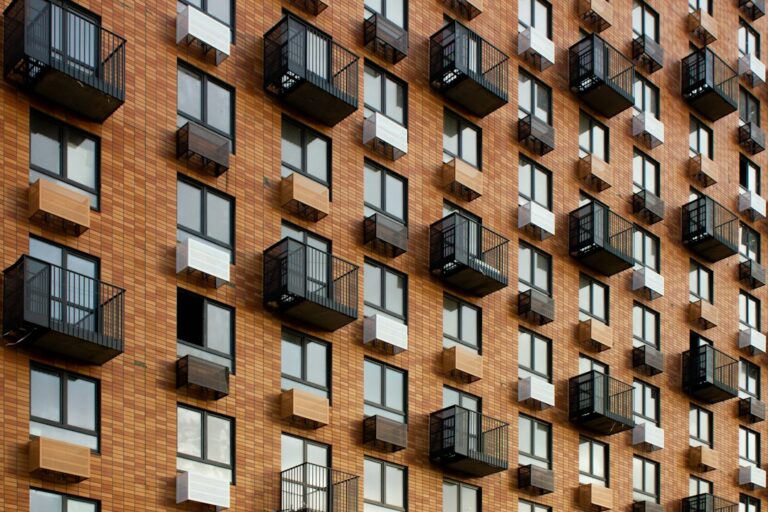

Seattle landlord-tenant rules stack two layers on every apartment building: Washington’s Residential Landlord-Tenant Act, which since May 2025 includes a statewide cap on rent increases, and a long list of city ordinances that go further on notice periods, screening, fees, registration and evictions. An owner of a 20-unit building in Seattle has to get both layers right, because a mistake under either one can undo a rent increase, delay an eviction or create a damages claim.
This guide walks through the rules in the order an owner meets them: setting and raising rent, registering and inspecting the building, filling a vacancy, collecting move-in money and fees, and ending a tenancy. It draws on the Revised Code of Washington, the Seattle Municipal Code and the city’s own Renting in Seattle guidance, and it flags the changes that take effect in 2027.
Who rents in Seattle and why the rules matter
Seattle is a renter-majority city. The Census Bureau estimated its population at 784,777 on July 1, 2025, and the 2020–2024 American Community Survey put the owner-occupancy rate at 43.7%, which means roughly 56% of the city’s 363,466 households rent. Median gross rent over that period was $2,030, according to Census QuickFacts for Seattle.
With that many renter households, the city has built one of the most detailed rental codes in the country. Most of it applies regardless of building size, so a small apartment owner faces essentially the same obligations as a large institutional landlord. The practical effect is that operating a Seattle building well is as much a compliance job as a leasing job.
Washington’s rent cap under HB 1217
The biggest recent change came from the state, not the city. House Bill 1217, enacted as chapter 209 of the 2025 session laws, took effect immediately on May 7, 2025, and is codified at RCW 59.18.700. It has three core rules:
- No increases in the first year. A landlord may not raise rent during the first 12 months of a tenancy.
- An annual ceiling after that. Increases in any 12-month period cannot exceed 7% plus the change in the consumer price index, or 10%, whichever is less.
- A published number each year. The Department of Commerce calculates the cap using the Seattle-Tacoma-Bellevue CPI-U from June to June. It set the cap at 9.683% for calendar year 2026. For 2027 the formula produced 11.53%, so the 10% ceiling applies.
The cap section expires on July 1, 2040. Commerce maintains an HB 1217 landlord resource center with the current-year cap and model notices, and it is the place to check before serving any increase.
Which apartment buildings are exempt
RCW 59.18.710 lists the exemptions. For a building with five or more units, three matter in practice:
- Units whose first certificate of occupancy was issued 12 or fewer years before the date of the rent increase notice. A building whose first certificate of occupancy was issued in mid-2015 therefore becomes subject to the cap for notices served after mid-2027.
- Units owned or operated by public housing authorities, public development authorities or qualifying nonprofits.
- Units in properties governed by a low-income housing tax credit regulatory agreement.
The owner-occupancy exemptions in the statute apply only to duplexes through fourplexes and certain single-family homes, so they rarely help an apartment owner. Note that the 12-year test rolls forward: a building that is exempt today will become covered once it ages past the threshold.
What happens if an increase is too large
The law is enforced through the state Consumer Protection Act, and tenants can also bring their own claims for excess rent and damages. For a building with dozens of units, a single template error repeated across every lease renewal can multiply quickly, so the notice form and the percentage deserve a second review before anything is served.
How much notice a Seattle rent increase needs
State law, at RCW 59.18.140, now requires at least 90 days’ written notice before a rent increase takes effect, up from the previous 60. Seattle has required more since November 9, 2021: at least 180 days’ written notice for any increase in housing costs. The city’s rules on housing cost increases define “housing costs” broadly, so the 180-day clock also covers increases to parking, storage and utility charges, not just base rent.
In practice the city rule controls in Seattle. An increase meant to take effect on June 1 has to be served by early December of the prior year. Many owners build a renewal calendar that works backward from each lease anniversary, because a notice served even a few days late cannot simply be backdated; it has to be reissued with a later effective date.
Economic Displacement Relocation Assistance
Seattle adds a further step for large increases. Under SMC chapter 22.212, for notices issued on or after July 1, 2022, a housing-cost increase of 10% or more within 12 months must be accompanied by a notice of the Economic Displacement Relocation Assistance program. Households at or below 80% of area median income (2025 limits of $84,850 for one person and $121,150 for four) who move out after such an increase can receive relocation assistance equal to three times the monthly housing cost before the increase. The landlord funds it; the city collects the payment and passes it to the tenant.
The state cap shapes how often this comes up. At 9.683% for 2026, a covered building cannot raise rent by 10% at all, so the program mainly reaches buildings exempt from the cap, such as newer construction. In 2027, however, the cap is exactly 10%, so an owner who takes the full allowed increase would trigger the relocation-assistance notice and potential payment.
Registering and inspecting the building under RRIO
Most rental housing in Seattle must be registered under the Rental Registration and Inspection Ordinance, codified in SMC chapter 22.214 and administered by the Seattle Department of Construction and Inspections. The city’s RRIO guidance for owners and managers explains that each registration lasts two years, and SDCI contacts owners about 60 days before it expires.
RRIO fees in 2026
The fee schedule published by SDCI, as of January 2026, includes a 5% technology fee in each amount:
- Registration: $126 per property, which covers the first unit, plus $31.50 for each additional unit.
- City inspection: $241.50 per property plus $52.50 for each additional unit.
- Late fee: $52.50.
For a 20-unit building, registration therefore costs $126 plus 19 × $31.50, or $724.50 for a two-year registration. If the city performs the inspection rather than a private inspector, the inspection portion is $241.50 plus 19 × $52.50, or $1,239. The city notes that fees are subject to change.
How inspections work
Every registered property is selected for inspection once during its first five years after registration, and after that it has about a 10% chance of selection in each subsequent five-year period. Owners of multi-unit buildings can choose to inspect all units or a random 20% sample. Failing to comply carries penalties of $150 per day for the first 10 days and $500 per day after that, with possible referral to the City Attorney. Just as important for operations, a landlord’s failure to register can be raised by a tenant as a defense to eviction, so an expired registration can stall a nonpayment case.
Screening and leasing a vacant unit
Seattle’s First-in-Time rule governs how applications are processed. Under the city’s guidance, a landlord must publish minimum screening criteria and the documents an applicant needs before accepting applications, date- and time-stamp each completed application, screen applications in the order received, give an applicant at least 72 hours to supply missing information, and offer the unit to the first qualified applicant, who then has 48 hours to accept before the landlord moves to the next applicant. The Washington Supreme Court upheld the rule in November 2019.
The Fair Chance Housing ordinance, SMC 14.09, took effect on February 19, 2018, and limits the use of criminal history in tenant screening. Part of it was struck down: on March 21, 2023, the Ninth Circuit held in Yim v. Seattle that the ban on asking about criminal history violated the First Amendment, while leaving in place the ban on taking adverse action based on criminal history. Since June 6, 2023, the Seattle Office for Civil Rights no longer enforces the inquiry ban, but it continues to enforce the prohibitions on requiring disclosure, on adverse action and on exclusionary advertising. For an owner, the safe reading is that criminal history should not drive leasing decisions in Seattle, even though asking is no longer penalized.
Deposits, fees and installment payments
The city’s move-in fee and deposit rules are tighter than state law:
- Non-refundable move-in fees are limited to screening and cleaning, and together cannot exceed 10% of one month’s rent.
- The security deposit plus those fees cannot exceed one month’s rent.
- A pet deposit of up to 25% of one month’s rent may be charged in addition.
- If a landlord charged a non-refundable cleaning fee at move-in, it cannot also charge for routine cleaning at move-out.
Tenants also have the right to pay move-in costs in installments. For tenancies of six months or more, the security deposit and fees can be paid in six equal monthly installments, and last month’s rent can also be spread over six payments. Month-to-month tenants can split the deposit and fees into two payments, and a pet deposit can be paid in three. A landlord cannot charge interest, and cannot refuse to rent to someone because they choose the installment option, but a missed installment can be treated like late rent.
Seattle’s rental agreement regulation caps late fees at $10 per month, bars fees for serving a notice on a tenant, and requires the deposit, or an itemized statement of deductions, to be returned within 30 days after move-out. It also requires a signed move-in condition checklist and requires landlords to provide the city’s Renter’s Handbook when a tenant applies, in hard copy at lease signing, every year to month-to-month tenants and whenever the city updates it.
The fee ban coming in July 2027
In August 2026 the City Council voted 8–0 to pass a new ordinance on rental fees, which the mayor’s office announced on August 12. According to the city’s summary of the new rental fee rules, it takes effect on July 1, 2027, and bans fees that are not on an allowed list, including pet rent, package fees and administrative charges, while still allowing pet deposits and charges for actual pet damage. Listings and leases will have to disclose all mandatory and optional fees and the total monthly cost. Existing leases can keep prohibited fees until the end of their term or July 1, 2027, whichever is later. Owners who rely on ancillary fee income should model the loss now, because it falls straight out of net operating income.
Ending a tenancy under Seattle’s just cause rules
Seattle has had a just cause eviction ordinance since 1980, now in SMC chapter 22.205, and Washington added a statewide just cause law in 2021 at RCW 59.18.650, which lists 16 permitted causes. Under the city’s Just Cause Eviction Ordinance guidance, the expiration of a lease is not itself a just cause. A landlord who does not want to renew needs one of the listed causes plus 60 days’ notice, and since July 2021 Seattle landlords must offer a renewal 60 to 90 days before a fixed-term lease ends. An owner or family move-in requires 90 days’ notice, and the cause tied to selling the property applies only to single-family homes, so it is not available to apartment owners.
Under state law, a tenant who wins a wrongful eviction case can recover the greater of actual damages or three times the monthly rent, plus attorney fees.
Nonpayment notices
For unpaid rent, RCW 59.18.057 requires a 14-day notice to pay or vacate that substantially follows the statutory form, including its tenant-resource language. Using an outdated form is a common way for an otherwise valid case to fail.
Winter and school-year defenses
Seattle adds two seasonal defenses, described on the city’s defenses-to-eviction page. From December 1 to March 1, tenants at or below 80% of area median income have a defense against eviction under SMC 22.205.080. During the school year, September through June, households with a child in school, from daycare through high school, and tenants who work at a school have a defense under SMC 22.205.110. Both have exemptions, including one for landlords with an ownership interest in fewer than four rental properties, and neither protects against causes such as criminal activity or nuisance. Owners of larger portfolios should assume the defenses apply and plan collections early in the cycle.
Relocation assistance for redevelopment and major rehab
The Tenant Relocation Assistance Ordinance, SMC 22.210, applies when tenants will be displaced by demolition, substantial rehabilitation, a change of use or the removal of use restrictions. The owner must obtain a Tenant Relocation License before the city issues the related permits. SDCI currently lists the payment for eligible low-income households at $5,552, split equally between the owner and the city, up from $5,354 under a 2025 director’s rule; the amount is adjusted each year. The owner serves a 90-day notice of development activity after paying, and violations can carry penalties of up to $1,000 per day.
For an owner weighing a gut renovation, these payments and timelines belong in the budget alongside construction costs.
What Seattle landlord-tenant rules mean for owners
Put together, the Seattle landlord-tenant rules reward owners who run their buildings on a calendar and a checklist. A practical approach looks like this:
- Plan increases six months out. Work backward 180 days from each renewal, confirm the current state cap and whether the building is exempt, and check whether the increase reaches the 10% relocation-assistance trigger.
- Keep RRIO current. Diary the two-year renewal and keep inspection records, since a lapse can become an eviction defense.
- Standardize leasing. Publish screening criteria, time-stamp applications and keep the Renter’s Handbook delivery on file.
- Audit fees before July 2027. Identify any fee that will be prohibited and decide whether to adjust base rent at renewal within the cap.
- Use current forms. Rely on the statutory 14-day notice and the city’s notice templates rather than older versions.
These rules also travel with the building when it changes hands. A buyer inherits the tenancies, the registration status and any deficiencies in notices, which is why the process of selling a rental property with tenants in place starts with organized lease files and a clean compliance record. For a broader view of the state, see our Washington multifamily market overview, and for local context on values and buyers, our Seattle market page covers the city in more detail.