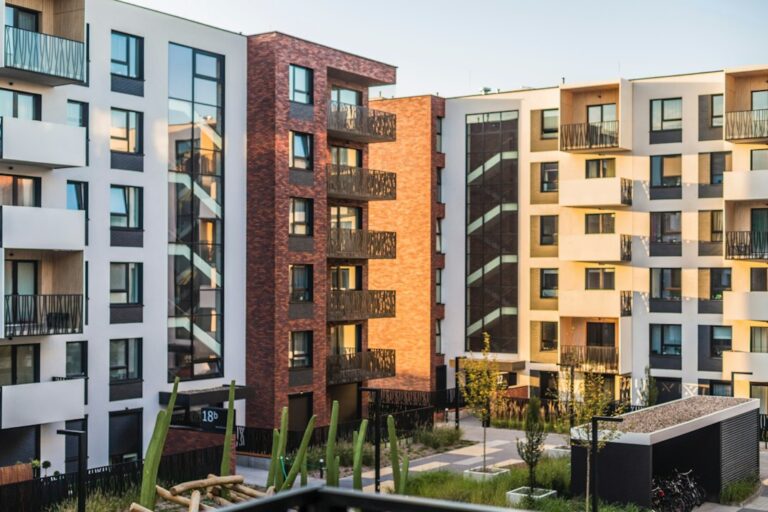
Smyrna apartment property taxes come from two separate bills built on two different valuations: a Kent County bill that bundles county, library, vocational-technical and school taxes on the county’s new 2023-based values, and a Town of Smyrna bill based on the town’s own, much older assessments. For the 2026-27 tax year, the Kent County side totals $0.4250 per $100 of assessed value for property in the Smyrna School District, while the town charges $0.94 per $100 of its own assessed value.
That split is the single most important thing for an apartment owner to understand, because the two rates cannot be added together or applied to the same number. The rest of this guide explains where each figure comes from, what changed with Delaware’s statewide reassessment, how appeals work, and which taxes show up when a building changes hands.
Who taxes an apartment building in Smyrna
Smyrna is an incorporated town, not a neighborhood of a larger city, and it sits on the line between two counties. Most of the town is in Kent County, with a portion in New Castle County. The town’s own property tax page refers to the updated values established by both Kent and New Castle counties. The 2020 Census counted 12,883 residents, and the Census Bureau’s estimate for July 1, 2023 was 13,277.
The Smyrna School District crosses the county line too. Delaware Department of Education figures for 2025-26 show $5,401,039,100 of assessed value in the Kent portion of the district and $749,507,700 in the New Castle portion, so the large majority of the district’s tax base is billed through Kent County.
For a Kent County parcel inside town limits, the taxing bodies are:
- Kent County Levy Court, which sets the county general rate and a library rate.
- The Smyrna School District, whose rate is made up of several components set under state law.
- The county vocational-technical school district, which levies its own small rate.
- The Town of Smyrna, which assesses and bills separately.
Delaware has no state property tax, so these local layers are the whole bill. Delaware also has no sales tax, which is one reason property and transfer taxes carry so much of the local revenue load.
How Kent County’s reassessment reset the base
Until recently, Kent County taxed property on 60% of values from 1987. That changed after Delaware’s Court of Chancery ruled in 2020 that the counties’ outdated assessments violated the state constitution, and the three counties completed court-ordered reassessments. Kent County contracted with Tyler Technologies, which valued every parcel as of a July 1, 2023 valuation date.
According to the Levy Court’s open letter on the reassessment, the new values took effect with the tax year that began June 1, 2024. Kent’s tax year runs from June 1 through May 31, so 2024-25 was the first year billed on the new values. Because those values were far higher than the old 1987-based figures, the county cut its general rate from 36 cents to 5.72 cents per $100 so that it would collect roughly the same total as the year before.
Two consequences matter for apartment owners:
- Values are now at full market value. Title 9, Section 8306 of the Delaware Code requires property to be assessed at its fair market value as of the base year, with no fractional ratio.
- Reassessment is now recurring. House Bill 62, signed August 9, 2023, added a requirement that every county reassess all real property at least once every five years. Kent County’s letter points to 2028 for the next one.
A rate cut that keeps the county’s total revenue flat does not keep every owner’s bill flat. Properties whose market value rose faster than the county average since 1987 took on a larger share of the levy, and those that rose more slowly took on less. Owners who bought or refinanced recently can usually see this directly by comparing the 2023-based assessment with an appraisal from the same period.
Smyrna apartment property taxes on the Kent County bill
The county publishes a 2026-27 tax rate chart listing every component by school district. For the Smyrna School District, district 14 on the chart, the rates per $100 of assessed value are:
- County general: $0.0572 (unchanged since the 2024-25 reset)
- Library: $0.0051 (charged countywide except inside Dover)
- Vocational-technical school: $0.0292
- Smyrna School District: $0.3335
- Total: $0.4250
For comparison, the 2025-26 total was $0.4192, made up of the same $0.0572 county and $0.0051 library rates, $0.0284 for vo-tech and $0.3285 for the school district. The year-over-year change came entirely from the two school components. The county’s chart notes that its totals exclude certain school caps, so the exact figure on an individual bill can differ slightly.
In practical terms, the Kent County portion works out to about 0.425% of the county’s market value each year. On a building the county values at $1,000,000, that is roughly $4,250 for 2026-27.
When the county bill arrives
The Kent County Assessment Office says bills typically go out by mid-August, and the full year’s tax is due September 30. Owners who escrow through a lender should check that the escrow analysis reflects the current rate each year.
School taxes and the split-rate question
School taxes are roughly three-quarters of the Kent County bill in Smyrna, so changes there move the total more than anything Levy Court does. The Department of Education’s 2025-26 assessment and tax rate table breaks the Smyrna district’s Kent rate into four parts:
- Debt service: $0.0406
- Current expense: $0.1919
- Tuition: $0.0738
- Match: $0.0222
The New Castle portion of the district carries the same debt service, tuition and match rates but a lower current expense rate of $0.1684, for a total of $0.3050. An apartment building on the New Castle side of town therefore sees a different school rate than an otherwise identical building a short distance away in Kent.
Why apartments in Smyrna were not affected by split rates
After the reassessments, New Castle County homeowners saw sharp school tax increases, and the General Assembly responded. House Bill 242, signed August 12, 2025, allowed certain districts to reset their 2025-26 rates with a non-residential rate set higher than the residential rate. In 2026, House Bill 462 made split rates permanent, now codified in Title 14, Section 1904, with the non-residential rate capped at 1.85 times the residential rate.
Both laws apply only to school districts located entirely in New Castle County. Because the Smyrna School District spans both counties, it was not eligible, and the Department of Education table shows a single rate for each county portion with no residential and non-residential split. For an apartment owner, that means a five-unit or larger building in Smyrna pays the same school rate per $100 as a house next door, which is not always the case in districts located entirely within New Castle County.
A separate 2025 law, Senate Bill 204, codified that counties and municipalities may tax different classes of property at different rates as long as each class is taxed uniformly. Nothing in Kent County’s current chart uses that authority, but it is worth watching as the town and county revisit their rates.
Another 2025 measure, House Bill 241, requires payment plans for residential bills that rise $300 or more after a reassessment. It is aimed at residential taxpayers, and owners of investment apartment buildings should not count on it.
The Town of Smyrna’s separate tax
The town assesses and bills on its own, and its system has not caught up with the county’s. According to the town’s tax page, Smyrna’s assessments date to 2006 and were based on 2003 to 2005 values. In April 2024, the town council voted to double the municipal rate from 47 cents to 94 cents per $100, as reported at the time by WDEL and WBOC, and the town’s tax page lists the current rate as $0.94.
Town staff have proposed adopting the updated county values with a revenue-neutral rate, which would mean a much lower rate applied to much higher values. As of mid-November 2026 the council had not adopted the change. Until it does, the $0.94 rate applies only to the town’s older assessed values. Multiplying it by a Kent County value would badly overstate the bill.
The town’s billing calendar is different from the county’s:
- Bills go out by May 15 and cover the following 12 months.
- A 2% discount applies if the bill is paid by July 1.
- The tax is due September 29, and a 1.5% penalty applies after that.
- Payments are made online or at the Tax Department at 27 S. Market Street Plaza.
Because the town bill arrives in May and the county bill in August, an apartment owner in Smyrna effectively pays property tax twice a year from two offices. Budgeting the two separately, rather than as one annual figure, avoids a cash squeeze in late summer.
Working through an example
Consider a hypothetical 12-unit building on the Kent County side of town. Suppose the county’s July 1, 2023 value is $1,500,000 and the town’s 2006-era assessment is $600,000. These figures are illustrative only.
- Kent County bill for 2026-27: $1,500,000 ÷ 100 × $0.4250 = $6,375
- Town of Smyrna bill: $600,000 ÷ 100 × $0.94 = $5,640
- Combined annual property tax: $12,015, or about $1,001 per unit
If the town later adopts county values with a revenue-neutral rate, this owner’s town bill would depend on how the building’s value changed relative to the rest of Smyrna since the early 2000s. A building whose value grew faster than the town average would pay more; one that grew more slowly would pay less. That is the same shift Kent County taxpayers went through in 2024, and owners can estimate their exposure now by comparing the two assessments on their own parcels.
To see how a change of this size affects valuation, an owner can plug a new tax figure into an NOI-based estimate. Every $1,000 of added annual tax at a 7% capitalization rate reduces indicated value by roughly $14,000. Our overview of rent control and property tax rules by state shows how Delaware’s approach compares with neighboring states.
Appealing a Kent County value
Kent County’s appeal path for the reassessment cycle had three steps: an informal review with Tyler Technologies, a hearing before a hearing officer, and then the Kent County Board of Assessment Review. An owner who disagrees with the Board can take the case to Delaware Superior Court.
For commercial property, which includes apartment buildings of five or more units, the county’s appeal instructions set out specific requirements:
- The appeal form was due by 5 p.m. on March 31, and postmarks were not accepted.
- An income and expense form must accompany the appeal, along with evidence of value as of the July 1, 2023 valuation date.
- An appraisal is optional, but if one is submitted it must name the Kent County Board of Assessment Review as the intended user.
- The owner must appear in person or be represented by a Delaware attorney.
The county’s Assessment FAQ lists a different deadline for annual appeals and notes that dates can change in reassessment years, so owners should confirm the current deadline with the Assessment Office at 302-744-2401 before relying on either date. State law sets Kent County’s Board hearing window from March 1 through May 31, and an owner who wins an appeal is entitled to a refund of any overpayment of $50 or more.
Building an income-based case
For apartments, the income approach usually carries the most weight. A strong file shows actual rents and vacancy as of mid-2023, real operating expenses from that period, and recent sales of comparable Kent County apartment buildings. Because the valuation date is fixed at July 1, 2023, improvements or rent growth after that date are not relevant to the appeal, but neither are later rent declines.
Transfer tax and other taxes tied to apartments
Property tax is not the only tax that touches an apartment building in Smyrna. The others are worth knowing before a refinance, a sale or a change in how units are rented.
Realty transfer tax
Kent County’s realty transfer tax rate table lists Smyrna at 1.5% local plus 2.5% state, for a total of 4%. The state’s transfer tax form instructions say the tax is apportioned equally between the seller and the buyer. On a $2,000,000 apartment sale, the total would be $80,000, or $40,000 per side.
Kent County issued guidance on July 18, 2025 explaining that, for arm’s-length sales, the sale price generally sets the taxable value even when the reassessed value is higher. That matters for older buildings that may have sold below their 2023 assessments.
Gross receipts and lodging taxes
Delaware’s gross receipts tax applies to commercial lessors, and state law defines a commercial unit as one used for purposes other than a dwelling unit. Long-term apartment rent therefore falls outside it. Short-term rentals are different: Delaware applies a 4.5% lodging tax to them, so an owner who converts units to short-term use takes on a new tax.
Smyrna’s rental license and inspection
The town requires rental properties to be licensed. Its 2026 fee schedule lists a $100 rental license and a $75 rental inspection, and the town’s renting page explains that a unit must pass inspection before each new tenant moves in. A failed inspection or late cancellation costs $100. For a building with steady turnover, these fees and the time needed to schedule inspections belong in the operating budget alongside the tax bills.
Credits that do not apply
Delaware’s senior school tax credit and Kent County’s senior and disability exemption both require the property to be the owner’s principal residence. They do not reduce taxes on an investment apartment building.
What this means for owners in Smyrna
Smyrna apartment property taxes are manageable on paper, but the two-bill structure and the pending town decision create real budgeting risk. A few practical steps follow from the rules above:
- Track both valuations. Keep the Kent County 2023 value and the town’s 2006-era value on file for every parcel, and note which county the building is in.
- Budget twice. Plan for the town bill in May and the county bill in August, and take the 2% town discount when cash allows.
- Watch the town council. If Smyrna moves to county values, recalculate the town bill using your building’s value relative to the town as a whole rather than assuming the total will stay flat.
- Plan for 2028. Kent County’s next reassessment is expected then, and the five-year cycle means values will now move far more often than they did under the 1987 system.
- Use the fixed valuation date. Keep mid-2023 rent rolls and expense statements; they are the evidence that counts in a Kent County appeal.
For a broader look at local conditions, visit our Smyrna market page or the Delaware markets overview.