
Syracuse Multifamily Buyer
Sell Your Commercial Property In Syracuse, NY
We are an active buyer of Syracuse commercial rental properties with five or more units, whether the building is fully leased, half vacant, or overdue for renovation.
- Clear feedback on your deal, typically within 48 hours
- 5 to 100+ units, stabilized or distressed, listed or off-market
- Owners, agents, and brokers welcome — every conversation is confidential
We buy:Tired landlordsEstate & trust sales1031 exchangesDeferred maintenanceHigh vacancyPartnership splits
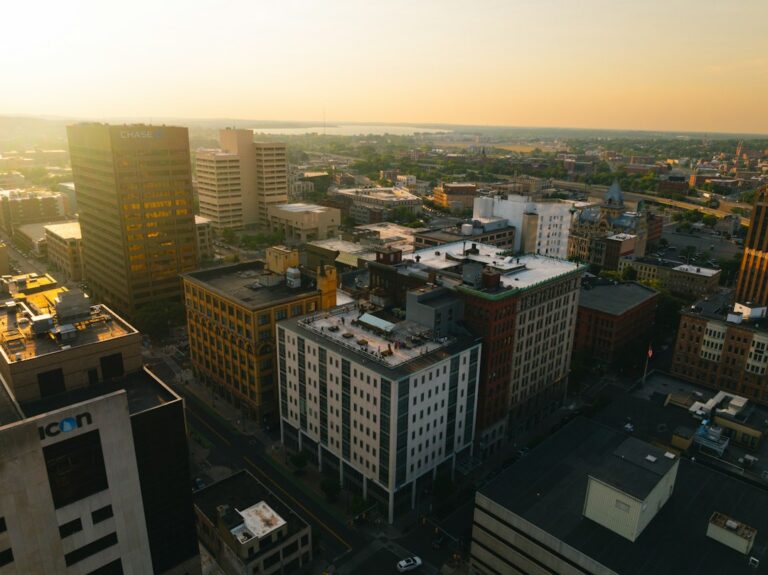
Syracuse Submarkets: Eastwood · University Hill · Liverpool · DeWitt — Onondaga County, NY
Market Snapshot
Renter Demand In Syracuse
Syracuse has a larger share of true apartment buildings than most upstate cities. In the Census Bureau's 2020–2024 American Community Survey, 18,841 of the city's 67,601 housing units, 27.9%, sit in buildings of five or more units, and renters occupy 58.4% of homes. The median gross rent is $1,039, against a median household income of $47,819.
The demand story is changing. Micron held its official groundbreaking in January 2026 for a planned semiconductor campus in the Syracuse area, with up to $100 billion of investment over 20-plus years. That sits on top of a base of health care and university employment.
We buy 5+ unit buildings in Syracuse and nearby communities including Liverpool and DeWitt. The figures below cover the city itself unless labelled as metro-level.
Micron's Clay semiconductor campus
Micron plans up to $100 billion of investment over 20-plus years for up to four fabs near Syracuse, backed by up to $6.4 billion in CHIPS Act funding, with groundbreaking in January 2026.SUNY Upstate, the region's largest employer
SUNY Upstate Medical University reports more than 13,000 employees and describes itself as the region's largest employer, with a health system serving about 1.8 million people.Syracuse University on University Hill
Syracuse University runs 13 schools and colleges with more than 200 majors and minors, and its students and staff anchor rental demand on University Hill.Our Buy Box
What We Buy In Syracuse
Asset Type
Multifamily, 5+ Units
Apartment buildings and income-producing residential.
Size
5 – 100+ Units
Sweet spot: 15–25 units.
Condition
Stabilized To Distressed
Value-add, mismanaged, and high-vacancy properties welcome.
Deal Types
Listed Or Off-Market
Direct-to-owner, pocket listings, portfolios.
Local Market Data
Syracuse Apartment Market
Figures gathered October 2026 from public market data.
Who rents in Syracuse
Syracuse had 146,384 residents and 59,816 occupied homes in the ACS 2020–2024 estimates. Renters occupied 34,927, or 58.4%. The median household income was $47,819, and the median gross rent was $1,039.
Affordability is tighter than in Buffalo, Rochester or Albany. Of renter households, 51.8% spend 30% or more of income on rent, and 32.0%, about 11,200 households, spend half or more (table B25070). Owners occupy the other 24,889 homes. With so many tenants already stretched, the gap between what a building could rent for and what current tenants can pay is often the central question in valuing it.
Employment is anchored by health care and higher education. SUNY Upstate Medical University reports more than 13,000 employees and calls itself the region's largest employer, with an estimated $3.2 billion contribution to the Central New York economy and a health system serving about 1.8 million people. Syracuse University has 13 schools and colleges and, with Upstate, draws students, residents and staff to rentals on University Hill.
Micron and future demand
Micron says it plans to invest up to $100 billion in the Syracuse area over 20-plus years, building up to four fabs in sequence in what it calls the largest semiconductor manufacturing site in U.S. history. The company cites up to $6.4 billion in federal CHIPS Act funding and up to $5.5 billion in state GREEN CHIPS incentives, and it held its official groundbreaking in January 2026.
For apartment owners the timing matters. Because the fabs are planned to be built one after another over two decades, demand tied to the project is more likely to build gradually than to arrive all at once, and the effect on any one city neighborhood is hard to predict.
Rents and HUD benchmarks
The Census median rent averages five years of leases and includes utilities. HUD's FY2026 Fair Market Rents for the Syracuse metro are a current benchmark, used for Housing Choice Voucher payment standards:
| Unit size | HUD FMR FY2026 |
|---|---|
| Studio | $995 |
| 1 bedroom | $1,123 |
| 2 bedroom | $1,392 |
| 3 bedroom | $1,691 |
| 4 bedroom | $1,848 |
The two-bedroom FMR is $353 above the city's median gross rent. Owners with voucher tenants in larger units can collect more than the typical market lease in the same neighborhood, subject to the housing authority's payment standard.
The apartment stock
Of 67,601 housing units, 27,995 are single-family detached, 11,813 are in two-unit buildings and 6,243 in three- and four-unit buildings (table B25024). The 18,841 units in buildings of five or more break down into 3,762 in 5 to 9 unit buildings, 3,419 in 10 to 19, 3,965 in 20 to 49 and 7,695 in buildings of 50 or more. That 27.9% share compares with 23.8% in Rochester and 16.9% in Buffalo (ACS 2020–2024), so a mid-size building here competes with more similar product but also has a deeper pool of buyers who know the asset type.
The median year built is 1948. Some 43.1% of units predate 1940 and 85.5% predate 1980, while only 3.9% were built in 2010 or later (table B25034). Buildings of that age, in Eastwood and on University Hill alike, can need heating and electrical updates, and pre-1978 units can contain lead-based paint.
Property taxes and local compliance
New York assessments can be set at a fraction of market value, and the city's assessor sets the value on which city, school and county taxes are levied (NYS Tax Department). Syracuse runs its own grievance calendar, so confirm deadlines with the city's Department of Assessment (grievance process). We could not verify a current Syracuse tax rate from an official source for this profile, so ask for your latest bill and assessment when pricing a sale.
- Certificate of Compliance: rental buildings of three or more units need a city Certificate of Compliance, with an inspection every three years and before a transfer of title. The fee is $55 plus $20 for each unit over two. On that schedule, a 12-unit building pays $255 and a 24-unit building $495. One- and two-unit rentals use a separate Rental Registry with a $150 fee.
- Rent rules: ETPA rent stabilization applies in New York City, Nassau, Westchester and Rockland and in municipalities that adopt it (HCR). Syracuse was not among the municipalities listed as opting into Good Cause Eviction as of May 4, 2026 (HCR notice).
- Deposits: capped at one month's rent, with an itemized statement due within 14 days (GOL § 7-108).
What this means if you own a building here
Syracuse sellers have a story buyers want to hear, but buyers still pay for today's net operating income. The Certificate of Compliance inspection before transfer means code issues surface during the sale, so it pays to schedule it early. The state transfer tax is 0.4% of the price (NYS Tax Department). Skyline Capital Investments buys 5+ unit buildings in Syracuse, Liverpool and DeWitt, and our seller page explains how we underwrite. You can also run numbers in our apartment building value calculator.
Good To Know
Pricing Your Building In Syracuse
If you want to sell commercial property in Syracuse, NY, these points drive how we price the building.
More about selling in New York →Investing in Syracuse? See apartment syndications in Syracuse →
- Syracuse requires a Certificate of Compliance for every rental building of three or more units, with an inspection every three years and before a transfer of title on sale.
- The Certificate of Compliance fee is $55 plus $20 for each unit over two, so a 12-unit building pays $255, and an open inspection can delay a closing.
- Syracuse was not on HCR's May 2026 list of municipalities that opted into Good Cause Eviction, so state Good Cause rent limits do not apply to city buildings.
- Liverpool and DeWitt lie outside the city, so Syracuse's assessments, inspection program and tax rates do not apply to buildings there; check local rules separately.
Seller Guides
Syracuse Seller Situations
Learn More
Taxes & Rules For Syracuse Property
The New York rules that shape any deal in Syracuse: what a sale costs in tax, how buildings are taxed, what landlords must follow, and how to defer gains.
Syracuse Seller FAQ
What is the average rent in Syracuse, NY?
The Census Bureau's ACS 2020–2024 estimate puts Syracuse's median gross rent, including utilities, at $1,039 a month. HUD's FY2026 Fair Market Rents for the Syracuse metro are $995 for a studio, $1,123 for a one-bedroom, $1,392 for a two-bedroom, $1,691 for a three-bedroom and $1,848 for a four-bedroom.
What inspections do Syracuse apartment buildings need?
Rental buildings with three or more units, along with mixed-use buildings, dormitories and Greek housing, need a Certificate of Compliance from the city's Division of Code Enforcement. The building is inspected every three years and before title transfers on a sale. The fee is $55 plus $20 for each unit over two. One- and two-unit rentals use the separate Rental Registry instead.
Does Syracuse have rent control?
Rent stabilization under the Emergency Tenant Protection Act applies in New York City, Nassau, Westchester and Rockland counties and in municipalities that adopt it, and Syracuse was not among the municipalities listed by HCR in May 2026 as having opted into Good Cause Eviction. State rules on deposits and nonpayment notices still apply.
What share of Syracuse households rent?
According to ACS 2020–2024 estimates, 58.4% of Syracuse's occupied homes, 34,927 households, are renter-occupied. Some 51.8% of renter households spend 30% or more of income on rent, and 32.0% spend half or more. About 27.9% of housing units are in buildings of five or more units.
Is now a good time to sell an apartment building in Syracuse?
The Micron groundbreaking in January 2026 has drawn attention to Syracuse, and the project is planned to build out over 20-plus years. Current rents still reflect a city where more than half of renters are cost-burdened, so buyers will weigh future demand against in-place rents and the condition of a building that is likely more than 70 years old.
Will you buy a Syracuse property that needs work or has high vacancy?
Yes. We regularly evaluate value-add, mismanaged, and distressed multifamily properties and underwrite them as they are today — no repairs or lease-up required before selling.
Can I sell my Syracuse apartment building off-market?
Yes. We work directly with owners and through listing agents. Off-market conversations are confidential, and we coordinate tours so tenants and staff are not disrupted.
Can I sell rental property in Syracuse with tenants in place?
Yes. We buy apartment buildings with tenants in place and keep existing leases intact. As a commercial real estate buyer focused on 5+ unit properties, we underwrite the current rent roll as it stands.
Do I need a broker to sell my apartment building in Syracuse?
No. You can work with us directly, or your broker can bring the deal to us. Either way, conversations stay confidential.
Submit A Deal
Get An Offer Review In Syracuse
Ready to sell commercial property in Syracuse, NY? Start with the short form below.
Share the basics below and we will follow up directly. Agents and brokers representing Syracuse sellers are welcome.
