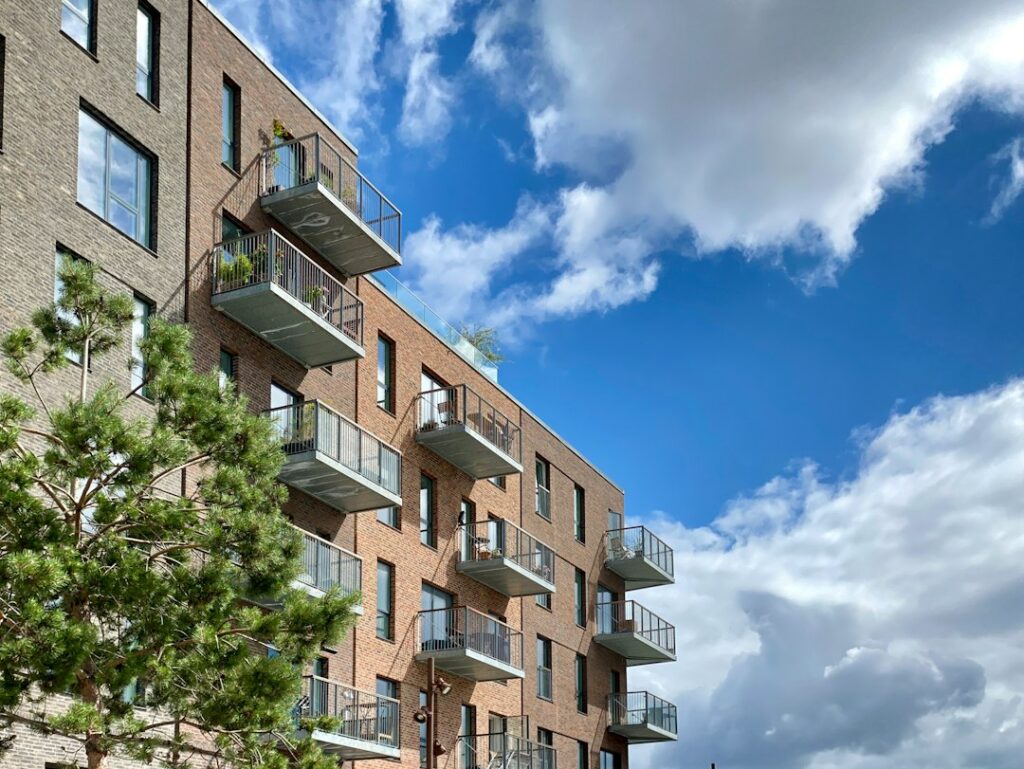
Columbia apartment neighborhoods fall into five broad groups: a downtown core along Main Street and in the Vista where most new towers are rising, a university corridor dominated by purpose-built student housing, historic neighborhoods where small multifamily buildings sit under design review rules, the master-planned BullStreet District on the former State Hospital campus, and the eastern side of the city shaped by Fort Jackson. Each group has a different tenant base, a different building type and a different set of rules, so the same rent figure can mean very different things depending on where a property sits.
This guide walks through each area using official and published sources, starting with the citywide numbers and the way HUD divides the wider metro into submarkets. One caution applies throughout: several places that feel like Columbia neighborhoods, including Forest Acres, Cayce and West Columbia, are separate municipalities with their own taxes and zoning, so a Columbia mailing address does not always mean a property is inside the city.
Columbia apartment neighborhoods by the numbers
Columbia is South Carolina’s capital and the seat of Richland County, and portions of the city extend into Lexington and Kershaw counties. The Census Bureau’s QuickFacts profile for Columbia shows 136,632 residents at the 2020 Census and an estimated 147,035 as of July 1, 2025, an increase of about 7.6%. Part of that count reflects soldiers in training at Fort Jackson and students living in university housing, both of whom are counted where they live.
Columbia is a majority-renter city. QuickFacts reports an owner-occupied housing rate of 45.5% for 2020–2024, which means roughly 54.5% of occupied homes are rented. Median gross rent for the same period was $1,204. That five-year average trails current asking rents: Rentometer’s figures for all property types in Columbia, as of October 22, 2026, show about $1,132 for a one-bedroom, $1,428 for a two-bedroom and $1,893 for a three-bedroom. Those private figures mix apartments with houses and do not say whether they are averages or medians, so they are best used as a rough guide.
How HUD divides the Columbia metro
The most recent official look at the metro apartment market is HUD’s Comprehensive Housing Market Analysis for Columbia, dated November 1, 2022. In the third quarter of 2022, it found metro apartment vacancy of 4.3% and an average rent of $1,083, up 9% from a year earlier.
HUD splits the metro into four apartment submarkets: north of downtown, south of downtown, Lexington County and Dutch Fork/West River. Its figures for three of them stand out:
- South of downtown, which includes the University of South Carolina and Fort Jackson. Vacancy here was the highest in the metro, 7.8%, which HUD attributed to elevated levels of new apartment completions. Rents were also the highest, at $1,403.
- Lexington County, west of the river, with vacancy of 2.4%.
- Dutch Fork/West River, with vacancy of 3.1% and the lowest average rent, $877.
Those numbers are now four years old, but the pattern is a useful starting point. The submarket that contains the city’s core, the university and the base had the most new supply and the most vacancy, while the suburban submarkets were tighter. That is consistent with what the rest of this guide describes: Columbia’s new construction has concentrated downtown and around campus.
Downtown, Main Street and the Vista
Downtown Columbia, including the Main Street corridor and the Vista district, is where the city’s apartment pipeline is concentrated. In March 2026, the Post and Courier counted eight projects that would add just over 5,000 new bedrooms within walking distance of Main Street. Among them:
- The Verve, 697 beds of student housing at 1127 Gregg St., due in fall 2026.
- 2222 Main View on North Main, 320 beds, due in 2027.
- 931 Senate St., 512 beds, approved in December 2025.
- 609 Huger St., 430 beds, which began construction in August 2025.
- Huger and Washington, 200 units, which started in January 2026.
The largest single project is ōLiv Columbia, a two-tower development on Main Street by Core Spaces. Multi-Housing News reported in August 2025 that it would include 720 market-rate units and 2,350 beds of student housing, with construction starting in fall 2025 and completion expected in summer 2028.
In the Vista, WIS reported in December 2025 that the city’s Design and Development Review Commission approved a project with more than 200 one- to three-bedroom apartments and ground-floor retail at the corner of Park and Senate streets.
Most of the downtown pipeline is counted in beds rather than units, which signals that it is aimed at students. For owners of conventional apartments downtown, the near-term competition comes mainly from the market-rate portion of projects like ōLiv and the Vista building. For owners of older student rentals near campus, the bed count is the more important number, since thousands of new purpose-built beds compete directly for the same tenants. To put the scale in perspective, the roughly 5,000 new bedrooms counted near Main Street equal more than half of the 9,200 students USC projected to house on campus in fall 2026, before counting the student beds at ōLiv.
The university corridor and student housing
The University of South Carolina is the single largest driver of rental demand in central Columbia. The university announced in August 2025 that preliminary fall 2025 enrollment on the Columbia campus exceeded 40,000 students, with a record 7,829 new freshmen.
Most of those students live off campus. For fall 2026, USC projected 9,200 students living on campus, against about 7,800 incoming freshmen. If enrollment remains above 40,000, that leaves roughly 30,000 students renting privately or living with family. HUD’s 2022 analysis made the same point with older numbers: of 35,400 students then enrolled, about 8,000 lived in dormitories and 27,400 lived off campus.
That off-campus population shapes the housing stock in neighborhoods around campus. Purpose-built student properties lease by the bed on academic-year cycles, and older houses and small apartment buildings near campus can draw student renters as well. For owners, student demand brings high turnover and an annual leasing deadline that leaves little room for error, but also a predictable flow of new tenants each August. The surge of new student beds downtown described above is the main risk to older student rentals, since new buildings compete for the same students with newer finishes and amenities.
Historic neighborhoods and design review
Many of Columbia’s older residential neighborhoods sit inside historic overlay districts, and those overlays determine what an owner can change on the outside of a building. The city’s historic preservation page lists 15 historic district zoning overlays, each with its own guidelines, and more than 180 individual landmarks.
The overlays come in two main types, with very different levels of review.
Architectural Conservation Districts
The city lists seven Architectural Conservation Districts: Cottontown/Bellevue, Elmwood Park, Granby, Melrose Heights/Oak Lawn, Oakwood Court, University and Wales Garden. In these districts, generally all exterior work is reviewed, including changes to windows, siding and porch details.
Protection Areas
The seven Protection Areas are Earlewood A and B, Governor’s Mansion, Old Shandon/Lower Waverly A and B, Seminary Ridge, Waverly, West Gervais and Whaley Street. Here, review is largely limited to additions, new construction and demolition, along with fences and driveways.
The city’s list of 15 overlays also includes a Landmark District and the West Gervais Street Historic Commercial District. Separately, Shandon, Heathwood, Hollywood-Rose Hill and Sherwood Forest are listed as Community Character areas, which the city says are not historic districts; their review is limited to demolition and new construction.
Every project in these areas begins with a staff consultation. Staff either approve the work or send it to the Historic Preservation Design Review Commission. The practical difference matters for small multifamily owners. Replacing windows or siding on a fourplex in Elmwood Park or Cottontown requires approval, while the same job in Old Shandon or Waverly usually does not. Budgets and timelines for exterior renovations should account for which category a building falls into.
The BullStreet District
The BullStreet District is a roughly 181-acre redevelopment of the former South Carolina State Hospital campus, with Hughes Development Corp. of Greenville as master developer. Unlike the historic neighborhoods, it is a planned district where housing has been added in phases alongside retail, offices and public space.
As of February 2023, Greenville Business Magazine listed the following housing at BullStreet:
- The Babcock, 208 units in the restored historic asylum building, developed by Clachan Properties.
- Bennet at BullStreet, 269 apartments, developed by Proffitt Dixon.
- Midtown at BullStreet, 90 attainable, moderately priced rentals.
- Merrill Gardens, 196 senior living units.
- TownPark, 28 townhomes.
- A planned Framework Group project of 355 apartments.
Other published counts differ slightly for some of these projects, so the figures above should be read as approximate. Taken together, BullStreet represents one of the largest concentrations of newer apartments in the city outside downtown, and its mix of market-rate, attainable and senior housing means it competes across several tenant segments rather than one.
Fort Jackson and the east side
Fort Jackson is inside Columbia’s city limits. The South Carolina Encyclopedia notes that the city annexed the post in 1968, and the base makes up a large share of the city’s land area. According to the Army’s Fort Jackson history page, it is the largest and most active Initial Entry Training center in the Army, training about half of all soldiers entering the Army each year: roughly 35,000 in Basic Combat Training and about 8,000 in Advanced Individual Training. The post covers about 51,316 acres.
Trainees live in barracks, so they do not rent apartments. The rental demand comes from permanent staff and their families. HUD’s 2022 analysis counted about 3,200 active-duty personnel at Fort Jackson and found that 67% of active-duty military households in the metro rent. Those households, along with civilian employees and contractors, support rental demand on the city’s east side.
Owners looking at this part of the region should note that Forest Acres, which sits between central Columbia and Fort Jackson, is a separate city, incorporated in 1935, with its own mayor and council. A property there follows Forest Acres zoning and pays Forest Acres taxes, not Columbia’s.
Citywide rules that apply in every neighborhood
Two sets of rules cut across all of Columbia’s submarkets.
The Unified Development Ordinance
Columbia’s current zoning and land development code, the Unified Development Ordinance, was adopted August 20, 2019. As the city’s amending ordinance sets out, the effective date was delayed from May 1, 2020 to March 31, 2021. A new citywide zoning map was adopted with Ordinance 2021-001. Any project to add units, convert a building or redevelop a site is reviewed under this code, layered with historic overlay rules where they apply.
The 6% assessment ratio
South Carolina assesses an owner-occupied primary residence at 4% of fair market value and other real property, which includes rental property, at 6%. Before any other differences in how local levies apply, the higher ratio alone means a rental is assessed at 1.5 times the value of an identical owner-occupied home. For a small apartment building with a fair market value of $1,000,000, the assessed value is $60,000 at the 6% ratio, compared with $40,000 if the same value were taxed as a primary residence, and the local millage is then applied to that assessed value. That ratio applies in every Columbia neighborhood, and it is one reason owners of small multifamily buildings in historic districts often face higher tax bills than the owner-occupants next door.
What this means for owners
Columbia’s apartment market is several markets sharing one city. A few practical takeaways:
- Match the building to the tenant base. Downtown and Vista properties compete with new towers; university-area properties compete with new student beds; east-side properties draw on military and civilian base employment.
- Watch the student bed count. More than 5,000 new bedrooms near Main Street, plus the student component of ōLiv, will test demand for older student rentals near campus over the next few years.
- Know your overlay. Whether a building sits in an Architectural Conservation District, a Protection Area or a Community Character area determines how much exterior work needs approval.
- Confirm the municipality. Forest Acres, Cayce and West Columbia have their own rules, so check city limits before relying on Columbia’s zoning or tax rates.
- Use submarket data, not citywide averages. HUD’s 2022 figures showed vacancy ranging from 2.4% to 7.8% across the metro, a spread that citywide numbers hide.
Owners estimating what a building is worth in a particular neighborhood can start with our apartment building value calculator. For broader context, see our South Carolina markets page or our Columbia market page.