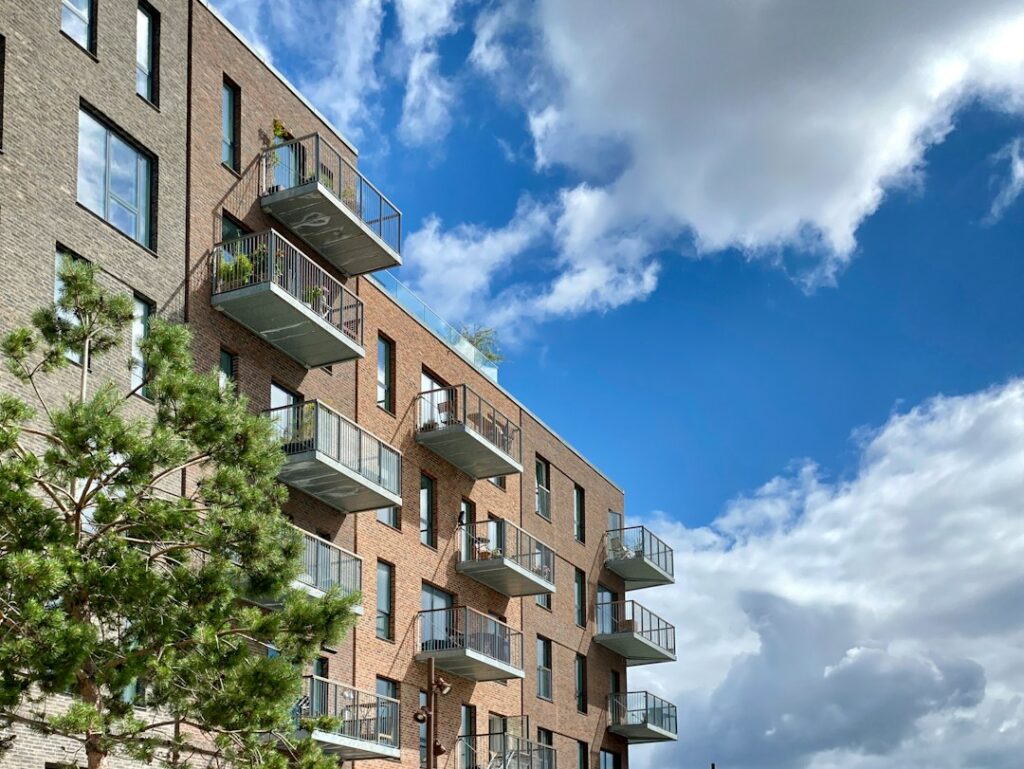
Lansing rental rules come from two layers: the city requires every rental to be registered, inspected and certified under Chapter 1460 of its code, and Michigan state law sets the rules for security deposits, leases, repairs, notices and evictions. On top of both, Lansing’s Human Rights Ordinance and a 2025 state law bar discrimination based on a tenant’s source of income, while state law prevents the city from adopting rent control.
This guide walks through each of those layers for owners of apartment buildings in Michigan’s capital, using the city’s own rental registration materials, the Michigan Compiled Laws and court guidance. It also covers the ordinance changes Lansing adopted in 2025 and 2026, which many owners have not yet absorbed.
Lansing at a glance: where the rules come from
Lansing has been Michigan’s capital since 1847 and is a home-rule city that lies mostly in Ingham County, with portions in Eaton County. The Census Bureau’s QuickFacts profile for Lansing counts 112,644 residents in the 2020 Census and an estimated 113,884 on July 1, 2025. With an owner-occupied housing rate of 53.8% in the 2020 to 2024 survey period, about 46% of the city’s 51,588 households rent, and median gross rent was $993.
One geographic point trips up investors: Michigan State University sits in East Lansing, a separate city with its own code. East Lansing adopted Ordinance 1549 on February 17, 2026, which repealed rental inspection and licensing provisions in its own code. None of East Lansing’s rules apply inside Lansing, and none of Lansing’s apply in East Lansing, so the address of a building decides which city’s ordinances govern it.
The rules covered here fall into three tiers:
- City of Lansing: rental registration, inspection and certification, tenant relocation requirements and the Human Rights Ordinance.
- State of Michigan: the Security Deposit Act, the Truth in Renting Act, the landlord repair covenant, notice and eviction procedures, the source-of-income law and the ban on local rent control.
- Federal: lead-based paint disclosure for housing built before 1978, along with federal fair housing law.
Rental registration and certification in Lansing
Every rental property in Lansing must be registered with the city, with an exception for a single-family home that the owner occupies. According to the city’s rental registration page and its Code Enforcement handout, registration is followed by a city inspection. A property that passes is certified. A property that fails receives a correction notice with 30 days to comply. A “pink tag” on a property indicates that it does not have a certificate because it has not been registered.
The city’s registration form states that a new registration requires an immediate inspection and warns that a “lack of inspection can lead to fines, vacating the property and other penalties.” For a buyer, that means confirming a building’s registration and certificate status is a basic part of due diligence, and for a seller, a current certificate removes a common source of delay. Code Enforcement can be reached at 517-483-4361.
Fees and penalties
The most recent fee schedule available from the city took effect on March 10, 2020, and owners should confirm current amounts with Code Enforcement before budgeting. Under that schedule:
- A new registration cost $400, and a change of owner cost $200.
- The inspection base fee was $150 per building for multiple-family, townhouse or condominium buildings, compared with $215 per building for one- and two-family properties.
- Each unit in a multiple dwelling added $18, while single-family, duplex and townhouse or condo units added $25 each.
- Re-inspections cost $50 for the second visit, $100 for the third and $150 for the fourth, and a no-show fee was $65.
- Failure to register carried a $150 administrative fee, and multi-family inspection late fees were $75 at 30 days and $150 at 60 days.
- Red-tagged properties were charged a $150 monthly monitoring fee, which the city’s handout applies to properties red-tagged for 90 days or more.
Using those 2020 figures, a 24-unit building would pay a $150 base inspection fee plus 24 units at $18, or $582 in total, before any re-inspections. The structure rewards owners who pass on the first visit: each failed inspection adds a re-inspection fee and pushes certification back.
Lansing rental rules changed in 2025 and 2026
Lansing amended its rental code twice in the past two years, and both changes affect apartment owners.
Tenant relocation insurance and fees
Two ordinances took effect on July 31, 2025, when their notices were published:
- Ordinance 1336 amended Section 1460.49(a) to require landlords to carry tenant-relocation insurance before the city issues a certificate of compliance.
- Ordinance 1337 created Section 1460.51, a relocation fee. If the city declares a unit unsafe and pays for tenants’ temporary housing, the owner must reimburse the city’s actual cost, up to a daily rate set by the City Council, for a maximum of 30 days. The fee does not apply if insurance covers the cost, and payment is due within 30 days of billing.
The city’s amended registration form gives landlords without relocation insurance the option of signing an agreement to reimburse those costs instead. Either way, owners should treat relocation exposure as a real line item: a building with a serious code failure now carries both the repair cost and the cost of housing displaced tenants.
Ordinance 1350
In April 2026 the city adopted Ordinance 1350, which amends Sections 1460.44 through 1460.52 and adds a new Section 1460.53 requiring landlords to give tenants certain information at move-in. According to the published summary, its purpose is to “clarify and update the regulation and certification of rental properties.” The summary was published on April 14, 2026, and the ordinance took effect on April 21, 2026. Because the new move-in disclosure requirement is in force, owners should obtain the adopted text from the city clerk and update their lease packets to match.
Fair housing and source-of-income protections
Lansing has protected renters who pay with vouchers or other benefits since 2006. The City Council passed the Lansing Human Rights Ordinance unanimously, 8 to 0, on December 18, 2006. It covers housing and includes source of income among its protected classes, along with categories such as student status, height, weight, sexual orientation and gender identity.
State law now reaches the same ground for larger landlords. Under MCL 554.601c, added by 2024 Public Act 178 and effective April 2, 2025, a landlord who owns five or more rental units in Michigan, counting related entities, may not deny a tenancy, set different terms or advertise a preference based on a tenant’s source of income. Covered income includes housing vouchers, Social Security and SSI, veterans’ benefits and child support. A landlord also may not exclude voucher or subsidy income when applying an income threshold, although emergency rental assistance is treated separately under that rule. A companion law, 2024 Public Act 180, amended the Elliott-Larsen Civil Rights Act so that complaints are handled by the Michigan Department of Civil Rights.
For almost any apartment building covered by this site, the five-unit threshold is met. Screening criteria that require income of three times the rent, for example, must count the voucher portion of a tenant’s income.
Security deposits under Michigan law
Michigan’s Security Deposit Act sets detailed rules that apply to every Lansing rental:
- A deposit may not exceed one and a half months’ rent, under MCL 554.602.
- Within 14 days after the tenant takes possession, the landlord must give written notice of the landlord’s name and address, the financial institution or surety holding the deposit, and the tenant’s obligation to provide a forwarding address. A required statement about the forwarding address must appear in 12-point boldface type at least four points larger than the rest of the document (MCL 554.603).
- The deposit must be held in a regulated financial institution. A landlord may use the money only after filing a cash or surety bond with the Secretary of State covering all deposits up to $50,000, plus 25% of any amount above $50,000 (MCL 554.604).
- At move-in the landlord provides two blank inventory checklists, and the tenant returns one within seven days after taking possession. The landlord completes a move-out checklist when the tenancy ends (MCL 554.608).
- The tenant must provide a forwarding address in writing within four days after moving out. If the tenant fails to do so, the landlord is relieved of the duty to send a damages notice (MCL 554.611).
- The landlord must mail an itemized list of damages within 30 days of the end of the tenancy, including a statement that the tenant must respond by mail within seven days (MCL 554.609).
- Within 45 days, the landlord must either file suit for the claimed damages or return the balance. A landlord who fails to comply waives the damage claim and can owe twice the amount withheld (MCL 554.613).
For a building with dozens of units, these deadlines are as much a systems problem as a legal one. A missed 30-day itemization on a single unit can turn a legitimate damage claim into a payment of double the deposit.
Leases, required notices and lead disclosure
Michigan’s Truth in Renting Act requires every written lease to include a prominent notice, in at least 12-point type, stating that Michigan law establishes rights and obligations for parties to rental agreements and that the agreement must comply with the Truth in Renting Act (MCL 554.634). The act also restricts lease clauses that waive tenant rights, so standard forms from other states should not be used without review against Michigan law.
Federal rules add a lead-paint disclosure for housing built before 1978. Before a lease is signed, landlords must give tenants the EPA pamphlet Protect Your Family From Lead in Your Home, disclose any known lead hazards and reports, include a Lead Warning Statement in the lease and keep signed copies for three years, according to the EPA’s disclosure rule guidance. It applies to every apartment building in Lansing built before that year.
Repairs and habitability
Under MCL 554.139, every Michigan landlord covenants that the premises and common areas are “fit for the use intended,” that they will be kept “in reasonable repair” during the lease, and that the property will comply with state and local health and safety laws, except where the tenant caused the damage. The parties can modify these duties only in a lease with a term of at least one year.
In Lansing this state covenant works alongside the city’s inspection program. A condition that would fail a city inspection is also likely to support a tenant’s claim under the repair covenant, and since 2025 a serious failure can also trigger relocation costs under the city’s code. Preventive maintenance on roofs, heating systems, smoke detectors and egress is therefore the cheapest compliance strategy available.
Notices, evictions and the 54-A District Court
Michigan’s notice periods are set out in MCL 554.134 and the summary proceedings statute:
- A month-to-month tenancy can be ended with one month’s notice.
- For nonpayment of rent, the landlord serves a written seven-day notice to quit, matched by a seven-day demand for possession under MCL 600.5714.
- For illegal controlled-substance activity, a written 24-hour notice to quit is allowed, but only after a formal police report has been filed.
Eviction cases in Lansing are heard in the 54-A District Court. Michigan court guidance describes the process: if the tenant does not appear, the court may enter a default; trials can be adjourned for seven to 14 days, or up to 56 days for good cause; and a pending application for rental assistance can pause a case for an initial 14 days, up to 28 days in total. Under MCL 600.5744(5), the order of eviction, known as a writ of restitution, generally cannot issue until 10 days after the judgment for possession.
No self-help evictions
A landlord may not remove a tenant without going through the court. Under MCL 600.2918, a landlord who forcibly ejects a tenant is liable for three times the tenant’s actual damages or $200, whichever is greater. Other interference, such as changing locks without providing keys, removing doors or windows, shutting off utilities or removing a tenant’s belongings, exposes the landlord to actual damages or $200 per occurrence.
No local rent control in Michigan
Lansing cannot cap rents. Under MCL 123.411, enacted in 1988 and amended in 2018, a local government “shall not enact, maintain, or enforce an ordinance” that would have the effect of controlling the amount of rent charged for private residential property. That means rent levels in Lansing are set by the market, subject to the terms of each lease and to any restrictions attached to subsidized or tax-credit properties.
The absence of rent control does not mean the absence of regulation. As the sections above show, Lansing’s influence on apartment operations comes through registration, inspections, relocation requirements and fair housing enforcement rather than through rent limits.
What this means for Lansing owners
The practical takeaway is that compliance in Lansing is mostly about process. A short checklist covers most of it:
- Confirm the building is registered and holds a current certificate of compliance, and keep inspection reports on file.
- Carry tenant-relocation insurance or sign the city’s reimbursement agreement, as required since July 2025.
- Update move-in packets for Ordinance 1350’s new Section 1460.53 disclosure requirement.
- Count voucher and benefit income in screening, as required by both the city’s Human Rights Ordinance and, for owners of five or more units, state law.
- Calendar the deposit deadlines: notice within 14 days of move-in, itemization within 30 days of move-out and action within 45 days.
- Include the Truth in Renting notice and, for pre-1978 buildings, the full lead disclosure package in every lease.
- Use the 54-A District Court process for every eviction, and never change locks or cut utilities to force a tenant out.
These rules also shape what happens when a building changes hands, since existing leases and deposit obligations carry over to a buyer and the city’s registration requires a change-of-owner filing. For more on how that works, see our guide to selling rental property with tenants in place. Owners weighing their options can read our Lansing market page, and those comparing cities can explore other Michigan apartment markets.