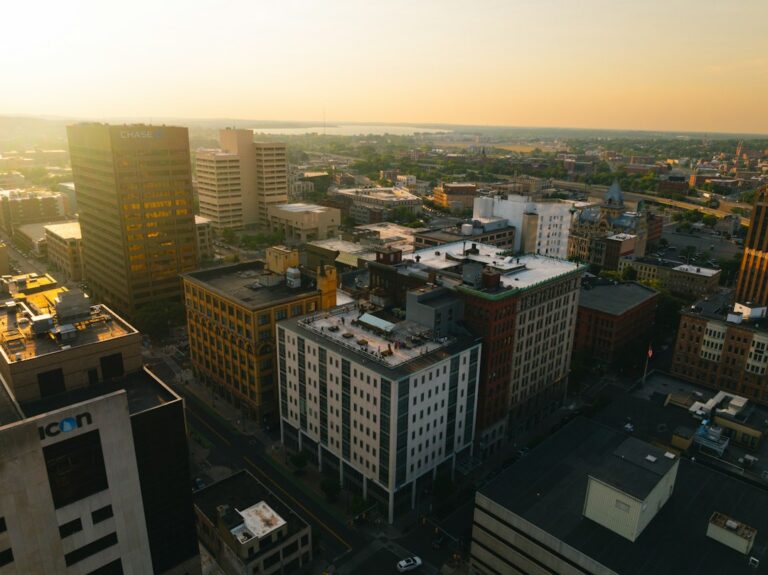
Austin zoning changes since late 2023 have made it far easier to add housing almost anywhere in the city: up to three homes on a single-family lot, no required parking, a 75-foot compatibility zone instead of 540 feet, and taller buildings in exchange for income-restricted units. For owners of existing apartment buildings, the practical effect is a larger and faster future supply pipeline, arriving just as the record 2024 and 2025 construction wave is finally being absorbed.
Austin sits mostly in Travis County, with smaller pieces in Williamson and Hays counties, and the rules below apply across the city limits.
A timeline of Austin zoning changes since 2019
The changes came as a series of targeted amendments after the city’s comprehensive rewrite stalled in court:
- May 9, 2019: Council unanimously adopts Affordability Unlocked, a bonus program for projects that are at least half income-restricted.
- June 9, 2022: Council creates VMU2, a vertical mixed-use option allowing up to 30 extra feet of height along corridors.
- November 2, 2023: Council votes 8-2 to eliminate minimum parking requirements citywide.
- December 7, 2023: HOME Phase 1 allows up to three housing units on most single-family lots.
- February 29, 2024: DB90 replaces VMU2 after a court strikes the earlier program down.
- May 16, 2024: HOME Phase 2 (1,800-square-foot lots), citywide compatibility reform and the transit-oriented ETOD overlay all pass at one meeting.
- September 1, 2025: Texas SB 840 and SB 15 take effect, overriding parts of local zoning in large cities.
- May 21, 2026: Council adopts the citywide density bonus (DBC), which replaces DB90 and the VMU programs as of June 1, 2026.
HOME Phase 1 and Phase 2: more homes on single-family lots
Phase 1: three units where one was allowed
The city’s HOME amendments page records that Phase 1 was adopted on December 7, 2023 (Ordinance 20231207-001) and that the city began accepting applications on February 5, 2024. It allows up to three housing units, including tiny homes, on lots zoned SF-1, SF-2 and SF-3. It also caps building coverage at 40% and impervious cover at 45% for two- and three-unit uses, removes the old limit on unrelated adults per unit, and drops the zoning requirement to separate buildings on a lot.
Uptake has been steady rather than explosive. The city’s first-year report, covered by Community Impact on November 19, 2025, counted 436 units approved in duplex and two- or three-unit projects between February 2024 and early February 2025. The city’s own dashboard, with data updated October 6, 2026, now shows 931 applications reviewed, 742 approved and 1,482 new units approved under Phase 1.
Phase 2: the 1,800-square-foot lot
Phase 2, adopted May 16, 2024 (Ordinance 20240516-006), cut the minimum lot size for a new small-lot single-family use from 5,750 square feet to 1,800 square feet. KUT reported that the 5,750-square-foot standard had been in place for nearly eight decades. Applications opened August 16, 2024 outside wildfire-interface areas and areas flagged in the city’s Uprooted displacement study, and citywide on November 16, 2024. Uptake was slow at first: the first-year report counted eight Phase 2 applications as of early February 2025.
Three-unit infill and small-lot houses compete mostly with older duplexes, fourplexes and small walk-up buildings for renters who want a yard or their own front door, so owners of smaller central properties will see more of that product nearby.
Parking and compatibility: two rules that shaped apartment sites
Parking minimums ended in November 2023
On November 2, 2023, the City Council voted 8-2 to remove minimum parking requirements for nearly every property type, according to Texas Tribune coverage of the parking vote. Before the change, apartments had to provide 1.5 spaces for a one-bedroom unit plus half a space for each additional bedroom. Accessible spaces required by federal law are still mandatory. The Tribune cited city officials’ estimate that one parking space per unit can add up to $200 a month to rent, and construction estimates of $25,000 to $65,000 per garage space.
More small and odd-shaped infill sites can now hold apartments, and older properties with surplus parking hold an amenity some new buildings will skip.
Compatibility shrank from 540 feet to 75 feet
Compatibility standards are the setbacks and height step-downs that apply when a larger building sits near single-family homes. The city’s summary of the adopted compatibility changes explains that on May 16, 2024 the Council reduced the reach of these rules from 540 feet to 75 feet. Compatibility is now triggered only by property zoned SF-5 or more restrictive that holds one to three homes, and lower-intensity multifamily zones are exempt. Larger buildings next to houses still need a planted buffer and screening for mechanical equipment.
Under the old 540-foot rule, much corridor land could not use its full zoned height. Austin zoning changes like this one opened that land to mid-rise apartments, often next to older garden-style complexes.
Density bonuses: from Affordability Unlocked to VMU2, DB90 and DBC
Affordability Unlocked (2019)
Affordability Unlocked, passed unanimously on May 9, 2019 according to the Austin Monitor, is aimed at mostly income-restricted projects. Per the city’s program page, a rental project needs at least 50% of its units affordable at an average of 60% of median family income (MFI) for 40 years, and ownership projects need 50% affordable at an average of 80% MFI for 99 years. In return, base height can rise 1.25 times (Type 1) or 1.5 times (Type 2), up to six or eight units can go on a single-family lot, and compatibility height limits and setbacks are waived.
One provision matters directly to owners of older complexes. The Monitor reported that a project replacing existing multifamily units must include at least as many affordable units at 80% MFI or below and at least as many bedrooms as the building it replaces, and demolition requires showing that repairs would exceed 50% of the property’s market value.
VMU2 and DB90
VMU2, created on June 9, 2022, allowed up to 30 feet of extra height along corridors in exchange for affordable units. In December 2023, District Judge Jessica Mangrum struck it down, finding the city had not given the individual notice to nearby owners that state law requires for zoning changes, as Community Impact reported. On February 29, 2024, the Council replaced it with DB90, a citywide bonus that adds up to 30 feet over base height to a 90-foot ceiling. The city’s DB90 applicant guide required rental projects to set aside 12% of units at or below 60% MFI or 10% at or below 50% MFI, affordable for 40 years. Because owners had to rezone into DB90, each site went through public review, which kept it outside the notice problem that sank VMU2.
DB90 was used heavily. Community Impact reported on April 6, 2026 that rezonings filed under DB90 could add nearly 20,000 homes and apartments citywide, including about 2,000 income-restricted units, based on zoning outlines rather than completed buildings.
The citywide density bonus (DBC) of 2026
On May 21, 2026, the Council adopted a new citywide density bonus, known as DBC, by an 8-1-2 vote. As Community Impact reported in June 2026, it took effect June 1, 2026, uses five tiers that add between 0 and 60 feet above existing height limits in commercial and multifamily areas, and requires at least 10% of rental units for households at or below 50% MFI (or 10% of for-sale units at 80% MFI). It replaces DB90 and the VMU programs for new zoning applications, though properties already zoned under those programs can keep their standards. A separate downtown bonus update passed a week later, allowing heights up to 750 feet across much of downtown under its DDB400 tier.
Planners cited state law as one reason for the redesign: SB 840 now allows apartments by right on most commercial land, which weakens any local bonus that requires a rezoning.
Light rail, ETOD and the transit corridors
The third piece adopted on May 16, 2024 was the Equitable Transit-Oriented Development (ETOD) overlay. According to the city’s summary, it rezoned certain lots within half a mile of the planned Phase 1 light rail line and priority extensions. Under the related density bonus, buildings can reach 120 feet within a quarter mile of the line and 90 feet between a quarter and a half mile, with affordable units or a fee-in-lieu required.
The rail line itself is still years away. The Federal Transit Administration’s November 2025 project profile for Austin Light Rail Phase 1 describes a 9.8-mile line with 15 stations, running from Guadalupe and 38th Street south to Oltorf Street on South Congress and along East Riverside toward a park-and-ride near the airport. The profile puts total capital cost at about $8.23 billion and anticipates revenue service in November 2033. KUT reported that the FTA issued the project’s Record of Decision, completing environmental review, on January 16, 2026.
Owners along Guadalupe, South Congress and East Riverside should assume that land near future stations will draw taller projects well before trains run, since the zoning entitlements already exist.
Why Austin still runs on a 1984 land development code
All of these changes are amendments to an old code. KUT reported in March 2022 that Austin’s land development code was last comprehensively rewritten in 1984. The city spent most of the 2010s trying to replace it, first through CodeNEXT, which the Council abandoned in 2018, and then through a successor rewrite approved on initial votes in late 2019 and early 2020.
That rewrite was voided by a 2020 Travis County district court ruling, and in March 2022 the Fourteenth Court of Appeals upheld it. The courts found that Austin had to give individual notice to nearby owners for a citywide rezoning, the same as for a single parcel, and that those owners had the right to file protests. When owners of at least 20% of nearby land protest, approval requires nine of the eleven Council votes. That is why the city switched to the narrower amendments and opt-in rezonings described above. The comprehensive rewrite has not been revived.
Texas law now sets a floor under local zoning
SB 840: apartments by right on commercial land
The enrolled text of Senate Bill 840 added Chapter 218 to the Local Government Code, effective September 1, 2025. It applies to cities with more than 150,000 residents that sit at least partly in a county above 300,000, which includes Austin. On land zoned for office, commercial, retail or warehouse use, a city must allow multifamily and mostly residential mixed-use projects without a rezoning, and it cannot impose:
- A density limit lower than the greater of 36 units per acre or the highest residential density the city allows anywhere.
- A height limit lower than the greater of 45 feet or the height allowed for commercial use on that site.
- Setbacks larger than the lesser of 25 feet or what applies to comparable commercial development.
- More than one parking space per unit, or a requirement to build a parking structure.
The bill also eases conversions of office, retail and warehouse buildings at least five years old into buildings that are at least 65% residential, barring traffic studies, extra parking and new impact fees for those projects. The City of Austin’s SB 840 information page describes the local result as up to 54 units per acre with unlimited floor-to-area ratio on most commercial land, excluding heavy industrial sites and land within 1,000 feet of them.
SB 15: smaller lots in new subdivisions
SB 15, also effective September 1, 2025, applies to unplatted tracts of five acres or more zoned for single-family homes in the same large cities. According to the Senate bill analysis of SB 15, a city cannot require lots larger than 3,000 square feet, wider than 30 feet or deeper than 75 feet. Because Austin had already cut its own minimum to 1,800 square feet in 2024, SB 15 changes less here than in suburbs that still require large lots.
Rent control is off the table
Texas Local Government Code Section 214.902 allows a city to adopt rent control only if its governing body finds a housing emergency caused by a disaster and the governor approves the ordinance, and the controls must end when the disaster declaration ends. In practice, that means Austin’s response to housing costs has run through supply and subsidy, not caps on existing rents. Owners keep pricing control, but they also bear the full effect of new competition.
Austin’s housing goals and the apartment pipeline
The Strategic Housing Blueprint
The Council adopted the Austin Strategic Housing Blueprint in 2017 with a 10-year goal of 135,000 new housing units, including 60,000 affordable units spread across all ten Council districts, and a target of placing 75% of new housing in Imagine Austin centers and corridors. The Austin Monitor reported in January 2024 that the city was on pace for the corridor target but behind on affordable production in most districts.
Record completions, then a sharp pullback
The construction wave arrived before most of these rules could produce buildings. RealPage reported in June 2025 that more than 31,000 units were delivered in the year ending in the first quarter of 2025, against a 2015 to 2025 average of about 13,000 a year, and that demand also hit a record of nearly 31,000 units absorbed. Matthews’ third-quarter 2026 report puts peak annual deliveries at 32,074 units in 2024.
Rents fell hard. RealPage measured effective asking rents down 8% year over year in May 2025, the steepest decline among large U.S. markets. Its October 2025 Austin market profile showed rents down 7.4% over the prior year, with Class A down 1.3%, Class B down 6.3% and Class C down 14.6%, and occupancy at 92.7%. The same profile expected only 10,313 completions in 2026.
New starts have collapsed. Northmarq reported in March 2026 that multifamily starts fell nearly 60% in 2025 to about 7,100 units, and that metro vacancy, by its measure, ended 2025 at 11.5%, the first annual decline since 2021. Matthews counted 14,825 deliveries in the twelve months through the third quarter of 2026, down 24% from the prior period, with 13,543 units under construction, about 3.9% of inventory, and vacancy at 11.8%. Providers measure vacancy differently, so the direction matters more than the exact figure.
There are early signs of a turn. CRE Daily, citing RealPage, reported in July 2026 that Austin market-rate rents rose 1.3% in the second quarter of 2026, the first quarterly gain since fall 2022, with average effective rent at about $1,425. RealPage data in that report still showed Class C rents down 11.6% from a year earlier, so the recovery is uneven by asset class.
Practical steps for owners of existing Austin buildings
With starts down sharply, near-term competitive pressure is easing. But the entitlements created since 2023 do not expire, and a rent recovery would make many of those sites viable again. A few specific points:
- Check your own parcel. If it is zoned commercial or office, SB 840 may already allow more residential density on it than the current use, which can matter for valuation and for any future sale or refinance.
- Map nearby commercial land, not just apartment-zoned land. Under SB 840 and DBC, strip centers and small office sites near your building are now potential apartment sites.
- Watch the light rail corridor. Properties within half a mile of the planned line sit inside or near the ETOD overlay, where 90- to 120-foot buildings are allowed.
- Expect Class C pressure to last longer. The steepest rent declines in 2025 and 2026 were in older stock, and new small-scale HOME units compete with the same renters.
- Budget for no rent caps but full market exposure. Section 214.902 protects pricing freedom, so revenue depends on how quickly the 2024 and 2025 supply is absorbed.
- If you consider redevelopment, read the replacement rules first. Affordability Unlocked requires replacing existing units and bedrooms at 80% MFI or below.
To see how these supply and rent trends translate into a property’s value, try our apartment building value calculator. For broader context, our Texas apartment market overview covers statewide conditions, and our Austin market page tracks local submarkets.