Lowell apartment zoning changed more in the last three years than in the previous decade: the city adopted transit-oriented overlay districts to comply with the state’s MBTA Communities law, accessory dwelling units became legal by right under a 2024 state statute, and a new master plan set a target of roughly 3,150 additional homes by 2030. For owners of existing apartment buildings, those changes matter less as abstractions than as a map of where new competition will appear, what it will cost to build, and which older buildings will hold their appeal as the pipeline delivers.
This guide covers who rents in Lowell, the zoning tools now in place, the state incentives financing mill and downtown conversions, the named projects moving through approvals, and how an owner of an older building can read all of it.
Who rents in Lowell and what they pay
Lowell is an independent city in Middlesex County and one of Massachusetts’ Gateway Cities, a group of older industrial centers the state targets for reinvestment. The Census Bureau’s QuickFacts profile for Lowell counted 115,554 residents at the 2020 Census and estimated 119,971 as of July 1, 2025, an increase of more than 4,000 people in five years in a city with little vacant land.
Renters are the majority. QuickFacts puts the owner-occupied housing rate at 43.2% for 2020–2024, which means about 57% of occupied homes are rented. The median gross rent over the same period was $1,625, against a median household income of $78,658. The city’s Housing Production Plan for 2024–2028, prepared with the Northern Middlesex Council of Governments, counted 43,482 year-round housing units in 2020 and found that 37% of households were cost-burdened, with 19% severely cost-burdened, based on 2017–2021 American Community Survey data.
Two features of that renter base shape how zoning plays out:
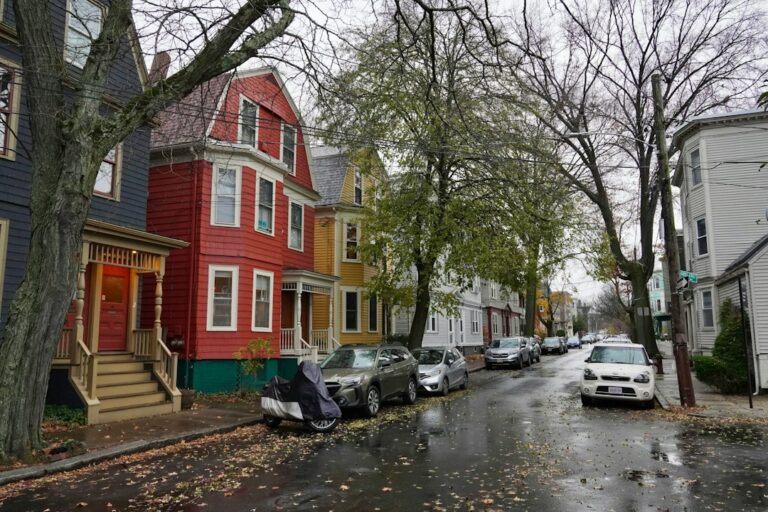
- A large university population. UMass Lowell reported a fall 2025 headcount of 16,826 students, of whom 12,294 were undergraduates and 4,532 graduate students. Many live off campus in the two- and three-deckers of Pawtucketville, Centralville and the neighborhoods around the university’s North and East campuses.
- Commuter access to Boston. The Lowell Line terminates at the Charles A. Gallagher Transit Terminal, which is the reason Lowell falls under the MBTA Communities law and why downtown and canal-district sites have become the focus of new apartment zoning.
The MBTA Communities overlays and Lowell apartment zoning
Section 3A of the state Zoning Act, known as the MBTA Communities law, requires cities and towns served by the T to allow multifamily housing as of right in at least one district of reasonable size near transit. A February 2022 memo from Lowell’s planning staff explained that Lowell qualifies “because of the existence of the commuter rail located at the Gallagher Terminal.” Commuter rail communities like Lowell faced a compliance deadline of December 31, 2024.
The state guidelines for a community in Lowell’s category set three core tests for the district: it must have zoned capacity equal to at least 15% of the community’s housing stock, cover at least 50 acres in total, and allow a gross density of at least 15 units per acre.
Three transit-oriented overlays
Lowell chose to meet the requirement with three Transit-Oriented Development overlay districts rather than a single district. As presented to the City Council by planning staff in October 2023, they were structured in tiers:
- TOD High-Rise: buildings up to 200 feet or 15 stories, with on-site parking capped at up to 0.5 spaces per dwelling unit.
- TOD Mid-Rise: buildings up to 85 feet or 7 stories, with parking up to 1.0 space per unit.
- TOD Neighborhood: buildings up to 35 feet or 3 stories, scaled to the triple-decker fabric of the surrounding streets.
Lowell was an early adopter, and the state’s published list of MBTA Communities district compliance letters lists Lowell among the communities found compliant. Owners whose buildings sit inside or next to an overlay should pull the adopted text and map from the city rather than relying on the presentation figures, since dimensional details can change between a staff presentation and final adoption.
Why parking caps matter to existing owners
The parking provisions deserve attention. A maximum, rather than a minimum, means a developer in the High-Rise overlay cannot build more than half a space per apartment on site. That lowers construction cost per unit and lets more of a lot go to housing, but it also means new buildings near Gallagher Terminal and downtown will market themselves to car-light renters. Older buildings in the same area with off-street parking can treat that parking as a competitive feature rather than a cost center.
Accessory dwelling units by right
The second major change came from Beacon Hill rather than City Hall. The state’s 2024 Affordable Homes Act made protected-use accessory dwelling units legal as of right statewide. According to the state’s ADU guidance, the provision took effect February 2, 2025, and caps a protected ADU at 900 square feet or half the floor area of the principal dwelling, whichever is smaller. Municipalities may not impose owner-occupancy requirements on a protected-use ADU.
Lowell’s own accessory dwelling unit page confirms that ADUs under 900 square feet are allowed by right in every zoning district that allows single-family homes, and that ADUs cannot be used as short-term rentals; rentals must run at least 30 days.
For apartment owners, ADUs are a modest supply factor rather than a threat. They add units one at a time, mostly in the single-family-zoned parts of the Highlands, Belvidere and South Lowell, and they tend to compete for one-person or two-person households rather than families looking for a three-bedroom flat in a triple-decker. Their bigger effect may be on the resale market for small properties: a single-family house with room for an ADU now competes in part with a two-family as an owner-occupant’s income property.
What the Lowell Forward master plan targets
In 2024 Lowell finalized Lowell Forward, the city’s new master plan, which replaces the earlier Sustainable Lowell 2025 plan. Its housing chapter is unusually specific. Among its goals and actions:
- Increase the total number of housing units to 46,950, an addition of roughly 3,150 homes, by 2030.
- Create 800 new affordable units by 2030 and 1,050 by 2040.
- Create 2,500 new housing units within the MBTA Community multifamily overlay districts by 2040.
- Conduct an inclusionary zoning market study and develop an inclusionary zoning ordinance appropriate to Lowell’s market.
- Build consensus around an accessory dwelling unit ordinance to expand housing choice in all residential areas.
Two points stand out for owners. First, the plan expects the transit overlays to carry most of the long-run growth, which concentrates new competition around downtown and the canal districts. Second, inclusionary zoning is listed as an action to study, not a rule already in force. If Lowell adopts it, new market-rate projects would have to set aside a share of units at restricted rents, which typically raises the cost of new construction and narrows the rent gap between new and older buildings from the other direction.
State incentives behind mill and downtown conversions
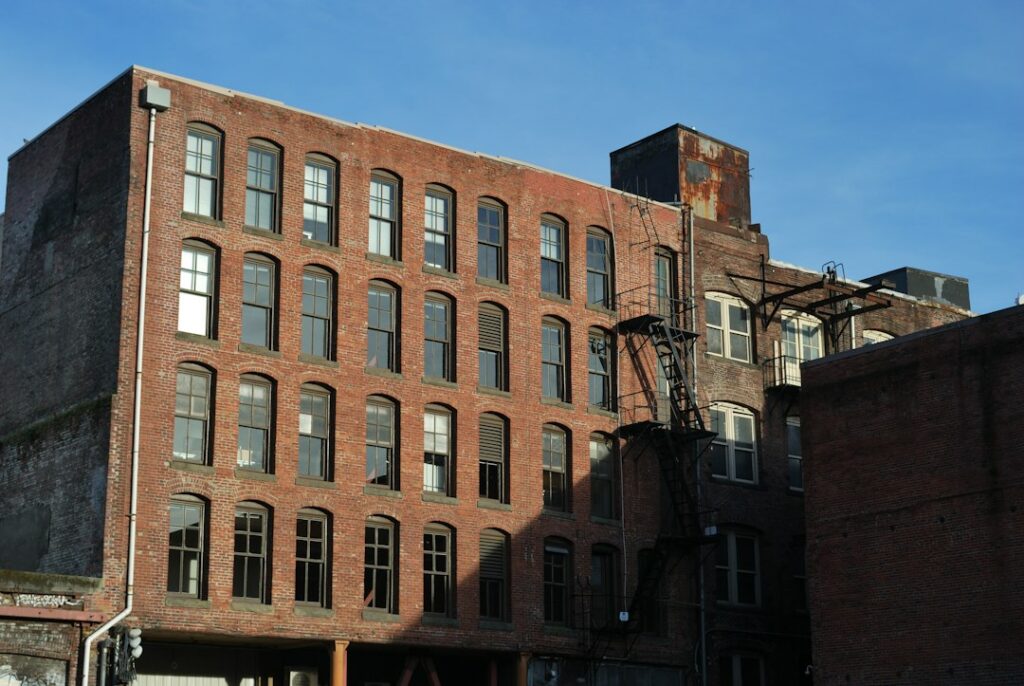
Lowell’s newest apartments are disproportionately conversions of mills and older commercial buildings, and a state program explains much of that.
The Housing Development Incentive Program
The Housing Development Incentive Program, known as HDIP, is available only in Gateway Cities. It pairs a state tax credit with a local property tax exemption for market-rate housing in designated Housing Development zones. Lowell’s program fact sheet requires that at least 80% of a project’s units be market-rate and that the project sit inside a designated zone, with a negotiated local tax exemption agreement.
Recent Lowell awards show how active the pipeline has been:
- July 2024: the Hildreth Building, a 50-unit office-to-apartment conversion at 45 Merrimack Street, received $2.5 million, and Isobel Lofts received $2 million for 26 units, together adding 76 units according to the state’s July 2024 HDIP announcement.
- April 2025: three projects each received $2.5 million: the Massachusetts Mills Boiler Building with 65 units, the Massachusetts Mills Main Power Building with 30 units and The Emery with 37 units, a total of 132 units.
Those projects are relatively small by suburban standards, but they land in the same downtown and canal-district blocks where renters looking for a walkable location compare options. They also tend to offer studios and one-bedrooms with modern finishes, the unit types that compete most directly with renovated units in older walk-ups.
Lowell’s place in the Subsidized Housing Inventory
The state’s Subsidized Housing Inventory, dated September 30, 2025, credits Lowell with 5,155 subsidized units out of 43,370 year-round units, or 11.89%. That is above the 10% threshold in Chapter 40B, the comprehensive permit law. In communities below 10%, developers who include affordable units can use 40B to override local zoning. Because Lowell is above the line, new projects generally have to work within the city’s own zoning and approvals, which is one reason the overlay districts and HDIP zones carry so much weight here.
Named projects moving through approvals
Beyond the HDIP conversions, several larger projects show where the next wave of supply is headed.
Jackson Street in the Hamilton Canal Innovation District
Cabot, Cabot & Forbes is planning 362 market-rate apartments in two six-story buildings at 291 and 341 Jackson Street, on a former machine-shop site in the Hamilton Canal Innovation District. Trade coverage from CoStar in March 2026 and Boston Agent Magazine in April 2026 put the project cost at about $155 million and reported that it had cleared review by the city’s historic board. Until shovels are in the ground, owners should treat it as an approved project rather than a delivery date, but its scale is roughly seven times the size of the Hildreth Building.
North Canal redevelopment on Moody Street
On January 22, 2026, the Lowell Planning Board voted 5-0 to approve the redevelopment of the North Canal apartments at 463 and 281 Moody Street. The project replaces 116 units of affordable housing with 160 units of newly built affordable housing. Because it rebuilds an existing affordable community rather than adding market-rate units, its effect on market rents is indirect, but it will raise the quality bar in the Acre and add 44 units on net.
Other canal-district and corridor plans
- WinnCompanies, Hamilton Canal Parcels 8 and 9: WinnCompanies closed financing in June 2020 on a 125-unit mixed-income building with 54 workforce units at 100% of area median income, 39 affordable units at 60% and 32 market-rate units.
- Lowell Innovation Network Corridor: announced by the governor on March 28, 2024 and tied to UMass Lowell, the LINC plan calls for nearly 500 new housing units along with research and commercial space; the university’s spring 2026 magazine describes it as “490+ new housing units.” It remains a long-range proposal.
Reading the pipeline as an existing owner
Put together, the zoning and incentive picture points to steady but concentrated growth. New supply in Lowell will cluster around Gallagher Terminal, downtown, the Hamilton Canal Innovation District and the UMass Lowell corridor, in buildings that are taller, newer and lighter on parking than most of the city’s existing rental stock. The two- and three-deckers and small brick walk-ups that make up much of Lowell’s rental inventory in neighborhoods such as Centralville, Pawtucketville, Belvidere and the Highlands are mostly outside those overlays.
That has several practical implications:
- Rent comparisons will shift downtown first. A renovated one-bedroom in a downtown walk-up will increasingly be compared with new HDIP conversions a few blocks away. Owners there should expect the new buildings to set the ceiling and plan renovations to compete on space, parking or price rather than on finishes alone.
- Family-sized units stay scarce. Most new projects skew toward studios and one-bedrooms. Three-bedroom flats in triple-deckers serve a segment the pipeline barely touches, which supports occupancy for owners of that stock.
- Land near transit has new value. A lot or underused building inside a TOD overlay now carries as-of-right multifamily potential that it did not have before 2023. That can change what a property is worth to a developer compared with what it is worth as an operating rental.
- Watch inclusionary zoning. If the city follows through on the master plan’s inclusionary zoning study, new market-rate construction gets more expensive, which tends to slow the pipeline and supports existing buildings.
- Expect continued conversion activity. HDIP rounds have funded Lowell projects in 2024 and 2025. Large mill and office buildings downtown remain candidates, and each round is an early signal of units that will deliver two or three years later.
How owners can put the zoning map to work
Whether you plan to hold, refinance or sell, a few concrete steps help translate Lowell’s zoning changes into decisions:
- Locate your parcel on the adopted overlay map. If it falls inside a TOD district, ask a land-use attorney or the planning department what could be built as of right, and compare that with the building’s value as a rental.
- Track Planning Board and historic board agendas. Approvals such as the Jackson Street and North Canal votes give 18 to 36 months of warning before units deliver.
- Benchmark against new product, not just old comps. When a new building opens nearby, note its unit mix, concessions and parking, and adjust your renewal and renovation strategy accordingly.
- Rebuild your valuation with current income. A quick pass through our apartment building value calculator shows how a change in rent or expenses moves value at a given cap rate, which is useful before deciding whether to invest in upgrades.
- Watch the ADU and inclusionary zoning conversations. Both can change the economics of small properties and new construction within a single budget cycle.
Owners weighing their next step can find local context on our Lowell market page, and compare Lowell with other Gateway Cities and suburbs through our overview of Massachusetts apartment markets.
The bottom line on Lowell’s zoning shift
Lowell has done what many Massachusetts communities have resisted: it zoned for density near transit early, leaned on state incentives to turn mills and office buildings into apartments, and set numeric housing targets in its master plan. The result is a pipeline that is real but concentrated. Owners of older buildings near downtown and the canals should prepare for sharper competition on small units, while owners of family-sized units in the surrounding neighborhoods face a pipeline that largely does not build what they offer. In either case, the city’s own maps, minutes and plans give enough advance notice to plan rather than react.