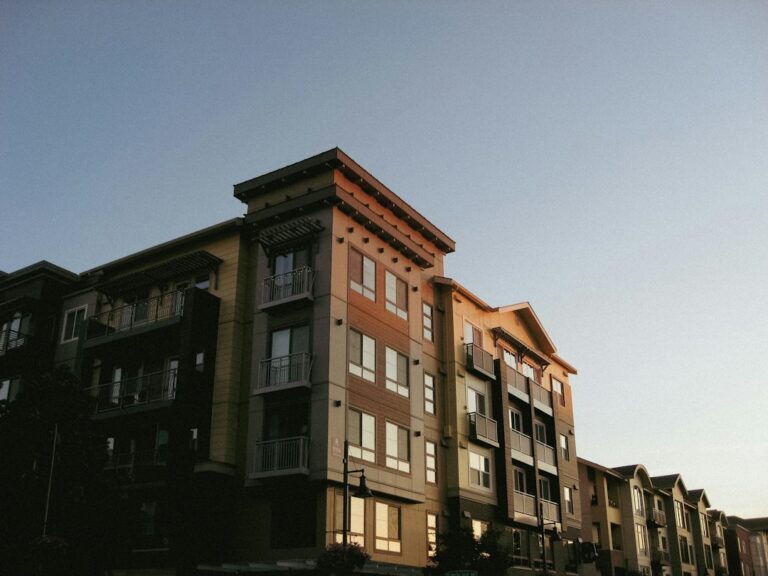
Ogden apartment demand rests on three things: a defense and federal employment base anchored by Hill Air Force Base and the IRS, a large public university on the city’s east bench, and a city where close to four in ten households rent even though the surrounding county is overwhelmingly owner-occupied. Layer on Utah’s long-running gap between home prices and renter incomes, and you have a market where the renter pool is wide and stable, even as new apartment supply has cooled rent growth for the newest buildings.
Ogden is the county seat of Weber County and its largest city, sitting at the northern end of the Wasatch Front roughly 35 to 40 miles north of Salt Lake City. The figures below come from the Census Bureau, HUD, the Utah Department of Workforce Services, the Kem C. Gardner Policy Institute and the employers themselves, with the year attached to each number because most of them are revised annually.
Ogden’s population and household picture
According to Census Bureau QuickFacts for Ogden and Weber County, Ogden had an estimated 89,510 residents on July 1, 2025, up about 2.5% from the April 2020 estimates base of 87,347. That is steady, not explosive, growth. The 2010 Census counted 82,825 people, so the city has added roughly 6,700 residents in fifteen years.
Weber County as a whole grew faster, reaching an estimated 278,174 residents in 2025, up 6.1% from 2020. Much of that growth has landed in newer suburbs such as West Haven, Plain City and the communities north and west of Ogden, where new subdivisions dominate. Ogden itself is largely built out, which means its population gains come from infill, redevelopment and higher occupancy of existing housing rather than greenfield expansion.
The household numbers explain why Ogden behaves differently from its county:
- Ogden had 33,508 households in the 2020–2024 American Community Survey, averaging 2.53 people each.
- The owner-occupied rate was 61.3%, which puts the renter share at roughly 38.7% of households.
- Weber County’s owner-occupied rate was 74.1%, so only about a quarter of county households rent.
- Ogden’s median household income was $72,575, compared with $90,005 for the county.
- About 87.0% of Ogden residents lived in the same home a year earlier, versus 89.7% countywide, a sign of more frequent moves inside the city.
Put simply, Ogden is where much of Weber County’s rental housing sits. The older housing stock, the duplexes and fourplexes on its numbered streets, the downtown apartments and the student-oriented buildings near campus all concentrate renters in the city limits.
The employers behind Ogden apartment demand
Hill Air Force Base, which sits just south of Ogden, is the single most important economic engine in the region. The base’s own FY2024 economic impact statement reports a total workforce of 26,893, a payroll of about $2.12 billion, a total economic impact of roughly $12.76 billion and 67,046 indirect jobs supported in the surrounding economy.
The Utah Department of Workforce Services publishes a list of the state’s largest employers by covered employment. Its 2024 annual-average ranking includes several names with a heavy Ogden footprint:
- Hill Air Force Base, ranked sixth statewide, with 10,000 to 14,999 covered employees.
- Northrop Grumman, ranked ninth, also in the 10,000 to 14,999 band.
- The U.S. Department of the Treasury, ranked twelfth with 7,000 to 9,999 employees, a figure that includes the IRS processing campus in Ogden.
- Weber County School District, with 4,000 to 4,999.
- Weber State University, with 3,000 to 3,999.
- Autoliv, the automotive safety manufacturer, with 3,000 to 3,999.
- America First Credit Union, headquartered in Riverdale, with 2,000 to 2,999.
The DWS count is lower than Hill’s own workforce figure because it measures covered employment and does not count everyone the base includes, such as active-duty personnel. Either way, the scale matters: a large share of renters in Ogden draw paychecks from a federal installation, a federal tax-processing center, a defense contractor, or a public university and school system. Those are not the most cyclical employers in the economy.
Northrop Grumman and the Sentinel program
Defense contracting adds another layer. In July 2026, Northrop Grumman announced it had broken ground on a new building at its Roy Innovation Center to support the Sentinel intercontinental ballistic missile program, with completion targeted for 2028. The company said the Roy campus will house more than 5,000 employees in over 1.1 million square feet and that it directly employs more than 11,000 Utahns. Roy borders Ogden to the southwest, and many engineers and technicians on these programs commute from Ogden neighborhoods.
The IRS campus and federal work
The IRS Ogden campus is one of the agency’s major processing centers. Treasury’s position as the state’s twelfth-largest employer reflects how much of that work is concentrated here. Federal processing jobs include seasonal staff who ramp up during filing season, which creates recurring demand for flexible, shorter-term rental housing close to the campus and to transit.
Weber State University and the student segment
Weber State University sits on the east bench of Ogden and is one of the largest universities in the state. In an October 2025 enrollment announcement, the university reported a record fall 2025 headcount of 33,293 students.
That headline number needs context. Weber State has a large population of part-time, concurrent-enrollment and commuter students, so headcount overstates the number of students who need a lease near campus. Campus reporting in 2026 also pointed to softer international enrollment. For apartment owners, the takeaway is that the student segment is real but narrower than the headcount suggests. The buildings that benefit most are those within walking distance of campus or on the transit line that serves it.
Transit links that shape where renters live
Ogden is the northern terminus of FrontRunner, the Utah Transit Authority’s commuter rail line. UTA describes FrontRunner as running from Ogden to Provo along a corridor of roughly 80-plus miles with 15 stations. That connection lets residents live in Ogden and work in Salt Lake County, and it makes the blocks around the Ogden Intermodal Hub on Wall Avenue a natural location for renter households who commute south.
In August 2023, UTA launched Ogden Express, known as OGX, a bus rapid transit line connecting the FrontRunner station, downtown, Weber State and McKay-Dee Hospital. Local news coverage at launch described 22 stations, electric buses and service every 10 minutes on weekdays. The line links the city’s three biggest demand nodes for renters: the rail station, downtown jobs and nightlife, and the university and hospital corridor along Harrison Boulevard.
Rents: what the federal data shows
Two federal data sets give a grounded view of rent levels.
The Census Bureau’s 2020–2024 American Community Survey reports a median gross rent of $1,216 in Ogden and $1,379 in Weber County. The earlier 2019–2023 window put Ogden’s median at $1,128, so the median rose about 8% between those overlapping five-year periods. Because ACS medians include long-tenured tenants paying below-market rents, they lag current asking rents.
HUD’s FY2026 Fair Market Rents for the Ogden, UT MSA are closer to the market. They set:
- $1,208 for a studio, up from $1,158 in FY2025.
- $1,281 for a one-bedroom, up from $1,237.
- $1,614 for a two-bedroom, up from $1,532.
- $2,163 for a three-bedroom, up from $2,055.
- $2,612 for a four-bedroom, up from $2,488.
HUD’s documentation for the same area shows the 40th-percentile gross rent for recent movers at $1,582, compared with $1,304 for all renters. That gap is the clearest sign of how far rents have moved for people signing new leases compared with households who have stayed put. It also means Housing Choice Voucher holders in the Ogden area have a payment standard that can support many existing units, which keeps voucher tenants an active part of the renter pool.
Why so many households keep renting
The demand story in Ogden is not only about jobs. It is also about how hard it has become to buy. The Kem C. Gardner Policy Institute’s 2026 State of the State’s Housing Market report found that about 91% of Utah renters cannot afford the monthly payment on a median-priced home, estimated at about $3,669. Only 4.9% of homes sold in 2025 were affordable to a household earning the median renter income of $64,000.
Ogden’s own ACS numbers point the same way. The median owner-occupied home value in the city was $355,600 in the 2020–2024 survey, and current sale prices run above that historical median. For a household earning near the city’s median income, ownership is a stretch, so renting is the default for younger workers, new arrivals, and anyone in the early years of a federal or defense career.
Apartments versus single-family rentals
The same Gardner report noted that across Utah’s five most populous counties, asking rents for detached homes rose 8.5% and townhomes rose 8.3% between March 2024 and March 2026, while apartment asking rents fell 2.3% as new supply eased pressure. Weber County is one of those five. For owners of older, smaller apartment buildings in Ogden, this is a useful framing: a well-run unit in an established building competes against both new Class A apartments with concessions and a single-family rental segment that has kept getting more expensive.
Supply, downtown plans and the growth outlook
A 2023 HUD comprehensive market analysis of the Ogden-Clearfield area put rental vacancy at 6.0% as of January 1, 2023, and forecast demand for about 3,800 new rental units over 2023–2026, with 3,025 already under construction at the time. That wave is why newer apartment rents softened statewide even as household formation continued.
On the city side, Ogden adopted Make Ogden, a 25-year downtown master plan, in 2020. The city’s Make Ogden question-and-answer document describes a strategy to bring more residents downtown, including the WonderBlock project, which the city says will add 354 housing units. More downtown residents mean more foot traffic for the 25th Street corridor and more competition for renters who want walkable apartments.
Longer term, the Gardner Institute’s Weber County projections show the county growing from about 262,726 residents in 2020 to 295,538 in 2030 and 366,031 by 2050, with households rising from 89,595 to 106,137 by 2030. Statewide, the institute projects Utah will pass 4 million residents by 2035 and need about 280,000 additional housing units to keep pace.
The rules backdrop
Utah does not allow local rent control. Utah Code Section 57-20-1 says a county, city or town may not enact an ordinance or resolution that would control rents or fees on private residential property without the express approval of the Legislature. That keeps Ogden’s rents a function of supply and demand rather than a local cap, though owners still need to follow state landlord-tenant law and any city licensing or code requirements. Our guide to passive multifamily investing explains how investors think about markets with this kind of regulatory backdrop.
Where Ogden’s renters concentrate
Without overstating any one block, renter demand in Ogden clusters around a few anchors:
- Downtown and the 25th Street area, close to restaurants, the Ogden Amphitheater, city offices and the FrontRunner station.
- The East Central neighborhood between downtown and Weber State, where older homes have long been divided into apartments and small multifamily buildings line the grid.
- The Harrison Boulevard corridor near Weber State and McKay-Dee Hospital, now tied together by OGX.
- Ogden’s southern neighborhoods near the city of South Ogden and the routes toward Hill AFB, which draw base employees who want a shorter commute.
- Areas along Wall Avenue and Washington Boulevard with older walk-up buildings that serve working households and voucher holders.
Each of these pockets draws a different tenant profile, from students and hospital staff to federal workers and Salt Lake commuters. Tracking Ogden apartment demand block by block, rather than citywide, gives a more accurate read on how quickly a given building will lease up after turnover.
What household size says about unit mix
An average of 2.53 people per Ogden household is close to the county figure, but the mix inside that average is what matters for apartment owners. Young single workers, couples without children, students sharing units and smaller families all show up in the city’s rental stock. That spread supports demand for one- and two-bedroom units in walk-up buildings, while three-bedroom apartments compete more directly with single-family rentals. When HUD’s FY2026 Fair Market Rent for a three-bedroom is $2,163 and a two-bedroom is $1,614, the jump of more than $500 a month pushes many households toward the smaller unit, which is a quiet tailwind for the classic Ogden fourplex or 12-unit building made up mostly of one- and two-bedroom layouts.
What this means for Ogden apartment owners
For someone who owns or is evaluating a building in the city, the data supports a few practical conclusions:
- The tenant base is anchored by federal, defense, education and health employers. Underwriting should reflect that stability, but also the exposure to federal budget cycles and defense program timelines.
- Concessions at new buildings matter more than they used to. When apartment asking rents fell statewide in 2024–2026, the newest product set the pace. Older buildings compete on price, location and management quality.
- Transit proximity is a real amenity. Units near FrontRunner and OGX serve commuters, students and hospital staff without requiring a car.
- Voucher tenants are a meaningful share of demand. With FY2026 Fair Market Rents above the ACS median, many existing units fall within HUD’s payment standards.
- The ownership affordability gap is unlikely to close quickly, which supports long-term renter demand even if rent growth for new leases stays modest.
Owners weighing their next step, whether that is holding, refinancing or exiting, can see local context on selling an apartment building in Ogden and statewide coverage on our Utah markets page.
Key Ogden figures at a glance
- Population: 89,510 (Census estimate, July 1, 2025).
- Renter share: about 38.7% of households (ACS 2020–2024).
- Median gross rent: $1,216 (ACS 2020–2024).
- Two-bedroom Fair Market Rent: $1,614 (HUD FY2026, Ogden MSA).
- Hill AFB total workforce: 26,893 (FY2024 base report).
- Weber State fall 2025 headcount: 33,293 (university release).
- Weber County projected population in 2030: 295,538 (Gardner Institute).
Ogden is not the fastest-growing city on the Wasatch Front, but its renter base is deep, its employers are durable, and the cost of buying a home keeps a large share of households in the rental market. For apartment owners, that combination tends to matter more over a holding period than any single year’s rent change.