Lewiston rental demand rests on four supports: a city where roughly half of all households rent, two hospitals and a college that anchor local employment, steady household growth from immigrant families, and a housing stock so old that much of it needs replacement rather than repair. Add a statewide housing shortage and a vacancy rate that local officials measured at about 1% in 2023, and the result is a rental market where demand runs ahead of decent supply.
This article looks at each of those drivers using Census, state and federal data, then at the new apartments being built downtown and what the combination means for owners of existing buildings in Maine’s mill city on the Androscoggin River.
Lewiston rental demand by the numbers
Lewiston is a city in Androscoggin County, across the river from Auburn, which is the county seat. The Census Bureau’s QuickFacts profile for Lewiston shows a population of 37,121 in the April 2020 Census and an estimated 38,866 on July 1, 2025, an increase of about 4.7% in five years. That followed slower growth in the prior decade: the 2010 Census counted 36,592 residents.
The renter share is what stands out. In the 2020 to 2024 American Community Survey period, the owner-occupied housing rate was 51.2%, which means about 49% of the city’s 16,099 households rent. The average household size is small at 2.20 people, so each new resident adds more to housing demand than it would in a city of larger families.
Rents and incomes are both moderate. Median gross rent over the same survey period was $986, and median household income was $55,393 in 2024 dollars. The poverty rate is 20.0%, which shapes the kind of rental product the city needs. Most demand is for workforce and affordable units rather than luxury apartments.
The Census Reporter summary of the 2024 five-year ACS counts 17,105 housing units in the city. Set against 16,099 households, that leaves about 1,000 units unoccupied for any reason, including units under renovation, seasonal use or simply uninhabitable. That figure is not a rental vacancy rate, but it is a reminder that some of Lewiston’s housing stock is not in usable condition.
Hospitals and a college as anchor employers
Healthcare is the backbone of Lewiston’s job base. The Maine Department of Labor’s list of the state’s largest private employers for the first quarter of 2026 ranks Central Maine Medical Center 12th in the state, with between 1,501 and 2,000 workers. St. Mary’s Regional Medical Center, the city’s second hospital, ranks 32nd on the same list, though it is reported on a statewide basis without a local headcount.
Two hospitals in a city of under 40,000 people create a steady flow of renters. Nurses, technicians, residents, support staff and travelling clinicians often rent first, and hospital work runs around the clock, which favors housing within a short drive of each campus. That demand is less sensitive to the business cycle than manufacturing or retail employment.
Bates College is the other institutional anchor, ranked 35th on the Department of Labor list with between 501 and 1,000 employees. Its effect on the apartment market is different from what owners might expect. According to the college’s 2025 to 2026 Common Data Set, Bates enrolled 1,736 full-time undergraduates in fall 2025, and 92.5% of them live in college housing, including every first-year student. With 201 instructional faculty and a larger professional staff, the college drives demand for faculty and staff housing more than off-campus student rentals.
What the employer mix means for unit demand
The combination tilts demand toward one- and two-bedroom apartments within reach of the hospitals and downtown. It also supports a mid-market tier of renters: hospital employees with steady incomes who may not be ready to buy in a market where the median owner-occupied home was valued at $235,100 in the 2020 to 2024 survey period.
New Mainers and household growth
Immigration has reshaped Lewiston over the past 25 years and is a major part of its recent household growth. The Census Bureau’s 2020 to 2024 data show that 11.5% of residents were born outside the United States and that 20.0% of households speak a language other than English at home.
The arrivals came in waves. Voice of America and Mainebiz have documented that Somali families began moving to Lewiston in early 2001, mostly relocating from Portland, followed by a large wave of Somali Bantu families in 2008 and 2009. From around 2015, asylum seekers from Congo, Angola, Burundi, Rwanda and Djibouti became the largest group of newcomers. Published estimates of the total immigrant population have ranged above 5,000 to above 7,000 in reporting from the 2010s, and those figures should be read as dated estimates rather than a current count.
For rental housing, the effect is concentrated and lasting. New arrivals rent almost without exception, often need larger units for multigenerational families, and have tended to settle close to downtown services, shops and community organizations. That has helped keep demand high in the older walk-up buildings around Lisbon Street and the Tree Streets, even where building conditions have lagged.
An old housing stock in the Tree Streets
Lewiston’s downtown housing is unusually old. A 2019 announcement of federal lead-hazard funding from Senator Susan Collins’s office noted that about 68% of downtown Lewiston’s housing was built before 1940. The same announcement covered roughly $5.2 million in HUD lead-hazard control and Healthy Homes funding for the city.
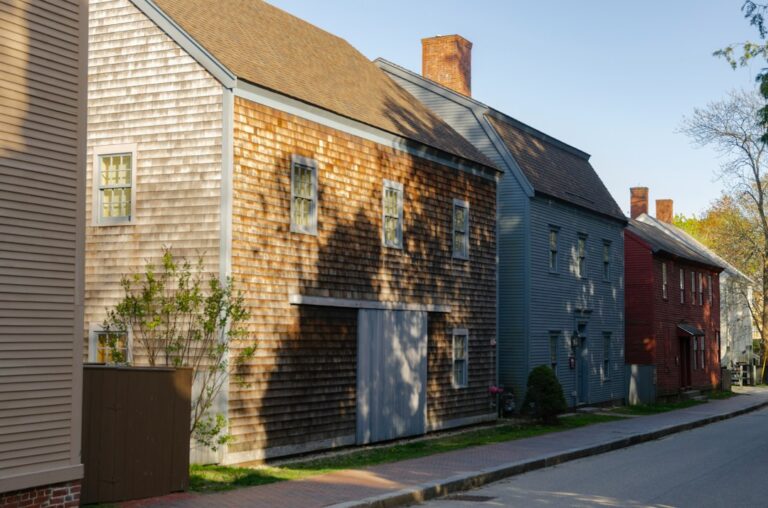
The Bangor Daily News described the neighborhood in detail in 2019. In the Tree Streets, named for streets such as Walnut and Pine, about 49% of residents lived in poverty, including 62% of families with children. Downtown held three of Maine’s four poorest census tracts, and nearly a third of Tree Streets housing was rated distressed or failing. Much of it was built cheaply between the 1890s and the 1920s to house mill workers.
That history explains two things about the current market. First, a large share of rental demand is met by buildings that need major capital work to remain habitable. Second, every building that fails a code or lead inspection and goes offline removes units from an already tight supply. Lead paint is a particular issue in pre-1978 housing, and the federal funding rounds show how much public money has gone into abating it.
The Choice Neighborhoods rebuild downtown
The largest single change to Lewiston’s rental stock in decades is federally funded. On May 20, 2021, HUD awarded a $30 million Choice Neighborhoods Implementation Grant to the Lewiston Housing Authority and the City of Lewiston for the “Growing Our Tree Streets” plan, as announced by Senator Collins’s office. The plan calls for about 185 mixed-income units on three sites, along with lead-hazard removal and investments in jobs, education and health. A later $2.5 million HUD supplemental grant added to the program.
The first two phases are now taking shape:
- Wedgewood, the first phase, has 82 units in nine buildings on Walnut and Pine Streets. Residents began moving in during October 2024, with units opening into summer 2025. Reported rents including utilities ranged from $773 to $1,375 for one-bedroom units and $927 to $1,600 for two-bedroom units.
- DeWitt, the second phase, will add 104 apartments on Pine Street, of which 83 are income-restricted and 21 are market-rate, with completion expected in early 2027.
The program is designed to replace 92 distressed public housing units at Maple Knoll and Lafayette, so not every new unit is net new supply. Still, the mix of income-restricted and market-rate units is new for the neighborhood, and the published rent ranges give private owners a useful benchmark for what renovated downtown units can command.
Mill conversions and other new supply
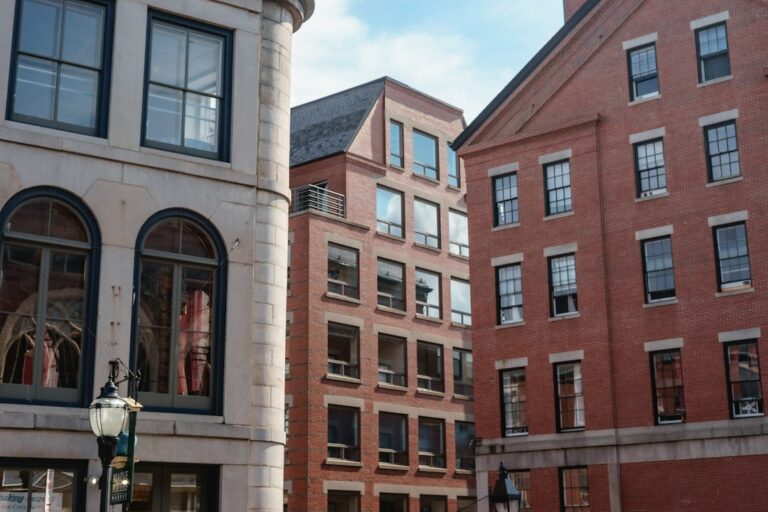
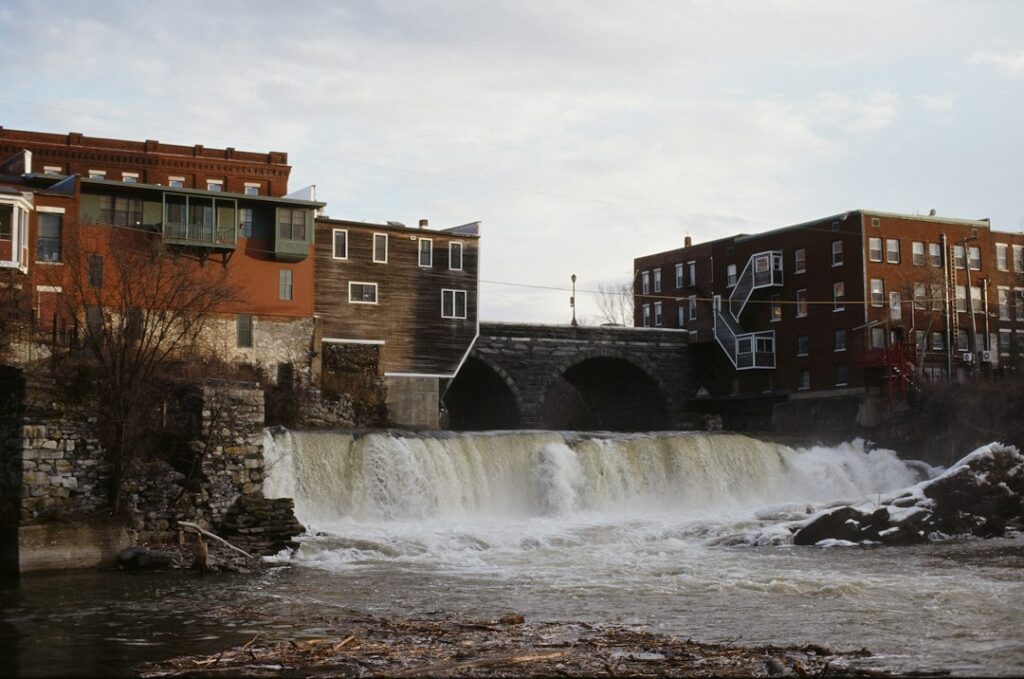
Lewiston’s mills are the other source of new apartments. The Lofts at Bates Mill, a conversion of Bates Mill No. 2 by the Szanton Company, opened 48 units in November 2012, one of the first residential conversions in the mill district.
More recently, Picker House Lofts in the Continental Mill complex added 72 workforce and market-rate units. MaineHousing announced the groundbreaking on June 9, 2023, and the building opened on March 26, 2025, fully reserved with a waiting list, according to local television coverage of the opening.
Taken together, these projects add a few hundred units over more than a decade. That is meaningful for a city of Lewiston’s size, but it is small relative to the number of older units that need replacement, and the immediate lease-up of Picker House suggests demand for quality units is far from satisfied.
Affordability pressure across Lewiston-Auburn
The best measure of how tight the market has become is the gap between what rents cost and what renters earn. The National Low Income Housing Coalition’s Out of Reach 2024 report for Maine puts the fair market rent for a two-bedroom unit in the Lewiston-Auburn metro area at $1,111. A worker would need to earn $21.37 an hour to afford it without spending more than 30% of income, compared with an average renter wage of $15.63. The report counts 15,375 renter households in the metro area, 34% of all households.
MaineHousing’s affordability analysis for the Lewiston-Auburn market area in 2020 told a similar story from an earlier vantage point. It found a median two-bedroom rent including utilities of $1,279, an income needed to afford it of $51,177 and a median renter income of $34,545, for an affordability index of 0.68. On that measure, 10,788 of 15,454 renter households, or 69.8%, could not afford the median two-bedroom unit.
Vacancy close to zero
Local officials have tracked the squeeze directly. In July 2023, the Sun Journal reported on the Lewiston Housing Committee’s scorecard, which put the rental vacancy rate at about 1%, against the committee’s target of 5% to 8%. The same report cited a market rent of about $1,800 for a two-bedroom unit, a public housing waiting list of more than 1,000 applicants, and a rise in the two-bedroom fair market rent from $999 to $1,060 in 2023.
The difference between the federal fair market rent and the reported market rent for new leases is important. Fair market rents lag the market and are built from survey data, while asking rents for available units reflect what a renter pays today. Owners should expect existing tenants on older leases to sit well below current asking rents.
Maine’s statewide housing gap
Lewiston’s shortage is part of a statewide one. The State of Maine Housing Production Needs Study, released in October 2023, estimated that Maine needed about 38,500 additional homes to meet current demand and between 76,400 and 84,300 homes in total by 2030. The region that includes Lewiston, Auburn and Augusta needs between 22,700 and 24,700 of those homes, and its housing availability rate was 2.2%, compared with a healthy level of about 5%.
MaineHousing’s 2026 Housing Outlook adds detail on how that shortage is hitting renters. Among Maine renters earning $35,000 to $49,999, the share paying more than 30% of income for housing rose from 37% in 2018 to 62% in 2024. Statewide eviction filings were 5,977 in 2023 and 4,663 in 2024.
Those statewide numbers matter for Lewiston because its median gross rent was still under $1,000 in the latest Census survey. As rents rise in Portland and its suburbs, Lewiston can absorb renters who are priced out of the coast, which would add another layer of demand on top of local job and population growth.
Soft spots owners should weigh
Strong demand does not mean every building performs well. A few local conditions cut the other way:
- Renter incomes are low relative to rents. With the average renter wage well below what a two-bedroom fair market rent requires, rent growth on older units can run into tenants’ ability to pay.
- Building condition drives turnover and cost. Pre-1940 stock brings lead, heating and code issues, and a unit that is not lead-safe can be harder to lease to families with young children.
- Population growth is real but modest. A gain of under 2,000 people in five years is significant for Lewiston, but it is not the kind of growth that absorbs large new developments quickly.
- Subsidized competition is growing. Choice Neighborhoods units with utilities included compete directly with older private walk-ups in the same blocks.
What this means for owners of existing Lewiston buildings
For owners, the picture is one of durable demand at moderate price points, with building quality as the main variable. Well-maintained one- and two-bedroom units near the hospitals and downtown are likely to stay leased, and the gap between in-place rents and current market rents gives many owners room to improve income through renovation rather than simply through rent increases.
At the same time, older buildings need capital. Owners holding pre-1940 walk-ups should plan for lead, heating and life-safety work as part of any long-term budget, since those items determine whether a unit stays in service. Running those costs through a realistic net operating income, and comparing it with what renovated units in the Tree Streets now rent for, is the clearest way to see what a building can support.
A short checklist helps translate the demand picture into decisions about a specific building:
- Compare each unit’s in-place rent with the current asking rents for renovated downtown units, such as the published Wedgewood ranges, rather than with the federal fair market rent alone.
- Confirm lead-safe status and documentation for any unit built before 1978, since family renters make up a large share of downtown demand.
- Track the DeWitt phase as it approaches its expected early 2027 completion, because 104 new units on Pine Street will compete for some of the same tenants.
- Budget heating and envelope work realistically for pre-1940 buildings, where deferred maintenance is the main risk to keeping units in service.
- Watch MaineHousing and Lewiston Housing Committee updates for fresh vacancy and rent data, since the most detailed local figures here date from 2023 and 2024.
Investors weighing the city from a distance can find background on how ownership structures work in our guide to passive multifamily investing. Owners thinking about their own building can read our Lewiston market page, and those comparing cities can explore other Maine apartment markets.