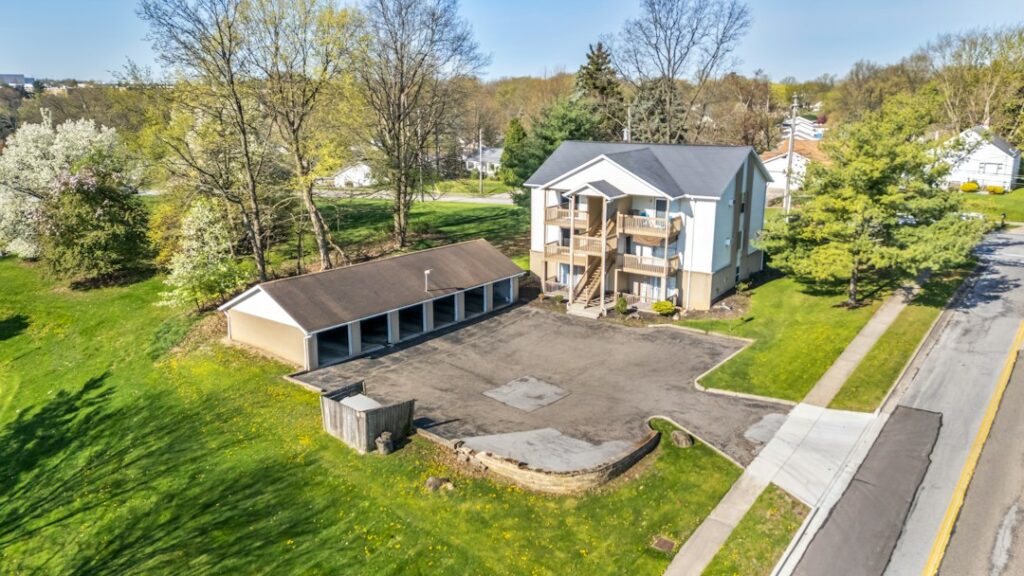
Aurora apartment operating costs are shaped by a handful of local line items that owners can track closely: Aurora Water’s tiered multifamily rates and stormwater fees, Xcel Energy’s 2026 electric and gas increases, hail-driven insurance premiums, private trash contracts, the city’s systematic apartment inspections, and Colorado’s multifamily property tax rate. Water and insurance tend to move the most from year to year, while inspection costs depend largely on how well a building is maintained.
The sections below cover each cost category using 2026 rate schedules and state data, with notes on what is changing and how owners can plan for it.
Aurora’s rental market in context
Aurora calls itself the third-largest city in Colorado. The U.S. Census Bureau counted 386,261 residents in 2020 and estimated 410,053 as of July 1, 2025, according to Census QuickFacts for Aurora. The same source puts the owner-occupied housing rate at 62.4%, meaning a bit more than a third of households rent, and the median gross rent at $1,835 based on the 2020–2024 American Community Survey.
Aurora is a home-rule municipality governed by a voter-adopted charter, and the city runs elections jointly with Arapahoe, Adams and Douglas counties. That multi-county footprint matters for owners because the county assessor, treasurer and tax levies depend on which county a property sits in, even though city services such as water and code enforcement are uniform across Aurora.
With a median rent above $1,800, expenses that look small per unit add up quickly across a building. The categories below are where most of the variance comes from.
Water, sewer and stormwater charges
Aurora Water bills multifamily properties on a structure that rewards staying within an assigned allocation. According to the city’s 2026 water rate schedule, effective January 1, 2026, multifamily accounts pay:
- Water, Tier I: $6.47 per 1,000 gallons, for use up to 100% of the account’s allocation.
- Water, Tier II: $12.04 per 1,000 gallons for use above the allocation.
- Sewer: $5.46 per 1,000 gallons, billed on the account’s December through February average.
- Storm drain: $12.18 base charge plus $9.60 for each additional unit, per month.
- Monthly water meter base charges ranging from $15.69 for the smallest meter to $585.46 for an 8-inch meter. A 2-inch meter carries a $57.44 water base charge and a $47.58 sewer base charge.
How allocations are set
The tier break depends on the account’s allocation. According to Aurora Water, allocations are set either from property specifics provided during development planning or from the account’s historical usage. For an older building, that usually means past consumption sets the threshold. A leak, a failing irrigation system or a summer of heavy landscape watering can push usage into Tier II, where each 1,000 gallons costs nearly twice as much.
How the tiers work in practice
A simple example shows why the allocation matters. Suppose a building has a monthly allocation of 200,000 gallons and uses 230,000 gallons in a hot month. The first 200,000 gallons bill at the Tier I rate of $6.47 per 1,000, or $1,294. The remaining 30,000 gallons bill at the Tier II rate of $12.04 per 1,000, or about $361. The total water charge is about $1,655, compared with roughly $1,488 if all 230,000 gallons had been billed at Tier I. The 30,000-gallon overage costs about $167 more than it would inside the allocation, and that is before base charges, sewer or any drought surcharge.
Why winter usage drives the sewer bill
Because sewer charges are based on the December through February average, winter consumption sets the sewer rate for the year. A running toilet or a leaking water heater during those months raises sewer costs long after the repair. Owners who schedule plumbing audits in late fall can keep that baseline down.
A stormwater example
The stormwater charge is easy to estimate because it depends on unit count rather than usage. For a 24-unit building, the monthly charge works out to $12.18 plus 23 additional units at $9.60, or about $233 a month, roughly $2,800 a year, before any water or sewer use.
Drought rules and surcharges in 2026
Colorado water supplies can tighten quickly, and 2026 brought restrictions. The City Council declared a Stage 1 drought on April 6, 2026, with a goal of reducing water use by 20%. Outdoor watering was limited to two days a week.
The declaration also added a drought surcharge of $2.15 per 1,000 gallons for use above 110% of an account’s winter average, and the surcharge applies to multifamily accounts. For apartment properties with irrigated lawns, that surcharge stacks on top of tiered rates during the summer months when landscape watering peaks.
The practical response is to manage outdoor use. Smart irrigation controllers, converting turf in low-traffic areas to water-wise landscaping, and checking irrigation zones for broken heads all reduce exposure to both Tier II rates and drought surcharges.
Electricity and natural gas
For Aurora buildings served by Xcel Energy, both electric and natural gas rates rose in 2026 after decisions by the Colorado Public Utilities Commission.
Electric rates
In August 2026 the commission approved a $157 million electric rate increase for Xcel, far less than the $356 million the utility requested. The increase took effect August 29, 2026. It works out to about 4.77%, or roughly $5 a month, for an average residential customer, and about 4.64%, or $7.29 a month, for small business customers, according to reporting by Denver7 and other outlets.
Natural gas rates
On September 4, 2026, the commission approved a $122.7 million natural gas increase, effective October 6, against a $190 million request. The change is about 8.6% for residential customers and about 9.2%, or $22.76 a month, for small business customers.
What it means for buildings
The impact depends on who pays. In buildings where tenants pay their own electricity and the owner pays only common-area power, the electric increase is modest. Buildings with central boilers that heat every unit with gas absorb the full gas increase, and since it took effect in October, the first full winter at the new rate is 2026–27. Owners of master-metered gas buildings should update budgets accordingly.
Energy reporting for larger buildings
Large properties also face a reporting requirement. Under Colorado’s Building Performance program, created by HB21-1286, most commercial buildings of 50,000 square feet or more must report energy use every year, according to the Colorado Energy Office. Reporting opens July 1 and the report and fee are due November 1, with penalties for late filing. The program sets statewide emissions reduction targets of 7% by 2026 and 20% by 2030, compared with 2021. Owners of larger apartment communities should confirm whether their building falls under the program, because benchmarking data feeds into future performance standards.
Insurance and Colorado’s hail problem
Hail is one of the biggest drivers of property insurance costs along the Front Range. State data released by the Colorado Division of Insurance in February 2026, as reported by CBS Colorado, showed that hail accounts for 26% to 54% of homeowners premiums in the state, compared with 1% to 25% for wildfire. The same data estimated that hail-resistant roofs could save homeowners $82 to $387 a year.
Losses explain the pressure. According to the Colorado Sun, citing state data, homeowners insurers in Colorado paid out 115% of the premiums they collected in 2023, a year the state insurance commissioner attributed to a long summer of constant hail. That figure fell to 70% in 2024. Colorado homeowners premiums have risen about 100.8% since 2019, according to a LendingTree analysis cited in the same report.
Those figures cover homeowners policies, not commercial apartment coverage, but the underlying risk is the same: roofs, siding, windows and vehicles on the same streets take the same hailstones. For apartment owners, the levers are similar too:
- Ask carriers about premium credits for impact-resistant roofing when a roof is due for replacement.
- Review wind and hail deductibles, which can be set as a percentage of insured value and can be much larger than the all-other-perils deductible.
- Document roof condition with dated photos and inspection reports so claims are easier to support.
- Budget roof replacement reserves with Colorado’s hail exposure in mind rather than using a generic replacement cycle.
Trash service is a private contract
Unlike some cities, Aurora does not provide residential trash collection. According to the city’s trash and recycling page, residential trash and recycling pickup is not a city-provided service, and multifamily property managers must contract with one of the city’s permitted haulers. All homes in the city are required to have weekly trash service.
That makes trash a negotiated cost. Owners can compare permitted haulers, right-size dumpster capacity and pickup frequency, and look at recycling service as a way to reduce overflow and extra pickups. Because the contract is private, its terms also matter: check for automatic renewal clauses, fuel or environmental surcharges, and the notice period required to switch haulers, so that a rebid at renewal is actually possible.
Inspections, code enforcement and possible licensing
Aurora does not currently charge a per-unit rental license fee, but apartment buildings are not left alone. The city runs a Multi-Family Systematic Housing Inspection Program, described on its health and housing codes page. Every multifamily property is inspected on a systematic basis, including each unit, common areas, hallways and the exterior. When violations are found, owners receive a re-inspection date at least 30 days out, re-inspections continue until everything is corrected, and administrative fees apply to re-inspections.
The cost of the program is mostly in the repairs and the staff time to prepare units, but repeated re-inspections add fees on top. Buildings that pass on the first visit avoid most of that expense.
Owners should also watch City Hall. In June 2026, according to Colorado Politics, a majority of City Council at a study session advanced a resolution asking the city manager to design a rental registration and licensing program, tentatively starting in January 2027. Details, including any fees, had not been set. If a program is adopted, it would add a new recurring cost line for Aurora landlords.
Property tax and state landlord rules that affect costs
Property tax
Colorado sets residential assessment rates by statute, and they have changed several times recently. For the 2026 tax year, residential and multifamily property is assessed at 6.8% of actual value for local government levies and 7.05% for school district levies, according to Adams County’s property assessment guide. Property is revalued every odd-numbered year, with notices of value mailed by May 1. Owners should review each reappraisal notice and consider an appeal when the value looks out of line with comparable sales or income.
State rules with cost implications
Several Colorado laws affect operating budgets indirectly:
- Under HB24-1098, effective April 19, 2024, landlords need cause, either tenant fault or a listed no-fault ground, to end most tenancies. That raises the importance of documentation and can lengthen turnover timelines.
- Under the state’s warranty of habitability rules, landlords must begin repairs within 24 hours of notice for conditions that threaten life, health or safety, and within 72 hours for other habitability problems. That favors having maintenance staff or vendors on call.
- Security deposits are capped at two months’ rent, and pet deposits at $300, refundable.
- Under HB23-1099, landlords cannot charge an application fee to applicants who provide a portable screening report from the past 30 days, with a $2,500 penalty for violations.
- A 2023 bill to repeal the state’s ban on local rent control, HB23-1115, died in a Senate committee, so rent levels in Aurora remain market-set.
A budget template for Aurora apartment operating costs
Pulling the categories together, here is how owners can source each Aurora-specific line item when building or reviewing an annual budget:
- Water and sewer: start from the account’s allocation and last year’s monthly usage, apply the current Tier I and Tier II rates, and add meter base charges by meter size. Use the December through February average for sewer.
- Stormwater: multiply the per-unit charge by the unit count and add the base charge. This line is fixed by unit count, so it rarely surprises.
- Drought exposure: if a drought stage is in effect, estimate summer use above 110% of the winter average and apply the surcharge.
- Electric and gas: separate owner-paid common-area and central-plant usage from tenant-paid usage, then apply the 2026 Xcel increases to the owner-paid portion.
- Insurance: get renewal quotes early, and compare premium and deductible options with roof age and condition in mind.
- Trash: price at least two permitted haulers and match container size to actual fill levels.
- Inspections and repairs: budget for the repairs a systematic inspection could identify, plus a contingency for re-inspection fees.
- Property tax: use the current assessment rates, and expect the value to reset with each odd-year reappraisal.
Building the budget this way keeps each estimate tied to a published rate or a property-specific record, which makes it easier to explain variances later and to show a buyer or lender how the numbers were built.
What this means for owners
The biggest swings in Aurora apartment operating costs come from water and insurance, and both reward active management. Keeping consumption inside the water allocation, controlling winter usage that sets the sewer baseline, and limiting outdoor watering during drought declarations can keep the utility line steady. On insurance, roof condition and deductible structure matter as much as the premium quote.
Energy costs moved up in 2026, with the larger impact falling on buildings that pay for central gas heat. Trash is a contract worth rebidding. And while Aurora does not yet license rentals, its systematic inspections and a licensing proposal under study mean compliance costs could grow.
To see how each of these line items flows through to net income, try our NOI calculator. For more on markets across the state, visit our Colorado market overview, and for local pricing and buyer activity, see our Aurora market page.