The Great Falls rental market is held up by two large, stable employers, Malmstrom Air Force Base and Benefis Health System, and by a housing stock that has not kept pace with demand, which kept apartment occupancy near 94% for years. The risks worth watching are a population that is roughly flat, the planned closure of the University of Providence in 2027, and uncertainty over how many construction workers the Air Force’s Sentinel missile program will actually bring to town.
This guide walks through the numbers behind renter demand in Great Falls, where those numbers come from, and how an apartment owner can read them.
Great Falls at a glance: people, households and renters
Great Falls is the county seat of Cascade County. According to the Census Bureau’s QuickFacts for Great Falls and Cascade County, the city had an estimated 60,208 residents on July 1, 2025, down 0.5% from the 2020 Census. Cascade County as a whole was estimated at 85,029, up 0.7% over the same period. In other words, the county is growing slowly while the city itself is essentially holding steady.
The household figures matter more to an apartment owner than the headcount:
- Households: 26,379 in the city (2020–2024 American Community Survey), averaging 2.21 people per household.
- Tenure: the owner-occupied rate was 66.1%, which means roughly one in three Great Falls households rents.
- Median gross rent: $900 a month for 2020–2024, up from $866 in the 2019–2023 release. The countywide median was $939.
- Median household income: $63,373 in the city, with a median owner-occupied home value of $257,000.
Those last two figures explain a lot. A household earning the median income would face a monthly payment on a $257,000 home that is well above what most local apartments rent for, so a meaningful share of households who might own in a cheaper decade continue to rent. That keeps demand for older, moderately priced apartments steady even when population growth is flat.
The two employers that anchor renter demand
The 2024 Great Falls Housing Demand Assessment, prepared by The Concord Group for the Great Falls Development Alliance, puts it plainly: Malmstrom Air Force Base and Benefis Health Care are the two biggest employers in Great Falls. Each supports a different slice of the rental market.
Malmstrom Air Force Base
Malmstrom is home to the 341st Missile Wing, which operates a missile field the base describes as a 13,800-square-mile complex. The wing’s Commander’s Data Card for fiscal year 2024, ended September 30, 2024, lists:
- Personnel: 3,268 military and 532 civilian employees assigned, 3,830 in total, plus 3,289 dependents.
- Payroll: $259.6 million in annual payroll, of which $208.6 million was military pay.
- Housing on base: 1,116 privatized family housing units.
- Schools: 603 K-12 military dependents enrolled in Great Falls schools.
- Total economic impact: an estimated $435.8 million a year, once construction, services and indirect jobs are added.
The ratio of assigned personnel to on-base family housing is the important figure for landlords. With 1,116 privatized units and several thousand service members and civilians, a large share of the base workforce lives off base, and many of them rent. Military renters bring predictable income through the Basic Allowance for Housing, but they also move on fixed rotation schedules, so turnover in buildings popular with airmen tends to cluster around summer reassignment season.
The housing allowance itself sets a useful benchmark. For 2026, the Defense Department’s Basic Allowance for Housing for the military housing area covering Malmstrom and Great Falls is $1,608 a month for an E-5 with dependents, effective January 1, 2026, as published by rate trackers that reproduce the official tables. That figure is far above the $900 citywide median gross rent and close to what the newest local buildings charge. In practice, many military households can afford newer or larger units than the typical Great Falls renter, so older buildings compete for airmen on location, layout and responsiveness rather than on price alone.
Benefis and the health care sector
Benefis describes itself as the largest private employer in the area. It is part of a broader education and health services sector that, according to the Bureau of Labor Statistics economy-at-a-glance page for the Great Falls metro, employed 7,700 people in August 2026 (preliminary), out of 36,100 total nonfarm jobs. Government accounted for another 4,200. Health care renters are often shift workers, traveling nurses on short assignments and early-career clinicians, which supports demand for furnished units, flexible lease terms and buildings within a short drive of the hospital campuses.
How tight the Great Falls rental market has been
The local labor market has been tight. The same BLS page shows the metro unemployment rate at 3.0% in July 2026 (preliminary). Low unemployment does not create renters by itself, but it does mean fewer households falling behind on rent and more households forming as people move out of shared housing.
The rental side has been tight too. The Concord Group’s 2024 assessment reported that the metro’s apartments averaged 94% occupancy over the preceding five years, and that private affordable housing was 98% occupied. For a market of this size, those are healthy figures: they leave enough vacancy for normal turnover without the long marketing periods seen in oversupplied cities.
The City of Great Falls reached a similar conclusion from a different direction. Its draft 2025–2029 Consolidated Plan, prepared for federal housing funds, states that housing in Great Falls is not keeping pace with the changing population. Using 2016–2020 data, the plan estimates that 42.5% of renter households were cost-burdened, paying more than 30% of income for housing, and 19.6% were severely cost-burdened, paying more than half.
New supply: what has been built and what is planned
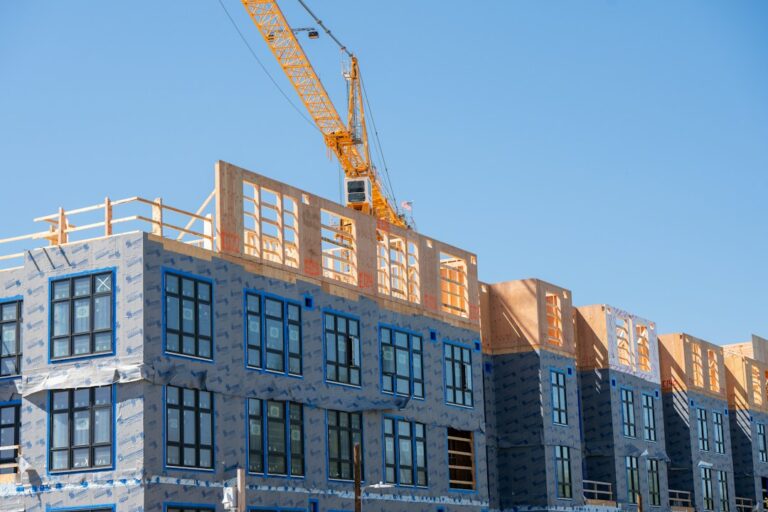
Great Falls is not a city with a construction freeze. The 2024 assessment counted more than 500 apartment units delivered in three new projects, reported that the metro had added between 250 and 300 new apartment units a year over the prior two years, and identified 1,152 rental units of all types under construction or in planning at the time.
On the demand side, the study projected annual demand in the metro for approximately 270 new rental units and 370 new for-sale units. Set against recent deliveries of 250 to 300 apartments a year, supply and demand were roughly in balance when the report was written, which is consistent with lease-up results at the newest property it profiled.
What new buildings rent for
That property, Station Lofts, was in lease-up at the time with an average rent of $1,666 a month. Compare that with the citywide median gross rent of $900. The gap is the key to how new supply affects existing owners:
- New construction in Great Falls competes mainly with other new or recently renovated buildings, not with a 1970s walk-up renting for well under $1,000.
- Households who move into new buildings free up older units, but the pool of renters who can pay $1,600 or more is limited, so a wave of new deliveries usually shows up first as concessions at competing new properties.
- Owners of renovated older buildings sit in between. If their rents climb toward new-construction levels, they lose the price advantage that keeps them full.
Federal rent benchmarks
The consolidated plan also lists fair market rents of $701 for a one-bedroom, $914 for a two-bedroom and $1,292 for a three-bedroom. These HUD benchmarks set payment standards for the Housing Choice Voucher program, so owners who accept vouchers should watch them each year. When contract rents run well above them, voucher holders have fewer options, which affects the tenant pool for older buildings in particular.
Sentinel: a potential surge that is not yet scheduled
The largest wildcard for the Great Falls rental market is the Air Force’s Sentinel program, which will replace the Minuteman III missiles in fields including Malmstrom’s. Converting Malmstrom’s 150 launch facilities to the new system will require a large temporary workforce.
Air Force Global Strike Command’s Sentinel project information page describes plans to establish workforce hubs in Great Falls and Lewistown, housing 2,500 to 3,000 residents during peak periods for three to five years. The same page also states that no activities at Malmstrom or Minot are scheduled at this time. The 2024 housing assessment noted that the project was expected to bring approximately 1,500 jobs and was set to begin in 2030.
How should an owner treat this? As upside that should not be underwritten as certain:
- If temporary workers are housed in dedicated hubs, the direct effect on existing apartments may be modest, while spending by those workers could still support local jobs and household formation.
- If hubs are smaller than planned or arrive late, contractors and their staff will look to the existing rental stock, and short-term demand could rise sharply for a few years.
- Either way, the timing sits years out. A buyer or lender pricing a building today on Sentinel-driven rent growth is betting on a schedule the Air Force has not set.
The University of Providence closure
On the other side of the ledger, the University of Providence announced in October 2026 that it will cease educational operations at the end of the 2026–27 academic year, with its last day of classes on August 20, 2027. Enrollment had fallen to 763 students in fall 2024, down 23.5% from 2019.
The direct hit to apartment demand is limited by the school’s size, but it is not zero. Owners near the campus on the city’s south side should expect some students who rent off campus, and some staff and faculty, to leave in 2027. The loss of a local employer and its spending also weighs modestly on the wider economy.
Great Falls College MSU remains open. Its 2025–26 Common Data Set reports 1,490 students in fall 2025, 561 full-time and 929 part-time, and the college has no student housing, so every student lives off campus or commutes. Many are older, working students who already live in town, which makes the college a steadier but smaller source of rental demand than a residential university.
Reading the numbers: which renters drive which buildings
Putting the pieces together, the Great Falls renter pool breaks into a few groups, each with its own preferences:
- Airmen and military families: the largest single group of mobile renters. They value proximity to the base on the east side of the city, two- and three-bedroom layouts for families, and landlords who handle military lease clauses smoothly.
- Health care workers: steady incomes and a mix of long-term staff and short-term travelers. They value quick access to hospital campuses, in-unit laundry and flexible terms.
- Local workforce and long-term residents: the core of demand for older, lower-rent buildings. This group is the most sensitive to rent increases, as the cost-burden figures show.
- Students: a small and shrinking segment after 2027, mostly part-time and already housed.
A building’s position relative to these groups often matters more than its finishes. A dated 12-unit property within a few minutes of the base can outperform a nicer building across town if it matches what military households need.
What these trends mean for owners
For owners of existing apartment buildings in Great Falls, the market evidence points to steady occupancy, moderate rent growth and a few specific risks. Practical steps that follow from it:
- Price against the right comparison. Benchmark rents against similar-vintage buildings and the $900 citywide median, not against new construction at $1,600-plus.
- Plan for seasonal military turnover. Stagger lease expirations away from a single summer month where you can, and keep make-ready budgets ready for that period.
- Do not underwrite Sentinel. Treat any construction-workforce demand as upside. Base valuations on today’s occupancy and rents.
- Watch the south side in 2027. Owners near the University of Providence should review rent rolls for student and staff tenants and plan for that demand to fade.
- Know your allowance and voucher benchmarks. Military housing allowances and HUD fair market rents both reset each year. Checking them before setting renewal rents tells you how much room military and voucher households have, and where a proposed increase would push them out.
- Track new deliveries. With more than a thousand rental units identified in the pipeline in 2024, concessions at new buildings are the earliest signal that supply has caught up with demand.
If you are weighing how these factors translate into what an investor would pay, our guide to how passive multifamily investing works explains how operators and investors think about income, risk and hold periods. For a look at the city itself, including the kinds of buildings we see there, visit our Great Falls market page, and for coverage of other cities across the state, see our Montana apartment market overview.
Key sources for tracking Great Falls renter demand
The figures in this article change on different schedules, so it helps to know where to check them:
- Census QuickFacts updates population estimates each spring and American Community Survey figures, including rent and tenure, each December.
- The BLS metro page updates employment and unemployment monthly, with preliminary figures revised later.
- Malmstrom’s Commander’s Data Card is published by fiscal year and is the best public source on base personnel and payroll.
- The Great Falls Development Alliance commissions periodic housing demand studies; the 2024 edition is the most recent cited here.
- Air Force Global Strike Command posts Sentinel project updates, including any changes to workforce hub plans.
Great Falls will not post the headline rent growth of faster-growing western cities, and owners should not expect it to. What it offers instead is a renter base tied to two durable employers, occupancy that has held in the mid-90s, and a housing shortage the city itself acknowledges. Owners who price against the right comparisons and plan for the known risks are working with a market that rewards steady operation.