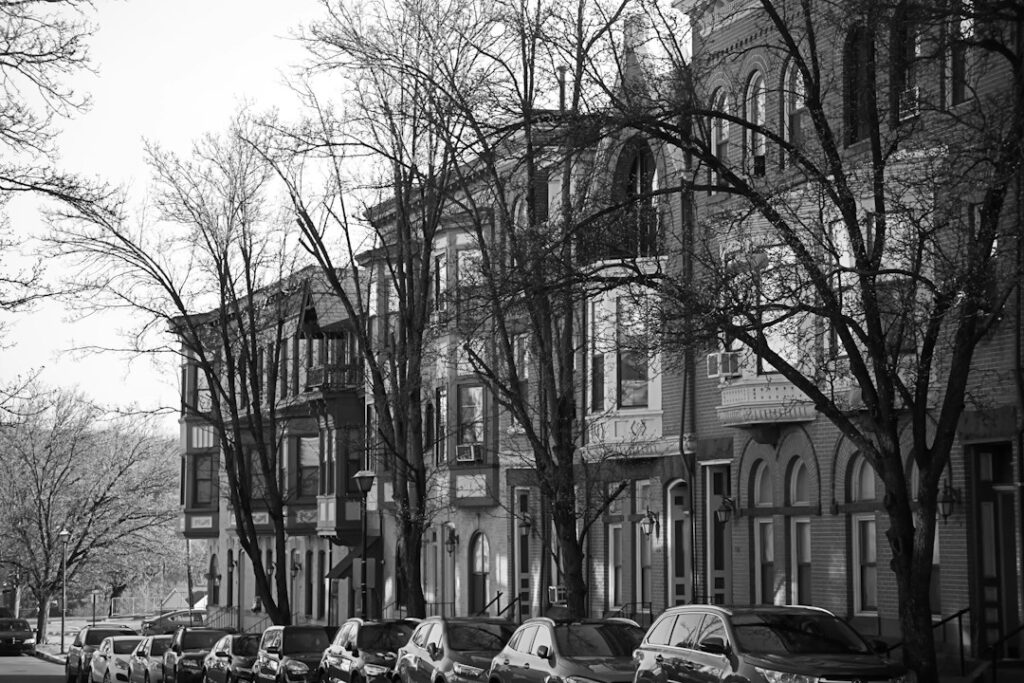
Allentown landlord rules come from two layers: the city requires every rental unit to carry an annual rental license, pass a city inspection and follow its property maintenance and disruptive conduct codes, while Pennsylvania’s Landlord and Tenant Act of 1951 sets the rules on security deposits, notices to quit and eviction. For an apartment owner, the city side is mostly about registration, fees and inspections, and the state side governs how money and possession change hands with tenants.
Allentown is the county seat of Lehigh County and a city where renting is the norm. The U.S. Census Bureau’s QuickFacts profile for Allentown puts the owner-occupied housing rate at 43.2% for 2020 to 2024, which means a majority of homes are renter-occupied, with a median gross rent of $1,317 over the same period. The city’s population estimate for July 1, 2025 is 126,044.
How Allentown rental licensing works
The core requirement is simple: you cannot rent a residential unit in the city without an active annual license. The city’s Rental Unit Registration and Inspection Program page says registration starts with an online application, followed by an inspection by the Residential Property Inspections staff. If the unit passes, the owner receives a rental license. Licenses run for the calendar year and must be renewed every year.
The details sit in the rental licensing article of the city’s property maintenance code, Chapter 455 of the Allentown codified ordinances on licensing residential rental units. That article makes it unlawful for an owner, operator, responsible agent or manager to rent a unit without an active annual license, and it requires each unit to pass inspection before a license is issued. The first fee covers the remainder of the calendar year in which you register, and renewals come due annually by December 31 regardless of when you first signed up.
Fees owners should budget for
The fee schedule in the code is per unit, so it scales directly with building size.
- Annual registration fee: $75 per unit.
- Late fee: $50 per unit when payment arrives after December 31.
- Reinspection fees: $75 per unit for a second reinspection and $150 per unit for the third and each later reinspection.
- Reinstatement after a license is revoked: $100 per unit.
- Appeals: $100.
- No-show fees apply when an owner misses a scheduled inspection without notice.
The city’s program page notes that renewal bills are issued by December 31.
How often units are inspected
Passing the initial inspection is not the end of it. Under the code, every residential rental unit is reinspected no more often than once within a five-year period, unless the city receives a complaint or a public officer has probable cause to inspect sooner. Rental complaints go to Residential Property Inspections at (610) 437-7694, and the program office is on the third floor of City Hall at 435 Hamilton Street.
The city publishes a common code violations checklist alongside the registration materials. Walking each unit against that list before an inspection is cheaper than paying a $75 or $150 per-unit reinspection fee after a failed one.
Penalties for renting without a license
Operating an unlicensed rental is a summary offense under the code. The fine can reach $1,000 per unit for each month the unit is not properly registered, and the city may also go to court for civil or equitable remedies.
Registration duties that catch owners off guard
Several of the city’s requirements are administrative rather than physical, and they tend to trip up owners who live outside the area or who just closed on a building.
- Local responsible agent. An owner who lives outside Lehigh County must name a responsible agent who lives or works in Lehigh County and can accept legal service. A post office box is not an acceptable address, and the agent cannot be a tenant. Any change in the agent must be reported to the Department of Community and Economic Development within five business days.
- New owners. After a title transfer, the new owner must file a license application within 10 business days. Registration fees already paid can carry over to the buyer if the seller met all requirements, with proof given to the city within the same 10 business days.
- Posting the license. In buildings with five or more dwelling units, the license must be posted in a visible spot in the owner’s or operator’s office or in a public hall. For any unit, the owner must be able to produce the license within 24 hours of a request from the code official.
- Owner and Occupant Duties notice. The city requires owners to post its Owner and Occupant Duties document in every rental unit they own.
Property maintenance, safety and disruptive conduct rules
Allentown’s rental page points owners to the code articles on the responsibilities of owners and occupants, which spell out who handles what inside a unit. Two city programs deserve particular attention from apartment owners.
Disruptive conduct reports
The city’s Disruptive Conduct Code applies only to rental units. When a tenant or guest is too loud at unreasonable hours, acts in an aggressive or hostile way, interferes with neighbors’ peaceful enjoyment of their homes or damages the property, an Allentown police officer can investigate and issue a Disruptive Conduct Report. The city logs each report and sends notices of violation to both the tenant and the landlord. According to the city’s disruptive conduct management page, a third report within 12 months results in a request for eviction, and the landlord may then choose to evict.
For owners, the practical duties are to make sure tenants know the rules and to act when the city notifies you of a violation. A Disruptive Conduct Board of Appeals hears challenges.
Window guards for young children
The city’s rental program page lists § 455-78, known as Ahnelly’s Law, among the rules that apply to rental owners. It requires landlords to install window guards on all windows when a child aged 10 or younger lives in or spends considerable time in a rental unit. The Allentown Health Bureau has advised that the devices should keep windows from opening more than 4 inches and meet the ASTM F2090 standard.
Lead paint rules for older Allentown apartments
Any Allentown apartment built before 1978 falls under federal lead rules. Under the EPA’s lead-based paint disclosure rule for rentals, a landlord of covered pre-1978 housing must do the following before a tenant signs a lease:
- Give the tenant the EPA pamphlet Protect Your Family From Lead in Your Home.
- Disclose any known lead-based paint or lead hazards, along with available records and reports. In multi-unit buildings, that includes records for common areas and other units from building-wide evaluations.
- Include the Lead Warning Statement in or attached to the lease.
- Keep a signed copy of the disclosure for three years after the lease begins.
The rule exempts zero-bedroom units such as efficiencies (unless a child under six lives there or is expected to), leases of 100 days or less, housing for the elderly or people with disabilities (with the same child exception), housing certified lead-free by an inspector, and housing built after 1977.
The city also runs a Lead Hazard Control Program funded with HUD grants. Landlords can apply for homes built before 1978 that are occupied or frequently visited by a child under six or a pregnant woman, provided the tenants are income-qualified at or below 80% of area median income. Approved properties get a lead risk assessment, abatement by a licensed contractor, temporary relocation for occupants during the work and clearance testing.
Pennsylvania security deposit limits and escrow rules
The state’s Landlord and Tenant Act of 1951 sets the deposit rules that apply in Allentown and across Pennsylvania. Section 511.1 caps the deposit at two months’ rent during the first year of a lease. From the start of the second year, the landlord cannot hold more than one month’s rent, so any excess must be returned. After a tenant has been in place for five years, a rent increase cannot be used to require a larger deposit.
Section 511.2 adds banking rules. Any deposit funds over $100 must be held in an escrow account at a regulated institution. After the second anniversary of the deposit, the account must bear interest; the landlord may keep an amount equal to 1% per year as an administrative fee, and the rest of the interest belongs to the tenant. Section 511.3 lets a landlord post a guarantee bond from an authorized bonding company instead of escrowing the money.
When a lease ends, Section 512 gives the landlord 30 days to return the deposit along with an itemized list of any damages being deducted. A landlord who fails to pay the difference can be held liable for double the amount by which the deposit exceeds the actual damages.
A new state rule on application fees
Pennsylvania recently added a rental application provision to the 1951 act. House Bill 558 was approved by the governor on October 22, 2026 as Act 67 of 2026, and it takes effect 60 days after enactment. The enacted text adds a Section 207 requiring rental application fees to be reasonably related to the actual administrative expenses the landlord incurs, and it bars using those fees as a general revenue source.
Rent increases, notices to quit and the eviction process
Pennsylvania has no rent control or rent stabilization law. Rent levels and increases are set by the lease. In practice, an increase takes effect at renewal unless the lease provides otherwise.
Notice periods under state law
Before filing for possession, a landlord generally serves a written notice to quit under Section 501 of the 1951 act. The notice periods depend on the reason:
- Nonpayment of rent: 10 days from service of the notice.
- End of the term or breach, for a lease of one year or less or of indefinite length: 15 days.
- End of the term or breach, for a lease longer than one year: 30 days.
How evictions move through Lehigh County courts
Residential evictions start at the magisterial district court level. Lehigh County’s magisterial district courts number 14 under boundaries that took effect January 2, 2024, and they handle landlord-tenant disputes along with civil claims up to $12,000. The county court site offers a lookup tool to find the court that covers a given address.
The Pennsylvania rules of civil procedure for magisterial district judges set a fairly tight timeline:
- Hearing. Under Rule 504, the judge sets a hearing between 7 and 15 days after the complaint is filed.
- Appeal window. Under Section 513 of the 1951 act, either side may appeal a residential lease judgment to the Court of Common Pleas within 10 days. A tenant’s appeal acts as a stay only if the tenant pays the required amount in cash or bond.
- Order for possession. Under Rule 515, a residential landlord may request the order for possession after the 10th day, but within 120 days, following entry of judgment.
- Lockout. Under Rule 519, the officer may remove occupants and deliver possession to the landlord on or after the 11th day after the order for possession is served.
Taken together, an uncontested nonpayment case usually runs about a month or more from the notice to quit to a lockout. Self-help evictions, such as changing locks or shutting off utilities, are not part of that process.
Fair housing and source of income protections in Allentown
Federal and state fair housing laws apply to every Allentown rental. The city adds its own layer. In June 2025, City Council unanimously replaced its older discrimination ordinance with an updated Chapter 27 that strengthens the Allentown Human Relations Commission. The protected classes in the current ordinance include source of income, along with race, ethnicity, color, religion, ancestry, citizenship status, sex, gender identity, sexual orientation, marital and familial status, age, height, weight and status as a victim of domestic or sexual violence. The commission’s 2026 complaint form covers housing and asks complainants whether the discrimination took place within the last 180 days.
For apartment owners, source of income is the one most likely to affect daily operations. Screening criteria that reject applicants because their rent is paid by a housing voucher or other lawful income are worth reviewing against the city ordinance. Advertising is covered too, so listing language like “no vouchers” creates risk.
Rules that apply when a rental building changes hands
Allentown’s pre-sale inspection procedure applies to anyone offering property for sale or title transfer, including agent listings, sales by owner, wholesale deals, auctions, tax sales and sheriff sales. The residential program has been in effect since January 1, 2018. Within five business days of offering a property for sale, the seller or agent must request and pay for the inspection.
- Residential fee: $100 for up to three units, plus $25 for each additional unit. That includes one reinspection within 30 days; later reinspections cost $75 and then $150 per unit.
- The inspection report is valid for one year.
- If violations are found, the seller either corrects them before closing or files a notarized acceptance form at least three days before transfer, in which the buyer agrees to fix them by the reinspection date.
- A transfer without a requested or completed pre-sale inspection exposes both buyer and seller to enforcement and fees.
Once the deal closes, the buyer’s 10-business-day window to apply for a rental license begins. Sellers who keep tenants in place should plan for both steps, and our guide on how a sale works with tenants in place covers how leases and deposits carry over at closing. Deposits held in escrow under the 1951 act move to the new owner along with the leases, so the escrow paperwork should be part of the closing file.
The city also requires vacant property registration. A residential or commercial building that has been unoccupied for more than 90 consecutive days must be registered within 15 calendar days, with a nonrefundable fee of $150 per residential property, renewed every year until the property is occupied or sold.
A compliance checklist for Allentown apartment owners
Many of the city’s requirements turn on dates and paperwork rather than physical repairs. A short annual routine covers most of them:
- Confirm every unit has an active license and pay the $75-per-unit renewal before December 31 to avoid the $50-per-unit late fee.
- If you live outside Lehigh County, confirm your responsible agent’s details are current with the city.
- Check that the license is posted in the office or public hall of any building with five or more units, and that the Owner and Occupant Duties notice is in every unit.
- Walk units against the city’s common violations checklist ahead of scheduled inspections.
- Review deposits on leases that crossed their first anniversary and return anything above one month’s rent; move deposits over $100 into escrow and start paying interest after the second anniversary.
- Keep lead disclosure forms on file for three years and confirm window guards in units with children 10 or younger.
- Review screening criteria and listing language for compliance with the city’s source of income protection and the new state application fee rule.
For broader context on how the city’s rental market and buildings compare, see our Allentown market page, and for statewide trends, the Pennsylvania market overview.