
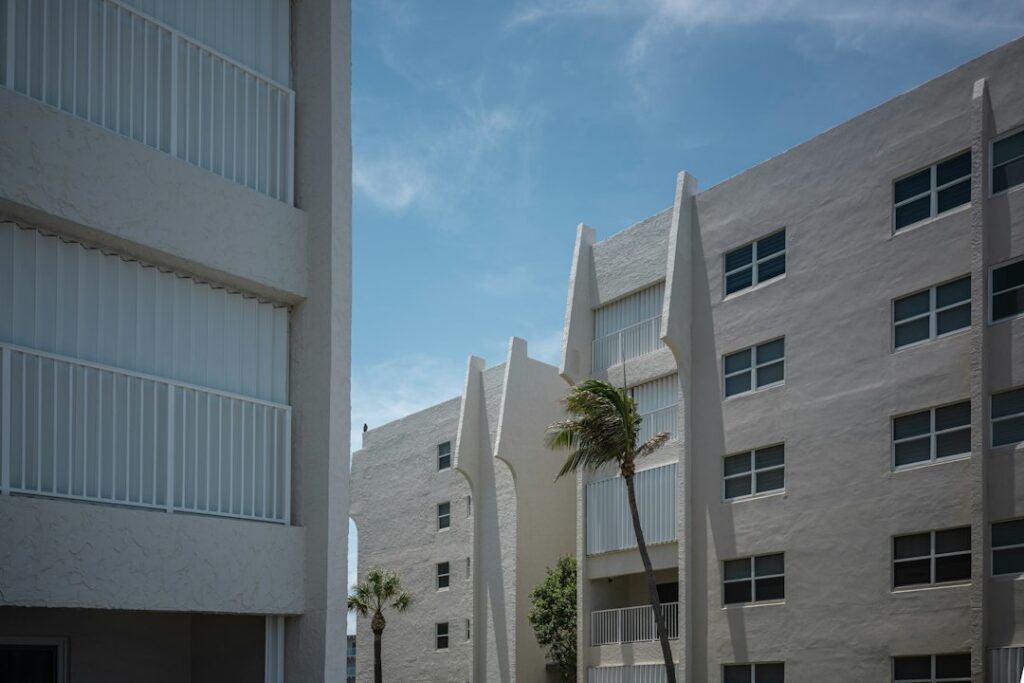
Fort Myers apartment operating costs are driven first by risk: property and flood insurance, storm-repair rules and the reserves an owner needs after Hurricanes Ian, Helene and Milton, followed by utilities, state licensing and property taxes. Several of those lines are moving in owners’ favor in 2026, including a better flood insurance discount inside city limits, an easing statewide insurance market and a voter-approved cut to the cap on non-homestead assessment increases, while utility rates are scheduled to keep rising.
This guide walks through each expense line an owner of a five-unit or larger building in Fort Myers should model, using state statutes, FEMA and city documents, and Lee County data.
Why Fort Myers apartment operating costs look different after 2022
Fort Myers is an incorporated city, chartered in 1886, and the county seat of Lee County. Its growth has been rapid: the 2020 Census counted 86,395 residents, and the Census Bureau’s estimate for July 1, 2025 is 101,581. That growth supports rental demand, but the expense side of the ledger changed sharply after September 2022.
According to the National Hurricane Center’s tropical cyclone report on Hurricane Ian, Ian made landfall on Cayo Costa on September 28, 2022 as a Category 4 hurricane with winds of about 150 mph. Storm surge reached roughly 5 to 8 feet above ground along the Caloosahatchee River in Fort Myers and 10 to 15 feet on Fort Myers Beach.
Two years later, the area was hit again. Hurricane Helene made landfall in Florida’s Big Bend on September 26, 2024, sending 3 to 5 feet of surge into parts of Lee County, and Hurricane Milton came ashore near Siesta Key on October 9, 2024 as a Category 3 storm. Lee County’s draft disaster recovery action plan puts combined Helene and Milton damage at more than $621 million countywide and counts 741 rental properties with moderate or major damage.
Those events explain why insurance, flood compliance and capital reserves now sit near the top of every Fort Myers operating budget.
Property insurance: what the reforms changed
Florida’s property insurance market went through two major rounds of legislation after Ian. Owners do not need to know every provision, but several directly affect what an apartment building pays and how claims play out.
The 2022 and 2023 laws
Senate Bill 2-A, passed in a December 2022 special session, ended one-way attorney fees in property insurance lawsuits, banned the assignment of post-loss benefits on policies issued on or after January 1, 2023, and created a $1 billion reinsurance program for insurers. The Senate’s bill summary lays out each change.
House Bill 837, effective March 24, 2023, went further on litigation. It repealed one-way attorney fees in other insurance cases, adopted modified comparative negligence so that a plaintiff more than 50% at fault recovers nothing, and cut the general negligence filing deadline from four years to two.
A liability provision written for apartment owners
HB 837 also gave multifamily owners a presumption that they were not negligent for third-party criminal acts on the property if they substantially implement a list of security measures. Among them:
- Security cameras at entry and exit points, with footage kept for at least 30 days.
- Parking lots lit to an average of 1.8 foot-candles.
- Deadbolts with at least a 1-inch throw and door viewers on unit entry doors.
- A crime prevention through environmental design assessment.
- Crime deterrence training for employees, with a January 1, 2025 deadline for existing properties.
Most of these items carry an upfront cost, but they can matter for liability premiums and claims. Owners who have not documented compliance should treat that as a near-term capital item.
Where the market stands in 2026
The Florida Office of Insurance Regulation reported on May 20, 2026 that 20 property and casualty insurers have entered the market since the reforms. It also reported that the 180-day average requested rate change for homeowners policies was negative 2.9%, compared with positive 0.7% a year earlier. Those figures are for homeowners coverage, and the announcement did not include a comparable figure for apartment policies, so owners should treat them as a sign of direction rather than a forecast for their own renewal.
Citizens Property Insurance, the state-backed insurer of last resort, lists apartment buildings as eligible for its commercial residential policies for owners who cannot find private coverage and who meet underwriting rules. Those policies exclude liability, so an owner placed with Citizens still needs separate general liability coverage.
Flood coverage and Fort Myers’ improved CRS class
Flood insurance is a separate line, and in Fort Myers it is not optional in practice for many buildings, whether or not a lender requires it.
The Community Rating System discount
FEMA’s Community Rating System gives policyholders a discount on National Flood Insurance Program premiums when their community takes steps beyond the minimum floodplain rules. The City of Fort Myers moved from Class 9 to Class 6, raising the discount from 5% to 20% for policies starting October 1, 2025, according to the city and local reporting by WGCU. Unincorporated Lee County properties receive a 25% discount. The city publishes a CRS program page explaining how the program works.
For an owner, the change is automatic at renewal, but it is worth confirming that the discount appears on the declarations page.
How much coverage the NFIP offers
For buildings with five or more units, which FEMA classifies as other residential, the NFIP’s maximum building coverage is $500,000 per building. That limit was raised from $250,000 effective June 1, 2014. Many apartment buildings in Fort Myers are worth far more than $500,000, so owners often layer private excess flood coverage above the NFIP policy. That excess layer is priced by the private market and can vary widely from one renewal to the next.
The 50% rule and storm repairs
The city’s floodplain rules include a substantial improvement and substantial damage threshold that can turn a repair budget into a rebuild. Under the city’s substantial improvement packet, when the cost of improvements or repairs reaches 50% or more of the structure’s market value, the building must be brought into compliance with current flood requirements, which can mean elevation or floodproofing.
The city measures market value using the Lee County Property Appraiser’s assessed building value, excluding land. An owner can submit a licensed appraisal instead if it shows a higher structure value, which raises the threshold.
Two practical points follow:
- Keep an appraisal current. A recent independent structure appraisal can give an owner more room before the 50% threshold applies after a storm.
- Ask about look-back periods. The city’s packet does not describe whether past improvements are added together over time. Owners planning phased renovations should confirm the current approach with the city’s floodplain staff before committing to a schedule.
State licensing and inspections for apartment buildings
Florida regulates long-term apartment buildings through the Division of Hotels and Restaurants at the Department of Business and Professional Regulation. According to the division’s apartment licensing guide, only buildings or complexes renting five or more units need a nontransient apartment license. License fees are based partly on the number of units, with an aggregate cap of $1,000 under Section 509.251 of the Florida Statutes.
The same chapter requires the division to inspect transient and nontransient apartments at least once a year. Buildings of three or more stories must also file a certificate of balcony inspection every three years. Balcony repairs found in that process are a recurring capital cost for older mid-rise buildings.
What the milestone inspection law does not cover
Florida’s milestone structural inspection law, adopted after the 2021 Surfside collapse and amended in 2023, applies to buildings three or more stories tall that are subject, in whole or in part, to condominium or cooperative ownership. A rental apartment building with no condominium or cooperative component is not covered. Owners who bought units in a condominium to rent them out, or who own a building with a condo regime, are a different case and should account for milestone inspections and reserve studies.
Water, sewer and electric costs
Utilities are the expense line most likely to keep rising in Fort Myers over the next several years.
City water and sewer
Inside city limits, water and sewer service comes from the City of Fort Myers. Lee County Utilities serves unincorporated areas and lists the city as outside its service territory, so the provider depends on the parcel’s location. The city’s fiscal 2026 utility rate schedule uses tiered water charges and a per-dwelling-unit base charge for multifamily accounts, so each apartment adds a fixed monthly cost before any water is used.
According to WGCU’s reporting on the City Council vote, rates rose 5% on October 1, 2025, and the council approved another 5% increase for each fiscal year from 2027 through 2030. Owners who pay water and sewer and do not bill it back should build roughly 5% annual increases into their projections for that line.
Electricity
Florida Power & Light serves much of Lee County. The Florida Public Service Commission approved an FPL rate settlement on November 20, 2025 that allows base-rate increases of $945 million in 2026 and $705 million in 2027. For an apartment owner, the effect is largest on house meters: common-area lighting, pool pumps, elevators and any centrally metered buildings.
Ways owners manage the line
- Submeter or bill back water where leases and local rules allow, so increases pass through rather than landing on net operating income.
- Fix leaks quickly. With tiered pricing, a running toilet in one unit can push a whole account into higher tiers.
- Audit common-area electric. LED retrofits and timers on exterior lighting can offset part of the base-rate increase, but owners relying on the HB 837 presumption must keep parking lots lit to the required level.
Property taxes as an operating line
Property taxes are one of the largest fixed costs for a Fort Myers apartment building, and three rules shape them.
Millage
The city’s operating millage for fiscal 2025-26 was 6.5000 mills, down from 6.5255, and Lee County’s general revenue millage was 3.7623, according to the Lee County Property Appraiser’s levy data. School, water management and other districts add their own rates. Taxing authorities set new rates each September, so owners should check the current year’s figures rather than carrying an old rate forward.
Assessment caps and Amendment 3
The Florida Constitution limits annual increases in assessed value for non-homestead property. One provision covers residential property of nine units or fewer, and another covers all other property, including larger apartment complexes. Both have capped non-school assessment increases at 10% a year, with values reset to market value under the rules that apply to each class after a change of ownership.
On November 3, 2026, Florida voters approved Amendment 3, a property tax measure that, according to the Senate’s bill summary, lowers that non-homestead cap from 10% to 5% for non-school levies beginning January 1, 2027. The first bills affected will arrive in November 2027. School taxes remain outside the cap.
For a long-held building whose market value has outrun its assessed value, the change slows future increases. For a buyer, the reset on sale still applies, so underwriting should use a post-sale assessment rather than the seller’s tax bill.
The annual calendar
Truth in Millage notices arrive in August, petitions to the Value Adjustment Board are due in September on the date printed on each notice, and tax bills go out in November.
Taxes that do not apply, and one that can help
Sales tax on rent
Florida repealed its state sales tax on commercial rent for rental periods beginning on or after October 1, 2025, according to the Department of Revenue’s tax information publication. Long-term apartment leases were never subject to that tax, because the statute always exempted property used exclusively as dwelling units. Rentals of six months or less remain taxable under a separate section, so an owner who furnishes units for short stays takes on sales and tourist development tax obligations.
The Live Local Act exemption
Newer, larger properties may qualify for a significant break. Under Section 196.1978(3) of the Florida Statutes, newly constructed multifamily projects with more than 70 units, substantially completed within the past five years, can exempt units rented to households earning up to 80% of area median income entirely, and units rented to households earning more than 80% and up to 120% of area median income at 75%. Owners apply to the Property Appraiser by March 1 with a certification from the Florida Housing Finance Corporation. Most smaller and older Fort Myers buildings will not qualify, but owners of recent large deliveries should check.
Budgeting Fort Myers apartment operating costs in practice
Putting the pieces together, a realistic Fort Myers operating budget for a five-unit or larger building includes:
- Property insurance, with separate general liability if the building is with Citizens.
- NFIP flood coverage up to $500,000 per building plus any private excess flood layer.
- A storm reserve sized for wind and flood deductibles and for uninsured cleanup costs.
- The DBPR nontransient apartment license and, for three-story buildings, the three-year balcony certification.
- Water and sewer with about 5% annual increases through fiscal 2030.
- Electric for common areas, adjusted for FPL’s 2026 and 2027 base-rate increases.
- Property taxes based on a realistic assessment, using the post-sale value for a purchase.
Running those lines through an NOI calculator shows how much of a building’s income is consumed by risk-related costs. In Fort Myers, that share tends to be higher than in many inland markets, which is why two buildings with the same rents can support very different values.
What owners in Fort Myers can do now
- Document HB 837 security measures and share the records with your insurance agent at renewal.
- Confirm the 20% CRS discount on any flood policy renewing after October 1, 2025.
- Order a structure appraisal before hurricane season if your building’s assessed value seems low, so the 50% threshold reflects real value.
- Review water billing and leak response before the next scheduled 5% increase.
- Recalculate taxes for 2027 under the new 5% non-school cap if you plan to hold.
For more on local conditions, see Skyline’s Fort Myers market page or browse other Florida markets we cover.