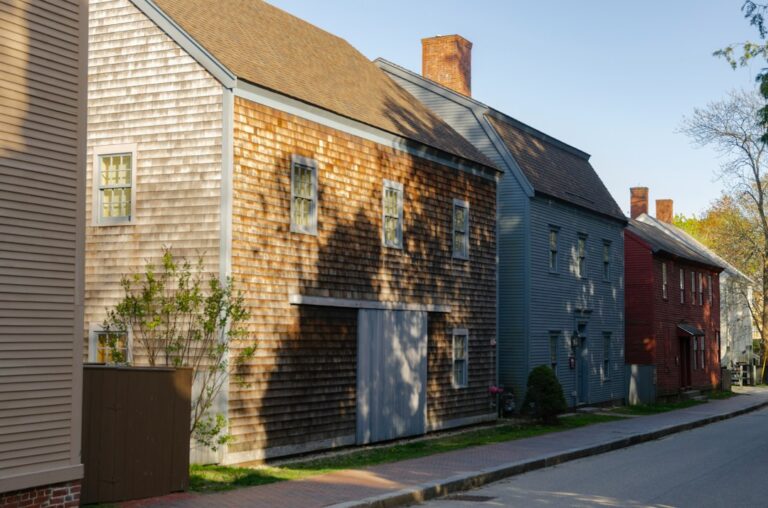
Auburn zoning reform has turned much of the city’s in-town land from large-lot, single-family territory into districts where apartments, triplexes and accessory units are allowed, and Maine’s statewide housing law has added another layer of density on top. For owners of existing apartment buildings in Auburn, Maine, that means more competition is legally possible than at any point in decades, but the city’s own housing study says demand still outruns what is being built.
This guide walks through what changed, when, and how the new rules interact with the buildings that already stand in neighborhoods such as New Auburn, the downtown riverfront and the Court Street corridor. It is written for owners who want to understand how the rulebook now works before deciding whether to hold, renovate, add units or eventually sell.
Auburn zoning reform in context
Auburn is the county seat of Androscoggin County and sits across the Androscoggin River from Lewiston; together the twin cities form the second-largest urban center in Maine. According to the U.S. Census Bureau’s QuickFacts profile for Auburn, the city counted 24,061 residents in the 2020 Census and an estimated 25,441 as of July 1, 2025. That growth matters because Auburn had spent a long stretch with little new housing, and the population gain arrived while the zoning changes described below were taking effect.
The same Census profile shows an owner-occupancy rate of 59.1 percent for 2020 to 2024, which means roughly two in five Auburn households rent. It reports a median gross rent of $1,041 and an average of 2.29 persons per household over that period. Small households and a sizable renter share are exactly the conditions that make small and mid-sized apartment buildings the backbone of the local rental stock.
From 1964 farm zoning to the 2021 comprehensive plan
To understand why the recent changes are significant, it helps to know what they replaced. Auburn created its Agriculture and Resource Protection zone in 1964, and that district still covers about 40 percent of the city’s land. It heavily restricts development, and an early attempt to loosen it failed in the face of strong opposition before the City Council approved more modest changes in December 2019. For apartment investors, the practical result is that a large share of Auburn will remain rural, which concentrates new multifamily construction in the areas already served by roads, water and sewer.
The turning point for in-town land was the update to the city’s Comprehensive Plan, finalized and approved in November 2021. The plan called for higher density in the urban core, where public utilities already exist, rather than spreading growth into undeveloped areas. Comprehensive plans in Maine are not zoning ordinances themselves, but they set the policy direction that later rezonings must follow, and Auburn’s council used the 2021 plan as the basis for the district changes that followed.
What the T-4.2 form-based district changed
The most important local tool has been Auburn’s form-based code, and specifically the T-4.2 traditional downtown neighborhood district. Form-based codes regulate what a building looks like and how it relates to the street, including height, frontage, setbacks and lot coverage, instead of capping the number of units per acre. That distinction is central for multifamily owners, because under a form-based code the number of apartments that fit inside a permitted building envelope is largely a design and market question rather than a fixed legal limit.
The rollout came in steps:
- January 2021: the T-4.2 district was extended into New Auburn and the Chestnut Park area.
- March 28, 2022: the City Council approved further traditional downtown neighborhood rezonings covering about 1,687 acres, including the Court, Lake and Turner street area, despite objections from some residents.
- Lot size: the earlier Urban Residential zone required 10,000 square feet of land per lot, while T-4.2 has no minimum lot size.
Dropping a 10,000-square-foot minimum is a bigger change than it sounds. Many of Auburn’s older neighborhoods were platted with narrow lots long before modern zoning. Under the old rules, a large share of those parcels were nonconforming, which complicated refinancing, rebuilding after a fire, or adding a unit. Under T-4.2, those same parcels can often be redeveloped or expanded within the district’s building-form standards. For an owner of a three-decker or a converted Victorian on a small lot, the rezoning can make the property more flexible, but it also means neighboring lots can be redeveloped more intensively than before.
How Maine’s housing laws stack on top of local zoning
Auburn’s local reforms were followed by statewide legislation that every Maine municipality must implement. The Maine Office of Community Affairs summarizes the requirements in its March 2026 housing legislation guidance for municipalities. The sequence that matters for Auburn is:
- LD 2003, signed on April 27, 2022, established the core statewide density, accessory dwelling unit and affordable-housing rules.
- LD 1706 set January 1, 2024 as the compliance date for municipalities governed by a council, which includes Auburn.
- LD 1829, enacted as Public Law 2025, chapter 385, set a further compliance deadline of July 1, 2026.
- LD 427, effective September 24, 2025, limits required off-street parking in designated growth areas to no more than one space per dwelling unit.
Under the state framework, at least one accessory dwelling unit must be allowed on any lot where housing is permitted, without an owner-occupancy requirement and without additional parking. Where residential use is allowed, municipalities must permit three units per lot, rising to four in designated growth areas or on lots served by public water and sewer. Projects in which at least 51 percent of units are affordable, protected by a 30-year covenant, can qualify for a density bonus of 2.5 times the number of units otherwise allowed.
Auburn’s planning staff laid out how the city applied these rules in a July 16, 2024 LD 2003 workshop staff report. According to that report, four units are allowed on vacant lots in the growth area; an existing home may add one attached unit, one detached unit, or one of each; single-family homes in the growth area may be converted to multifamily; and the 2.5 times affordable-housing bonus applies where water and sewer are available. The report also notes that a 2023 law, LD 1473, exempts the Lake Auburn watershed from the added-unit provisions, so the extra density does not reach land draining into the lake.
The housing gap Auburn’s 2025 study measured
Zoning reform only matters if there is demand to fill the new capacity, and the city commissioned a housing study from HR&A Advisors to measure it. The study, described on the city’s Auburn housing study page and reported by Mainebiz, found that Auburn needs at least 1,300 additional homes by 2030. At the recent pace of construction the city would add only about 720, leaving it roughly 580 homes short.
Three other findings from the study are directly relevant to apartment owners:
- Rent level: the study put Auburn’s median rent at $983 in 2023, a lower figure than the Census five-year median because it uses a different data set and time frame.
- Affordability strain: 79 percent of low-income renter households were cost-burdened, meaning they spend more than the standard affordability threshold on housing.
- Unit-size mismatch: about 70 percent of Auburn households have one or two people, yet only about 20 percent of homes are studios or one-bedroom units.
The unit-size mismatch is probably the most actionable point for an existing owner. Older Auburn apartment buildings are dominated by two- and three-bedroom flats built for families. If most new renter households are singles and couples, smaller units are where the shortage is sharpest, and that shapes both which new projects get built and how existing buildings can be reconfigured.
Projects in Auburn’s development pipeline
Not every proposal in the city’s pipeline is certain to be built, and timelines in Maine often slip with financing and construction costs. Two projects are well documented and show the range of what the new rules allow.
Stetson Road. A developer proposed a large multifamily project on Stetson Road that was later scaled back from 180 to 160 units. The revised plan consists of 30 quadplexes and 20 duplexes, with 322 parking spaces, to be built in three phases. The building types are worth noting: rather than one large mid-rise, the project relies on two- and four-unit structures, the same small-multifamily forms that dominate Auburn’s existing stock. Once complete, those units will compete for the same renters who now lease older fourplexes and duplexes elsewhere in the city.
Hampshire Commons. At 143 Hampshire Street, a 32-unit permanent supportive housing project is planned using 4 percent low-income housing tax credits and 32 project-based vouchers. For scale, the Auburn Housing Authority already manages 564 affordable apartments in the city. Supportive housing serves a population that rarely competes directly with market-rate buildings, but it does help relieve pressure at the lowest end of the rent spectrum, where the housing study found the deepest cost burden.
Taken together with the housing study, these projects suggest that Auburn’s new supply is arriving at both ends of the market, newer market-rate townhouse-style rentals on the edge of the urban area and subsidized housing in town, while the large stock of older mid-market buildings in the middle continues to house most renters.
How new supply affects older buildings
For owners of existing apartments, the reforms cut in two directions. On one side, more permitted density means more potential competition, and new buildings come with modern layouts, in-unit laundry and better energy performance that tenants value. On the other side, the city’s own study projects a shortfall of several hundred homes by 2030 even with the current pipeline, which suggests new supply is filling a gap rather than flooding the market.
Several practical consequences follow:
- Land value is now a bigger part of the story. A building in the T-4.2 district or the growth area sits on land that can legally hold more units than it could before 2021. When owners or buyers analyze a property, the underlying redevelopment potential can matter alongside the rent roll.
- Accessory and conversion options are real. Under the city’s LD 2003 rules, an existing home in the growth area can add an attached unit, a detached unit or both, and single-family homes there can be converted to multifamily. Owners of a single-family rental or a duplex with a large yard have options they did not have a few years ago.
- Parking is less of a constraint. With the state’s one-space-per-unit cap in growth areas, an owner adding units is less likely to be blocked by off-street parking requirements, though tenants still expect convenient parking in a car-dependent city.
- Small units are where to look. Because 70 percent of households are one or two people but only a fifth of homes are studios or one-bedrooms, reconfiguring an oversized unit, or adding a compact accessory unit, aligns with documented demand.
The watershed exemption is the main exception. Properties within the Lake Auburn watershed do not receive the state’s added-unit allowances, so owners there should not assume the growth-area rules apply. Checking a parcel against the city’s zoning map and the watershed boundary is the first step before any planning work.
What owners can do with the new rules
Whether you plan to hold for the long term or are weighing an exit, a short checklist helps translate the zoning changes into decisions:
- Confirm your district. Find out whether your parcel is in T-4.2, another form-based district, the growth area or the Agriculture and Resource Protection zone. The answer determines how many units the lot can legally hold.
- Check nonconformity status. If your building was nonconforming under the old 10,000-square-foot rule, ask the planning office whether the rezoning resolved that. Lenders and insurers sometimes treat nonconforming buildings more cautiously.
- Price the add-a-unit option. Get rough construction numbers for an accessory unit or a basement or attic conversion and compare them with the rent the unit would command. The state’s parking relief can lower the cost of these projects.
- Watch the affordable bonus. If you own a larger site with water and sewer, the 2.5 times density bonus for projects that are at least 51 percent affordable may change what a buyer would pay for it.
- Track the July 1, 2026 compliance changes. LD 1829 set another municipal compliance date, so Auburn’s ordinance may continue to evolve. Planning board and council agendas are the best place to follow amendments.
Valuation is where these decisions come together. An apartment building’s value still depends mainly on its net operating income, but redevelopment potential and unit-mix flexibility can shift what a buyer is willing to pay. Running your current rents and expenses through an apartment building value calculator gives a baseline before you consider whether added units or reconfiguration would change the picture.
The takeaway for Auburn apartment owners
Auburn has rewritten its land-use rules in several deliberate steps since 2019. The 2021 Comprehensive Plan pointed growth toward the urban core, the T-4.2 district removed minimum lot sizes across a large swath of older neighborhoods, and the state’s LD 2003 framework added accessory units, three- and four-unit allowances and a strong affordable-housing bonus. Yet the city’s housing study still projects a shortfall of about 580 homes by 2030, and its finding that small households far outnumber small units points to continued demand for well-located apartments.
For owners, the practical message is that the rules now reward flexibility. Buildings on lots in the growth area carry options they did not have before 2021, and new competition is arriving mainly in specific segments rather than across the board. If you are thinking about the next step for a property, our Auburn market page explains how we evaluate buildings in the city, and our Maine multifamily market overview puts Auburn alongside the state’s other rental markets.