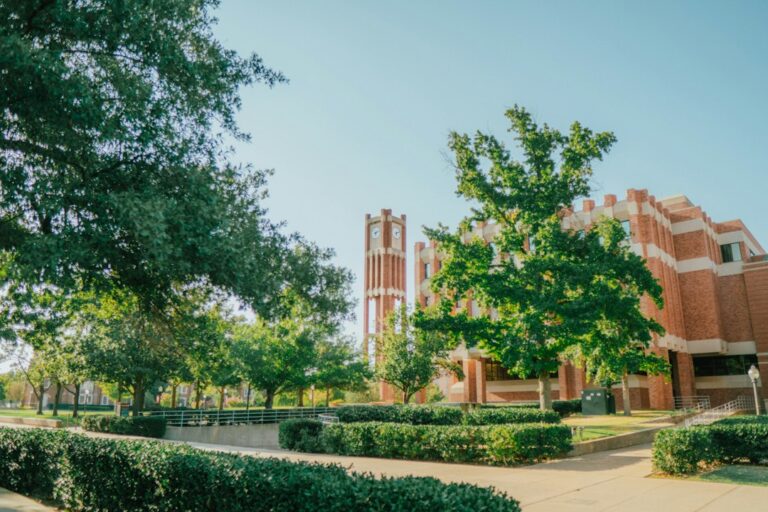
Lawton apartment rental demand rests on three pillars: Fort Sill and the soldiers, trainees and families tied to it; a manufacturing and health care base led by the Goodyear tire plant and the city’s two hospitals; and Cameron University. Together they make Lawton a renter-majority city where turnover is constant, rents are modest by national standards, and demand depends more on the Army’s footprint than on population growth.
This article walks through the numbers behind that picture, using Census Bureau, HUD, Army and local economic development data, and explains what each driver means for owners of apartment buildings in the city.
Lawton at a glance: a stable population with a renter majority
Lawton is the county seat of Comanche County. The city and county were created on the same day, August 6, 1901, when the surrounding land was opened to settlement by lottery, according to the Oklahoma Historical Society’s encyclopedia entry on Lawton. The town grew up directly south of Fort Sill, which the Army has operated continuously since 1869, and that geography still shapes the rental market more than a century later.
The Census Bureau’s QuickFacts profile of Lawton shows a population that is flat rather than growing:
- The 2010 Census counted 96,867 residents.
- The 2020 Census counted 90,381.
- The Vintage 2025 estimate for July 1, 2025 is 90,503, essentially unchanged from the April 2020 base.
- The owner-occupied housing rate for 2020–2024 was 44.8%, which means roughly 55% of occupied homes are rented.
- Median gross rent for 2020–2024 was $967 a month, and median household income was $54,433.
- There were 33,413 households, averaging 2.43 people each.
The headline takeaway is that Lawton does not need population growth to sustain apartment demand. A majority of households already rent, and the reasons they rent are structural: military assignments that last a few years, young households, students and workers who have not yet bought. That is a very different profile from a fast-growing Sun Belt suburb where demand is driven by in-migration and new household formation.
Fort Sill is the anchor of Lawton apartment rental demand
No single factor matters more to rental housing in Lawton than Fort Sill. The post’s own newcomer information from Fort Sill describes an installation of about 94,000 acres with roughly 20,000 active duty and civilian personnel and about 33,000 family members. Military OneSource puts the total associated population at approximately 53,000, the same figure the Lawton-Fort Sill Economic Development Corporation uses.
Fort Sill is home to the Fires Center of Excellence, the Army’s school for Field Artillery and Air Defense Artillery, and it is one of only four Army sites that conduct Basic Combat Training. According to the post, it trains approximately 20,000 basic trainees a year. In 2025 an Army Reserve battalion stood up an additional basic training site at Fort Sill in about 90 days, with a first cycle of 210 trainees, a sign that the training mission is expanding rather than shrinking.
Who lives off post
Not every part of that population is a renter in Lawton. Trainees live in barracks, and unaccompanied soldiers in grades E-5 and below are generally housed in barracks on post. On-post family housing is privately managed; a 2022 Army article on Corvias’ capital program at Fort Sill counted more than 1,800 homes after renovations and new construction. That leaves a large group who look to the local market:
- Married junior enlisted soldiers and noncommissioned officers who prefer off-post housing or cannot get on-post housing right away.
- Officers and senior NCOs, many of whom rent for the length of a two- to three-year assignment rather than buy.
- Civilian employees and contractors who work on the installation.
- Instructors and permanent party personnel whose schedules follow course cycles.
Newcomers are told to visit the Housing Services Office before leasing, buying or renting, which means many military tenants arrive having compared on-post and off-post options. Owners who understand that process, including the timing of report dates, tend to fill units faster.
What military tenancy means for an operating plan
Military demand is steady in aggregate but lumpy for an individual building. Permanent change of station moves cluster in the summer, deployments and orders can end a lease early, and the federal Servicemembers Civil Relief Act (50 U.S.C. 3955) gives qualifying servicemembers the right to terminate a residential lease when they receive orders. For an owner, that translates into a few practical habits: budgeting for higher turnover than a civilian-only property, keeping make-ready times short, and pricing units with the Basic Allowance for Housing in mind. BAH rates are set each year by the Defense Travel Management Office for the Fort Sill/Lawton housing area, and they effectively set the budget ceiling for a large share of the renter pool. Owners can check current rates on the Defense Travel Management Office’s BAH page.
The civilian job base behind the renter pool
Fort Sill is the largest driver, but Lawton is not a one-employer town. The Lawton-Fort Sill Economic Development Corporation’s 2025 Economic Review and its employer listings point to a diversified civilian base.
Manufacturing
The Goodyear Tire & Rubber plant is the city’s largest private employer, with 2,559 employees on the economic development corporation’s list. The Oklahoma Department of Commerce has reported that the plant opened in 1979, that more than $1 billion has been invested in it since, and that it has produced more than 700 million tires. Other manufacturers on the list include Bar-S Foods with 350 employees, IPEX with 175 and Republic Paperboard with 162.
Newer projects add to that base. The 2025 Economic Review describes Firehawk Aerospace’s $45 million investment in the SW Rail Industrial Park with 100 high-tech jobs, and a Fisher 59 project of more than $16 million for a 110,000-square-foot building and 30 jobs. These are modest numbers next to Fort Sill, but manufacturing shift workers are a steady source of demand for one- and two-bedroom apartments near the city’s industrial corridors.
Health care, schools and government
The same review lists Comanche County Memorial Hospital with 265 beds and Southwestern Medical Center with 199 beds. Hospital staff, including traveling nurses on short assignments, are a natural fit for furnished or flexible-term units. An older county employer list published by Cameron University’s business research center also names Lawton Public Schools, the Comanche Nation, Walmart and the City of Lawton among the area’s largest employers.
Wages and unemployment
The 2025 Economic Review reports a 2024 average unemployment rate of 3.6% for Comanche County and a 2025 average annual wage of $50,984. Those figures, combined with the Census median household income, explain why rents in Lawton cluster around the $900 to $1,100 range: household budgets are moderate, and the local cost of living is well below the national average. The review puts Lawton’s housing cost-of-living index at 72.9, where 100 is the U.S. average.
Cameron University and the student segment
Cameron University adds a smaller but growing source of demand. In a September 2026 release, Cameron reported fall 2026 enrollment of 3,671, up nearly 1% from the prior year. More telling for housing, the university said the number of students living on campus rose 22% year over year, with its Cameron Village apartments at 96% capacity and Shepler Towers above 80%.
When on-campus housing runs that full, some upperclassmen and graduate students turn to off-campus apartments, particularly older complexes within a short drive of the campus. Cameron also enrolls many commuters, working adults and military-connected students, which blurs the line between the student and military segments. A recent example of small-scale development aimed at this area is a six-unit townhouse project near the university approved by the City Council, according to local reporting.
What Lawton tenants pay
Several data sets describe Lawton rents, and they measure different things, so it helps to read them side by side.
Census median gross rent
The Census Bureau’s $967 median gross rent for 2020–2024 is a five-year average that includes utilities paid by tenants and covers every rental unit, including single-family houses and older apartments. Because it blends five years, it lags the current market.
HUD Fair Market Rents
HUD’s Fair Market Rents are used to set payment standards for Housing Choice Vouchers and are a useful benchmark for owners. The FY2026 Fair Market Rents for the Lawton, OK HUD Metro FMR Area are:
- Efficiency: $779
- One bedroom: $784
- Two bedrooms: $1,001
- Three bedrooms: $1,392
- Four bedrooms: $1,679
The two-bedroom figure rose from $962 in FY2025 to $1,001 in FY2026, an increase of about 4%. The Lawton Housing Authority administers vouchers in the city, so these figures matter to owners who accept voucher tenants.
Local asking rents
The economic development corporation’s 2025 review reports an average rent of $1,049 in Lawton for January through August 2025. That is higher than the Census median because it reflects more recent leases, and it lines up closely with the HUD two-bedroom FMR. Taken together, the three sources suggest that a typical two-bedroom apartment in reasonable condition rents in the vicinity of $1,000 a month, with renovated units and newer complexes above that and older one-bedrooms below it.
What the unit mix tells you
The spread between HUD’s unit sizes is worth a closer look. In FY2026 the one-bedroom FMR is only $5 a month above the efficiency figure, while the step from two to three bedrooms is $391. In practical terms, studios compete directly with one-bedroom units on price, so a studio needs a location or condition advantage to justify its rent. Larger units command a meaningful premium, which is consistent with a renter base that includes many military and civilian families. For an owner, that spread argues for paying close attention to unit mix: in an older property, two- and three-bedroom units are likely to carry more of the rent roll than their share of the unit count suggests.
How mobility shapes turnover
Lawton is a city where people come and go. The 2025 Economic Review estimates that 11,527 people, about 13% of the population, moved to Lawton in the past year, and it reports a median age of 32.4. The Census Bureau’s figure for residents living in the same house as a year earlier is 77.4%, which means more than one in five residents changed homes within a year.
For apartment owners, that churn has two sides:
- Vacancy between leases is a recurring cost. Every turnover means cleaning, paint, minor repairs and a few days or weeks without rent.
- Frequent turnover also lets owners bring rents to market regularly, rather than carrying long-tenured tenants at below-market rents for years.
Properties with efficient make-ready processes, online leasing and flexible move-in dates are better positioned to capture the steady flow of new arrivals, especially in the summer moving season.
Affordability and the supply picture
Lawton’s rent levels sit against a backdrop of real affordability strain. The Census Bureau reports a poverty rate of 21.1% for the city, and the median owner-occupied home value of $142,100 is low enough that some renters can realistically consider buying. The 2025 Economic Review lists an average home sale price of $153,408 in the metro area.
On the public side, the city’s federal housing grants are small relative to need. Local reporting on Lawton’s FY2025 allocations listed a Community Development Block Grant of $742,497 and HOME funding of $374,881, with portions set aside for exterior improvements and emergency repairs to existing homes.
New apartment construction has been limited. The research for this article found no large market-rate apartment project under way in Lawton. In a market with a flat population, that restraint is part of what keeps existing apartments competitive. The flip side is that, without strong population growth, rent increases depend largely on local wages and military housing allowances rather than on a surge of newcomers.
Reading Lawton’s demand drivers as an owner
For anyone who owns an apartment building in the city, or is evaluating one, the drivers above translate into a short list of practical points.
- Watch Fort Sill news closely. Changes to training loads, brigade stationing or on-post housing have a larger effect on Lawton occupancy than almost any civilian employer decision. The 2025 expansion of basic training is a positive signal, while any future reductions would be the main downside risk.
- Price with BAH and HUD benchmarks in view. Military housing allowances and voucher payment standards set practical ceilings for a large share of tenants. Units priced well above both need a clear quality advantage to lease.
- Budget for turnover. A city where more than one in five residents moves each year rewards owners who plan for higher make-ready and leasing costs instead of treating them as surprises.
- Location still matters. Properties with easy access to Fort Sill’s gates, the Goodyear plant, the hospitals or Cameron University tend to lease faster than those on the edges of the city.
- Value is driven by income. Because rents are moderate, small changes in occupancy or expenses have an outsized effect on value. Running your rent roll through an apartment building value calculator shows how a few points of occupancy change the result.
Where Lawton fits in Oklahoma’s apartment landscape
Lawton is a different market from Oklahoma City or Tulsa. It is smaller, more military, and less exposed to the waves of new construction that larger metros have absorbed in recent years. For owners comparing markets across the state, the Oklahoma market overview puts Lawton alongside the state’s other cities.
For owners weighing their own next step, including those thinking about selling an apartment building in Lawton, the key is to document how your property performs against these local drivers: occupancy through the summer moving season, the share of military and voucher tenants, and how your rents compare with the HUD and local benchmarks above. Those are the questions any informed buyer, lender or appraiser will ask first.
The bottom line on Lawton’s renter base
Lawton’s rental market is not built on rapid growth. It is built on a large, recurring flow of people who need housing for a few years at a time: soldiers and their families, civilian workers at the post and the city’s plants and hospitals, and a modest student population. With a renter majority, flat population and limited new supply, apartment demand in Lawton is less about chasing growth and more about operating well in a market where tenants are always arriving and leaving.