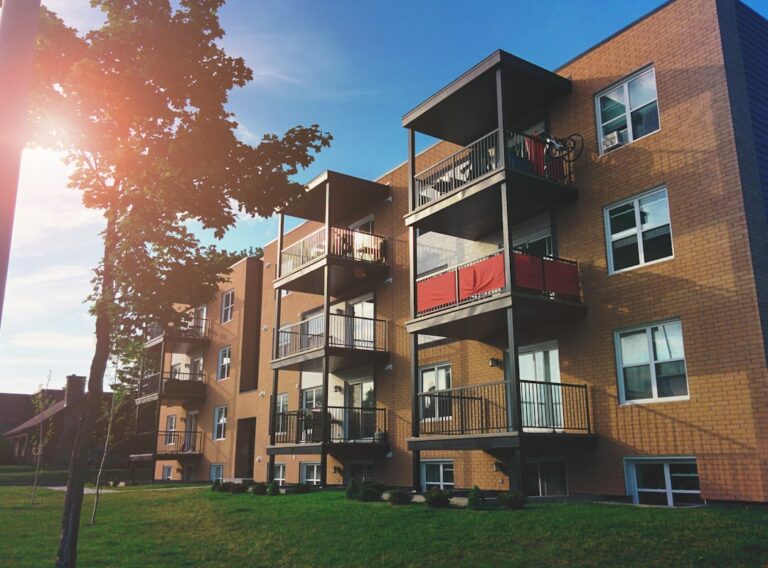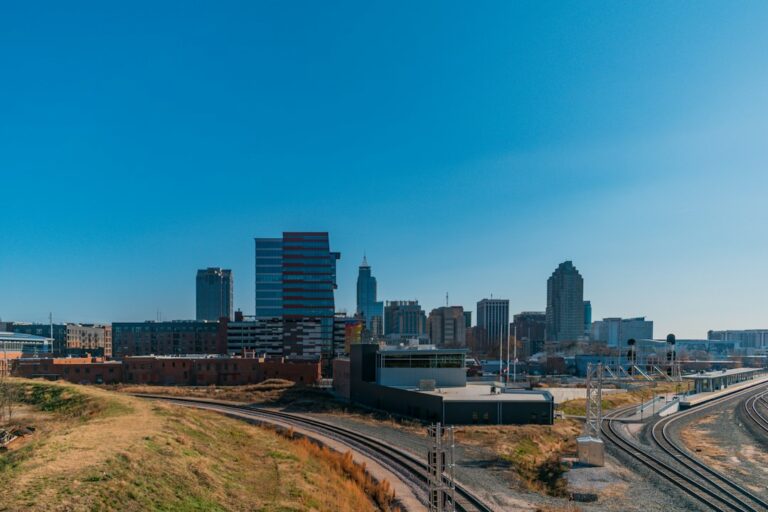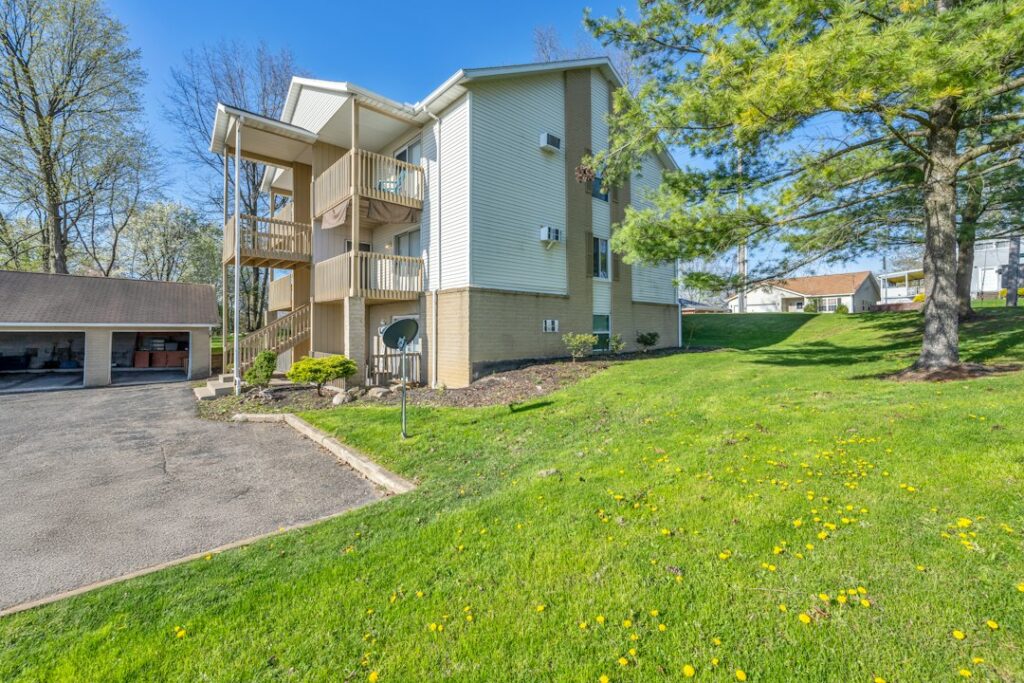
Wilmington NC apartment submarkets fall into a handful of clear groups: the downtown core and riverfront, the older neighborhoods that ring it, the Market Street and Independence Boulevard spine through Midtown, the College Road area around UNCW, the Mayfaire area near the Intracoastal Waterway, and the fast-growing southern corridor that runs past the city line into unincorporated New Hanover County. Each one holds a different kind of building, from century-old houses split into flats to garden complexes from the 1970s and 1980s to the large new mid-rise and garden projects that dominate today’s construction pipeline.
Where a figure changes from year to year, the year and source are given in the text, and our multifamily glossary defines the industry terms used here.
How Wilmington, NC apartment submarkets fit together
Wilmington is a municipality inside New Hanover County, not a stand-alone jurisdiction. That matters for apartment owners because two properties a few hundred yards apart can fall under different zoning codes, different planning documents and different tax bills depending on whether they sit inside the city limits. The city’s fiscal year 2025 annual financial report puts Wilmington’s 2025 population at 126,164 and its land area at roughly 52.9 square miles.
The wider rental market is larger than the city. The U.S. Department of Housing and Urban Development defines the Wilmington housing market area as New Hanover and Pender counties together. In its 2024 comprehensive housing market analysis for Wilmington, HUD estimated the area’s population at 315,000 as of November 1, 2024, with about 50,750 renter households, or 36.8 percent of all households.
Several numbers in that HUD report help frame the submarkets that follow:
- In 2023, 45 percent of renter households in the market area lived in buildings with five or more units, down from 52 percent in 2021. The rest rented single-family homes (31 percent), small two-to-four-unit buildings (15 percent) or other structures.
- The average apartment rent was $1,518 in the third quarter of 2024, slightly below the third-quarter 2022 high of $1,543.
- Apartment vacancy was 11.8 percent in the third quarter of 2024, up from 11.1 percent a year earlier, a sign that new supply was outpacing demand at the time.
- About 2,500 rental units were under construction, and roughly 2,100 of them, or 84 percent, were inside the city of Wilmington. Most of the remaining 400 were in Hampstead in Pender County.
- New Hanover County completed 1,425 apartment units in the 12 months ending September 2024, compared with an average of 970 a year from 2015 through 2018.
The big point for owners: the city is where most new apartments are going up, so competition from new product lands hardest on older buildings inside the city limits. Inside those limits, rezonings are judged against the Create Wilmington Comprehensive Plan, adopted by City Council on March 1, 2016, which uses broad growth strategy maps rather than a parcel-by-parcel land-use map.
Employers that anchor rental demand
The city’s 2025 financial report lists the area’s ten largest employers. Novant Health, which bought New Hanover Regional Medical Center from the county, leads with 7,500 employees. It is followed by New Hanover County Schools (3,385), New Hanover County government (2,044), General Electric’s nuclear fuel operations (2,021), UNCW (1,965) and Thermo Fisher Scientific’s PPD unit (1,700). Wilmington Health, the City of Wilmington, Cape Fear Community College and Corning round out the list. HUD’s report adds the Port of Wilmington, a 284-acre state port facility about three miles south of downtown.
These employers sit in different parts of town, so they pull renters toward different submarkets. UNCW anchors the College Road corridor, the port sits on the river south of the central business district, and the medical center and downtown offices draw year-round workforce renters to the neighborhoods closer in.
Downtown Wilmington and the riverfront
Downtown is the oldest and densest part of the city, and its apartment stock is the most varied. It includes upper-floor units above storefronts, converted warehouses and commercial buildings, and a few large modern projects along the Cape Fear River.
The best-known recent riverfront project is River Place, a public-private redevelopment with East West Partners that replaced the city’s old Water Street parking deck and combines condominiums, apartments, parking and street-level retail. North of the core, the city owns Riverfront Park at 10 Cowan Street, a 6.6-acre tract it bought in 2013 and planned under the name North Waterfront Park. Its Live Oak Bank Pavilion amphitheater opened in 2021. The park sits at the edge of the area the city’s new downtown plan calls the northern riverfront, where most of the remaining large development sites are.
What the Greater Downtown Plan means for this area
City Council adopted the Greater Downtown Plan on June 16, 2026. It covers the 18 neighborhoods around the downtown core and was built on feedback from more than 6,000 people over two years. Among the actions in its housing section:
- Update zoning to allow “missing middle” housing such as duplexes and townhomes.
- Keep using public land for affordable housing.
- Support urban mixed-use (UMX) zoning and mixed-use redevelopment of major housing sites.
- Steer taller, larger buildings toward the northern riverfront and the Brooklyn Arts District, where there is more vacant land and surface parking.
For an owner of a small downtown building, the practical result is that more new apartments are likely to cluster on the north end of downtown, while infill in the historic blocks stays small in scale.
The historic neighborhoods around downtown
The ring of neighborhoods around downtown holds much of Wilmington’s small multifamily stock: duplexes, triplexes, fourplexes, large houses divided into apartments and the occasional small brick walk-up. Many of these properties sit in historic districts, and that affects what an owner can do to the outside of a building.
Local districts versus National Register districts
The city’s historic districts page separates two kinds of designation. Local districts and overlays are regulated by the Historic Preservation Commission: the Theater Historic District, the Residential Historic District (HD-R), the Mixed-Use Historic District (HD-MU), the Downtown Commercial Historic District Overlay and the Carolina Heights/Winoca Terrace Historic District Overlay. Exterior changes to property in these areas may need a Certificate of Appropriateness. The city’s district brochure says major work such as roofs, windows and doors goes to the commission, while minor items like paint colors and signs can be approved by staff. Interior work is not reviewed.
National Register districts are a federal listing. The city lists eight: Wilmington Historic and Archaeological, Market Street Mansion, Carolina Place, Carolina Heights, Masonboro Sound, Sunset Park, Westbrook-Ardmore and Brookwood. Properties that are only on the National Register are not reviewed by the commission unless they also fall inside a local district, though the city’s brochure notes a 90-day notice for proposed demolitions. The city also describes its downtown district as one of the largest historic districts in North Carolina.
Carolina Heights, Carolina Place and the streetcar suburbs
Carolina Heights and Winoca Terrace grew in the early 1900s as a streetcar suburb, and the city’s overlay there exists to keep that early twentieth-century character. Carolina Place, Ardmore and the Delgado area are grouped with them in the Greater Downtown Plan. Rental product here is mostly converted houses and small multifamily buildings on narrow lots rather than large complexes.
Northside, Southside and the Castle Street corridor
The Greater Downtown Plan names Northside (including Love Grove), Southside, South Front, Greenfield and the Dry Pond area among the neighborhoods it covers. These are older, largely residential areas where small rental buildings sit alongside single-family homes. The plan’s housing actions for the wider area include helping more residents use existing housing programs and turning around vacant or neglected homes.
Castle Street, home to an arts and antiques district, has become one of the more active small-infill corridors. Midcastle, built on the former Wave Transit bus maintenance site at 1110 Castle Street, was one of the first of these projects, and the Greater Wilmington Business Journal reported several smaller mixed-use apartment proposals along the street in late 2025 and early 2026. They are useful comparables for anyone weighing a small new building in the older grid.
Soda Pop District and Brooklyn Arts District
Two smaller named districts show up often in downtown leasing and marketing. The Soda Pop District stretches along several blocks of Princess Street and takes its name from a former Coca-Cola bottling plant. The Brooklyn Arts District is centered on North Fourth Street, with residential blocks on Fifth and Sixth streets. City Council authorized social districts in July 2025, and Brooklyn Arts is one of the city’s designated social districts. Both areas mix older houses and small buildings with newer rental product, and the Greater Downtown Plan points to Brooklyn Arts as a place where taller buildings could fit.
Midtown, Market Street and Independence Boulevard
Midtown is the broad band of mid-century and later development between the historic core and the eastern part of the city. Market Street, Oleander Drive and Independence Boulevard carry much of the commercial activity, and the rental stock is a mix of older garden-style complexes on the main roads with duplexes and small buildings on the side streets.
This is also where redevelopment of older commercial sites is starting to add apartments. One example is the former AMC movie theater site on Cinema Drive off Market Street, where a project of roughly 147 apartments in eight buildings on about nine acres was approved by right in 2025, meaning it did not need a City Council vote. Its sponsor markets it as student-oriented housing about a mile from UNCW. Projects like this compete directly with older Midtown garden complexes for the same renters.
For owners here, the main questions tend to be about capital needs rather than zoning: roofs, siding, HVAC and parking lots on aging buildings, set against new product nearby with modern finishes.
The UNCW and College Road submarket
The University of North Carolina Wilmington is the single biggest driver of rental demand along the College Road corridor. UNCW reported a preliminary fall 2025 enrollment of 19,895 students, including 3,109 new first-year students, the largest first-year class in its history.
Two university policies shape how much of that demand reaches private apartments. First, UNCW has a two-year on-campus residency requirement for newly admitted first-year students, so most freshmen and sophomores live in university housing. Second, the university is building a new residence hall, Student Housing Village Phase III, with about 550 beds and a scheduled completion of August 2027. Juniors, seniors and graduate students are the core of the off-campus market, and new university beds mainly absorb the younger classes.
The city’s College Road Corridor Plan, adopted in November 2004, covers about six miles of College Road from Martin Luther King Jr. Parkway to the southern city limit at the time, near Lansdowne Road, with UNCW in the stretch between Oriole Drive and Wilshire Boulevard. It recommended that multifamily and mixed-use zoning go at or between commercial nodes, while the road’s remaining single-family frontage be protected from rezoning. The plan is old, but it still explains why apartments along College Road cluster near intersections.
Stock in this area ranges from older garden complexes rented by the bed or the unit to newer purpose-built student buildings and townhome rentals. HUD’s 2024 report notes Wrightsville Townes, a townhome rental community completed in 2024 about a mile from UNCW. Owners near campus should expect a leasing calendar tied to the academic year and more turnover each August than in other parts of the city.
Mayfaire and the Military Cutoff Road area
Mayfaire, a mixed-use town center that opened in 2004 around Eastwood Road and Military Cutoff Road, is one of the city’s largest suburban retail and office nodes. Its holding entity, Mayfaire Town Center LP, appears in the city’s 2025 financial report as one of the ten largest property taxpayers, with a taxable assessed value of about $91 million.
Because the area grew up after Mayfaire opened, its apartment stock is newer than Midtown’s and leans toward large garden and mid-rise communities rather than small buildings. In 2025 the developer announced a further residential expansion called Mayfaire West on undeveloped land nearby. For a small-building owner, this area matters less as a place to buy and more as a benchmark: it sets the top of the market that newer Midtown and College Road properties are compared against.
South of downtown: Carolina Beach Road, Riverlights and Monkey Junction
The southern part of the city and the unincorporated land beyond it have taken a large share of recent rental construction. Several distinct pieces make up this corridor.
Carolina Beach Road inside the city
Carolina Beach Road is the main route south from downtown. One of the larger recent rental projects in the city is Starway Village at 2346 Carolina Beach Road, a 278-unit income-restricted community built on a former flea market site and financed in part with Low-Income Housing Tax Credits and city and county loans. It began leasing in 2025 and accepts Housing Choice Vouchers.
Riverlights
Riverlights is a master-planned community off River Road covering about 1,400 acres, with single-family subdivisions, an age-restricted section, townhomes and rentals. HUD’s report lists Argento at Riverlights, a rental community completed in mid-2024, among the area’s recent apartment deliveries.
Monkey Junction is outside the city
Monkey Junction, the commercial area around the intersection of College Road and Carolina Beach Road, is often described as part of Wilmington, but it is unincorporated New Hanover County. A 2012 action by the General Assembly stopped Wilmington’s planned annexation of the area. Apartments there fall under county zoning and the county’s planning documents, not the city’s. The county has been working on a new comprehensive plan for unincorporated areas called Destination 2050; state projections cited during that process show more than 107,000 additional county residents by 2050. Anyone comparing a Monkey Junction property with one inside the city should check which government’s rules and tax rate apply.
Subsidized and income-restricted apartments in Wilmington
Not all of the city’s multifamily stock trades on the open market. The Wilmington Housing Authority owns 16 apartment and townhome communities across central Wilmington and runs the area’s Housing Choice Voucher program. Its board has nine commissioners appointed by the mayor to five-year terms.
Private owners interact with this part of the market in two ways. Voucher holders rent from private landlords across the city, and income-restricted projects like Starway Village add new competition at the lower end of the rent range. The city’s Housing and Neighborhood Services Department also offers limited funding for rental projects serving households at or below 80 percent of area median income.
What the submarket map means for Wilmington owners
Putting the submarkets side by side points to a few concrete steps for owners and passive investors:
- Confirm whether a property is inside the city limits before you compare it with anything else. Monkey Junction and other unincorporated areas follow county zoning and tax rules.
- Check historic district status early. A building in a local district or overlay needs a Certificate of Appropriateness for many exterior projects, which adds time to roof, window and siding work.
- Watch the new supply nearest to you. With about 84 percent of the area’s 2024 apartment pipeline inside the city, older garden complexes in Midtown and along College Road face the most direct competition.
- Match the leasing plan to the renter base. Buildings near UNCW run on the academic calendar, while those near the hospital and downtown draw more year-round workforce renters.
- Read the Greater Downtown Plan if you own near the core. Its push for missing middle zoning and taller buildings on the northern riverfront will shape what gets built next to existing small buildings.
For a broader look at the state’s other apartment markets, see our North Carolina market overview. Owners thinking about timing or valuation for a specific property can find more local detail on selling an apartment building in Wilmington.