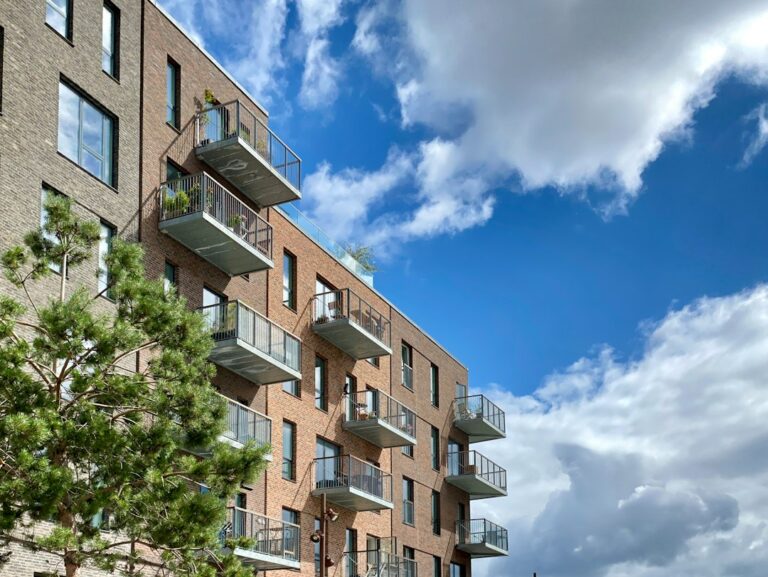
Kalamazoo apartment neighborhoods fall into a few clear types: historic, renter-heavy districts of converted houses next to Western Michigan University and the hospitals, such as Vine and Stuart; mixed owner-renter neighborhoods of older single-family homes and small multifamily buildings, such as Edison and the Northside; and a downtown core where zoning updates have opened the door to new apartment construction. Knowing which type a building sits in tells an owner a great deal about its tenants, its regulatory burden and the competition it faces.
The City of Kalamazoo had roughly 73,500 residents at the 2020 Census and recognizes more than 20 named neighborhoods on its official neighborhoods page, including Arcadia, Downtown, Eastside, Edison, Milwood, Northside, Oakland Drive/Winchell, Oakwood, Parkview Hills, Stuart, Vine, West Douglas, West Main Hill, Westnedge Hill, Southside and the WMU area. Rather than covering all of them briefly, this guide focuses on the neighborhoods where apartment and small multifamily ownership is most concentrated, drawing on the city’s Imagine Kalamazoo neighborhood plans.
The institutions behind Kalamazoo apartment neighborhoods
Three institutions explain much of the city’s rental geography. Western Michigan University reported 17,331 students in fall 2025, including 13,714 undergraduates and 3,617 graduate students, according to its 2025-26 Common Data Set. Kalamazoo College, founded in 1833, is much smaller at 1,183 students, with 64 percent living on campus. Bronson Methodist Hospital, south of downtown, is the third anchor. Neighborhoods between and around those three institutions carry the highest concentrations of renters.
Two local programs also shape demand across the whole city. The Kalamazoo Promise pays college tuition for graduates of Kalamazoo Public Schools from the class of 2006 onward who attended the district for at least all of high school and lived in the district; students enrolled from kindergarten through 12th grade receive 100 percent coverage, according to the Promise eligibility rules. Because the benefit depends on residency within the school district, it gives families a reason to rent or buy inside district boundaries. Separately, the city’s Foundation for Excellence provided $70.3 million to stabilize the city budget and lower its property tax rate, plus $10 million a year for community projects, which affects the tax line for every property owner in the city. When comparing a building in the city with one in a neighboring township, it is worth pulling the actual tax bills for both rather than assuming the city carries the heavier burden, since the foundation’s support was used in part to bring the city’s rate down.
Vine: converted houses between campus and hospital
Vine is the archetypal Kalamazoo rental neighborhood. The city’s 2019 Vine neighborhood plan describes it as lying south of downtown, east of Western Michigan University and west of Bronson Methodist Hospital, with roughly 5,572 residents on about one square mile, based on 2017 estimates. The plan shows a large renter majority, and most of the neighborhood is covered by historic districts.
The typical Vine apartment property is not a purpose-built complex but a large older house divided into several units. That stock creates a specific operating profile:
- Tenants: a mix of students, hospital workers and young professionals who value walking distance to campus, downtown and Bronson.
- Leasing cycle: properties that rely on students tend to turn over on the academic calendar, which concentrates vacancy and make-ready work into a short window.
- Capital needs: older wood-frame structures with multiple kitchens and baths need steady investment in roofs, porches, electrical and plumbing.
- Exterior rules: because most of Vine is in a historic district, exterior changes go through an added layer of review.
Vine is also where some of the most visible new apartment investment is happening. B on Burdick, an 85-unit building planned at Burdick and Vine streets across from Bronson, is being developed by Bogan Developments with Bronson. It will include 18 studios, 48 one-bedrooms and 19 two-bedrooms aimed at households earning 60 to 120 percent of area median income, with 20 units set aside for Bronson employees and supported by a $2 million award from the Michigan State Housing Development Authority. Occupancy is expected in the first quarter of 2028. A modern building of that size, priced for working households and tied to the area’s largest employer, will compete most directly with renovated converted-house units marketed to hospital staff.
Stuart and the historic district layer
Stuart is smaller, with a population of 1,088 in the city’s 2023 neighborhood plan, but it has a long history as a rental area. The plan notes that some of the larger houses were subdivided into smaller apartments as housing shortages arose in the 1920s, and that the neighborhood drew a growing number of student renters after Western Michigan University ended its requirement that students live on campus. Stuart became a local historic district in 1976.
Historic designation is one of the defining features of Kalamazoo’s core rental neighborhoods. The city’s historic districts page lists six local districts:
- Haymarket
- Rose Place
- South Street
- Stuart
- Vine
- West Main Hill
Properties in these districts face an additional layer of local review by the Historic District Commission. For an apartment owner, that means planning exterior projects such as window replacement, siding, porch rebuilding or new additions with the commission’s review time built into the schedule, and checking with the city before ordering materials. The trade-off is that historic districts tend to protect the character that makes these neighborhoods attractive to renters in the first place, and they limit the kind of out-of-scale redevelopment that could change a block quickly.
Edison: a near-even split of owners and renters
Edison is a much larger neighborhood with a different profile. The city’s 2019 Edison plan, using 2010 Census data, counted 8,717 residents and found the housing almost evenly split: 1,539 owner-occupied homes, or 51 percent, and 1,487 renter-occupied homes, or 49 percent. Its housing is mostly older single-family homes.
In a neighborhood like Edison, the rental stock is spread across scattered single-family houses, duplexes and small multifamily buildings rather than concentrated in converted mansions or complexes. Tenants are more likely to be working households and families than students. That generally means longer tenancies and less seasonal turnover than in Vine, but also rent levels that are more sensitive to local wages. Owners here compete less with new student-oriented product and more with the price of buying a modest house nearby.
Northside: small multifamily and reinvestment
The Northside has the most detailed housing-type data among the city’s plans. The 2018 Northside neighborhood plan, citing 2000 Census data, counted 2,299 dwelling units, 64 percent of them detached single-family homes. The rest break down roughly as follows:
- About 11 percent in two-unit buildings
- About 14 percent in buildings of three or four units
- About 6 percent in buildings of five or more units
The median year built was 1945, and vacancy in the 2000 data stood at 12.83 percent compared with 7.46 percent citywide. The 2018 plan also counted 219 vacant structures. Those figures are dated, but they describe the neighborhood’s starting point: an older stock with a meaningful share of two- to four-unit buildings and more vacancy than the city as a whole. That combination typically means lower acquisition prices alongside higher renovation and lease-up risk.
Translating the percentages into units makes the picture more concrete. Applied to 2,299 dwelling units, 11 percent is roughly 250 units in two-unit buildings, 14 percent is roughly 320 units in three- and four-unit buildings, and 6 percent is roughly 140 units in buildings of five or more. In other words, the Northside’s multifamily inventory is dominated by duplexes, triplexes and fourplexes rather than larger complexes. Buildings of that size are usually owned by individuals or small partnerships, are often self-managed, and trade on condition and rent roll more than on institutional pricing, which makes careful inspection and verification of leases especially important.
The Northside was also the first area to receive the city’s updated zoning, in two phases adopted on November 19, 2018 and July 6, 2021. Updated rules make it easier to build on vacant lots and to add units, which can support values for owners of existing small multifamily buildings as surrounding vacant parcels are filled in, while also adding new competition over time.
Downtown and the Eastside after the zoning updates
Kalamazoo rewrote its zoning in stages through the Imagine Kalamazoo process. According to the city’s zoning updates project page, downtown zoning was updated in 2020, splitting the former Central Business District into three districts effective November 12, 2020; the Eastside followed on February 15, 2021; and general code updates were adopted in 2022.
The broader package has drawn national attention. Reporting by Strong Towns and Second Wave Media in 2025 described it as legalizing accessory dwelling units, reducing parking minimums and opening most residential lots in the city to new home construction. The city also offers a catalog of pre-approved building plans that includes duplexes and a fourplex. For apartment owners, the most relevant effect is that small multifamily construction on infill lots is easier than it was a decade ago, especially in neighborhoods with vacant parcels.
Downtown, the three-district structure is designed to support denser, mixed-use buildings in the core. Owners of older walk-up buildings near downtown should expect newer product to set the top of the local rent range, while their own buildings compete on price and location.
Rental certification applies in every neighborhood
Whatever the neighborhood, every rental in the city falls under the same inspection program. The city’s rental certification page states that all rental properties in Kalamazoo must be registered and certified to ensure they are safe and sanitary. The program is administered by Community Planning and Economic Development, and its key features are:
- Certificates of compliance can last as long as 52 months.
- The city guarantees owners the ability to earn a 40-month or 52-month certificate; the 52-month term requires two consecutive 40-month certificates with no enforcement actions.
- Any needed reinspection must be scheduled within 10 days of the first inspection.
- Fees are billed after the inspection, and it is the owner’s responsibility to know when a certificate expires.
The longer certificate terms reward owners who maintain their buildings consistently, which matters most in neighborhoods with older housing like Vine, Stuart and the Northside. A converted house with several units can generate a long list of deficiencies if maintenance slips, while a clean record extends the time between inspections and reduces administrative work.
Neighborhood-specific questions before you buy or hold
Each neighborhood type raises its own set of questions. Working through them with city records and the neighborhood plans is more reliable than relying on a listing description.
Near campus and the hospitals. With 13,714 undergraduates and 3,617 graduate students at Western Michigan University in fall 2025, the tenant pool around Vine and Stuart includes two distinct groups. Undergraduates tend to lease in groups on an academic-year rhythm, while graduate students and hospital staff are more likely to sign individual leases and stay through the summer. A building’s unit mix, with large multi-bedroom flats versus studios and one-bedrooms, largely determines which group it serves. Ask for several years of lease start dates to see how seasonal the vacancy really is.
In historic districts. Because the 1920s-era conversions in Stuart and the older houses in Vine sit inside local historic districts, budget extra time for any exterior project and confirm with the city whether past work, such as replacement windows or siding, was approved. Unapproved changes can become a cost for the next owner.
In family-oriented areas. In neighborhoods such as Edison, living within the Kalamazoo Public Schools district is one of the Promise’s eligibility conditions, so stable, family-sized rentals inside the district boundary can hold tenants for many years. Confirm the school district for the specific parcel rather than assuming it from the city limits.
Anywhere in the city. Request the property’s rental certificate history. A building on a 52-month certificate has, by the city’s rules, earned two consecutive 40-month certificates without enforcement action, a useful signal about past maintenance. A building on a shorter cycle, or with an expired certificate, deserves a closer look before closing.
Comparing neighborhoods as an owner
Putting the neighborhood profiles side by side gives a practical framework for evaluating a Kalamazoo building:
- Vine and Stuart: highest renter concentration and walkability, historic review on exteriors, academic-year leasing for student-oriented properties, and new competition from projects like B on Burdick.
- Edison: balanced owner and renter mix, family and workforce tenants, scattered small rentals and less seasonal turnover.
- Northside: older stock with a meaningful share of two- to four-unit buildings, historically higher vacancy, and early adoption of the updated zoning.
- Downtown and the Eastside: updated zoning designed to support more housing, with new product setting the top of the rent range.
When underwriting a property in any of these areas, look past the citywide averages. Vacancy, tenant mix and capital needs vary sharply from Vine to Edison, and so do the regulatory steps for exterior work. Two terms worth having straight before comparing properties are net operating income and cap rate, both defined in our multifamily glossary. Pull the certificate history from the city, check whether the parcel falls in one of the six historic districts, and compare the unit mix with what the nearest new building will offer.
What it adds up to for Kalamazoo owners
Kalamazoo’s apartment market is really a set of neighborhood markets. The converted houses of Vine and Stuart serve students and hospital workers under historic district rules; Edison and the Northside house working households in older single-family and small multifamily stock; and updated zoning downtown and on the Eastside is making room for new construction. A citywide rental certification program sits over all of them. To see how we evaluate buildings across these areas, visit our Kalamazoo market page, and for statewide context, see the Michigan market overview.