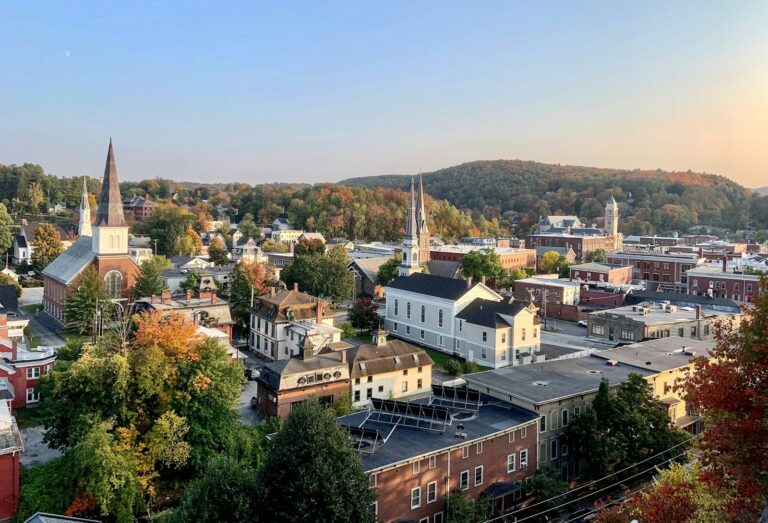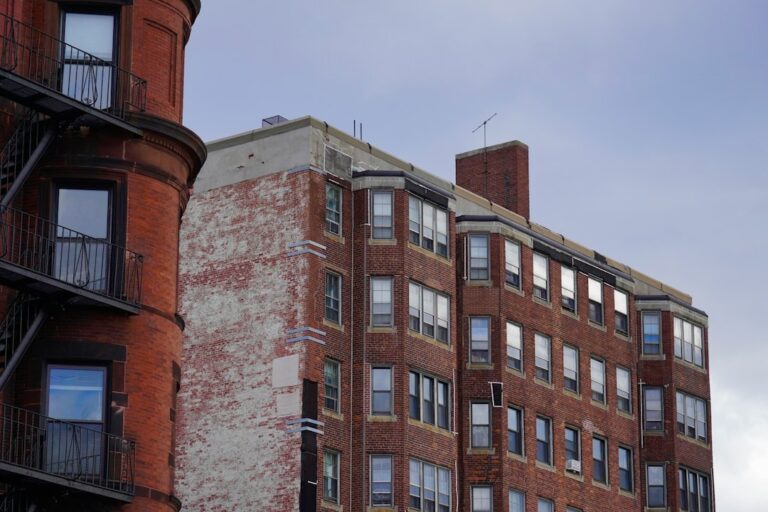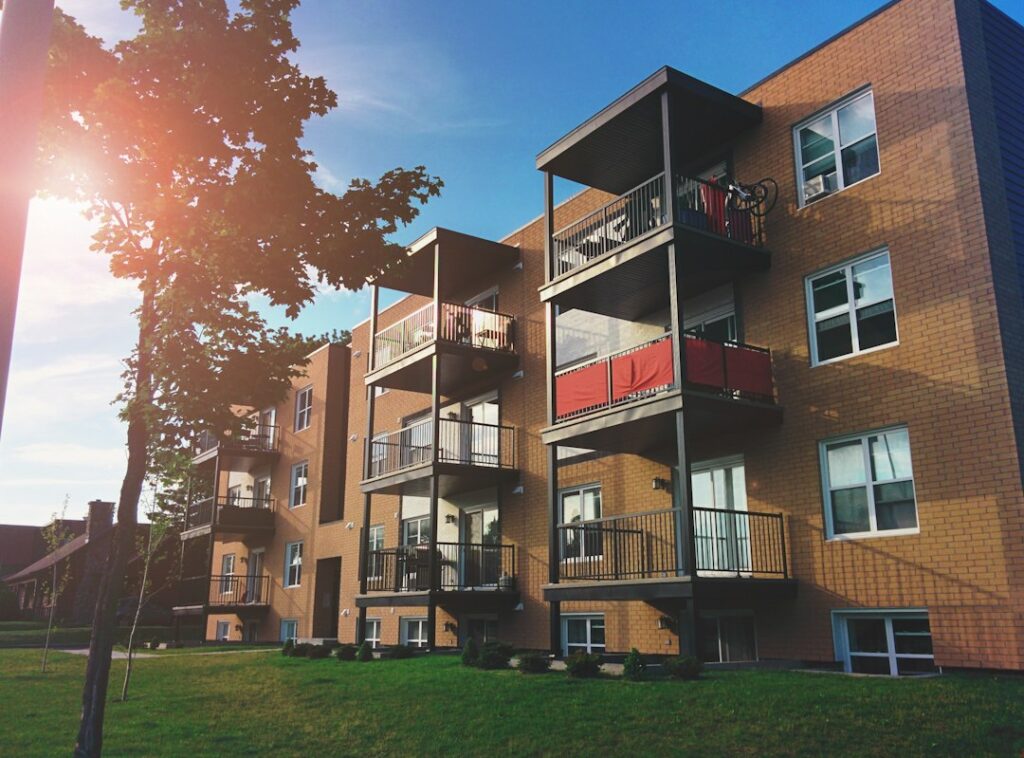
South Burlington apartment development is being shaped by three forces at once: a planned downtown, City Center, built around Market Street with tax increment financing; amendments to the city’s land development regulations that change inclusionary zoning and building heights; and a series of Vermont housing laws since 2023 that loosen zoning and Act 250 review in growth areas. Together they make it easier to build apartments in the right places, while a tight Chittenden County rental market keeps demand for those units high.
For owners of existing buildings, the new pipeline brings both competition and context. This article covers what has been built, what the rules now allow, how state policy is changing the math, and what all of it means for older apartment properties in the city.
South Burlington in numbers
South Burlington is a separate city from Burlington, its larger neighbor in Chittenden County, and it is home to Burlington International Airport, whose address is 1200 Airport Drive in South Burlington. GlobalFoundries’ Vermont semiconductor plant sits nearby in Essex Junction. The Census Bureau’s QuickFacts for South Burlington show a city with high incomes and a large rental sector:
- 20,292 residents in the 2020 Census and an estimated 21,394 on July 1, 2025, a 5.8% increase.
- 9,466 households and an owner-occupied housing rate of 61.6% for 2020–2024, meaning close to four in ten households rent.
- A median gross rent of $1,787 a month and a median household income of $106,667 for 2020–2024.
- A median value of owner-occupied homes of $443,400.
With home values well above $400,000, many households that might buy in a less expensive market stay in the rental market, and that steady renter base is what new apartment projects are built to serve.
City Center and the Market Street district
A planned downtown funded with TIF
City Center is South Burlington’s effort to create a walkable downtown from scratch. According to the city’s City Center and TIF FAQ, the tax increment financing district covers “the area on both sides of Market Street between Dorset Street and Hinesburg Road and to the south along San Remo Drive,” and that area has also been designated a New Town Center by the State Downtown Board.
Under the TIF arrangement, 75% of the new tax revenue generated by development in the district stays in South Burlington to repay infrastructure debt. As of 2018, the city reported $5 million in TIF-funded debt for “the reconstruction of Market Street, and the development of City Center Park.” The window to incur TIF debt opened with the first borrowing in February 2017 and closed in March 2022.
The civic anchor at 180 Market Street
The district’s centerpiece is the building at 180 Market Street, which houses the library, City Hall and a senior center. The city’s FAQ puts the total cost at $21.8 million, with $20.4 million in bonds approved, including a TIF bond of about $5.32 million. TIF covers 30% of the library and senior center funding and 10% of City Hall funding.
Apartments along the new street grid
Residential construction has followed the public investment. In a May 2023 update, the city reported construction at 224 Market Street, 268 Market Street and 339 Garden Street totaling 161 new homes and 22,675 square feet of first-floor commercial space, which is part of the area’s form-based code zoning. Earlier projects include Garden Street Apartments, a 60-unit building owned by Champlain Housing Trust and Housing Vermont and completed in late 2019, and Dover Place, a 43-unit, four-story building that the Burlington Free Press reported was expected to be finished in spring 2022.
The pattern is typical of a planned downtown: public money builds the street, park and civic building, and private and nonprofit developers fill in mixed-use apartment buildings with ground-floor commercial space.
How the land development regulations are changing
Inclusionary zoning
South Burlington has required affordable units in larger projects for years, and the requirement is being restructured. The city’s inclusionary zoning explainer, prepared for the LDR-24-09 amendments, compares the old and proposed rules:
- Previously, projects of 12 or more units had to make 15% of rental units or 10% of ownership units affordable.
- Under the proposal, rental projects of 10 to 24 units must make 10% of units permanently affordable, and rental projects of 25 or more units must make 20% affordable.
- For-sale projects of 10 or more units must make 10% affordable.
- A project that doubles its required affordable units can earn an additional floor of height.
A simple example shows how the proposed structure would work. A 30-unit rental building would need six permanently affordable units at the 20% rate. If the developer doubled that to 12, the project could add a floor, which is how the city intends to trade height for affordability in places like City Center. For a 15-unit building, the rate falls to 10%, or one or two units depending on how the rules round.
The explainer describes the proposal as drafted; owners and developers should confirm the final percentages in the adopted regulations before relying on them.
Heights, transfer rights and the current rulebook
According to a September 2025 Housing Committee packet, the land development regulation amendments adopted by the City Council on September 2, 2025, included an increase in the heights allowed in City Center. The same packet notes that since 2024, transferable development rights can be used in the city’s higher-density districts and for commercial projects, and that the lowest-scale neighborhood district is no longer a receiving area for those rights. The state’s zoning data portal lists South Burlington’s regulations as effective August 3, 2026, which reflects how frequently the rules have been updated.
The goals behind the changes
The same explainer quotes two goals from City Plan 2024: to “increase number of affordable housing units by 1,000 units by 2035, including 750 units affordable to households earning up to 80% of AMI,” and to “increase rental vacancy rate to 5%.” The second goal speaks directly to apartment owners. A city plan that explicitly aims to loosen the rental market is a signal that policy will keep favoring new supply.
State laws loosening South Burlington apartment development
The HOME Act
Vermont’s Act 47 of 2023, often called the HOME Act, set statewide minimums for local zoning. The text of Act 47 as enacted includes several provisions that matter for apartments:
- In areas served by sewer and water, “multiunit dwellings with four or fewer units shall be a permitted use.”
- Municipalities must allow at least five dwelling units per acre in those areas.
- Duplexes are allowed with the same dimensional standards as a single-unit dwelling.
- Parking requirements are capped at one space per unit in sewer and water areas, with up to 1.5 spaces allowed in some other areas.
- Affordable housing developments receive a 40% density bonus and one additional floor.
Act 250 changes under Act 181 and Act 152
Vermont’s Act 250 land use review has long added time and cost to larger projects. Act 181 of 2024 created a tiered system, and Act 152 of 2026 revised it. According to the state Land Use Review Board’s Act 181 and Act 152 FAQ, dated August 31, 2026, Tier 1A areas receive a full Act 250 exemption, while in Tier 1B areas “housing projects of up to 50 housing units are exempt.” Act 152 repealed Tiers 2 and 3 and the so-called road rule.
Separate temporary exemptions also apply. The state lists housing exemptions running through January 1, 2028, including unlimited units in designated downtowns, up to 75 units in new town centers and similar designated areas, and up to 50 units in a Chittenden County transit corridor category. Because City Center carries a New Town Center designation, some sites there may qualify, though eligibility for any particular parcel depends on the state’s mapping or a jurisdictional opinion.
Act 69 and landlord reporting
Act 69 of 2025, which began as S.127, was signed on June 12, 2025. It created the Community and Housing Infrastructure Program (CHIP), a project-based form of tax increment financing that took effect July 1, 2025, and it changed the state’s landlord certificate. Landlord certificates must now report unit types, unit counts, owner contact information and the number of ADA-accessible units. The law also amended the statute governing rental applications.
Chittenden County supply and demand
Even with all of this activity, the regional rental market remains tight. Vermont Public reported in June 2026, citing Allen, Brooks and Minor’s survey, that Chittenden County’s rental vacancy rate was 3.3%. The same report said more than 800 new units opened in 2024, a record, and more than 500 opened in 2025, while rent inflation slowed from 6.1% in fall 2024 to 3.5%.
The state’s long-range targets suggest the building is far from finished. Vermont’s Housing Needs Assessment for 2025–2029 calls for 7,301 to 10,537 homes in Chittenden County between 2025 and 2030, as part of a statewide target of 27,867 to 41,185 additional homes by 2030. South Burlington, with sewer and water service, a New Town Center and recently revised zoning, is one of the places in the county best positioned to absorb a share of that growth.
How far the region is from its targets
Comparing recent deliveries with the state targets puts the gap in perspective. Even if Chittenden County matched its 2025 pace of roughly 500 new units every year, it would fall well short of the low end of the 7,301-home target for 2025 through 2030. Reaching the target would require building at closer to the record 2024 pace, or faster, for several years in a row. That is the policy backdrop for the zoning and Act 250 changes: the state and the city are trying to raise the ceiling on how much can be built, and how quickly.
A state permit example close to home
Larger projects still leave a paper trail that owners can follow. The Act 250 permit for one phase of Hillside at O’Brien Farm, permit 4C1106-3C issued on August 31, 2022, covers “two 47-unit residential buildings.” Permits like this are public records, and they are one of the most reliable ways for owners to see what is coming before construction starts. As more projects fall under Act 250 exemptions in designated growth areas, local Development Review Board records become the main place to track new supply.
Rules that apply to every rental building
New construction gets most of the attention, but several local and state rules apply to existing buildings as well.
The rental registry and inspections
South Burlington’s rental registry ordinance took effect April 1, 2024, and requires short-term and long-term rental units to be registered with and inspected by the city. WCAX reported in April 2025 that as of January 2025, 417 properties with 2,643 total units had been registered and 753 units had been inspected, and that owners receive 30 days to complete required repairs.
For anyone buying or selling a building, registry status belongs on the due diligence list. A buyer should confirm that every unit is registered, ask for the most recent inspection results and check whether any repair orders remain open, since a new owner will need to resolve them. Sellers can avoid surprises by resolving outstanding items before a property goes to market.
Security deposits
Under Vermont’s security deposit statute, 9 V.S.A. § 4461, a landlord must return the deposit with an itemized statement of any deductions within 14 days. Missing the deadline forfeits the right to keep any of it, and a willful failure exposes the landlord to double the amount plus attorney’s fees. With a deadline that short, deposits held by a seller need to be accounted for and transferred cleanly at closing so the new owner can meet it for residents who move out soon after a sale.
Where new apartments are now easiest to build
Putting the local and state changes together, the path of least resistance for new apartments in South Burlington runs through a few kinds of locations:
- City Center and the Market Street area, with form-based code, a New Town Center designation, higher allowed heights and TIF-funded infrastructure.
- Parcels served by municipal sewer and water, where Act 47 makes buildings of up to four units a permitted use and caps parking requirements.
- Sites that qualify for Act 250 exemptions, either through Tier 1 status or the temporary exemptions for designated areas.
- Projects that include affordable units, which can earn density bonuses under state law and extra height under the city’s inclusionary framework.
Older apartment buildings in established neighborhoods outside these areas are less likely to see large new competitors next door, while buildings near Market Street sit in the middle of the city’s planned growth.
What the pipeline means for existing buildings
For owners of older apartment buildings in South Burlington, the development picture cuts both ways:
- New buildings in City Center compete for higher-income renters, particularly those who value walkability and new finishes.
- The inclusionary rules and state affordability incentives mean many new projects include income-restricted units, which compete with older buildings at moderate rents.
- A 3.3% county vacancy rate and state targets in the thousands of homes indicate that demand has room to absorb new supply.
- The rental registry and inspection program raise the baseline standard for every building, which can mean capital spending for older properties.
- Act 69’s expanded landlord certificate adds a modest reporting task each year.
The practical response for an owner is to know where a building sits relative to these changes and to plan capital work around the inspection standard rather than around the next tenant complaint. Terms like TIF, inclusionary zoning and transferable development rights come up often in these discussions, and our real estate glossary explains them.
For owners weighing their next step, our page on selling an apartment building in South Burlington explains how we look at the local market, and our Vermont market overview covers other communities across the state.