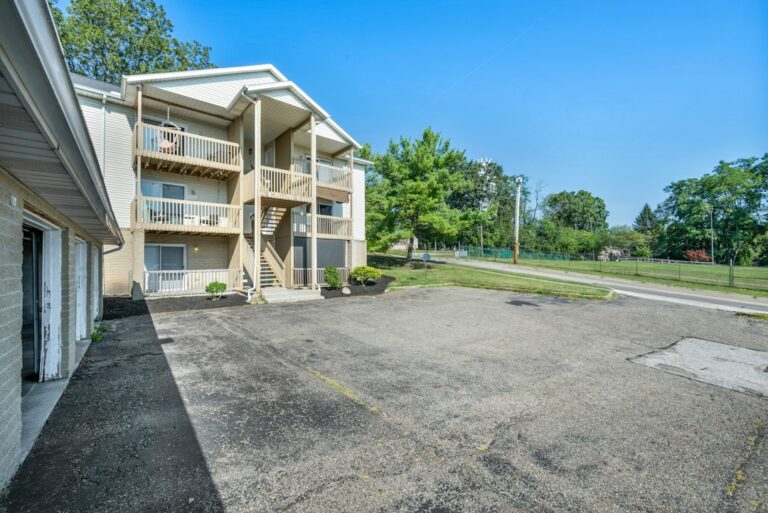
North Las Vegas, NV apartment submarkets divide roughly by age: the city’s original core in the south, around downtown and the Las Vegas Boulevard North corridor, holds its oldest housing and its redevelopment area, while the master-planned north, including Aliante and the Villages at Tule Springs, is where much of the recent apartment construction has gone. In between sit employment and amenity anchors such as Craig Ranch Regional Park, the VA medical center and the College of Southern Nevada’s Cheyenne campus.
North Las Vegas is its own city, not a neighborhood of Las Vegas. It was incorporated in 1946, sits in Clark County, and has grown quickly: the 2020 Census counted 262,527 residents, and the Census Bureau’s estimate for July 1, 2025 is 296,653, an increase of roughly 13%. This guide walks through the main areas, what kind of rental housing each one holds, and what drives demand there.
North Las Vegas, NV apartment submarkets by the numbers
According to Census Bureau QuickFacts for North Las Vegas, drawing on American Community Survey data for 2020 to 2024:
- Median gross rent was $1,705.
- The owner-occupied housing rate was 63.6%, which means roughly 36% of households rent.
- The city had 88,909 households.
- Median household income was $79,542.
Those averages hide wide differences across the city. A renter in an older complex near downtown and a renter in a new community north of the 215 Beltway are in very different markets, which is why owners and buyers in North Las Vegas tend to think in submarkets rather than citywide averages.
A simple way to hold the map in your head is to read the city from south to north:
- Downtown and Las Vegas Boulevard North: the historic core, the redevelopment area and much of the oldest housing.
- Cheyenne corridor: the College of Southern Nevada campus, with Nellis Air Force Base just outside the city to the east.
- Craig Ranch and the central corridor: the regional park and amphitheater, Craig Road retail and quick access to Interstate 15.
- Aliante: a master-planned community in the northwest built around single-family neighborhoods and a casino resort.
- The VA medical center area: the medical center on North Pecos Road and the communities around the 215 Beltway.
- Villages at Tule Springs and the far north: the newest master-planned area and a focus of new apartment supply.
- Apex: an industrial park to the north that adds jobs rather than housing.
The sections below take each in turn.
Downtown and the Las Vegas Boulevard North corridor
The southern end of the city, around East Lake Mead Boulevard, North 5th Street and Las Vegas Boulevard North, is the historic core of North Las Vegas. It is also where the city concentrates redevelopment.
The city’s Redevelopment Agency was established in 1990 as a separate agency governed by the City Council. A parcel is inside a redevelopment area if its tax district is 253, 255 or 256, which gives owners a quick way to check their status on a tax bill. The Las Vegas Review-Journal has described a downtown redevelopment focus of about 160 acres centered on East Lake Mead Boulevard and North 5th Street, bounded by Judson Avenue, Tonopah Avenue, Las Vegas Boulevard North and Interstate 15. A 14-screen Maya Cinemas opened downtown in 2019, across from City Hall.
The most significant new rental project here is public housing. The Senator Joseph M. Neal Jr. Apartments, at 1632 Yale St. near Tonopah Avenue and North 5th Street, will add 192 units, 180 one-bedroom and 12 two-bedroom, for the Southern Nevada Regional Housing Authority at a cost of about $88 million, with a leasing preference for residents 55 and older. Reported completion dates range from the end of 2026 to 2027.
For private owners, this area typically means older, smaller complexes, rents that tend to sit below newer product elsewhere in the city, and a tenant base that is sensitive to rent increases. Redevelopment investment around the civic center can lift the area over time, but buildings here are usually valued on in-place income and condition rather than on new-construction comparables. Buyers in this submarket typically focus on deferred maintenance, utility systems and collections history, because those factors move value more than amenities do. Owners who have kept up roofs, plumbing and HVAC can often stand out simply by offering a well-maintained unit at a rent below newer buildings to the north.
Craig Ranch and the central corridor
Moving north, the area around West Craig Road is anchored by Craig Ranch Regional Park, roughly 170 acres at 628 W. Craig Road. The park’s amphitheater reopened in April 2026 after renovations that raised its capacity from about 6,000 to 10,000, according to local news coverage, making it a regional events venue. A venue of that size also brings event traffic on show nights, something nearby owners notice in parking demand.
The Craig Road corridor sits between the older south and the newer north, with access to Interstate 15 and the central part of the city. Renters here often work along I-15, in the Las Vegas Valley’s resort and logistics economy, or in North Las Vegas itself.
Amenities matter in this middle band. Proximity to the regional park, retail along Craig Road and reasonable commutes give these buildings an edge over older properties farther south, while their rents usually sit below brand-new product in the far north.
The Cheyenne corridor and the College of Southern Nevada
East Cheyenne Avenue is home to the College of Southern Nevada’s North Las Vegas campus at 3200 E. Cheyenne Ave. Community college campuses rarely create a student-housing market in the traditional sense, since most students commute, but they do support a steady stream of renters who want to live near classes, part-time jobs and transit.
This part of the city also sits close to Nellis Air Force Base. One detail matters for anyone reading population figures: Nellis is not part of North Las Vegas. Clark County lists Nellis AFB as a separate unincorporated place in its 2025 population tables. The base opened in 1941 as Las Vegas Army Air Field and was renamed Nellis AFB in 1950. Military households who live off base can be part of the renter pool on the city’s east side, even though the base itself is outside city limits.
Aliante and the northwest
Aliante, in the northwest part of the city, is a master-planned community. Its best-known landmark, the Aliante Station casino, now Aliante Casino + Hotel, opened on November 11, 2008, as a $662 million joint venture of Station Casinos and Greenspun Corp., according to the Las Vegas Sun, which is owned by Greenspun.
Master-planned areas like Aliante are dominated by single-family homes, with apartments in planned multifamily parcels rather than scattered small buildings. That means relatively few small, privately owned five- to twenty-unit buildings and more professionally managed communities. Renters here are often households that want a suburban setting, newer construction and access to parks, schools and the 215 Beltway. For an investor looking at small buildings, Aliante is less a place to find them than a source of competition for higher-income renters who might otherwise choose a well-kept older property.
The VA medical center area
The North Las Vegas VA Medical Center, at 6900 N. Pecos Road, opened in 2012 as a 1-million-square-foot facility. The VA’s location page lists it as part of the VA Southern Nevada Healthcare System.
A major hospital campus is a durable source of rental demand: nurses, technicians, administrative staff and contractors all need housing near work, and hospital schedules make short commutes valuable. Apartment communities in the northern part of the city, within reach of Pecos Road and the 215 Beltway, draw on that demand along with commuters headed elsewhere in the valley.
Villages at Tule Springs and the far north
The newest part of the city is the far north, beyond the 215 Beltway. The Villages at Tule Springs covers about 1,280 developable acres, with plans for up to 8,683 homes, and broke ground in 2017, according to the Las Vegas Review-Journal. Builders including Pardee, KB Home and CalAtlantic were involved in early phases.
Build-to-rent and professionally managed apartment communities have followed the homebuilders. Ascend Heartland, a 333-unit D.R. Horton community north of the 215 near Revere Street within the Villages at Tule Springs, is open and leasing, with construction expected to finish in 2026, according to the Review-Journal. Its 1- to 3-bedroom plans at 7400 Evelyn Brook illustrate what new supply in the north looks like: large, amenitized communities competing for renters who might otherwise rent a new single-family home.
For owners of existing buildings elsewhere in the city, the far north is the primary source of new competition. New communities in lease-up often offer concessions, and renters who can afford new product sometimes leave older buildings for them. That pressure is felt most by older mid-market communities, and least by older buildings whose rents sit well below new construction.
Apex and the job engine to the north
The Apex Industrial Park is not a residential submarket, but it shapes them all. The city describes Apex as about 18,000 acres, roughly 5,000 of them developable, about 20 minutes north on Interstate 15 with access to U.S. 93 and the Union Pacific rail line. A $59 million public-private water line now serves the park.
Named tenants include Kroger, Hey Dude and Crocs with a 1 million-square-foot facility, Saddle Creek Logistics with 580,000 square feet, and Air Liquide’s liquid hydrogen plant. Smith’s, a Kroger company, announced a $225 million distribution center at Apex with 250 jobs, scheduled to open in fall 2023, according to the Review-Journal. Each of those employers draws workers who need housing within commuting distance, and because Apex sits north of the city on Interstate 15, neighborhoods with quick interstate access have a commuting advantage.
For apartment owners, the useful question is not how many jobs Apex adds in total but what those jobs pay and where the workers can afford to live. Warehouse, logistics and manufacturing roles often fit renters who need moderately priced one- and two-bedroom units with an easy drive to Interstate 15. Buildings in the central and northern parts of the city that sit close to the interstate are positioned to capture that demand, while new communities in the far north compete for the higher-paid end of the same workforce.
Tax rules and rent rules that apply citywide
Two Nevada rules affect apartment economics across every submarket.
The first is the property tax abatement. Nevada caps annual increases in a property’s tax bill: up to 3% for a primary residence under NRS 361.4723, and up to 8% for other property. Under NRS 361.4724, rental housing, including apartments, can qualify for the 3% cap if every unit’s rent is at or below HUD’s fair market rent for the county. According to Clark County’s tax abatement page, the Assessor mails an affidavit in April or May for owners to claim it, and the 2026/27 rent limits are $1,146 for a studio, $1,270 for one bedroom, $1,504 for two bedrooms, $2,139 for three bedrooms and $2,456 for four bedrooms. New construction or a change in use gets no cap in its first fiscal year. Because the citywide median gross rent is $1,705, older buildings in the southern submarkets are more likely to qualify than new communities in the north.
The difference compounds. Consider a building whose tax bill is $40,000 this year. If the full 8% cap applied every year, the bill could reach about $58,800 after five years; under a 3% cap it would be about $46,400, a gap of roughly $12,400 a year by year five. The qualification test is strict, though: every unit’s rent must be at or below the limit for its bedroom count, so a single two-bedroom leased above $1,504 can cost the whole property the lower cap. Owners who rely on the abatement should check new leases and renewals against the current limits before signing them.
The second is rent-increase notice. Nevada’s Residential Landlord and Tenant Act, NRS Chapter 118A, requires written notice before a rent increase: 30 days for periodic tenancies shorter than one month and 60 days in all other cases, under NRS 118A.300. For an owner with annual leases, the 60-day requirement means renewal pricing needs to be settled more than two months before each lease ends. Nevada has no statewide rent cap. Governor Lombardo vetoed AB 298 in 2023, which would have piloted a 10% cap for seniors and people with disabilities, and vetoed AB 280, which included a temporary 5% cap, on June 2, 2025.
Opportunity Zones are also worth a note for investors. Nevada has 61 zones from the 2018 designation round, open for investment through December 31, 2028, and a new round of designations takes effect January 1, 2027, according to the Governor’s Office of Economic Development. Owners whose buildings sit in a designated tract should confirm its status against the official federal list.
What this means for owners across the city
For owners and buyers of apartment buildings in North Las Vegas, the submarket picture suggests a few practical steps:
- Identify which submarket a building really competes in, and compare rents with nearby properties rather than with the $1,705 citywide median.
- Check the tax district on the bill to see whether the property is in a redevelopment area.
- Review whether the building qualifies for Clark County’s 3% abatement, since the HUD-based rent limits change each year.
- Track lease-up concessions at new communities in the far north, which set the ceiling for mid-market buildings.
- Factor Apex employment and the VA medical center into demand assumptions for properties with good access to Interstate 15 and the 215 Beltway.
Once rents and expenses are mapped to the right submarket, the apartment building value calculator can turn them into a value estimate. Owners can read more about local conditions and about selling an apartment building in North Las Vegas, or compare other Nevada cities on the Nevada markets page.