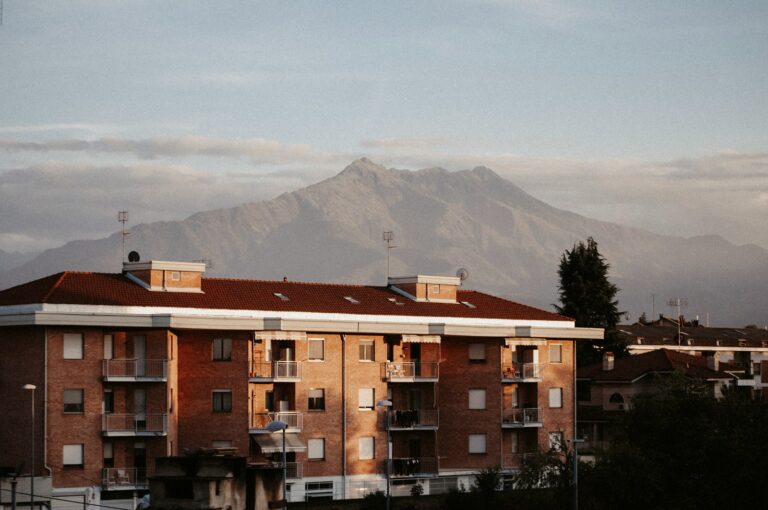
St. George apartment demand comes from a combination few markets of its size can match: one of the fastest-growing metro populations in the country, a regional hospital and an airline headquarters anchoring year-round jobs, a university of roughly 12,700 students, and a national park drawing nearly five million visits a year. Against that demand sit high home prices, a large wave of new construction and a water supply that shapes how fast the area can keep building.
This article looks at each of those drivers using the most recent official data, explains how they translate into renter households, and covers what the numbers suggest for owners and investors watching the market in southwest Utah.
A city that has grown by nearly half since 2010
St. George is the county seat of Washington County, a role it took over from Harmony, according to Washington County’s history post. Its growth since then has been rapid. The Census Bureau’s QuickFacts for St. George and Washington County show:
- 72,897 residents in the 2010 Census, 95,342 in 2020 and an estimated 108,713 on July 1, 2025.
- A 14.0% increase in the city’s population between the 2020 Census and the 2025 estimate.
- Washington County growing from 138,115 in 2010 to 180,279 in 2020 and an estimated 213,670 in 2025, an 18.5% increase since 2020.
That pace places the area near the top of national rankings. The Census Bureau’s March 2026 release on metro and county population estimates ranked the St. George metro eighth among U.S. metro areas by percentage growth between July 1, 2024 and July 1, 2025, with a 2.5% gain from 208,431 to 213,670 residents.
The single year from July 2024 to July 2025 alone added 5,239 residents to the metro, which at the city’s average of 2.75 people per household works out to roughly 1,900 additional households in one year. For apartment owners, the absolute numbers matter as much as the percentages. The county added more than 33,000 residents between 2020 and 2025, and every household formed by that growth has to live somewhere: in a purchased home, a rented house or townhome, or an apartment.
How many St. George households rent
St. George is still predominantly an ownership market, but its renter share is meaningful and higher than the county’s. For 2020–2024, Census QuickFacts reports:
- An owner-occupied housing rate of 66.7% in St. George, which means about one in three households rents, compared with 71.6% owner-occupancy countywide.
- 36,490 households in the city, averaging 2.75 people each.
- A median gross rent of $1,545 a month in St. George and $1,566 in Washington County.
- A median household income of $76,508 in the city and $80,632 in the county.
- A median value of owner-occupied homes of $496,100 in the city and $510,700 in the county.
Applying the renter share to the household count gives a rough sense of scale: about one-third of 36,490 households is roughly 12,000 renter households in the city, before counting renters in surrounding Washington County communities. Those figures also describe a market where ownership is expensive relative to local incomes. A household earning the city’s median income faces a median home value of roughly six and a half times that income, which keeps many younger workers, new arrivals and seasonal employees in rentals longer than they might be elsewhere.
What the rent figures imply
The census numbers allow a rough affordability check. A median gross rent of $1,545 a month comes to $18,540 a year, or about 24% of the city’s median household income. That comparison uses the income of all households, owners included, and renter incomes are typically lower, so the share of income that a typical renter household spends on rent is likely higher. Even so, renting at the median is far more attainable on a local salary than buying at a median value near $500,000, which is the gap that keeps the renter pool steady.
The same figures also show why unit mix matters. With an average household size of 2.75, St. George has many families, and family renters tend to look for two- and three-bedroom units, garages and yards. Buildings heavy in studios and one-bedrooms draw more heavily on younger workers, students and single retirees.
The employers behind St. George apartment demand
Healthcare as a regional anchor
Intermountain Health’s St. George Regional Hospital is the clearest example of a job base that draws from far beyond city limits. The hospital describes itself as a 284-bed facility and “the major medical referral center for northwestern Arizona, southeastern Nevada, and southern Utah,” and it is a Level II trauma center. Hospitals generate demand across the income spectrum, from physicians and nurses to technicians, support staff and traveling clinicians on short assignments, many of whom prefer renting near the campus.
An airline headquarters and a university
St. George is also the headquarters of SkyWest Airlines, which says its fleet of more than 500 aircraft connects passengers to 258 destinations. On the Utah Department of Workforce Services’ statewide list of largest employers, based on 2024 average employment, SkyWest ranks 43rd with 2,000 to 2,999 employees statewide. The Washington County School District ranks 30th with 3,000 to 3,999 employees, and Utah Tech University ranks 57th with 2,000 to 2,999.
Recent job growth
The labor market has continued to expand. According to the Department of Workforce Services’ Washington County economic snapshot, the county gained 2,536 jobs over the 12 months ending in June 2026, a 2.9% growth rate, with professional and business services and leisure and hospitality each adding more than 600 jobs. Federal data show unemployment staying low: the Bureau of Labor Statistics reports Washington County’s not seasonally adjusted rate at 3.2% in September 2026 (preliminary), down from 3.5% in September 2025.
Job growth matters for rental demand in a specific way. New jobs bring new arrivals, and new arrivals usually rent first while they learn the area, even if they eventually buy.
Utah Tech University and the student renter base
Utah Tech University, which was “officially renamed to Utah Tech University starting July 1, 2022” after operating as Dixie State University, is the other institutional anchor. The university’s institutional research office reports a fall 2026 headcount of 12,733 students, or 8,891.67 full-time equivalents, with 82% of students from Utah. That headcount is lower than the year before, a reminder that enrollment can move in both directions. For scale, 12,733 students equal roughly 12% of the city’s estimated 2025 population, although not every student lives in St. George, and the gap between headcount and full-time equivalents shows that many study part time.
Students affect the rental market in a few distinct ways:
- Off-campus students concentrate demand in buildings close to campus and along transit and bike routes.
- Student leases often run on an academic calendar, creating predictable turnover each spring and summer.
- University faculty and staff add a steadier, non-student layer of renter demand.
For owners near campus, the year-to-year enrollment figure is worth tracking closely, because even a modest change in headcount can shift leasing velocity for buildings that depend on students.
Retirees, tourism and seasonal workers
An older population with different housing needs
St. George is well known as a retirement destination, and the data bear that out. QuickFacts estimates that 21.8% of St. George residents and 22.4% of Washington County residents were 65 or older in 2025. Retirees mostly own, but they also generate demand for healthcare, services and hospitality jobs whose workers frequently rent. Some older residents also choose to rent for flexibility, particularly part-year residents or those moving closer to family and medical care.
Zion’s pull on the local workforce
Zion National Park, northeast of St. George, recorded 4,984,525 recreation visits in 2025, the second-highest total among national parks, according to the National Park Service’s 2025 visitation release. The official data do not measure how many park-related workers live in St. George. Still, the volume of visitors helps explain why leisure and hospitality is one of the county’s fastest-growing sectors, and many of those jobs pay wages that point toward renting rather than buying.
Rents, prices and the new supply wave
What rents have done
The Kem C. Gardner Policy Institute’s State of the State’s Housing Market: 2025–2026 report, released in September 2026, offers the most detailed recent comparison. Between March 2024 and March 2026:
- Asking rents for single-family detached homes rose fastest in Washington County among the counties studied, up 11.6%, based on RentRange data.
- Townhome asking rents in Washington County also led, up 13.0% to about $1,948 a month.
- Apartment rents fell 2.3% across Utah’s five large counties, but Washington County was the exception, with apartment rents up 3.4%, based on ApartmentList data.
The gap between apartment rent growth and single-family and townhome rent growth is notable. It suggests that renters in St. George are paying a growing premium for space and private entrances, and that apartments are competing on price against an expanding supply of rental houses and townhomes.
Prices and permits
The same report puts St. George’s median sales price at $507,000 for 2025 and $505,000 in the first quarter of 2026, essentially flat. It also reports that Washington County permitted 2,888 residential units in 2025, or 11.1% of Utah’s 26,053 total. Census QuickFacts records a slightly different figure, 2,857 county building permits for 2025; the two sources tally permits separately, so each figure is best cited by name. Either way, the county accounted for more than one in ten residential units permitted in Utah that year.
For apartment owners, a high permit count is a double-edged signal. It confirms that builders expect continued demand, but it also means new units, including build-to-rent townhomes and new apartment communities, are competing for the same renters.
How the competition shows up for apartments
When single-family and townhome rents rise faster than apartment rents, the effect for apartment owners is usually felt in leasing rather than in headline rent. Renters who might once have signed an apartment lease compare it against a rental house or a new townhome with a garage, and the apartment has to win on price, location or convenience. In practice, that tends to show up as longer lease-up periods for new communities, more use of concessions and more sensitivity to renewal increases among residents who have other options.
Older apartment buildings with lower rents can benefit from the same dynamic, because they sit below the price point of new rental houses and townhomes. The renters most exposed to rising rental house costs often look for exactly that kind of unit.
Water as the long-term constraint
Growth in the St. George area depends on water, and local water policy is shaping what gets built. The Washington County Water Conservancy District says it has adopted the state’s highest water conservation standards for new construction and has achieved a 50% reduction in per capita water use since 2000.
The district’s 20-Year Plan, adopted in July 2023, estimates that supply can serve approximately 72,000 new equivalent residential connections over 20 years, provided planned conservation measures and new supplies come online. It sizes new development at 0.59 acre-feet per year per connection.
That framework matters for existing apartment buildings in two ways. Conservation standards push new construction toward smaller lots and denser housing, which can include more multifamily product. At the same time, any limit on how quickly new connections can be added acts as a brake on how fast supply can grow, which tends to support the value of housing that already has water service in place.
State rules that shape the rental market
Utah gives local governments little say over rents. Utah Code § 57-20-1 states: “A county, city, or town may not enact an ordinance or resolution that would control rents or fees on private residential property unless it has the express approval of the Legislature.” The full section is on the Utah Legislature’s website. In St. George, rents therefore follow market conditions such as job growth, new supply and competition from rental houses, rather than local regulation.
Questions to ask about a specific building
Because the drivers above vary by location and product type, the same city-level data can point to different conclusions for two buildings a few miles apart. A few questions help connect the market picture to a particular property:
- How close is the building to the hospital, the Utah Tech campus or major employment corridors, and how easy is the commute?
- Does the unit mix match the city’s larger household sizes, or does it depend mostly on single renters and students?
- When do leases expire, and are many of them clustered around the academic calendar?
- How does the asking rent compare with new townhomes and rental houses nearby?
- How water-efficient are the fixtures and landscaping, given the region’s conservation standards?
What the demand picture means for owners
Putting the drivers together, St. George apartment demand looks broad-based but not uniform:
- Population growth remains among the fastest in the nation, supplying a steady stream of new households.
- Healthcare, education, an airline headquarters and hospitality provide jobs at a wide range of pay levels.
- Expensive ownership relative to local incomes keeps many households renting longer.
- Student demand is meaningful near campus but varies with enrollment.
- Heavy permitting, together with fast-rising rents for rental houses and townhomes, means apartments face real competition for renters.
- Water policy encourages denser building while capping how quickly supply can expand.
For owners of existing buildings, the most useful signals to watch are the ones published regularly: the Gardner Institute’s annual housing report, DWS job growth and Utah Tech’s fall headcount. Passive investors evaluating a St. George deal can use those same sources to test a sponsor’s assumptions, a process our guide to passive multifamily investing explains in more depth. Owners considering their options can learn more on our page about selling an apartment building in St. George, and our Utah market overview covers other cities across the state.