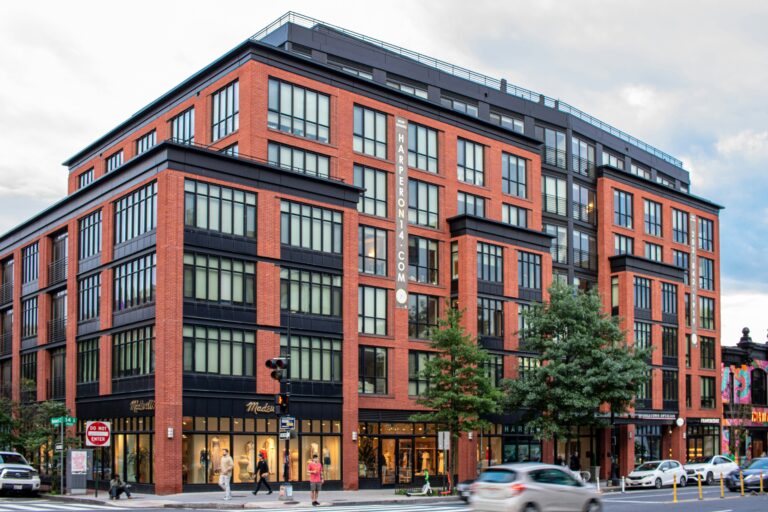
Georgia landlord-tenant law at a glance
Georgia landlord-tenant law sits in Title 44, Chapter 7 of the Official Code of Georgia. Article 1 covers the tenancy itself, Article 2 covers security deposits and Article 3 covers dispossessory proceedings, which is what Georgia calls an eviction case. HB 404, the Safe at Home Act, rewrote several of these sections for residential leases entered into or renewed on or after July 1, 2024.
| Rule | Georgia requirement | Statute |
|---|---|---|
| Ending a tenancy at will (month-to-month) | 60 days’ notice from the landlord; 30 days from the tenant | O.C.G.A. 44-7-7 |
| Before a nonpayment case | Written demand to pay all past-due amounts within 3 business days, posted on the door in a sealed envelope plus any lease method | O.C.G.A. 44-7-50(c)-(d) |
| Deposit cap | Two months’ rent | O.C.G.A. 44-7-30.1 |
| Holding the deposit | Escrow account at a regulated bank; tell the tenant in writing where it is | O.C.G.A. 44-7-31 |
| Deposit return | 30 days after the landlord gets possession, with a written statement of exact reasons for anything kept | O.C.G.A. 44-7-34 |
| Late fees | Only if the lease provides for one, in the agreed amount (DCA handbook); no statutory cap confirmed here | Lease |
| Entry notice | No statutory rule confirmed here; set entry terms in the lease | Lease |
| Answer to an eviction | 7 days from service | O.C.G.A. 44-7-51(b) |
| Rent control | Banned for counties and cities | O.C.G.A. 44-7-19 |
How much notice does a landlord have to give in Georgia?
A Georgia landlord must give 60 days’ notice to end a tenancy at will, which is how Georgia law treats a month-to-month arrangement with no fixed end date. The tenant needs to give only 30 days. Both periods come from a one-sentence statute, O.C.G.A. 44-7-7.
A fixed-term lease simply ends on its end date, and most Georgia apartment leases set their own renewal and non-renewal notice periods. The Department of Community Affairs’ Landlord Tenant Handbook (2012 edition) says the 60-day notice also applies to a rent increase on a tenancy at will, and that rent under a written lease can rise only as the lease allows. Georgia law sets no limit on the size of an increase.
The 3-business-day notice for unpaid rent
Since July 1, 2024, a Georgia landlord must give written notice demanding payment of all past-due amounts within three business days before filing a dispossessory affidavit for nonpayment. The notice covers rent, late fees, utilities and other charges owed, and it has to be posted in a sealed envelope on the door of the unit and delivered by any other method the lease calls for.
If the tenant pays in full inside the three business days, the case cannot be filed. Count business days carefully: a notice posted on a Thursday does not expire until the end of Tuesday, because the weekend does not count. A notice that lists the wrong amount or skips the door posting gives the tenant an easy defense.
Security deposit rules in Georgia
Georgia caps security deposits at two months’ rent under O.C.G.A. 44-7-30.1, added by the Safe at Home Act. On a $1,450 apartment, the most you can take is $2,900, and the cap applies to refundable charges whatever the lease calls them.
Most professional landlords must also hold deposits in an escrow account at a regulated bank and tell tenants in writing where the account is (44-7-31). That rule and the related rules in 44-7-32, 44-7-33 and 44-7-35 do not apply to a natural person who, with a spouse and minor children, owns ten or fewer rental units, unless a paid manager runs them (44-7-36). An owner of a 5-unit building who self-manages may be exempt; an owner of a 40-unit building is not.
Within 30 days after getting possession back, the landlord must return the deposit, or send a written statement of the exact reasons for keeping any part along with the balance (44-7-34). Normal wear and tear cannot be charged. First-class mail to the tenant’s last known address satisfies the rule.
Late fees and repairs in Georgia
Georgia has no statute capping late fees that we could confirm. The DCA handbook says a landlord can charge a late fee only if the lease provides for one, in the amount the lease states. Keep the fee reasonable and written into the lease, and note that the 3-business-day demand must list late fees with the rent if you want to collect them in the case.
Repairs are a different story since 2024. Every residential lease now includes a warranty that the premises are fit for human habitation, and the landlord must keep them in good repair (O.C.G.A. 44-7-13). The tenant cannot waive this. Under O.C.G.A. 44-7-24, a landlord may not file a dispossessory case, raise rent, cut services or end the lease within three months after a tenant complains in good faith about health, safety or habitability, except for reasons such as unpaid rent or a serious lease breach.
The eviction process in Georgia
An eviction in Georgia is a dispossessory proceeding, usually filed in magistrate court. The steps are set in Article 3 of Chapter 7.
- Demand possession, and for nonpayment serve the 3-business-day pay-or-vacate notice.
- File a sworn dispossessory affidavit with the court.
- The sheriff, a constable or an approved process server serves the summons, by hand, on an adult at the unit, or by posting plus first-class mail (44-7-51(a)).
- The tenant has 7 days from service to answer; if day 7 is a weekend or holiday, the next business day (44-7-51(b)).
- If the tenant answers, the court holds a hearing. If service was by posting and there is no answer, the court can grant possession by default, but a money judgment needs an answer or appearance.
- After judgment for the landlord, the writ of possession becomes effective 7 days after the judgment is entered (44-7-55(a)).
- The tenant can appeal within 7 days of judgment and stay in possession only by paying the rent found due, and future rent, into the court registry (44-7-56).
How long does an eviction take in Georgia?
The statutory waiting periods in an uncontested Georgia nonpayment case add up to at least 17 days: 3 business days for the notice, 7 days to answer once served, and 7 days after judgment before the writ takes effect. Service delays, court calendars and the sheriff’s schedule for executing writs add time, and they differ a great deal between counties.
A contested case or an appeal runs longer. The registry rule limits the cost of an appeal to the landlord, because a tenant who stops paying into the registry can lose the right to stay. Once the writ is executed, the tenant’s belongings may be placed on the landlord’s property or another approved spot, and the landlord owes no duty to store them.
Does Georgia have rent control?
No. O.C.G.A. 44-7-19 bars every Georgia county and city from enacting or enforcing any ordinance that regulates the amount of rent on privately owned single-family or multi-unit residential rental property. Atlanta, Savannah and every other city are covered.
The ban has one carve-out: a local government or its housing authority can set rents on property it owns, or under an agreement with a private owner, such as an affordable housing deal. If your building has a regulatory agreement tied to tax credits or public financing, its rent limits still apply and pass to a buyer.
Selling a Georgia apartment building with tenants in place
Leases survive a sale in Georgia. The DCA handbook states that a buyer of rental property generally takes it subject to existing leases, so the new owner steps into your place as landlord for the rest of each term.
Deposits need a clear handoff. The handbook says the former owner must either transfer each deposit to the new owner or refund it to the tenant. In practice, deposits are credited to the buyer on the closing statement, and the buyer takes over the escrow account duties. Send tenants written notice of the new owner and where rent and deposits now go.
- Deliver a rent roll with each lease, deposit amount and move-in date.
- Credit deposits to the buyer at closing and document the transfer.
- Disclose pending dispossessory cases and any registry funds.
- Pass along move-in inspection lists for each unit.
Georgia landlord-tenant law changes in 2025 and 2026
The biggest recent change is still the Safe at Home Act, which applies to every residential lease entered into or renewed on or after July 1, 2024. Most 12-month leases signed before that date have since come up for renewal, so its deposit cap, 3-business-day notice and habitability warranty now reach most apartment rent rolls.
The next change takes effect January 1, 2027. SB 406, the Georgia Property Owners’ Bill of Rights Act (2026), adds a new subsection (e) to O.C.G.A. 44-7-50. On a motion and hearing, a court can order records of a dispossessory case made unavailable to the public if the tenant won, if the tenant paid the judgment in full with interest and costs, or if seven years have passed since a dismissal or a paid judgment. The landlord can still collect amounts owed in a separate action. Expect fewer old filings to show up when you screen applicants.
Selling a Georgia apartment building to Skyline
Skyline buys apartment buildings with five or more units in Georgia, with tenants in place. We buy directly, close on your timeline, and can work inside 1031 deadlines. We take over leases and deposits at closing and send the tenant notices.
For the tax side of a sale, see Georgia capital gains tax on real estate and the 1031 exchange in Georgia.