
Georgia Multifamily Buyer
Sell Your Commercial Property In Georgia
Strong population growth, expanding infrastructure, and increasing multifamily demand position Georgia as one of the most attractive investment markets in the Southeast.
- Clear feedback on your deal, typically within 48 hours
- 5 to 100+ units, stabilized or distressed, listed or off-market
- Owners, agents, and brokers welcome — every conversation is confidential
We buy:Tired landlordsEstate & trust sales1031 exchangesDeferred maintenanceHigh vacancyPartnership splits
Key Metros
Multifamily Markets In Georgia
Every City We Cover
Browse Georgia By County
Bartow County
Bibb County
Bulloch County
Carroll County
Clarke County
Coweta County
Dougherty County
Douglas County
Fayette County
Floyd County
Hall County
Houston County
Liberty County
Lowndes County
Muscogee County
Richmond County
Troup County
Whitfield County
Local Market Data
Georgia Apartment Market
Figures gathered October 2026 from public market data.
To sell commercial property in Georgia, start with the figures buyers price against. Statewide median gross rent was $1,393 a month and rental vacancy 6.8%, per the Census Bureau's 2020-2024 American Community Survey. Renters occupy 34.3% of occupied Georgia homes, and 16.2% of all Georgia housing units sit in buildings with five or more units.
Those statewide averages hide gaps between counties. Across Fulton, Gwinnett, Cobb, DeKalb, Chatham, Cherokee and Henry counties, Gwinnett County posts a $1,810 median gross rent with 5.1% rental vacancy, while DeKalb County runs at 10.9% vacancy. Below, Georgia rents, five-year trends, county figures and the state's landlord and tax rules sit side by side, so an owner can see how a buyer will read a building before any offer arrives.
Renter household growth
Georgia gained 16,984 renter households between the 2015-2019 and 2020-2024 ACS periods, a 1.2% increase, per Census table B25003.Larger-building stock
Units in Georgia buildings with five or more units rose 9.7% to 735,655 between the two ACS periods, per Census table B25024.Household income gains
Georgia median household income rose 31.8%, from $58,700 to $77,353, between the 2015-2019 and 2020-2024 ACS periods, per table B19013.The Georgia rental market at a glance
Georgia had 1,398,009 renter households in the Census Bureau's 2020-2024 American Community Survey, or 34.3% of 4,074,366 occupied homes. Owners hold the other 65.7%. Another 735,655 Georgia housing units, 16.2% of the total, sit in buildings of five or more units, per table B25024. Georgia counted 4,541,835 housing units in all, with a median year built of 1992.
Georgia rental vacancy stood at 6.8% in the 2020-2024 DP04 housing profile. Median household income was $77,353, so the $1,393 median gross rent equals about 21.6% of a typical household's gross income.
Five-year trends in Georgia
Georgia median gross rent rose 38.5% between the 2015-2019 and 2020-2024 ACS periods, from $1,006 to $1,393 a month. Median household income grew 31.8% over the same span, from $58,700 to $77,353. Rents therefore outran incomes by 6.7 percentage points.
Georgia added 16,984 renter households between the two periods, a 1.2% gain. Units in five-plus buildings rose 9.7%, adding 65,232 units statewide. Georgia's population grew 5.2% to 10,940,407 over the same span. Employed Georgia residents rose 7.8% to 5,213,857, per the ACS.
Georgia county comparison
Median gross rent in the seven Georgia counties profiled here ranges from $1,471 in Chatham County to $1,810 in Gwinnett County. Rental vacancy runs from 5.1% in Gwinnett County to 10.9% in DeKalb County, per each county's 2020-2024 ACS figures.
| County | Median gross rent | Renter share | Share of units in 5+ buildings | Rental vacancy |
|---|---|---|---|---|
| Fulton County | $1,732 | 45.7% | 41.0% | 7.9% |
| Gwinnett County | $1,810 | 33.7% | 18.2% | 5.1% |
| Cobb County | $1,730 | 33.0% | 22.2% | 5.3% |
| DeKalb County | $1,692 | 41.2% | 30.5% | 10.9% |
| Chatham County | $1,471 | 43.2% | 19.6% | 6.2% |
| Cherokee County | $1,799 | 22.7% | 10.9% | 6.1% |
| Henry County | $1,674 | 25.1% | 9.8% | 6.5% |
Fulton County leads this list on both renter share, at 45.7%, and units in five-plus buildings, at 41.0%. Henry County has the smallest larger-building stock, at 9.8% of units, and Cherokee County the lowest renter share, at 22.7%.
Rent growth was strongest in Cherokee County, up 45.0% between the two ACS periods. Chatham County rose 35.6%, the slowest of the seven, though still well ahead of incomes.
Georgia landlord, tax and transfer rules
Under O.C.G.A. 44-7-19, no Georgia county or municipality may enact or enforce an ordinance regulating the amount of rent on privately owned residential rental property, including multiple-unit buildings. A buyer can therefore underwrite Georgia rent growth without a local cap.
For a tenancy at will, O.C.G.A. 44-7-7 requires 60 days' notice from a Georgia landlord and 30 days' notice from the tenant. On deposits, Section 44-7-34 requires the full deposit back within 30 days after the landlord obtains possession.
Georgia assesses real property at 40% of fair market value, per the Department of Revenue and O.C.G.A. 48-5-7. Property is revalued every year, so a strong rent year can surface in the next assessment notice.
Georgia taxes deeds under O.C.G.A. 48-6-1 at $1.00 for the first $1,000 of value plus 10 cents per additional $100. That works out to $1 per $1,000 of consideration, before any liens left in place.
What this means if you sell in Georgia
Owners who sell commercial property in Georgia are priced on rent rolls, vacancy and the next assessment. A building in Gwinnett County, at 5.1% vacancy, reads differently to a buyer than one in DeKalb County at 10.9%. Henry County sits between them, at 6.5% vacancy and a $1,674 median rent.
Georgia rents rose 38.5% in five years, but incomes rose 31.8%, so buyers test whether current rents can keep climbing. Because there is no local rent cap, a documented rent history carries real weight. Expect the transfer tax at the closing table.
We review Georgia buildings of five or more units in the seven counties above and across the rest of Georgia. Send the rent roll and the latest Georgia assessment notice, and we will set the property against these county figures.
Local Knowledge
Selling Multifamily In Georgia
Every state has its own tax, legal, and market dynamics. A few things we factor into every Georgia offer:
- Georgia assesses property at 40% of fair market value each year under O.C.G.A. 48-5-7; ask for the latest notice.
- No Georgia county or city can cap rents on private residential property under O.C.G.A. 44-7-19.
- Georgia deposits are due back within 30 days after the landlord obtains possession under Section 44-7-34; confirm the ledger.
- Georgia transfer tax is $1.00 per $1,000 of consideration under O.C.G.A. 48-6-1; plan for it at closing.
Seller Guides
Georgia Seller Situations
From The Blog
Georgia Market Insights
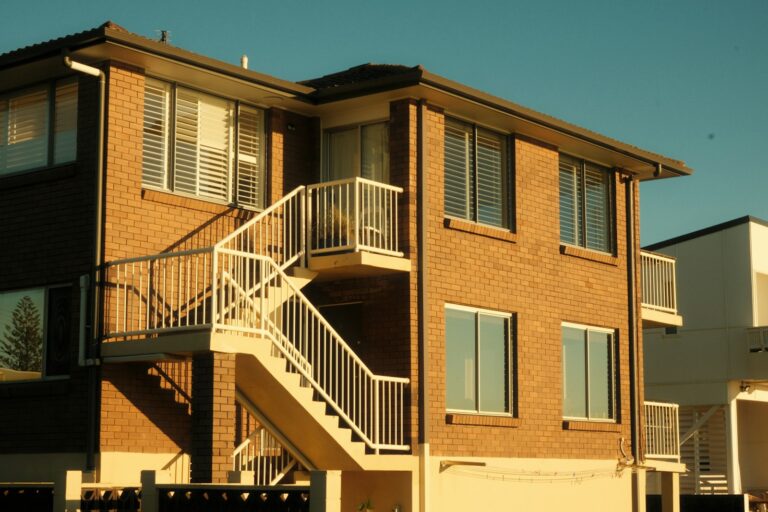


Our Buy Box
What We Buy In Georgia
Asset Type
Multifamily, 5+ Units
Apartment buildings and income-producing residential.
Size
5 – 100+ Units
Sweet spot: 15–25 units.
Condition
Stabilized To Distressed
Value-add, mismanaged, and high-vacancy properties welcome.
Deal Types
Listed Or Off-Market
Direct-to-owner, pocket listings, portfolios.
How Selling To Us Works
- 01
Submit The Deal
Send the address, unit count, asking price, and a rent roll or T-12 if you have them.
- 02
Initial Review
We review it against our buy box and give clear feedback — typically within 48 hours.
- 03
Underwriting & LOI
If it fits, we underwrite in detail and submit a written letter of intent.
- 04
Diligence & Close
Inspections and financing on the agreed timeline, then a professional, predictable closing.
Georgia Seller FAQ
What should I check before I sell commercial property in Georgia?
Start with rents and vacancy, since buyers do. Georgia median gross rent was $1,393 a month and rental vacancy 6.8% in the Census Bureau's 2020-2024 ACS. Then check the assessment notice, because Georgia taxes real property at 40% of fair market value each year.
Does Georgia charge a transfer tax when an apartment building sells?
Yes. O.C.G.A. 48-6-1 imposes $1.00 for the first $1,000 of value and 10 cents for each additional $100 on deeds conveying realty, where the value exceeds $100. That equals roughly $1 per $1,000 of consideration, excluding liens that stay in place.
Can Georgia cities limit how much I raise rents?
No. O.C.G.A. 44-7-19 prohibits any Georgia county or municipal corporation from enacting or enforcing an ordinance that regulates the amount of rent on privately owned single-family or multiple-unit residential rental property. Local governments may still set terms for property they own.
Which Georgia counties have the tightest rental markets?
Among the seven Georgia counties profiled here, Gwinnett County had the lowest rental vacancy at 5.1%, followed by Cobb County at 5.3% and Cherokee County at 6.1%, per the 2020-2024 ACS. DeKalb County had the highest at 10.9%, and Fulton County stood at 7.9%.
How do I sell commercial property in Georgia?
Send us the address, unit count, and a rent roll if you have one. We review Georgia apartment buildings of 5+ units against our buy box and give clear feedback, typically within 48 hours.
Do you buy apartment buildings everywhere in Georgia?
Yes. We evaluate multifamily properties statewide, including Atlanta, Savannah, Augusta, Columbus, Macon, Athens, Sandy Springs, Roswell, smaller cities, and suburban markets. Every property is reviewed on its own fundamentals.
What types of Georgia multifamily properties do you buy?
Apartment buildings and income-producing residential properties with 5 or more units — stabilized, value-add, mismanaged, or distressed. Our sweet spot is 15–25 units, and we review larger communities with capital partners.
Can I sell rental property in Georgia with tenants in place?
Yes. We buy apartment buildings with tenants in place and keep existing leases intact. As a commercial real estate buyer focused on 5+ unit properties, we underwrite the current rent roll as it stands.
What do I need to sell my apartment building in Georgia?
An address and unit count are enough to start. A current rent roll and trailing twelve-month statement let us move to a written offer faster.
Do I need to make repairs before selling?
No. We underwrite properties as they are today, including deferred maintenance and vacancy.
From The Blog
Georgia Market Insights
Submit A Deal
Have A Property In Georgia?
Tell us about it. Owners, agents, brokers, and deal finders are all welcome — conversations are confidential.

Tell Us About
Your Property
Neighboring States
Compare rent control & property tax rules by state · All cities A–Z