Santa Fe apartment submarkets divide into three broad parts: the historic core, where strict design review keeps the stock small and older; the St. Michael’s Drive and Midtown corridor, where the city is steering new density; and the Southside, where many of the larger complexes and the master-planned growth sit. Each area has a different mix of buildings, renters and rules, so an owner’s results depend heavily on which part of the city a property is in.
This guide covers each submarket in turn, then looks at citywide forces that cut across all of them: the renter profile, the affordable housing requirements in the Santa Fe Homes Program, short-term rental limits and the size of the development pipeline. It relies on the Census Bureau and on the City of Santa Fe’s own planning, housing and redevelopment pages, with the Santa Fe New Mexican used for project details.
Santa Fe’s renter base in numbers
Santa Fe is the capital of New Mexico and the seat of Santa Fe County. The Census Bureau’s QuickFacts profile for Santa Fe estimates 89,837 residents on July 1, 2025, up 2.7% from an April 2020 base of 87,508. The 2010 Census counted 67,947, so the city is far larger than it was a decade and a half ago.
The American Community Survey for 2020 to 2024 shows:
- Households: 41,921, averaging 2.09 persons each, a small household size that favors studios, one-bedrooms and smaller two-bedroom units.
- Tenure: 63.6% owner-occupied, so about 36% of households rent, roughly 15,000 renter households.
- Rent: Median gross rent of $1,463.
- Income: Median household income of $73,482.
- Home values: Median owner-occupied home value of $444,900.
- Age: 26.2% of residents are 65 or older.
The high home values and older population shape the rental market. With the median home valued at roughly six times the median household income, many younger workers and newcomers rent for longer, while the large 65-and-older population adds demand for accessible, low-maintenance units.
Affordability pressure
The city’s Five-Year Housing Strategy executive summary, prepared by Root Policy Research using 2021 survey data, found that 6,559 renter households were cost burdened, more than half of all renters. It estimated a shortage of 2,660 rental units affordable to households below 50% of area median income, including 1,299 units for households at or below 30% and 1,361 units for households between 30% and 50%. It also estimated that about 3,500 renter households earning at or below 80% of area median income were severely cost burdened. Those numbers describe the lower end of the market, where demand far exceeds the supply of affordable units. The plan set a goal of building 300 rental homes through tax credit, supportive housing, accessory dwelling unit and small multifamily projects, including in Midtown and Tierra Contenta.
The historic core: Downtown, Eastside and Westside-Guadalupe
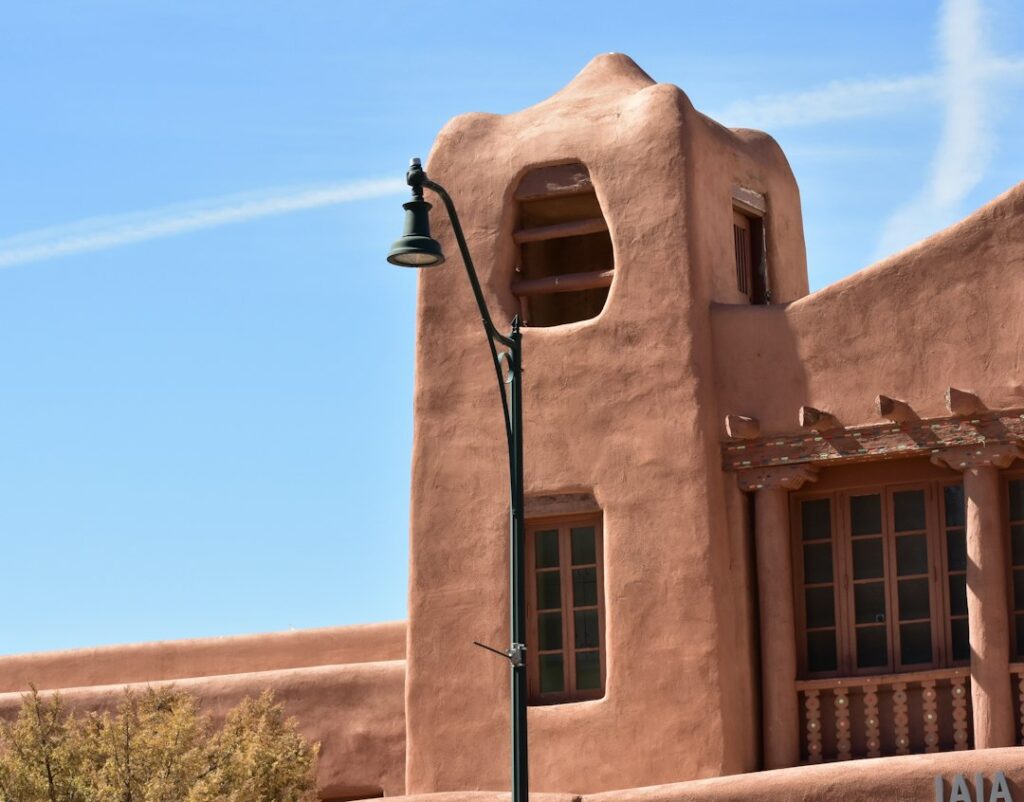
Santa Fe has five designated historic districts: Downtown and Eastside, Don Gaspar Area, Westside-Guadalupe, Historic Transition and Historic Review. New construction and exterior changes in these districts go before the Historic Districts Review Board, which reviews projects for compatibility in style, form, color, height, proportion, texture and material.
What the apartment stock looks like
Rental housing in the historic districts tends to be small in scale: older buildings, small courtyard-style complexes and houses with casitas or added units. Design review and small parcels make large modern complexes difficult to build there, and that scarcity of new supply is the main feature of the submarket.
What it means for owners
- Steady demand, limited competition. New supply in the historic core comes slowly, so well-kept units face less direct competition from new buildings than units elsewhere in the city.
- Higher renovation costs. Exterior work, windows and materials often need board approval, which adds time and cost to capital projects.
- Short-term rental pressure. Small units near the Plaza and downtown can also be attractive as visitor lodging, which pulls some of them out of the long-term market. The city’s short-term rental rules, covered below, limit how much of that conversion can happen.
The St. Michael’s Drive and Midtown corridor
The city sees St. Michael’s Drive as its main opportunity for new density. Its St. Michael’s Drive planning page describes seven lanes of traffic in the mile and a quarter between St. Francis Drive and Cerrillos Road, carrying about 25,000 to 30,000 vehicles a day, lined largely with shopping centers and older car dealerships with large parking lots. The city’s long-range vision for the corridor calls for higher-density, more affordable housing for rent and ownership.
The Midtown District
At the center of that corridor is the Midtown District, the former college campus the city bought in 2009. The city describes a 64-acre redevelopment with 30% of housing units dedicated to affordable housing and nearly eight acres of open space. Phase 1, running from 2024 to 2026, includes mixed-use and affordable housing development.
The first residential project has arrived, nearly two decades after the city’s purchase. The Santa Fe New Mexican reported in August 2026 that the Art House apartments, a four-story, 129-unit building at 1001 Midtown Calle Central off St. Michael’s Drive, received its certificate of occupancy in late August after construction began in March 2025. The developer is Phillip Gesue of Aspect Media Village.
More Midtown housing in the pipeline
The same report described several projects that were not yet approved:
- A 98-unit workforce housing project from the same developer, priced near the upper end of the area median income range.
- A Homewise plan for 74 homes on 2.2 acres, 40% of them affordable, under an exclusive negotiating agreement with no final deal.
- A Blue Mesa Center for the Arts proposal that includes 43 live-work townhouses.
The New Mexican also reported that the city’s infrastructure costs at Midtown had reached $54 million, plus up to $23 million for parks. That public investment is meant to make the district attractive to residents and developers.
What it means for owners
Older apartment buildings near St. Michael’s Drive will see the most direct change. New buildings will raise the quality bar and may lift rents at the top of the market, while new retail, parks and infrastructure can make the surrounding blocks more attractive. Owners of older properties along the corridor should expect more competition during lease-ups and should plan improvements around what new buildings offer.
The Southside: Cerrillos Road, Las Soleras and Tierra Contenta
The Southside, broadly the part of the city south and west of the historic core along and beyond Cerrillos Road, is home to many of Santa Fe’s larger apartment communities and its master-planned neighborhoods.
Las Soleras and newer complexes
One example is the Arcadia apartments at 5300 Las Soleras Drive near Cerrillos Road. The Santa Fe New Mexican reported that construction began around January 2023 on the 332-unit complex on a 17-acre site, built by DeBartolo Development, with first units expected in spring 2024. A syndicated version of that report noted that the developer paid into the city’s Affordable Housing Trust Fund rather than setting aside 15% of the units.
Tierra Contenta
Tierra Contenta is a master-planned community the city began in the early 1990s, when it bought about 1,400 acres. According to a 2021 city news release, about 2,300 homes had been built there since the mid-1990s, more than 40% of them sold or rented at subsidized prices to households earning under 80% of area median income. Phase 3 covers about 400 acres, with 288 acres in Phase 3A owned by the Tierra Contenta Corporation.
What it means for owners
- Much of the new competition is here. Large complexes on the Southside set the standard for modern amenities, and new deliveries often lease up with concessions.
- Family renters. The area’s mix of townhomes, single-family homes and apartments tends to suit larger households than the small units of the historic core.
- Affordable housing nearby. The share of subsidized homes in Tierra Contenta means market-rate buildings compete with income-restricted options for some renters.
Citywide rules that shape every submarket
The Santa Fe Homes Program
Santa Fe’s inclusionary housing law, the Santa Fe Homes Program in Chapter 26 of the city code, requires new rental developments to set aside 15% of units for income-qualified renters, compared with 20% for homeownership projects. In 2016, the city amended the program to let developers of market-rate multifamily housing pay a fee in lieu of building the units, and that option was made permanent in 2020. The fee is recalculated each year, and rental projects of 12 units or fewer can pay a small-project fee.
For owners of existing buildings, the program matters in two ways. It raises the cost of new market-rate construction, which supports the value of existing units. And because fees go to the trust fund rather than on-site units, much of the new affordable supply comes from dedicated projects in places like Midtown and Tierra Contenta.
Short-term rental limits
The city’s short-term rental rules define a short-term rental as a unit rented for less than 30 days. In multi-unit developments of four or more units, no more than 25% of units may be rented as short-term rentals, and no more than 12 permits may be issued for a single multi-unit structure. A 50-foot spacing rule applies between short-term rentals, and permits expire every December 31. Separately, a 2020 ordinance capped residential-zone short-term rental permits at 1,000. Owners considering mixing furnished stays with long-term leases should confirm the current rules before making plans, since short-term rental rules are a recurring topic of local debate and can change.
The development pipeline across Santa Fe
The city publishes a residential pipeline snapshot that tracks housing projects through approval and construction. As published in October 2026, it lists:
- Under review: 918 dwelling units
- Approved: 4,185 units
- Under construction: 3,146 units
- Completed since 2017: 2,331 units
Not every approved unit will be built, and the snapshot includes single-family and townhome projects as well as apartments. Still, the numbers show that the city expects much more housing in the coming years than it has added since 2017.
Reading Santa Fe apartment submarkets as an owner
Bringing the submarkets together:
- Historic core: Expect stable demand and little new competition, but budget extra time and money for renovations under design review and keep a close eye on short-term rental rules.
- St. Michael’s Drive and Midtown: Expect the most visible change. New buildings and public investment will reshape the corridor, raising both competition and the area’s appeal.
- Southside: Expect continued new supply and strong competition from modern complexes. Older buildings compete on price, location and management quality.
Passive investors evaluating Santa Fe through a syndication or fund can read our overview of passive multifamily investing, which explains how sponsors, investors and properties fit together.
Where Santa Fe fits in New Mexico’s apartment market
Santa Fe is a small capital city with high home values, an older population and an active affordable housing program. Its submarkets differ more than the city’s size would suggest, so the location of a building within the city matters as much as citywide trends. More context on other cities in the state is on our New Mexico markets page. Owners considering a sale can read about selling an apartment building in Santa Fe on our city page.
For any owner, the most useful step is to check the city’s residential pipeline page a few times a year and note the projects closest to your building. In a city of about 90,000 people, one large complex on the Southside or one new Midtown building can change the competitive picture for an entire submarket.