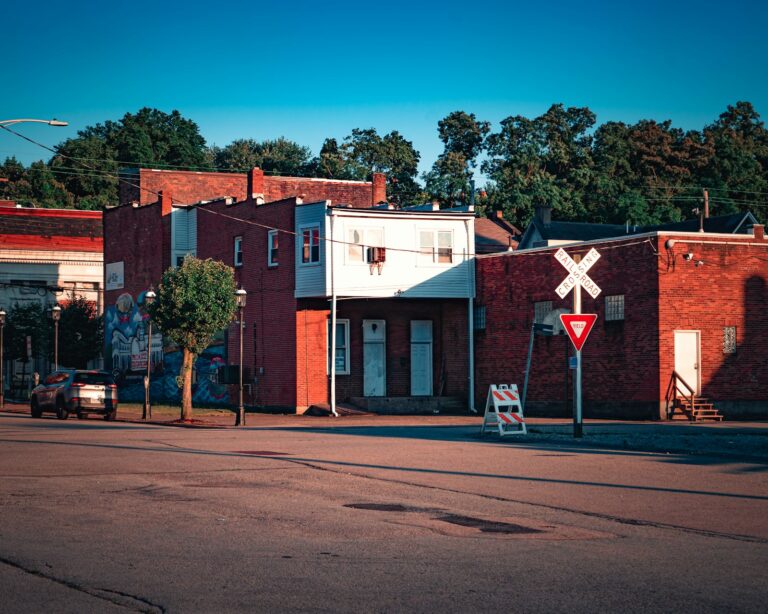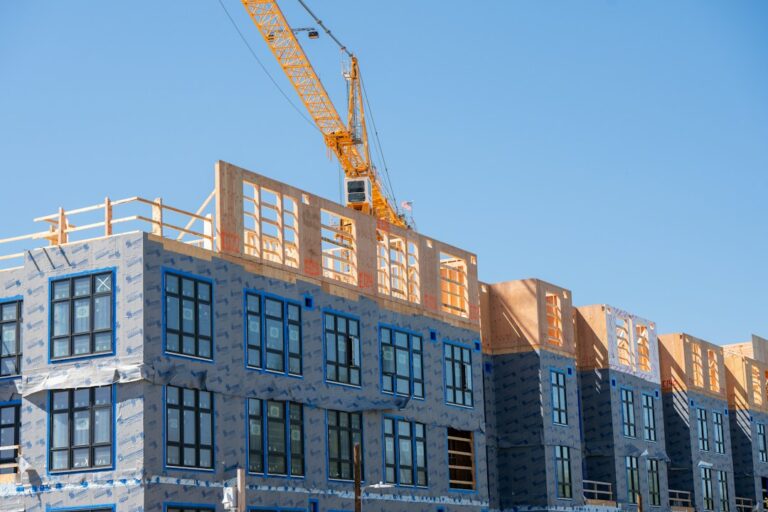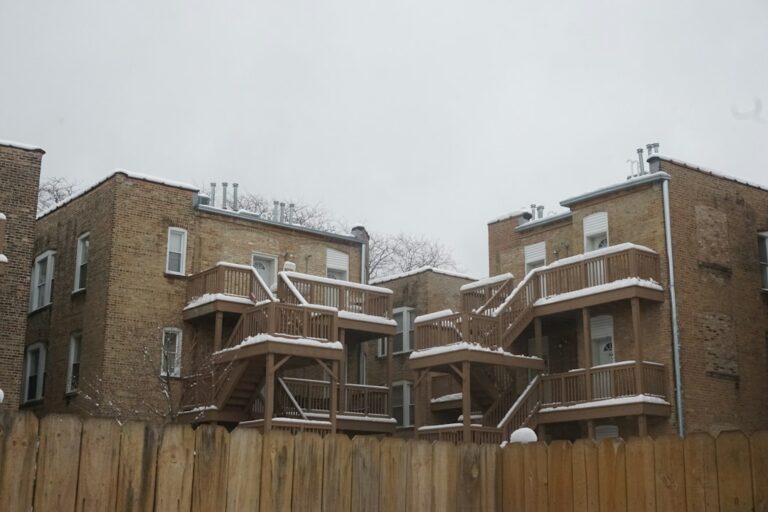
Bozeman apartment development entered a new phase on February 1, 2026, when the city’s rewritten Unified Development Code took effect, replacing the entire zoning chapter and map under Ordinance 2151. The rewrite, together with a set of 2023 Montana laws that require cities like Bozeman to allow apartments in commercial zones, duplexes on single-family lots and accessory dwelling units, has widened where multifamily housing can be built at the same time that permit applications for apartment buildings roughly doubled in 2025.
For owners of existing apartment buildings in Bozeman, those changes matter in two directions. They make new competition easier to build, and they can also open new options for owners whose land or buildings could support more units. This guide explains what changed, what the city’s own permit data shows and how owners can think about the effect on existing properties.
Growth that outran the old rules
Bozeman’s population growth is the starting point for every planning decision the city has made in recent years. The Census Bureau’s QuickFacts comparison for Bozeman and Gallatin County estimates the city’s population at 58,814 on July 1, 2025, up 9.7% from an April 2020 base of 53,596. Gallatin County grew 8.2% over the same period, to 128,740 residents.
Housing costs rose with that growth. The same Census profile shows:
- A median value of owner-occupied homes in Bozeman of $687,900 for 2020 to 2024.
- A median gross rent of $1,717 over the same period.
- A median household income of $85,747 in 2024 dollars.
- An owner-occupied housing rate of 44.7%, meaning roughly 55% of the city’s 23,970 households rent.
- 1,544 residential units authorized by building permits across Gallatin County in 2025.
With home values close to $700,000 and a majority of households renting, Bozeman has a large and relatively high-income renter base. At the median rent and median income, rent equals about 24% of household income, which helps explain why apartment developers have continued to pursue the market. But the old zoning code, which had been amended piece by piece over decades, limited where and how densely multifamily housing could be built. Both the city and the state concluded that the rules needed to change.
What Ordinance 2151 changed in Bozeman
The Bozeman City Commission voted on December 16, 2025, to adopt the updated Unified Development Code, according to the city’s Building our Future Together project page. The ordinance repealed and replaced all of Chapter 38 of the municipal code, the chapter that contains the city’s zoning and development rules, along with the associated zoning map. It took effect on February 1, 2026.
The Bozeman Daily Chronicle’s report on the adoption notes that work on the update began in the summer of 2022 and lists the key changes as increased diversity of housing options, consolidated zoning districts and strengthened zone edge transitions. The city’s project page adds several specifics:
- The residential RA district was reworked to consolidate the former RS, R1 and R2 districts, which simplifies the map for lower-density residential areas.
- At final adoption, the commission made one change to the text, setting a maximum building height of 90 feet in the B-3 central business district in Section 38.220.050.B.1.
- No changes were made to the draft zoning map at final adoption.
- The city tied the update to its deadline to comply with the Montana Land Use Planning Act, which it lists as May 17, 2026.
Reading the new code for a specific parcel
Because the ordinance replaced the entire chapter rather than amending it, owners should not assume that a property keeps its old district name or rules. The practical step is to look up the parcel on the adopted zoning map, identify its new district and then read the use tables, dimensional standards, parking rules and transition requirements that apply to that district. For a building that sits next to a lower-intensity district, the new zone edge transition standards can affect how tall or how close to the property line an addition or new building can be. Owners who are unsure how the standards apply can request a zoning verification from the Community Development Department; the department’s 2025 summary shows 46 zoning verification applications that year, up from 25 the year before.
The state laws behind the rewrite
Bozeman did not rewrite its code in isolation. In 2023, the Montana Legislature passed several land-use bills that apply directly to the city. The Legislature’s own summary of 2023 land use legislation describes them:
- SB 382, the Montana Land Use Planning Act, applies to cities of 5,000 or more people in counties of 70,000 or more, and the summary lists Bozeman among them. Cities that met the threshold when the law took effect on May 17, 2023, had three years to adopt a land use plan, zoning and subdivision rules that fit the new framework. The land use plan and future land use map must be reviewed every five years.
- SB 245 requires cities of more than 5,000 people to allow multiple-unit dwellings, defined as buildings with five or more units, and mixed-use developments in commercial zones. Cities may not require more than one off-street parking space per unit, except where a parking agreement or accessibility rules require more. In a qualifying mixed-use project, nonresidential uses must be less than 50% of the floor area and limited to the first floor.
- SB 323 requires cities of more than 5,000 people to allow duplex housing on lots where single-family homes are permitted, and bars zoning rules that are more restrictive for duplexes.
- SB 528 requires cities and towns with zoning to allow at least one accessory dwelling unit on a lot with a single-family home. A detached ADU can be limited to 75% of the main home’s gross floor area or 1,000 square feet, application fees are capped at $250, and cities cannot require additional parking for the ADU.
For apartment investors, SB 245 is the most consequential. It means that commercial land in Bozeman, often located along arterials and near shopping and employment, is available for apartment buildings without a rezoning, and that parking, one of the largest cost drivers in multifamily construction, cannot be required at more than one space per unit.
The Bozeman apartment development pipeline in 2025 permit data
The clearest picture of the near-term pipeline comes from the city’s Community Development summary for calendar year 2025, which tracks building permit activity by type. For apartment buildings with five or more units, the summary shows:
- 38 permit applications received in 2025, up from 19 the year before.
- 912 new dwelling units counted for that category in 2025, compared with 755 the prior year.
- $175.9 million in valuation for issued apartment building permits.
Mixed-use buildings, which typically combine ground-floor commercial space with apartments above, showed 197 new dwelling units in 2025, compared with 23 the year before. Across all categories, the summary counts 1,253 new dwelling units in 2025, up from 987.
The mix is as telling as the total. Single-family dwellings accounted for 70 new units in the 2025 summary, down from 88, and townhouses for 8, down from 34. In other words, most of Bozeman’s new housing activity is now concentrated in apartment and mixed-use buildings rather than detached homes, which is consistent with the direction of both the state laws and the new local code.
Small-scale infill in the same report
The smaller building types that the 2023 state laws were meant to encourage show more modest numbers. The 2025 summary counts 14 new duplex units, down from 30 the year before, 21 triplex units, the same as the prior year, and 24 fourplex units, compared with 28. Accessory dwelling units accounted for seven new units, compared with eight. Those figures suggest that, at least in the first years after the state reforms, the bulk of Bozeman’s new rental supply is coming from larger apartment and mixed-use buildings rather than from backyard cottages and duplex conversions, which matters for owners of mid-size buildings because that is the product they compete with most directly.
What the numbers do and do not say
Permit data measures intent and authorization, not finished buildings. Applications can be withdrawn, projects can be delayed by financing or construction costs, and large buildings often take two years or more to move from permit to occupancy. The same summary records 60 occupancies in the apartment building category in 2025, a reminder that deliveries lag permits. Owners should treat the 2025 figures as a signal of what may open in 2027 and later rather than as a measure of supply already on the market.
Annexation and the growth policy at the city’s edges
The new code sits inside a longer planning framework. The City Commission adopted the Bozeman Community Plan 2020, the city’s growth policy, on November 17, 2020. The city’s annual implementation report for July 2024 through June 2025 states that 27 annexations covering about 680 acres had been finalized since the plan was adopted, and that 15 of those annexations wholly or partly closed existing gaps in the city’s boundaries. The same report notes that the city simplified its annexation policy in spring 2025 through Resolution 2025-07 and updated its incentives for affordable housing in February 2025.
Annexation matters to apartment owners because land brought into the city gains access to city water and sewer and becomes subject to city zoning, which is what makes larger multifamily projects feasible on the edges of town. As annexed land is zoned and served, new apartment communities tend to appear first on the periphery, where land is cheaper, rather than next to established buildings in older neighborhoods.
Montana State University and the demand side
Supply is only half of the equation. Montana State University, based in Bozeman, is a major source of renter demand in the city. MSU reported a record fall 2026 enrollment of 17,477 students, along with its largest-ever incoming first-year class. That followed a previous record of 17,165 students in fall 2025.
Students who move off campus after their first year, graduate students and university employees all draw on the city’s rental stock. Combined with population growth of nearly 10% since 2020 and a for-sale market where the median home value is close to $700,000, that demand has kept the renter share of Bozeman households above half.
The interaction between rising enrollment and a growing apartment pipeline will shape the market in the next few years. If new buildings arrive faster than demand grows, the result is likely to be more concessions and slower rent growth, especially for newer properties competing with one another. If enrollment and in-migration keep pace, the new supply may be absorbed without much effect on established buildings.
How new supply affects existing apartment buildings
For owners of older apartment buildings, the effect of new construction depends on where a building sits in the market:
- Older, smaller buildings with lower rents usually compete less directly with new construction, which tends to lease at the top of the market. But when new buildings offer concessions during lease-up, some renters trade up, and older properties can feel the pressure at the margin.
- Buildings near commercial corridors may see new apartment neighbors more quickly, because SB 245 allows apartments in commercial zones without a rezoning.
- Properties in the consolidated RA district and other lower-density areas will face more small-scale infill, such as duplexes and ADUs allowed under SB 323 and SB 528, rather than large apartment complexes.
- Downtown buildings in the B-3 district now have a defined 90-foot height maximum, which sets the upper bound for what can be built around them.
Opportunities for existing owners
The same rules that ease new construction can create options for current owners. A building on a lot that is larger than the existing structure needs may have room for additional units, an accessory building or a mixed-use addition under the new district standards. An owner of a small commercial property may be able to add apartments under SB 245’s commercial-zone allowance. And an owner considering a sale can point a buyer to whatever additional development capacity the new code allows on the site, which can support value beyond the building’s current income.
Owners who want to understand what their building is worth on its current income can start with our apartment building value calculator, then compare that figure with the site’s potential under the new code.
Next steps for owners of Bozeman buildings
Bozeman’s development rules have changed substantially since 2023, and owners who understand the new framework will make better decisions. A practical checklist:
- Look up each property on the zoning map adopted with Ordinance 2151 and confirm its new district, permitted uses, height limit and transition standards.
- Identify nearby commercial parcels, since SB 245 allows apartment buildings there with no more than one parking space per unit.
- Track the city’s permit reports. The 2025 summary showed apartment applications doubling to 38, with 912 new units counted for the category, and the next year’s figures will show whether that pace continues.
- Watch lease-up activity at new buildings for concessions, which are an early sign of pressure on rents in older properties.
- Follow MSU enrollment, which reached a record 17,477 students in fall 2026 and remains a central source of renters.
- Evaluate whether a property has unused development capacity under the new code, either for the owner’s own use or as part of its value in a sale.
For local context on transactions, see our page on selling an apartment building in Bozeman, and for the statewide picture, our Montana market overview. Bozeman remains a growing, renter-majority city with strong university demand. The new code changes the competitive landscape around existing buildings, and owners who read it carefully will be better placed to judge both the risks and the opportunities it creates.