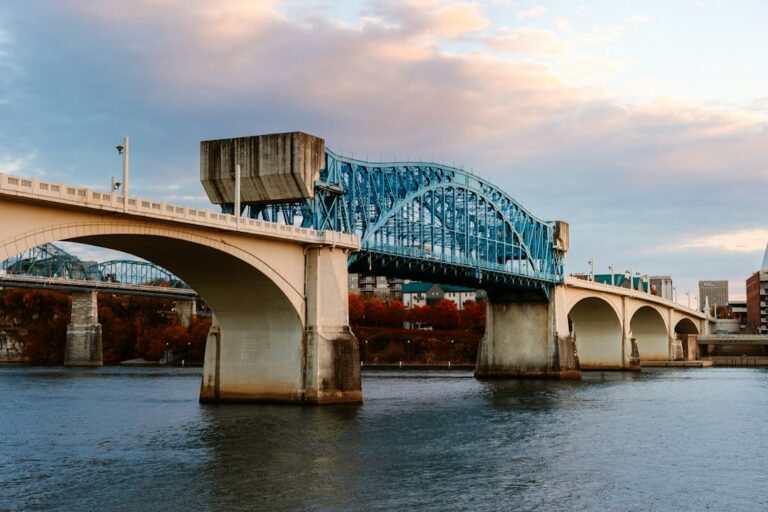

Fort Campbell shapes the Clarksville rental market more than any other single force: the post has roughly 28,000 to 30,000 active-duty soldiers, and about two-thirds of assigned soldiers and their families live off post, most of them in and around Clarksville. Add a population that grew by more than 22,000 people between 2020 and 2025, a growing manufacturing base and a record-enrollment university, and you get a city where renters make up close to half of all households and apartments stay nearly full.
This article walks through the verified numbers behind that demand: who rents in Clarksville, what the military housing allowance signals about rent levels, which employers are adding jobs, what the city’s own housing study found about supply, and the military-specific lease rules that shape turnover.
Why the Clarksville rental market runs on Fort Campbell
Fort Campbell straddles the Kentucky-Tennessee line. Its mailing address and identification are in Kentucky, but according to the Military OneSource installation overview for Fort Campbell, nearly two-thirds of the post’s land lies in Tennessee. The installation touches four counties: Montgomery and Stewart in Tennessee, and Christian and Trigg in Kentucky. Clarksville, the seat of Montgomery County, is the largest city next to the gate.
The size of the population tied to the post is what makes it so important for housing. Military OneSource lists 30,113 active-duty personnel, about 51,480 family members, 6,422 civilians and 2,179 contract employees, and says the installation supports more than 241,000 people once military retirees and their families are counted. The Kentucky Commission on Military Affairs’ February 2026 defense activity report gives a slightly lower, more recent manning figure of 28,200 assigned soldiers for fiscal year 2025, plus about 2,500 associated military personnel and 8,300 full-time Army civilians and DoD contract employees.
The post is home to the 101st Airborne Division (Air Assault), the 5th Special Forces Group (Airborne) and the 160th Special Operations Aviation Regiment (Airborne). Those units are large, they deploy and rotate on Army schedules, and their soldiers are young. That last point matters for rental demand, because younger households are far more likely to rent than to buy.
On-post housing covers only part of the need
Military OneSource counts 4,557 family housing units and 9,838 barracks spaces on the installation. Set against tens of thousands of soldiers and family members, that inventory cannot house everyone, and the same overview states that about 66% of assigned soldiers and their families live off post in Christian or Trigg County, Kentucky, or Montgomery or Stewart County, Tennessee. Montgomery County, with Clarksville at its center, is the largest of those housing markets by a wide margin.
Demand does not end when a soldier leaves the Army, either. The Kentucky commission’s report says 400 to 500 soldiers a month separate from the Army at Fort Campbell, and about 35% of them stay in the area, a rate it describes as at least 10 percentage points above the norm for Army installations. Many of those new veterans need housing while they start civilian jobs or school, and a share of them become long-term local renters.
Population growth in Clarksville, TN by the numbers
The Tennessee State Data Center’s analysis of the Census Bureau’s Vintage 2025 city estimates puts Clarksville’s population at 188,829 as of July 1, 2025. That is an increase of 22,040 people, or 13.2%, from the April 2020 estimates base. In raw numbers, only Nashville added more residents among Tennessee cities over that period. Clarksville is now within a few thousand people of passing Chattanooga as the state’s fourth-largest city.
Montgomery County as a whole reached 249,935 residents on July 1, 2025, up 3,654 (1.5%) in a single year, according to the State Data Center’s review of the Vintage 2025 county estimates. That gain ranked sixth in Tennessee by numeric growth. One detail stands out: Montgomery was the only Tennessee county where natural increase, meaning more births than deaths, was the main source of population change in 2025. That fits a county with a young, military-heavy population, and it means growth here is less dependent on people moving in from elsewhere than it is in many Sun Belt suburbs.
At the metro level, the Clarksville TN-KY metropolitan area, which includes the Kentucky side of the post, grew from about 321,800 people in 2020 to about 349,000 in 2025, based on Census Bureau resident population figures published through the St. Louis Fed’s FRED database. City planning staff have said that several thousand people move to Clarksville every year.
Who rents in Clarksville: tenure, rents and building types
Census Bureau American Community Survey (ACS) data show how large the renter base has become. In the ACS 2020-2024 five-year estimates, Clarksville had 67,832 occupied housing units, of which 30,149 were renter-occupied. That is a renter share of about 44%. The single-year ACS 2024 estimate is higher, at 35,678 renter households out of 72,910, or roughly 49%, though one-year figures for a city this size carry wider margins of error. For comparison, about one-third of Tennessee households rent statewide in the 2024 one-year data.
Rents have moved up with that demand. Median gross rent, which includes contract rent plus estimated utilities, was $1,356 a month in Clarksville in the ACS 2024 one-year estimates, compared with $1,284 for Tennessee. The five-year figure for 2020-2024 was $1,307. Keep in mind that a median across all occupied rentals blends long-tenured leases with new ones, so asking rents on recently turned units typically run above it.
Where Clarksville renters actually live
The building mix matters for anyone who owns or studies apartments. The same 2020-2024 ACS table on tenure by units in structure shows how Clarksville’s 30,149 renter households were housed:
- Single-family detached homes: 10,230 renter households, about 34%.
- Attached homes, duplexes and 3-4 unit buildings: 9,993 households, about 33%.
- Buildings with 5 to 19 units: 6,623 households, about 22%.
- Buildings with 20 or more units: 2,659 households, about 9%.
- Mobile homes and other: 644 households, about 2%.
In other words, roughly 31% of Clarksville renters live in buildings with five or more units, and two-thirds live in single-family homes or small multiplexes. Small and mid-size apartment buildings compete directly with rented houses and townhomes, a pattern common in military towns where families moving on orders look for space, a yard and a short commute to the gate.
How BAH sets a reference point for rents
Basic Allowance for Housing (BAH) is the monthly payment service members receive when they live off post. It is set by military housing area, not by ZIP code, and Fort Campbell has its own housing area (code KY106) that covers the Clarksville area. Because so many local renters receive it, BAH works as a visible reference point for what a large share of tenants can pay.
According to the Department of War announcement of 2026 BAH rates, rates nationwide rose an average of 4.2% effective January 1, 2026. The department builds each area’s rates from median market rent plus utilities for six housing profiles, using Census surveys, commercial rental databases, listings and input from local installation housing offices. Members also absorb a cost share of 5% of the national average housing cost for their grade. Rate protection means a member’s BAH does not fall while they stay at the same location, even if the local rate drops.
For the Fort Campbell housing area, the 2026 monthly rates drawn from the DoD rate files, as reported consistently by several BAH lookup sites, are:
- E-4: $1,743 with dependents; $1,470 without.
- E-5: $1,815 with dependents; $1,593 without.
- E-6: $2,100 with dependents; $1,671 without.
- O-3: $2,496 with dependents; $1,995 without.
Two things are worth noticing. First, these figures sit above Clarksville’s 2024 median gross rent of $1,356, which helps explain why newer units with modern finishes can lease at higher price points in this city than local household incomes alone would suggest. Second, Fort Campbell’s 2026 rates were mixed against 2025: the E-5 with-dependents rate rose $3, while the E-5 without-dependents rate fell $42 and the E-4 with-dependents rate fell $30. BAH follows the local market; it does not guarantee rent growth, and anyone using it as a benchmark should check the current year’s table on the Defense Travel Management Office site.
Employers beyond the gate
Fort Campbell is the anchor, but Clarksville has spent the past decade adding a manufacturing base that brings a different kind of renter: civilian workers, engineers and managers relocating for plant jobs. The main announced projects, drawn from Tennessee Department of Economic and Community Development releases, include the following.
- Korea Zinc: In December 2025 the state announced that Korea Zinc selected Tennessee for its first U.S. operations with an investment of more than $6.6 billion, described as the largest single private corporate investment in state history. The company plans a U.S. headquarters and manufacturing facility in Clarksville, with 420 of the project’s 740 planned jobs in Montgomery County over five years.
- LG Chem: Announced in November 2022, a cathode materials plant for electric vehicle batteries on 420 acres at the Allensworth site, with an investment of about $3.2 billion and roughly 860 planned jobs.
- Hankook Tire: A $612 million third-phase expansion announced in 2022 adds the company’s first U.S. truck and bus tire line and 397 jobs over five years at a plant that is more than two million square feet.
- LG Electronics: A washing machine plant completed in 2018 as a $360 million smart factory, expanded in 2021 with a $20.5 million investment and 334 jobs, bringing its Clarksville employment to about 1,000.
Announced jobs and actual hiring are not the same thing, and large plant projects can be phased, delayed or resized. Still, these projects broaden the employment base beyond the Army, which matters for a rental market that would otherwise rise and fall with deployment cycles and force structure decisions.
Austin Peay State University
The third demand driver is Austin Peay State University, which reported a record fall 2026 enrollment of 11,338 students, up from the previous record of 11,161 a year earlier. The university welcomed 1,918 first-time freshmen, its largest incoming class since 2018. About 35% of the student body is active-duty, veteran or military-family, which ties the university’s growth back to the same military population that drives so much of the city’s housing demand.
Supply pressure in the Clarksville rental market
In July 2025, the Clarksville-Montgomery County Regional Planning Commission and the city’s Neighborhood and Community Services department released a housing needs assessment prepared by Bowen National Research. As reported by local outlets ClarksvilleNow and NewsChannel 5, its main findings were:
- Housing gap: 15,193 additional units needed over five years, including 6,598 rental units and 8,595 for-sale units.
- Apartment occupancy: 96.7% overall among surveyed multifamily properties, 96.3% for market-rate units and 100% for tax credit and subsidized units. The study treated 94% to 96% as a healthy range.
- Waitlists: nearly 70% of affordable properties and just over 18% of market-rate properties had them.
- Largest rental gap: units renting between $1,607 and $2,409 a month.
- Cost burden: 43.6% of renter households pay more than 30% of income for housing, versus 43.4% statewide, and nearly 18% of renters (5,447 households) pay more than half.
- For-sale market: a 1.4% availability rate among owner-occupied units, well below a healthy 2% to 3%.
Taken together, those numbers describe a market where demand has been running ahead of supply in both rentals and ownership housing. A tight for-sale market also keeps some would-be buyers renting longer. The planning commission has said it intends to repeat the assessment every two years, so the next update should show whether new construction has narrowed the gap.
The study’s cost-burden finding is also a reminder of the market’s limits. With nearly 44% of renters already stretched, rent growth on older, lower-priced units is constrained by what local civilian households can afford, even while BAH-supported tenants can pay more for newer product.
Military lease rules and turnover
A military town has its own lease rhythm. Permanent change of station (PCS) moves cluster in the summer, units deploy for months at a time, and soldiers separate or retire every month. Federal law shapes how leases end in each of those cases.
Under the Servicemembers Civil Relief Act, a tenant who signs a lease and then receives PCS orders, deployment orders for at least 90 days, or separation or retirement orders can end a residential lease early without penalty. The Justice Department’s guide to ending residential leases early explains that the tenant must give written notice with a copy of the orders or a commanding officer’s letter. For a monthly lease, the termination takes effect 30 days after the next rent payment is due. The landlord must refund prepaid rent for the period after termination and cannot charge early termination fees or claw back rent concessions.
On the state side, Tennessee’s Uniform Residential Landlord and Tenant Act applies in counties with more than 75,000 residents according to the 2010 federal census, which includes Montgomery County. The Kentucky commission’s report notes that communities on the Kentucky side of Fort Campbell have not adopted the uniform act, which means landlords and tenants on either side of the state line can operate under different rules.
Risks and swing factors to watch
The same features that support demand also create risks that are specific to Clarksville. A balanced view includes these:
- Deployments and force structure: When large units deploy, some families leave the area, and Army stationing decisions can change the size of the post over time. A rental market this tied to one installation is exposed to decisions made in Washington.
- BAH resets: 2026 rates for some Fort Campbell grades fell slightly from 2025. Rents that are set close to BAH can stall when the allowance does.
- New supply: The housing study’s identified gap is an invitation to developers. If a large wave of new apartments arrives at once, occupancy and concessions at older properties can shift quickly.
- Project timing: Large plant investments can be delayed or resized, which can change the timing of civilian job growth.
- Affordability ceiling: With 43.6% of renters cost-burdened, operators of older properties have limited room to push rents.
Takeaways for building owners
If you own a small or mid-size apartment building in Clarksville, or are studying the market as a passive investor, a few practical points follow from the data:
- Know your tenant base. Track what share of your residents are military, civilian workers, students or veterans. Each group has different move timing and payment sources.
- Benchmark against BAH each January. Compare your rents by unit type with the current Fort Campbell rates for the grades most likely to rent from you.
- Plan for summer turnover. PCS season concentrates move-outs and move-ins, so lease expirations, make-ready crews and marketing should be staggered around it.
- Build SCRA terminations into your expectations. Early terminations are a normal part of operating here, so lease forms and vacancy budgets should reflect them.
- Watch the pipeline. Follow Regional Planning Commission agendas and the next housing needs update to see how much new rental supply is coming.
For a broader look at how local markets fit together, see our Tennessee multifamily market overview, and for how passive ownership of apartment buildings is structured, read our guide to passive multifamily investing. Owners weighing a sale can find local context on our Clarksville market page.
The bottom line on Clarksville renter demand
Clarksville’s rental demand rests on three pillars: a post with roughly 28,000 to 30,000 soldiers, most of whom live off base; a city that added more than 22,000 residents from 2020 to 2025; and a growing civilian job base led by manufacturing and Austin Peay State University. The city’s 2025 housing study found apartments more than 96% occupied and a five-year need for about 6,600 additional rental units. The pressure points are just as clear: BAH that can move in either direction, a renter population that is already stretched, and a construction pipeline that could change the picture. Following those indicators year by year is the most reliable way to understand where the Clarksville rental market is heading.