
Kentucky Multifamily Buyer
Sell Your Commercial Property In Kentucky
Kentucky offers affordable acquisition prices, a central logistics location, and steady demand anchored by manufacturing, healthcare, and universities.
- Clear feedback on your deal, typically within 48 hours
- 5 to 100+ units, stabilized or distressed, listed or off-market
- Owners, agents, and brokers welcome — every conversation is confidential
We buy:Tired landlordsEstate & trust sales1031 exchangesDeferred maintenanceHigh vacancyPartnership splits
Key Metros
Multifamily Markets In Kentucky
Every City We Cover
Browse Kentucky By County
Boone County
Christian County
Daviess County
Fayette County
Franklin County
Hardin County
Henderson County
Jessamine County
Madison County
McCracken County
Scott County
Warren County
Local Market Data
Kentucky Apartment Market
Figures gathered October 2026 from public market data.
To sell commercial property in Kentucky, start with the figures buyers price against. Statewide median gross rent was $967 a month and rental vacancy 4.6%, per the Census Bureau's 2020-2024 American Community Survey. Renters occupy 31.7% of occupied Kentucky homes, and 11.7% of Kentucky housing units sit in buildings with five or more units.
Those averages hide gaps between markets. Jefferson County, anchored by Louisville, posts a $1,149 median gross rent and Kenton County $1,069, both well above the statewide figure. Kentucky median household income reached $63,726. Below, Kentucky rents, five-year trends, county figures and the state's landlord and tax rules sit side by side, so an owner can see how a buyer will read a building before any offer arrives, whether it sits in Louisville or a smaller Kentucky market.
Rent growth
Kentucky median gross rent rose 26.7%, from $763 to $967, between the 2015-2019 and 2020-2024 ACS periods, per table B25064.Larger-building stock
Units in Kentucky buildings with five or more units rose 9.1% to 237,492 between the two ACS periods, per Census table B25024.Household income gains
Kentucky median household income rose 26.0%, from $50,589 to $63,726, between the 2015-2019 and 2020-2024 ACS periods, per table B19013.The Kentucky rental market at a glance
Kentucky had 574,561 renter households in the Census Bureau's 2020-2024 American Community Survey, or 31.7% of 1,814,469 occupied homes. Owners hold the other 68.3%. Buildings of five or more units hold 237,492 Kentucky housing units, 11.7% of the total, per ACS table B25024.
Kentucky rental vacancy stood at 4.6% in the 2020-2024 DP04 housing profile. Median gross rent was $967, about 18.2% of the $63,726 median household income. Even so, 45.4% of Kentucky renter households paid 30% or more of income on rent, per table B25070.
HUD's FY2027 Fair Market Rents put a two-bedroom unit between $909 and $1,442 across 120 Kentucky areas. The median across those areas was $925, below the $967 ACS median gross rent for all units.
Five-year trends in Kentucky
Kentucky median gross rent rose 26.7% between the 2015-2019 and 2020-2024 ACS periods, from $763 to $967 a month. Median household income grew 26.0%, from $50,589 to $63,726. Rents and incomes rose at almost the same pace, only 0.7 percentage points apart.
Kentucky added 5,974 renter households between the two periods, a 1.1% gain. Units in five-plus buildings rose 9.1%, adding 19,847 units. The larger-building stock grew about eight times faster than the renter base.
Kentucky county comparison
Median gross rent in the two largest Kentucky markets profiled here runs from $1,069 in Kenton County to $1,149 in Jefferson County. Both counties show 6.3% rental vacancy in the 2020-2024 ACS, above the 4.6% statewide rate.
| County | Median gross rent | Renter share | Share of units in 5+ buildings | Rental vacancy |
|---|---|---|---|---|
| Jefferson County | $1,149 | 37.9% | 21.0% | 6.3% |
| Kenton County | $1,069 | 29.3% | 17.2% | 6.3% |
Jefferson County, home to Louisville, is the more renter-heavy of the two, with renters in 37.9% of occupied homes and 21.0% of units in five-plus buildings. Kenton County lost 9.0% of its renter households between the ACS periods, while Jefferson County gained 5.0%.
HUD's FY2027 two-bedroom Fair Market Rent is $1,276 in the Louisville metro area covering Jefferson County. For Kenton County, in the Cincinnati metro area, it is $1,442.
Kentucky landlord, tax and transfer rules
Kentucky Revised Statutes Section 383.500 lets cities, counties and urban-county governments adopt the Uniform Residential Landlord and Tenant Act, but only in its entirety and without amendment. A buyer should confirm whether the local government where a building sits has adopted it.
Where the Act applies, KRS 383.580 requires landlords to hold deposits in a separate account and give signed damage listings at move-in and move-out. A landlord that skips either step cannot retain any part of the deposit.
Under KRS 383.580(7), a landlord who owes a refund must send notice to the tenant's last known address. After 60 days without a response, the landlord may keep the deposit. A clean deposit ledger lets a buyer confirm that liability before closing.
Kentucky taxes the grantor on real estate transfers at $0.50 for each $500 of value, under KRS 142.050. The county clerk collects it when the deed is recorded. On a $5,000,000 sale, that equals $5,000.
KRS 132.020 also limits state real property tax revenue growth to 4% a year, excluding new property. Local taxing districts set their own rates, so two Kentucky buildings of equal value can carry different bills.
What this means if you sell in Kentucky
Owners who sell commercial property in Kentucky are priced on rent rolls, vacancy and the local tax bill. A building in Jefferson County at 6.3% vacancy and $1,149 median rent reads differently from a rural one near the $967 statewide median.
Landlord-tenant rules also vary by location, because Kentucky lets each local government decide whether to adopt the Uniform Residential Landlord and Tenant Act. We check which rules govern the building before pricing deposits and lease terms.
Closing costs deserve a line-by-line look. The grantor pays the KRS 142.050 transfer tax, so we build it into the net proceeds before an owner compares offers.
We review Kentucky buildings of five or more units in Jefferson and Kenton counties and across the rest of Kentucky. Send the rent roll and the latest Kentucky tax statement, and we will set the property against these county figures.
Local Knowledge
Selling Multifamily In Kentucky
Every state has its own tax, legal, and market dynamics. A few things we factor into every Kentucky offer:
- Kentucky grantors pay a $0.50 per $500 transfer tax under KRS 142.050, collected by the county clerk at recording.
- Local governments may adopt the Uniform Residential Landlord and Tenant Act under KRS 383.500; confirm whether the building's locality has.
- Where the Act applies, KRS 383.580 requires separate deposit accounts and signed damage listings, or the landlord cannot keep deposits.
- Statewide rental vacancy was 4.6% in 2020-2024, while Jefferson and Kenton counties both ran 6.3%.
Seller Guides
Your Situation, Handled — Kentucky
From The Blog
Kentucky Market Insights

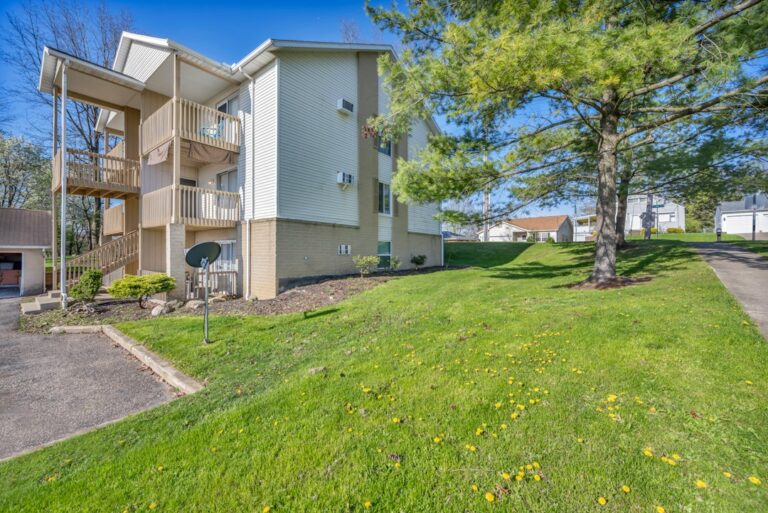

Our Buy Box
What We Buy In Kentucky
Asset Type
Multifamily, 5+ Units
Apartment buildings and income-producing residential.
Size
5 – 100+ Units
Sweet spot: 15–25 units.
Condition
Stabilized To Distressed
Value-add, mismanaged, and high-vacancy properties welcome.
Deal Types
Listed Or Off-Market
Direct-to-owner, pocket listings, portfolios.
How Selling To Us Works
- 01
Submit The Deal
Send the address, unit count, asking price, and a rent roll or T-12 if you have them.
- 02
Initial Review
We review it against our buy box and give clear feedback — typically within 48 hours.
- 03
Underwriting & LOI
If it fits, we underwrite in detail and submit a written letter of intent.
- 04
Diligence & Close
Inspections and financing on the agreed timeline, then a professional, predictable closing.
Kentucky Seller FAQ
What should I check before I sell commercial property in Kentucky?
Start with rents and vacancy, since buyers do. Kentucky median gross rent was $967 a month and rental vacancy 4.6% in the Census Bureau's 2020-2024 ACS. Then check deposit records and the transfer tax owed under KRS 142.050.
Does Kentucky charge a transfer tax when an apartment building sells?
Yes. KRS 142.050 taxes the grantor at fifty cents for each $500 of value, or fraction thereof, declared in the deed. The county clerk collects it as a condition of recording, and the tax is collected once per transaction.
Can Kentucky cities adopt their own landlord-tenant rules?
Only one set. KRS 383.500 authorizes cities, counties and urban-county governments to adopt the Uniform Residential Landlord and Tenant Act in its entirety and without amendment, and bars other ordinances on the subjects it covers.
How do Kentucky's two largest rental markets compare?
Jefferson County had a $1,149 median gross rent and 37.9% renter share in the 2020-2024 ACS. Kenton County had $1,069 and 29.3%. Both showed 6.3% rental vacancy, above the 4.6% Kentucky average, per table DP04.
How do I sell commercial property in Kentucky?
Send us the address, unit count, and a rent roll if you have one. We review Kentucky apartment buildings of 5+ units against our buy box and give clear feedback, typically within 48 hours.
Do you buy apartment buildings everywhere in Kentucky?
Yes. We evaluate multifamily properties statewide, including Louisville, Lexington, Bowling Green, Frankfort, Henderson, Independence, Jeffersontown, Nicholasville, smaller cities, and suburban markets. Every property is reviewed on its own fundamentals.
What types of Kentucky multifamily properties do you buy?
Apartment buildings and income-producing residential properties with 5 or more units — stabilized, value-add, mismanaged, or distressed. Our sweet spot is 15–25 units, and we review larger communities with capital partners.
Can I sell rental property in Kentucky with tenants in place?
Yes. We buy apartment buildings with tenants in place and keep existing leases intact. As a commercial real estate buyer focused on 5+ unit properties, we underwrite the current rent roll as it stands.
How fast can I sell my apartment building in Kentucky?
Most owners get clear feedback within 48 hours of sending the address, unit count, and a rent roll. Closing is typically set around your timeline, including extra time for a 1031 exchange.
Do I need to make repairs before selling?
No. We underwrite properties as they are today, including deferred maintenance and vacancy.
From The Blog
Kentucky Market Insights
Submit A Deal
Have A Property In Kentucky?
Tell us about it. Owners, agents, brokers, and deal finders are all welcome — conversations are confidential.

Tell Us About
Your Property
Neighboring States
Compare rent control & property tax rules by state · All cities A–Z